



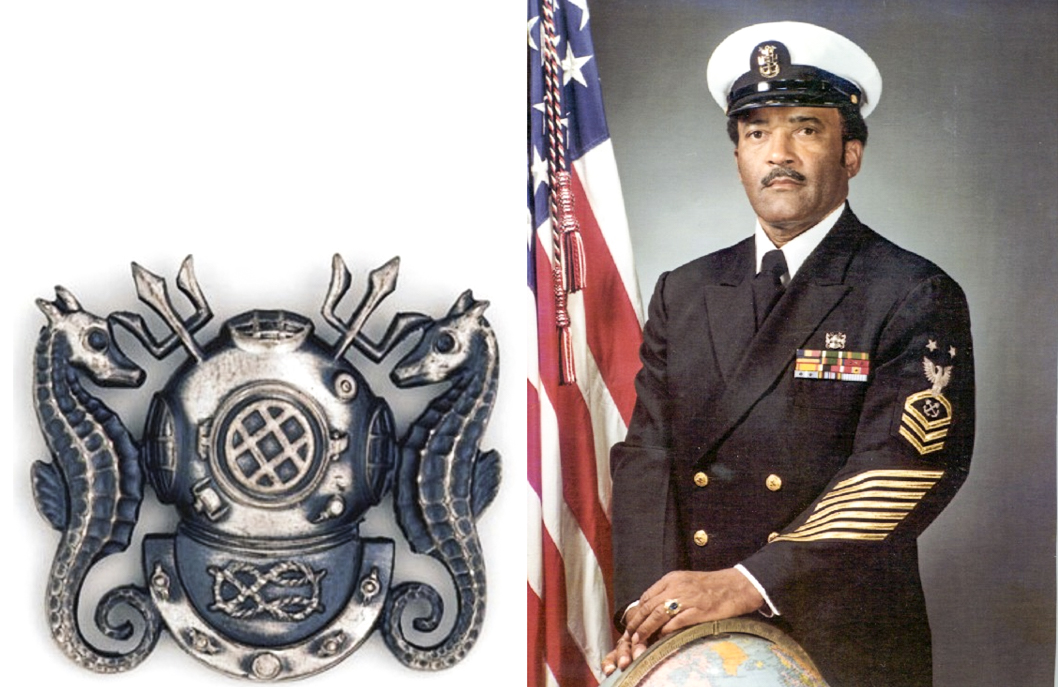
Do you know what it takes to have a U.S. Navy vessel, veterans center, and conference center named after you? A career of naval distinction? That’s the least of it, or thousands would qualify. Such honor goes to only a few who excel, even in a class of excellent men. One such man, whose 20th death anniversary falls this year, was Master Chief Carl Brashear.
Brashear’s story is not only one of success but also of want, failure, and rejection. Born in 1931 in Kentucky, he was one of eight children in a poor sharecropping family. For years, he woke before dawn and helped his father milk cows, chop wood and till the land, before walking to the one-room schoolhouse three miles away.
His mother supplemented his classwork with math and reading at home, but the boy soon lost interest, dropping out after the eighth grade. That cost him later, but at this time in his life, he wanted adventure outdoors and swimming.
Navy Diver
Brashear was set on becoming a Navy diver when blacks in the navy were resigned to being cooks or officers’ valets. Brashear enlisted in 1948. He grew so skilled at seamanship that President Eisenhower gifted him an engraved knife for successfully operating the crash-boat escorting the presidential yacht.
Brashear enjoyed working several navy jobs, but he kept pleading to be a diver. He also kept getting refused to train as a diver. Worse, his shaky schooling caught up with him. When offered the chance in 1960, he failed at diving school.
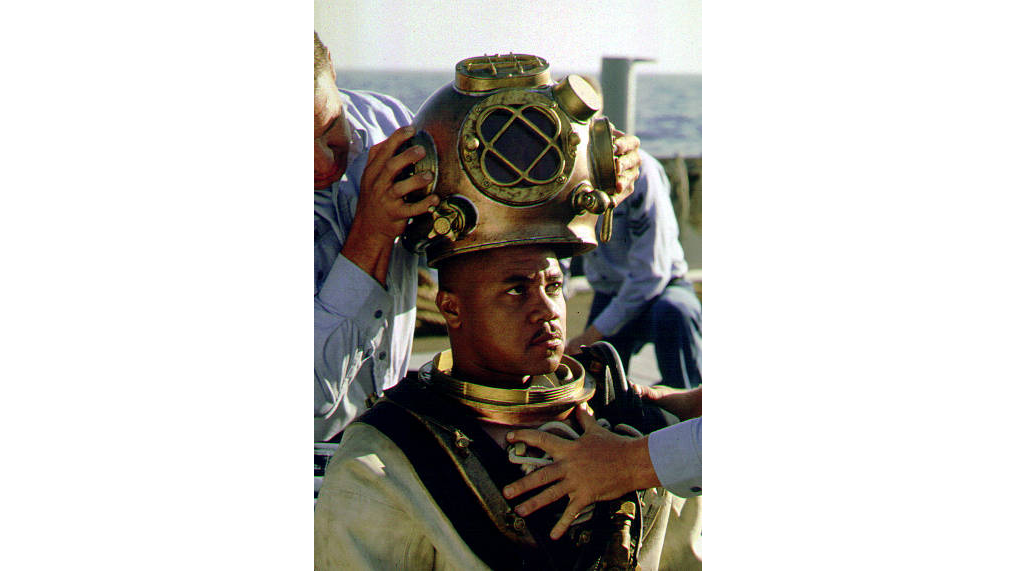
But something had changed. Instead of quitting, he doubled his resolve, taking classes remotely to master the academic work that was holding him back. Failure forged a brassier Brashear. He worried less about humiliation or insult and pondered more about what was good for him. He no longer found shame in seeking help.
Distraught over bullying notes from prejudiced cadets, Brashear once wanted to quit. A boatswain’s mate Rutherford supported him with hard words: “I can’t whip you, but I’ll fight you every day if you quit. Those notes are not hurting you. Show them you’re a better man than they are.”
Impressed with Brashear, Master Diver Chief Patrick Flanigan encouraged him to have another go at diving school and helped him prepare. Brashear re-applied when he was 31, among much younger recruits, and graduated.
Recovery Operation
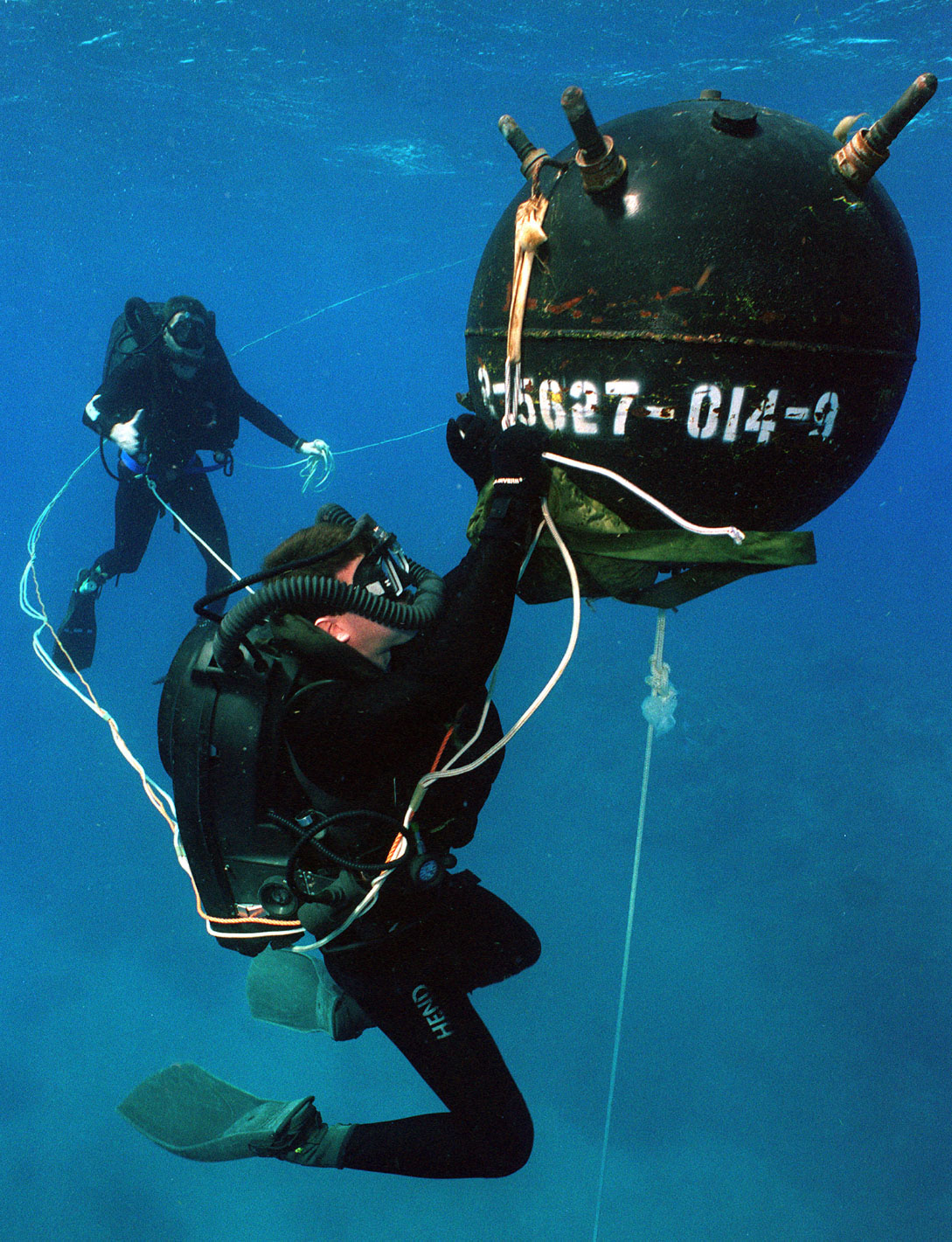
One of his jobs was in salvage operations. The citation on Brashear’s Navy and Marine Corps Medal explains why the U.S. President recognized his sacrifice and bravery in salvage operations “of great importance” to America. Those operations involved recovering lost nuclear weapons. Then, in 1966, disaster struck.
When the bowline of a landing craft tore loose, Brashear knew his shipmate astern would be killed when the stern line also tore free. Risking his own life, he shoved his mate to safety but severely injured his leg. In doing that, the citation says Brashear “upheld the highest traditions of the U.S. Naval Service.”
Threatened with being barred from diving, Brashear ordered doctors to amputate his ruined leg, which hadn’t healed after repeated surgeries. He then hurled himself into an excruciating regimen of diving, running, and calisthenics. He intended to thwart the Navy’s well-meant tactics to retire him from active duty. He said:
“Sometimes I would come back from a run, and my artificial leg would have a puddle of blood from my stump. I wouldn’t go to sick bay because they would have taken me out of the program. Instead, I’d go hide somewhere and soak my leg in a bucket of hot water with salt in it—that’s an old remedy I learned growing up.”
Brashear weathered grueling pain and brutal physical-endurance tests to become the first amputee to return as a U.S. Navy Diver. He retired after what must have been an unimaginably punishing decade in service.
Hollywood couldn’t resist making a biopic, “Men of Honor” (2000); it revolved around Brashear’s battles with racism. But his real life was about other battles won; against poverty, ignorance, ableism, ageism, and battles lost. His obsession with his career took a toll on him and his family.
Character
The point of inspirational figures, though, is to learn not only from their head and shoulders of iron, but also from their feet of clay. Of his father, Brashear’s army officer son Phillip mentioned both, saying:
‘‘He taught people worldwide that your race, your gender, your religion, none of that makes any difference. You can achieve your goals, you can be held accountable to your characteristics as a person, not by the color of your skin.’’
Philip also spoke of his father’s struggles with alcoholism. After Brashear drove his car off a naval base pier in Virginia Beach, he signed up for a substance-abuse course, completing it before he retired from service in 1979.
Brashear received multiple awards: the Navy Commendation Medal, Navy Achievement Medal, National Defense Service Medal, Navy and Marine Corps Medal, Navy Occupation Service Medal and the Presidential Unit Citation.
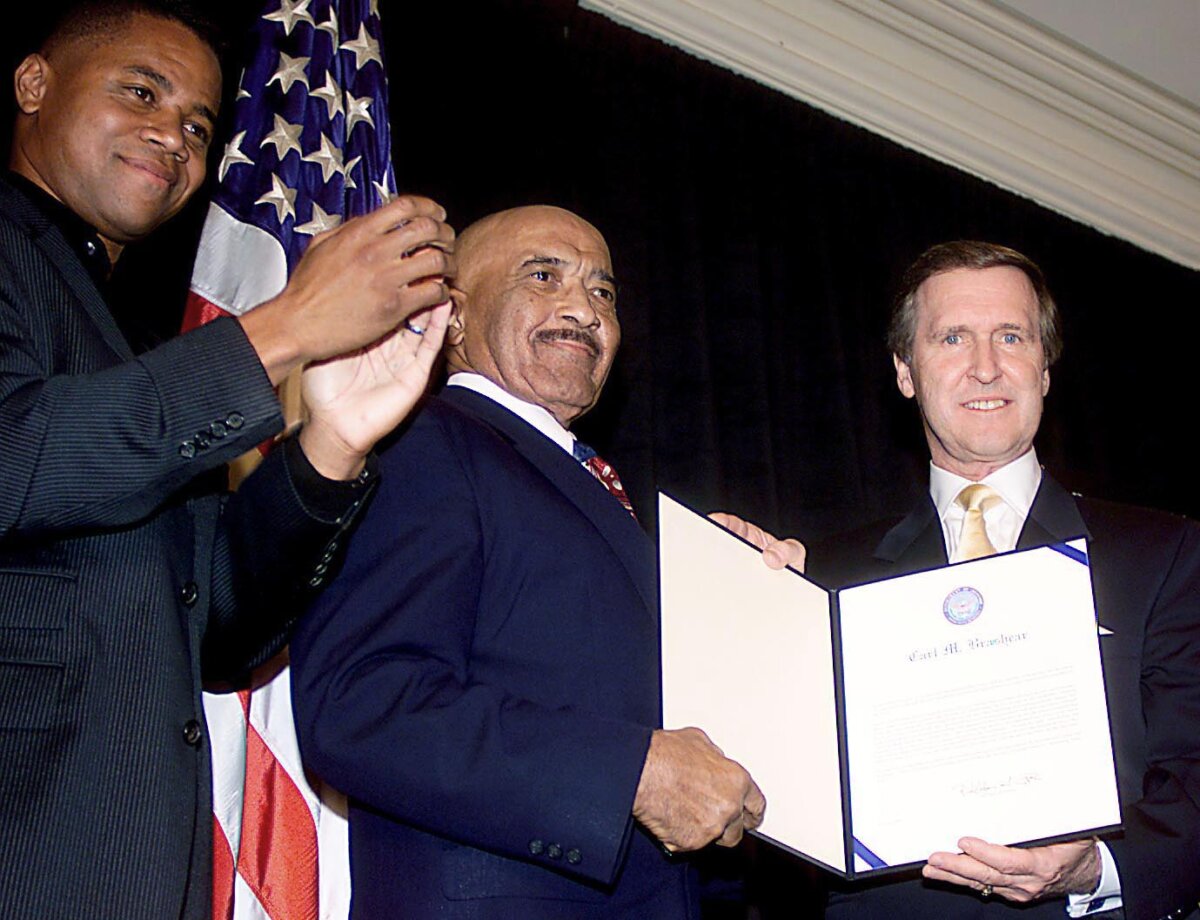
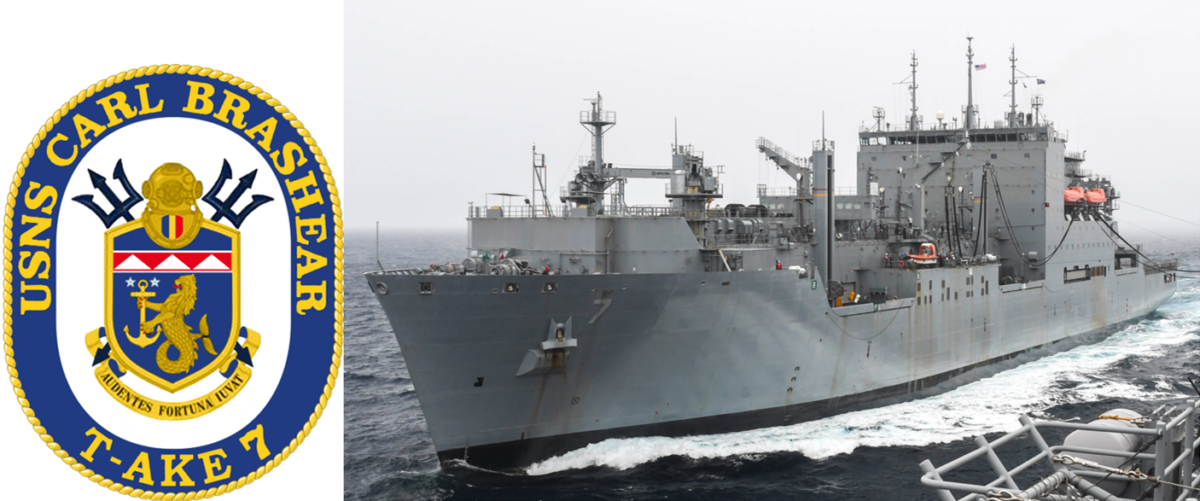
The Navy named the USNS Carl Brashear (T-AKE 7) ship in his honor, as well as a conference center in Virginia Beach, Virginia, and a Veterans Center in Radcliff, Kentucky.
In interviews, Cuba Gooding Jr., who played Brashear onscreen, clarified that Brashear’s color had nothing to do with what he could pull off, topside or underwater.
Former House Rep. G.K. Butterfield of North Carolina called Brashear “a great American warrior and patriot. His legacy is not that of an amputee or of an African American but rather of a seaman who overcame disability and racial prejudices to join a long blue line of American heroes.”
Master Diver J. Lamont King called Brashear “the best of the best of what was truly American.”
Insisting on Merit
Why did so many single Brashear out? He insisted on qualifying on merit. What matters, he seemed to say, are passion, excellence, integrity, professionalism, not identity.
That’s the opposite of performative 21st-century posturing, which insists on lowering the bar of excellence to honor identity over merit. Even with one good leg, Brashear stood firm against such decadence.
At the ship-naming ceremony, Secretary of the Navy Donald Winter said the gesture “continues the tradition of the T-AKE Lewis and Clark-class of honoring legendary pioneers.”
Chief of Naval Operations Adm. Gary Roughead said, “The naming of a ship is a very significant event. The Navy has practiced naming and christening for 211 years. The USNS Carl Brashear embodies the spirit and character of this remarkable individual. This is a statement of our beliefs and an affirmation of our values and those of Carl Brashear. I could not be more pleased to have his spirit in this ship.”
Now, a thought experiment: Imagine you have to do a few physical routines in sequence. Swim 500 yards in 14 minutes using the sidestroke or breaststroke; then rest 10 minutes. Next, do 42 push-ups in 2 minutes, resting 2 minutes. Then, do 50 sit-ups in 2 minutes, rest 2 minutes, and do 6 pull-ups, rest 10 minutes. Finally, run 1.5 miles in about 13 minutes.
Feel out of breath just reading that? Today, aspirants must pass this bare minimum physical before they even qualify for the Navy Diver program; only those who pass get selected.
Then follows what the Navy euphemistically calls “intense physical conditioning” to the low-visibility, low-temperature, high-pressure habitat of deep-sea repair, maintenance, rescue, and salvage work.
Whatever the standards in the 20th century, and they were always rigorous, Brashear exceeded them. As a rookie, he didn’t want them lowered because he was black. As a veteran, he doesn’t want them lowered just because he was twice as old as his peers, or because he was disabled. Why is only one ship named after him? Brashear can have a whole fleet named after him.
What arts and culture topics would you like us to cover? Please email ideas or feedback to features@epochtimes.nyc.
