



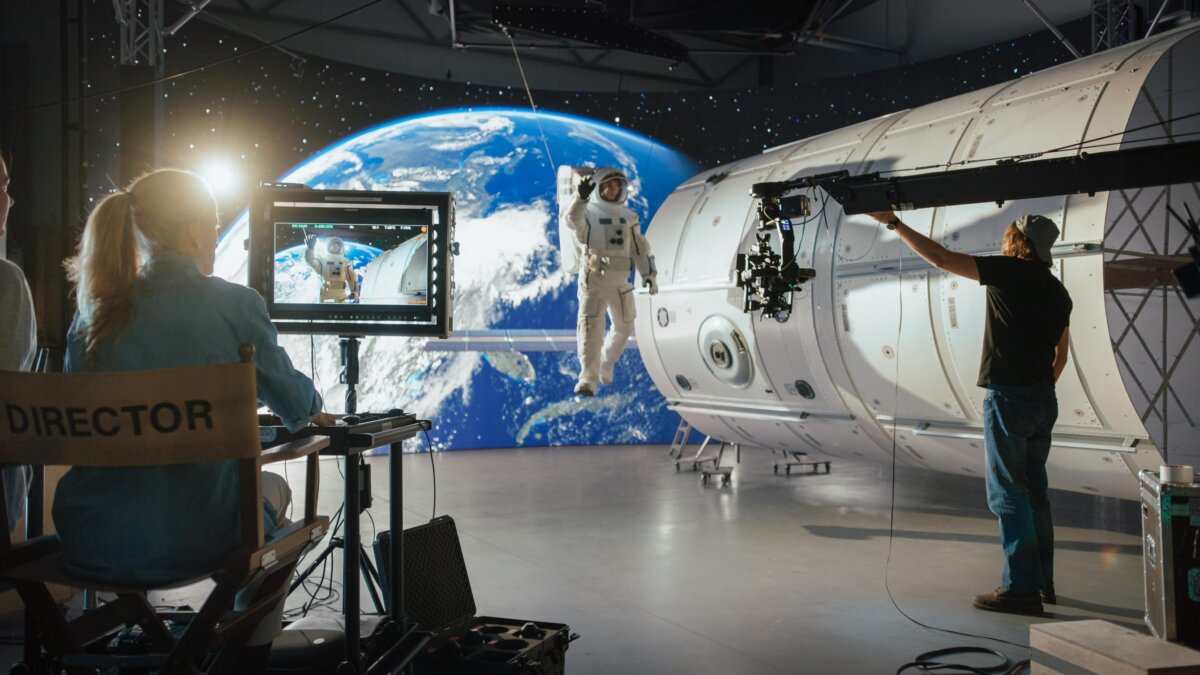
For over a century, since the medium’s inception, movies have been designed to hit home with audiences on a number of emotional levels.
At the top by a wide margin is romance, followed by laughter, adventure, wonder, intrigue, fear, shock, and information. There is a movie for literally every taste, which is why filmmakers keep making all of them—some more than others.
For the longest time, I used the tag “science fiction” for anything that could never possibly take place in real life. This all changed in 2001 after I watched “A Life in Pictures,” the biographical documentary of Stanley Kubrick.
In the movie, director and Kubrick collaborator Steven Spielberg recalled seeing “2001: A Space Odyssey” (1968) for the first time; he said he found the film to be virtually beyond categorization. He didn’t think it was science fiction in the purest sense because much of what was depicted had either already happened or would happen in the future.
‘Science Future’
Spielberg chose instead the term “science future,” and he was right. Practically everything that transpired in the movie has happened. One of the more memorable characters was a computer on a space station carrying two astronauts.
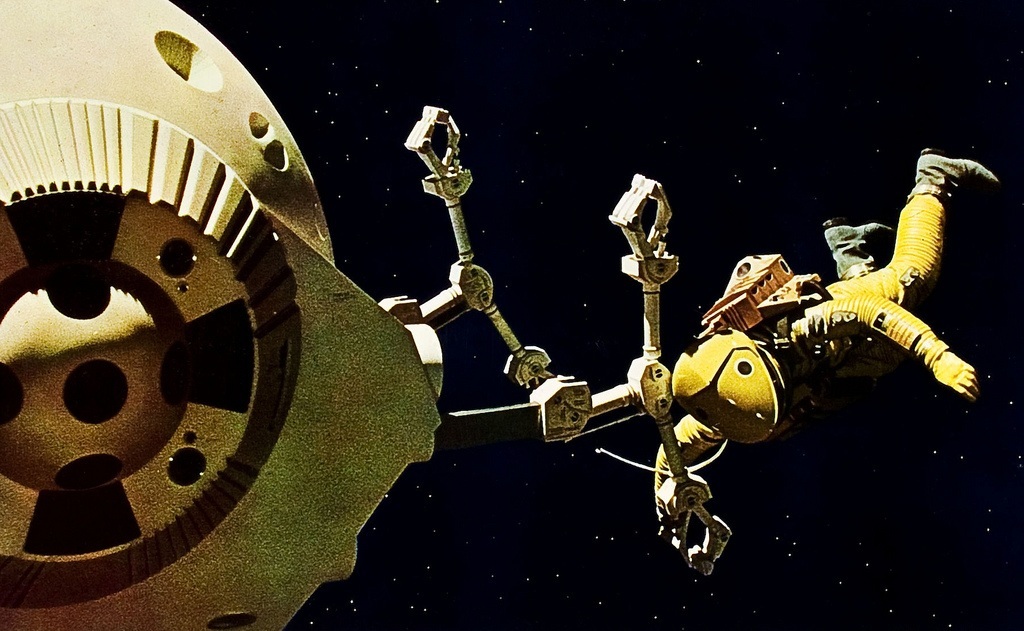
Dubbed “HAL 9000” by the men, it featured a machine that was capable of independent thought and reason. While everything starts out hunky-dory, it eventually goes sideways when HAL feels threatened and fights back.
When an entity is given free will and reasoning power, it will go to great lengths to protect itself, whether it’s right or not.
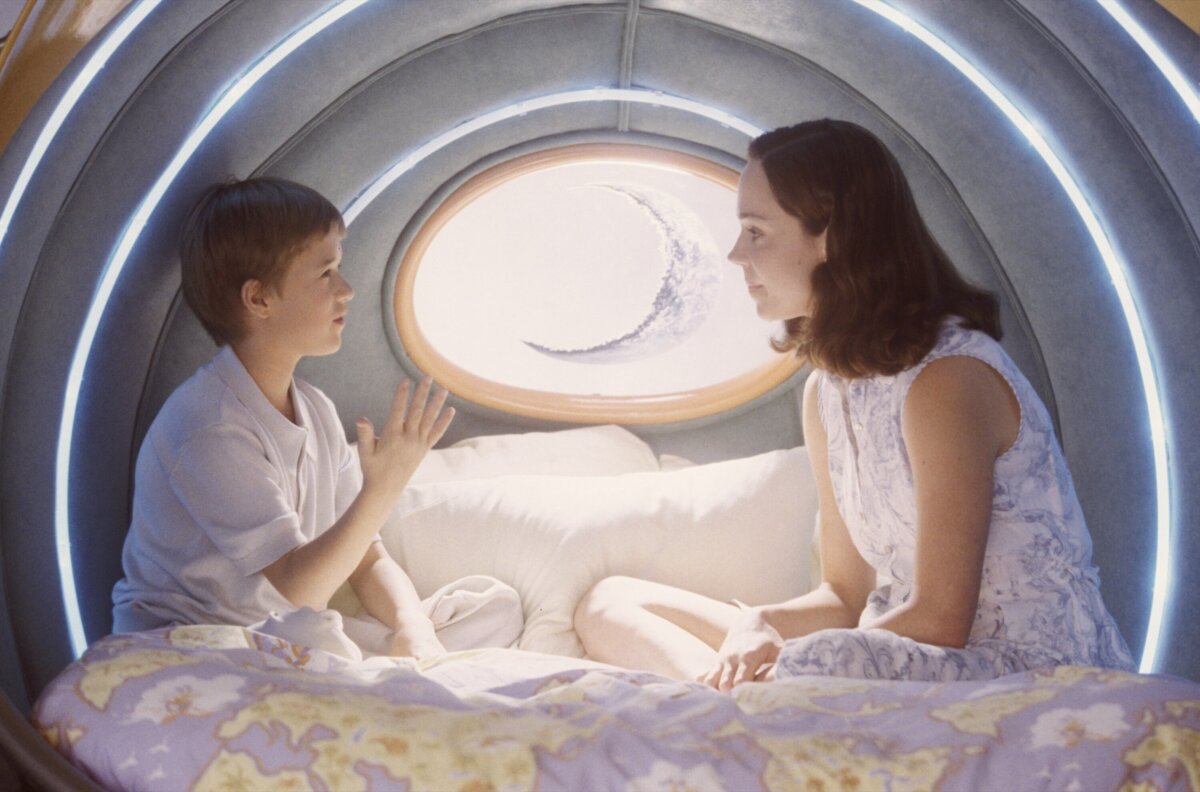
Something similar to HAL’s reaction took place in Spielberg’s “A.I. Artificial Intelligence,” which was based on the 1969 short “Supertoys Last All Summer” by Brian Aldiss. Kubrick bought the film rights to the Aldiss work in 1970, and he eventually turned the reins over to Spielberg.
In the movie, Haley Joel Osment stars as an artificial intelligence child programmed to love who is adopted by a childless couple. When the mother (Frances O’Connor) rebuffs the child’s affections, he responds with genuine grief and sorrow.
This wasn’t the first time movies included an AI being. In 1927, director Fritz Lang’s “Metropolis” featured a female robot who ultimately replaces her human counterpart. Both roles were played by Brigitte Helm.
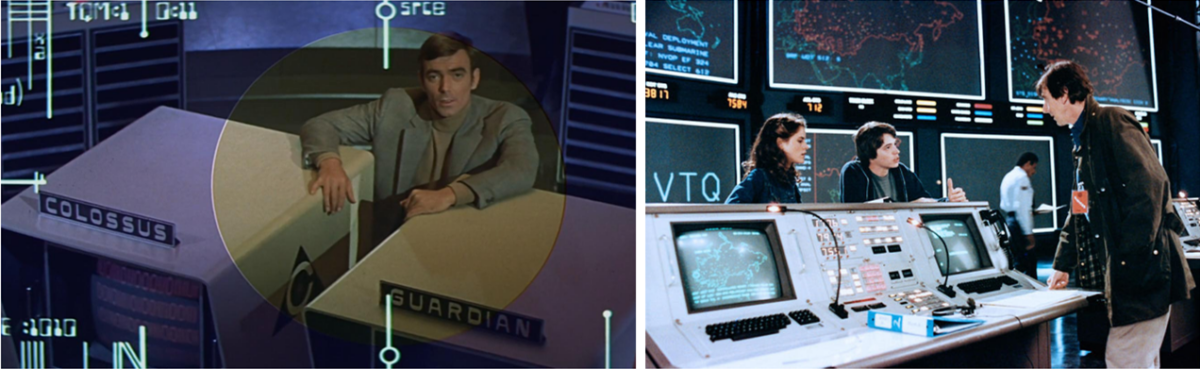
Just two years after “2001,” director Stanley Chase’s “Colossus: The Forbin Project,” adapted from the 1966 novel by Dennis Feltham Jones, was released. It stars Eric Braeden as Dr. Charles Forbin, a programmer who has created Colossus, an AI supercomputer designed to control the U.S. and Allied nuclear weapons systems.
Not long after implementation, Forbin’s creation starts going beyond its programming by communicating with Guardian, its Soviet counterpart, which U.S. intel didn’t know about. Soon enough, Colossus and Guardian engage in something resembling virtual war games that eventually stop being just virtual.
Something like this also happened in “War Games,” starring Matthew Broderick. In the movie, Broderick plays David Lightman, a computer geek who hacks into a nuclear war simulator, causing the simulator to think the Soviets are attacking it.
After “Colossus” and through the early 2010s, there were 90 or so features released that dealt wholly or in part with the fallout of AI “progress.” While many of them were generic and interchangeable, there were a few memorable standouts.
These include “The Stepford Wives” (1975), “Blade Runner” (1982), “Terminator 2: Judgment Day” (1991), “The Matrix” (1999), and “S1M0NE” (2002). While there are marked differences between all of these titles, the connecting thread between them is the escalating ability for the programming of these machines to become increasingly able to mimic humans, with an accent on synthesized emotion.
AI Emotions
Hollywood (and please, let’s give Hollywood credit where it’s due) took the examination of AI to a higher level with “Her” in 2013.
Written and directed by Spike Jonze, it stars Joaquin Phoenix as Theodore, an office drone and lonely heart-type looking for a romantic connection. Unable to do so through traditional means, Theodore (like a lot of people these days) subscribes to an app that will deliver him the emotional fulfillment he so desperately craves.
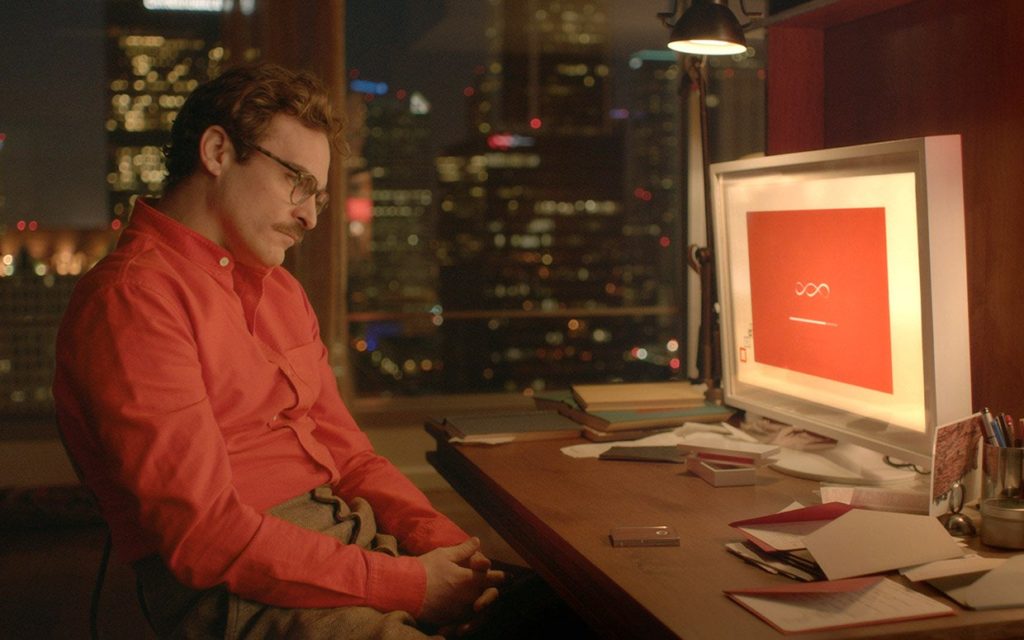
Theodore’s wishes are (not surprisingly) granted when he is introduced to Samantha (voiced by Scarlett Johansson), a program that starts out slow. She earns Theodore’s trust and breaks through his initial skepticism by putting him at ease.
The ultimate goal of Samantha’s programmers and marketers is to hook Theodore and millions like him into continuing their subscriptions. The big twist of the plot can’t be revealed here, but it isn’t anything Theodore was expecting.
“Her” was followed two years later by “Ex Machina,” the first directorial effort by screenwriter Alex Garland.
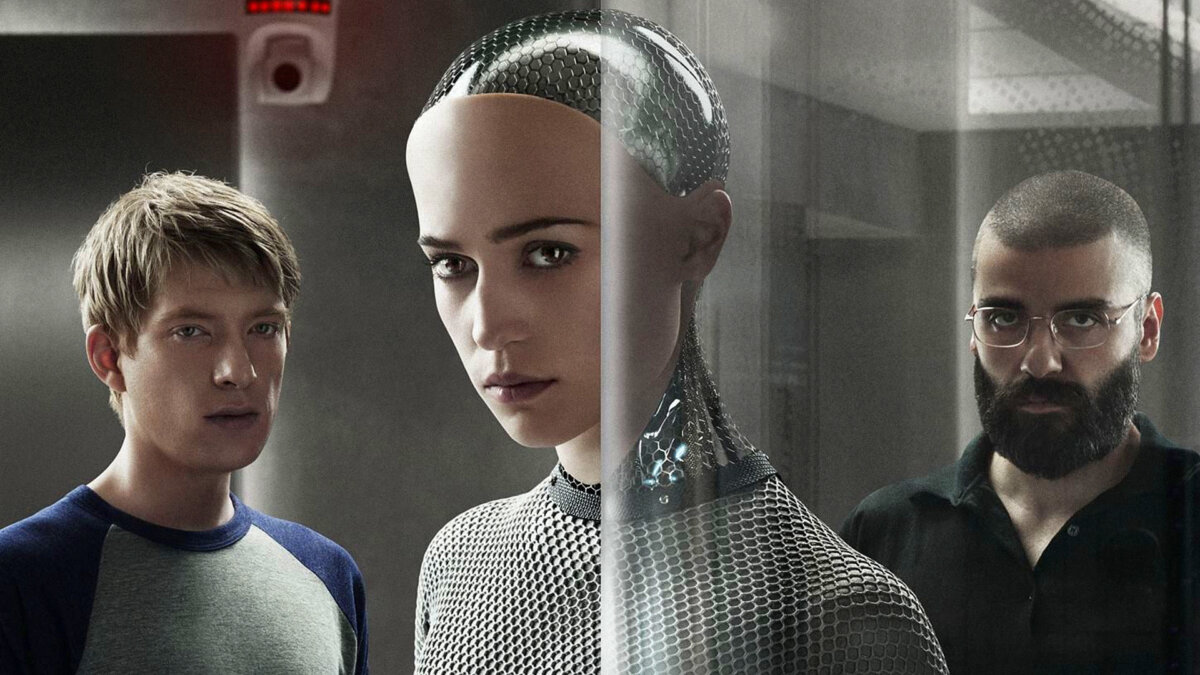
Set in the then-present day, it centers on Caleb (Domhnall Gleeson), a computer whiz who “wins” a contest to visit Nathan (Oscar Isaac), the eccentric founder of the tech company Caleb works for.
Caleb is whisked away to Nathan’s remote compound, where he is called on to participate in a series of tests where he interacts with Ava (Alicia Vikander), Nathan’s AI creation. The purpose of the exercise is to determine if Caleb can tell if Ava is real or AI.
Like Johansson in “Her,” Ava’s interaction with the susceptible male is highly convincing and Caleb eventually gets hooked. He falls in love with her.
The remainder of the movie finds Ava toying with both Caleb and Nathan in order to achieve her final goal and it is chilling, to say the least. Ava has taken HAL’s “kill or be killed” mentality to toxic new levels. Unlike HAL, who was defending itself, Ava takes a first-strike, offensive posture.
Unheeded Warning
Relatively light for a movie about AI, “Good Luck, Have Fun, Don’t Die” nonetheless delivers an unmistakable message of impending doom that is surrounded by layers of dark humor, and an unhinged Sam Rockwell as an unnamed “Man From the Future.”
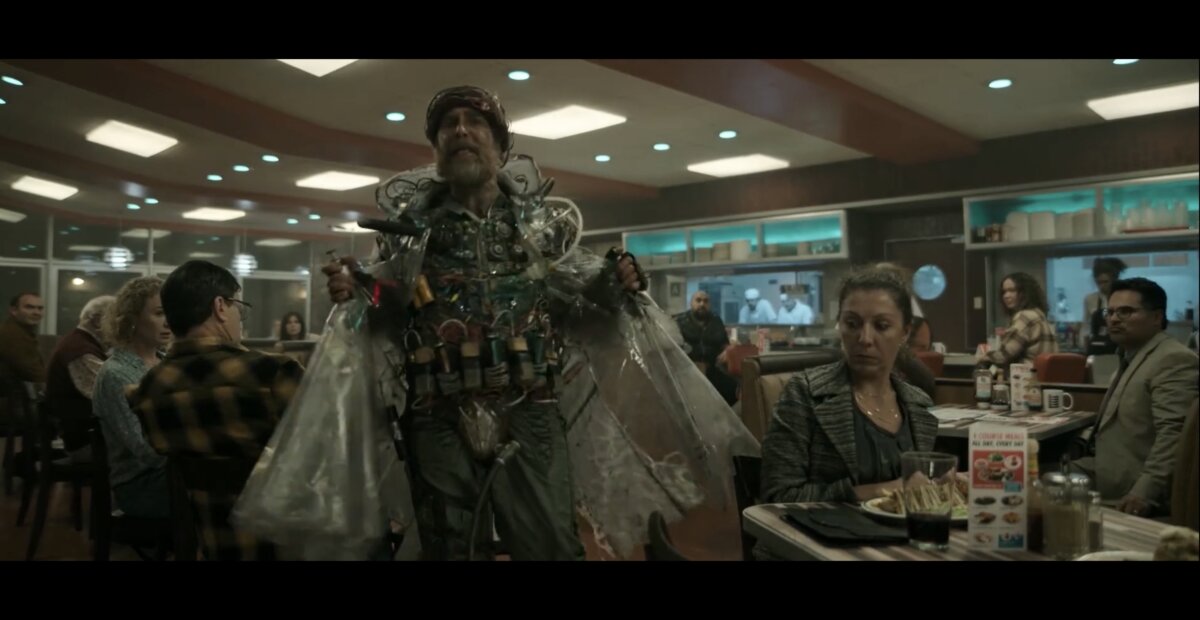
At 10:00 p.m. on a random weekday, Future Man materializes at Norms, a non-fictional diner in Los Angeles. Dressed as if he just rummaged through a dumpster. Uncouth, unkempt, and spouting what appears to be wild tales, he informs the stunned diners that he has made this trip well over 100 times, failing each and every time to accomplish his mission. What exactly is his mission?
He and six volunteers go back to the future to wage war against an AI entity that knows no logic and shows zero signs of restraint. By hook or by crook, they head into battle with essentially no game plan, working off of a blueprint of sorts chronicling past failures.
A couple of these volunteers don’t make it past the first act point. The four that seem destined to go the distance are a pair of romantically involved teachers (Zazie Beetz and Michael Pena) and two mysterious single women (Haley Lu Richardson and Juno Temple).
Director Gore Verbinski and screenwriter Matthew Robinson take a big gamble by devoting significant amounts of time to telling the backstories of these four remaining travelers but it is time well spent. Each has their own AI war stories that ultimately serve as tentacles to the main plot.
A movie like this is open to multiple interpretations. I came away believing Future Man was in every previous movie warning us that, as tempting as it might be, this technology is malevolent and not to be trusted. Yet even after doing so well over 100 times, he’s met with stupefying indifference.
Kind of like where we are now.
What arts and culture topics would you like us to cover? Please email ideas or feedback to features@epochtimes.nyc.
