For more than 90 years, two paintings by artist Robert S. Duncanson lay concealed beneath layers of wallpaper and paint at what is now the Taft Museum of Art in Cincinnati. The museum knew something of Duncanson’s work survived beneath the coverings, but exactly what survived was another question. After decades out of sight, the paintings were finally ready to be unveiled this year.
The Taft murals are considered among the most significant remaining domestic murals created in the United States before the Civil War. When the museum began a conservation project on two of the paintings, assistant curator Angela Fuller was cautiously optimistic about what conservators would find. “I was just hoping that there was still a painting there,” she told The Epoch Times.
I spoke with Fuller and Laura Stewart, the registrar and collections manager at the Taft, as the museum approached its deadline to complete the project. Their insights offer a closer look at what has survived, what the museum is learning about Duncanson’s work, and how conservation is reshaping our understanding of a historic interior.
Duncanson and the Longworth Murals
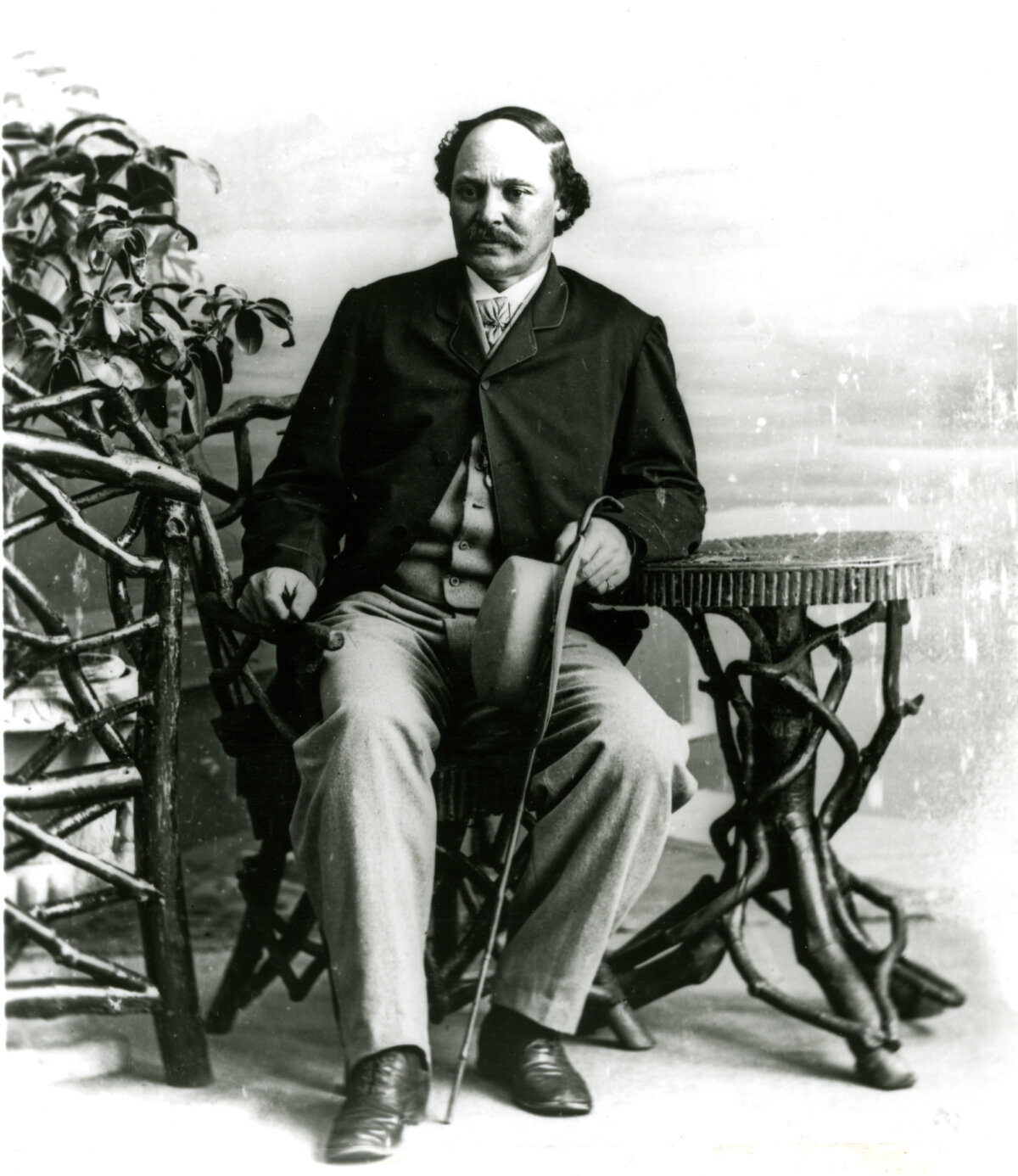
Duncanson arrived in Cincinnati from Michigan around 1840. Many of his works were painted on canvas, first portraits and later landscapes. Largely self-taught, he learned by studying European art through prints and sketching directly from nature, and he gradually blended those influences with his own observations of the American landscape.
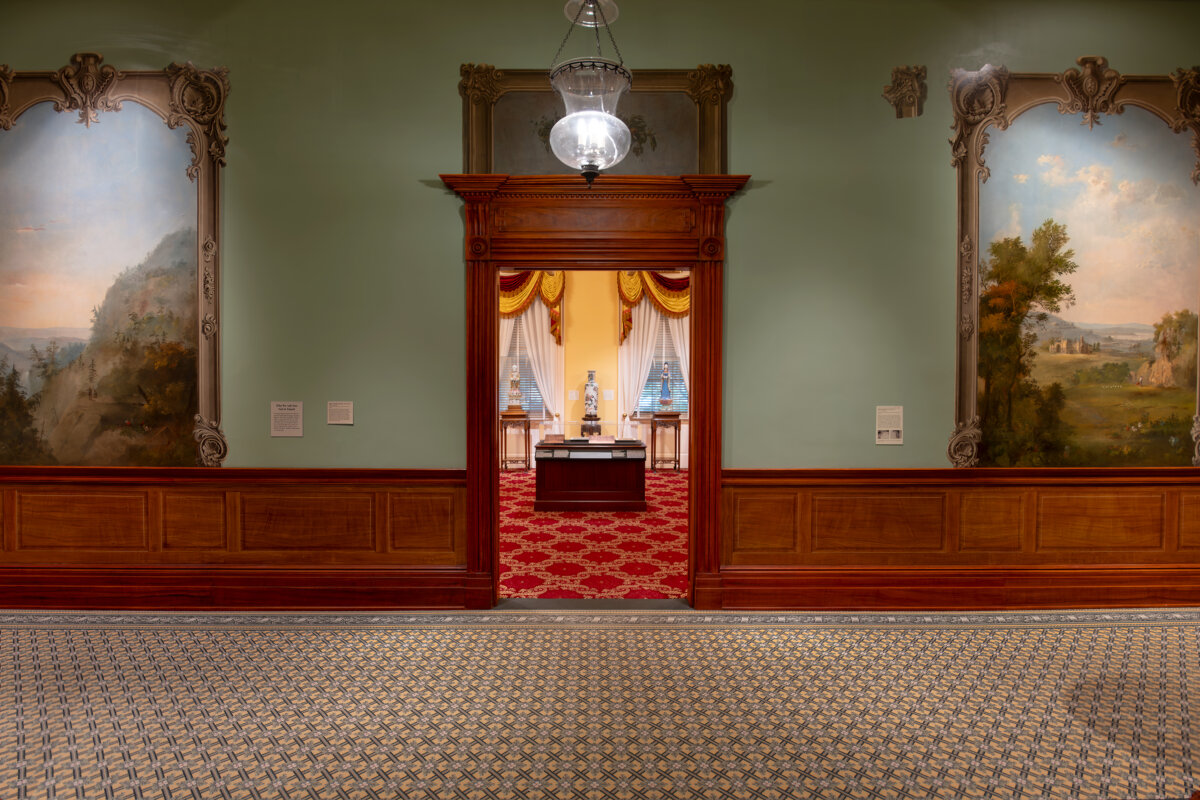
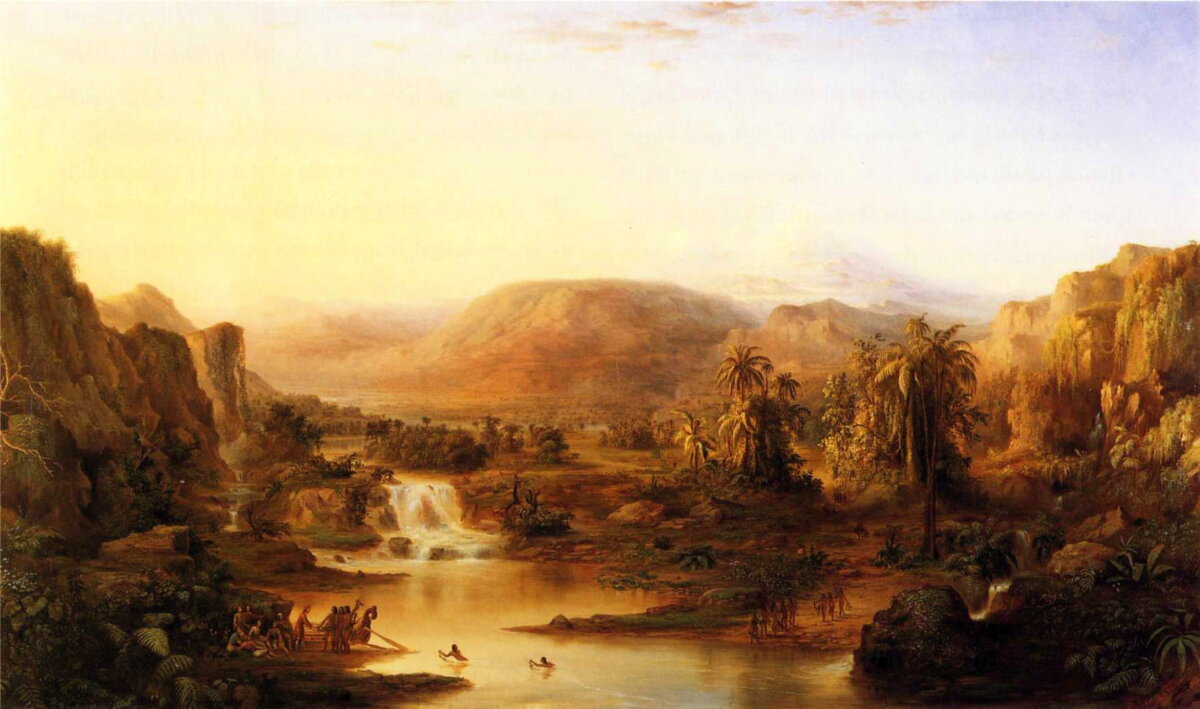
Between 1850 and 1852, he painted eight monumental landscape murals and four smaller overdoor still lifes directly onto the plaster walls of the home of Cincinnati entrepreneur Nicholas Longworth, now the Taft Museum. Each landscape measured roughly 9 by 6 and a half feet. Rather than depicting identifiable locations, Duncanson created imagined scenes: forested hills, rocky outcroppings, winding rivers, and small figures and buildings, set within trompe l’oeil architectural details that transformed Longworth’s foyer into an immersive environment. The commission was the largest of Duncanson’s career and helped establish his reputation as a landscape painter.
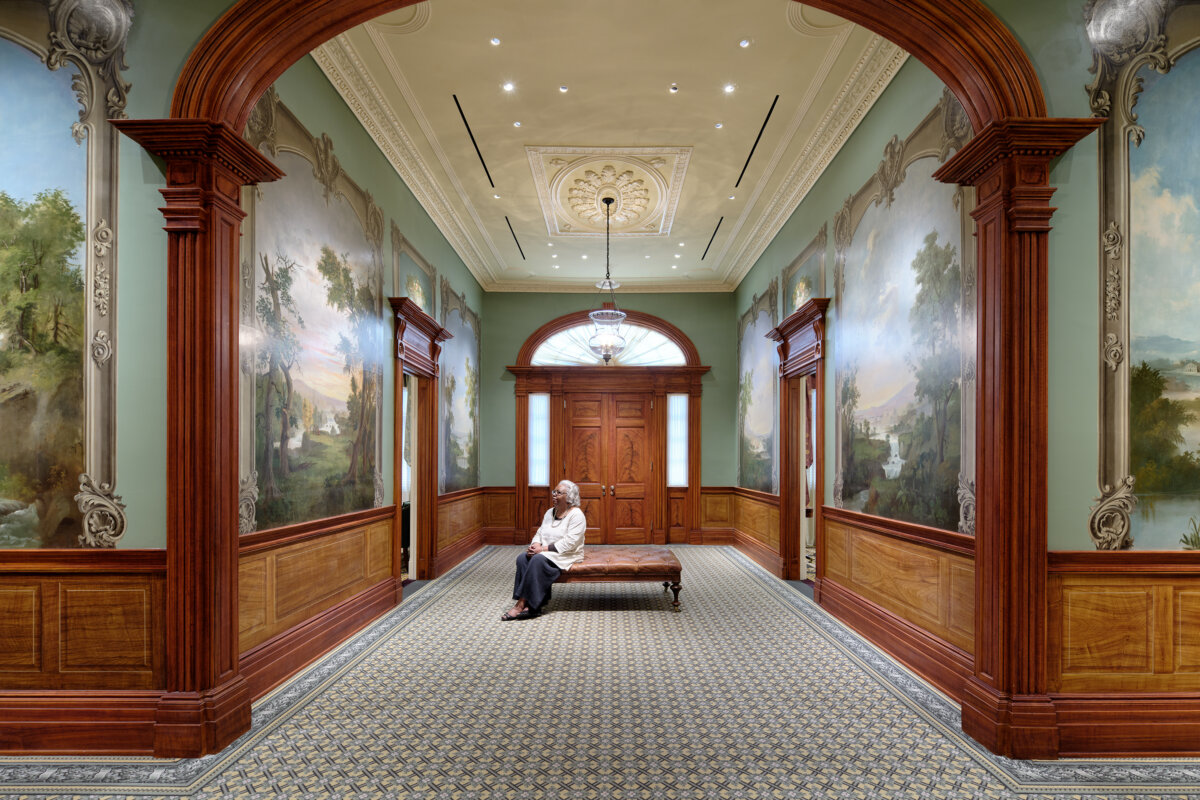
By 1861, the Daily Cincinnati Gazette had called Duncanson “the best landscape painter in the West.” The Smithsonian American Art Museum has called him perhaps the most accomplished African American painter in the mid-19th-century United States. In 1976, the house and murals were designated National Historic Landmarks.
The house predates the murals by several decades. Completed in 1820 for Martin Baum and his wife, Ann Somerville Wallace Baum, its design has been attributed to both James Hoban, architect of the White House, and architect Benjamin Latrobe. The residence later passed through several of Cincinnati’s wealthiest families, including Longworth, a wealthy horticulturist, winemaker, philanthropist, and collector who was also a strong supporter of Cincinnati’s local artists, and then David Sinton, considered the richest man in Ohio. Sinton’s daughter, Anna, married Charles Phelps Taft, half-brother of President William Howard Taft.
When the Taft Museum opened in 1932, the murals received their first major restoration. Photographs taken during that work captured portions of the paintings beneath wallpaper and later paint, providing valuable clues for the museum’s current investigation. The murals were likely covered as interior tastes changed, with wallpaper hung first, followed by additional coats of paint.
Conserving Duncanson’s Work
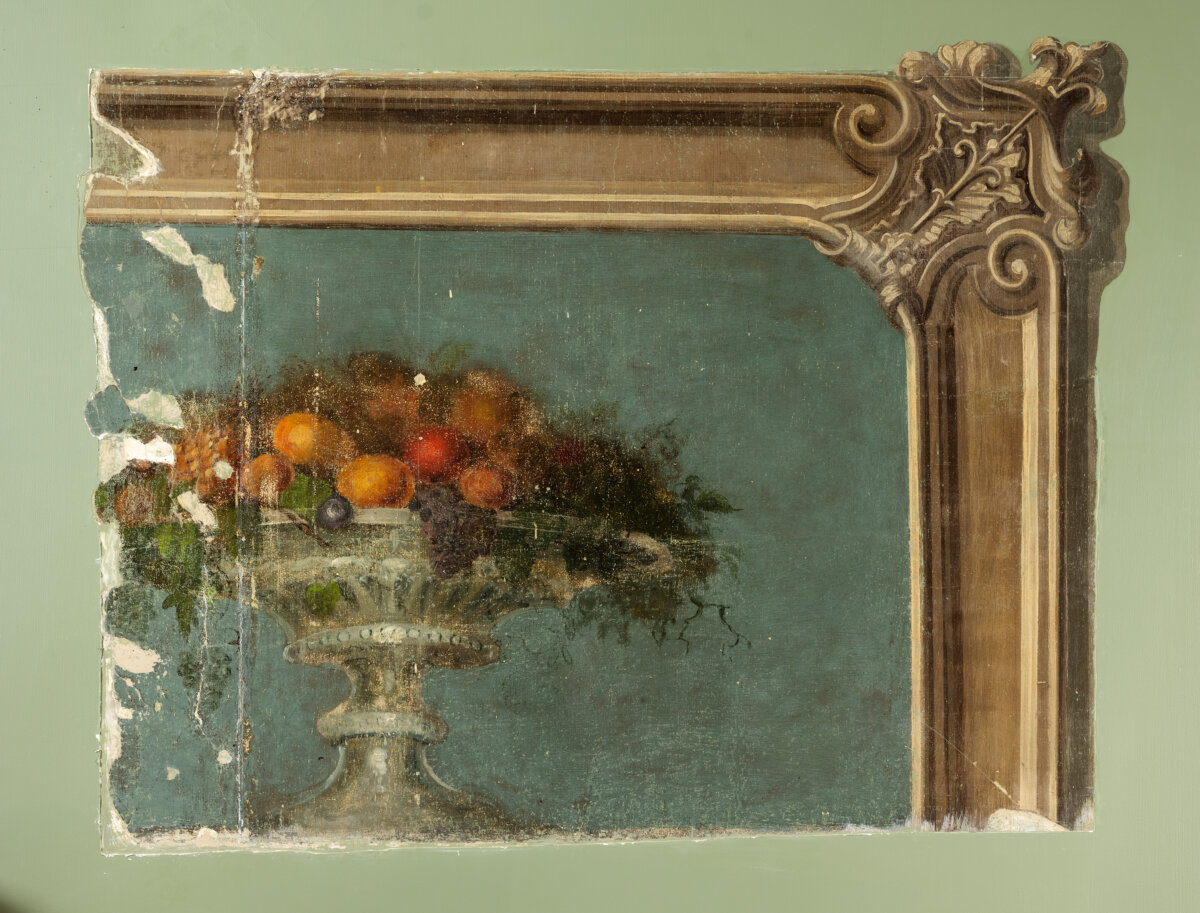
The current project focuses on conserving two overdoor murals in the foyer while documenting what survives beneath decades of covering. Paintings conservator Michael J. Ruzga is leading the effort. So far, he has removed seven layers of grime, plaster, and wall paint from the murals. He has begun inpainting small areas of paint loss and will finish by applying a protective varnish to each work.
What has emerged is surprising: two fruit still lifes featuring grapes, pineapple, and other fruits. Duncanson is best known as a landscape painter, which makes these still lifes an unexpected find, yet they show his extraordinary talent across genres. Why he chose grapes and pineapple is uncertain, though speculation offers some explanations. The grapes may nod to Longworth, who was a vintner. The pineapple may reflect its symbolism: introduced to the American colonies from the Caribbean in the 17th century, the exotic fruit soon became a symbol of lasting hospitality.
The murals are also uncommon examples of Duncanson’s work painted directly onto architecture, since relatively few of his murals survive. Beyond their visual restoration, they offer physical evidence of his working methods, giving researchers a unique opportunity to study his materials and techniques firsthand. “Murals were fairly rare pre-Civil War in the U.S.,” Stewart said. “So just contributing to Duncanson’s scholarship, his materials and techniques, is a great goal, and one that we’re going to achieve through this project.”
Infrared photography has been especially revealing. Fuller said the museum brought in an independent researcher to examine the underdrawings, uncovering detailed graphite sketches beneath the still lifes. “It’s super detailed, just like underneath the landscapes,” Fuller said. “That helps give us more evidence that Duncanson did indeed execute both of those pieces, because there was some question about that in the past.”
Conservators also used X-ray fluorescence (XRF) and Raman spectroscopy. XRF uses X-rays to identify pigments by the characteristic radiation they emit, without requiring samples from the artwork. Raman spectroscopy uses laser light to identify pigments and other materials through the patterns produced when light scatters off a surface. Together, these methods reveal pigments and working methods not visible on the finished surface, deepening scholars’ understanding of Duncanson’s process.
The work is also changing the experience of the historic house itself, recovering elements of the interior much as visitors would have encountered it in the 1850s. Fuller said she hopes that the conservation takes visitors back in time and gives them a sense of “being a guest in this home in the mid-1850s.”
Today, Duncanson’s work can be found at major museums, including the Metropolitan Museum of Art and the National Gallery of Art. But at the Taft, his legacy remains tied to the building itself, which gives the murals a special place among his works. More than 170 years after Duncanson painted the Longworth murals, the Taft Museum is offering a renewed encounter with his works and new insight into how he made them.
What arts and culture topics would you like us to cover? Please email ideas or feedback to features@epochtimes.nyc.