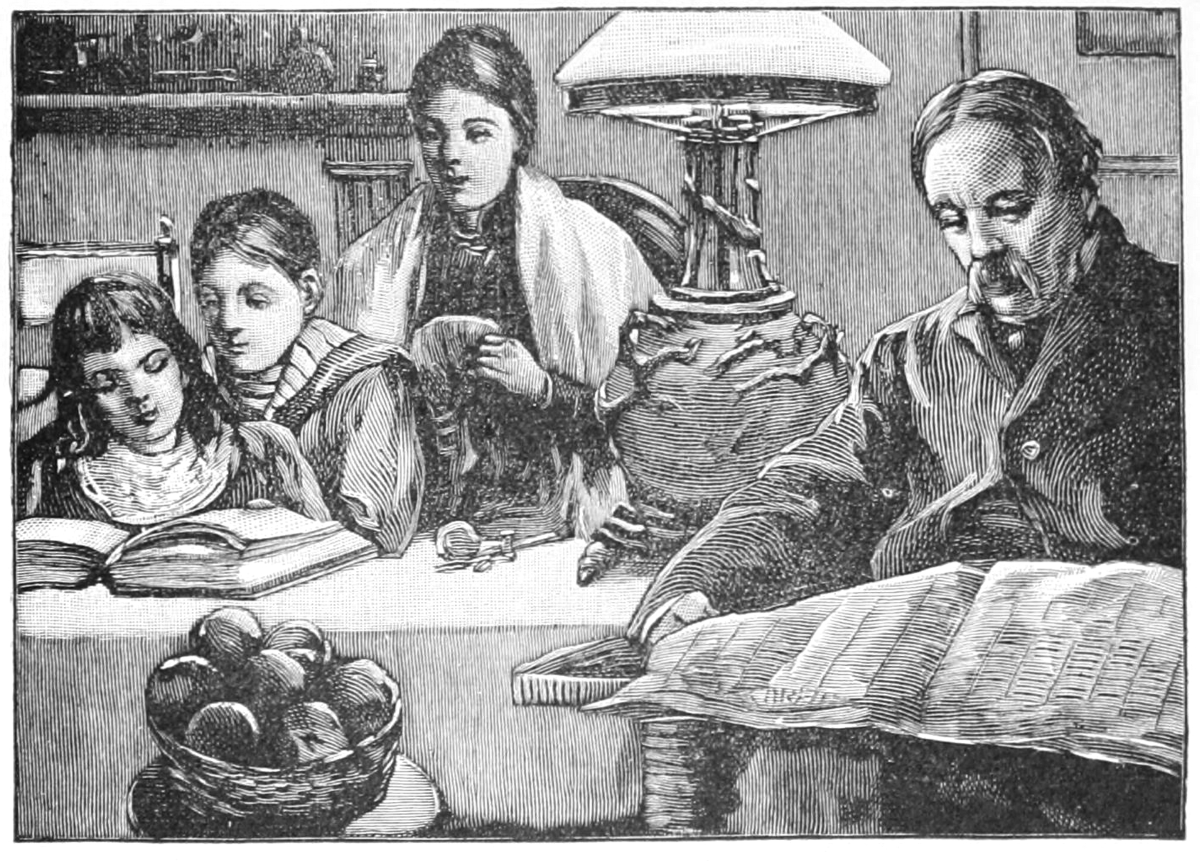
A reprint of Mary Elizabeth Burt’s 1904 “Poems That Every Child Should Know” appears on Amazon with three reviews. The first two offer glowing accolades of the book and the author’s choices. The third review consists of two sentences: “This book is not for modern children. The selections are for children of a hundred years ago.”
To anyone who has already peeked inside the book via the “Read sample” button, this little blast of cold wind will likely bring some sad laughter. Included in the reviewer’s judgment “not for modern children” are poems from the likes of Lewis Carroll, William Wordsworth, William Shakespeare, Robert Burns, and others from the canon of American and British poets. The poems are arranged by ages appropriate to the child, with the initial section including pieces like “Twinkle, Twinkle Little Star” and Robert Louis Stevenson’s classic “My Shadow.”
In Burt’s 1908 “Prose That Every Child Should Know,” we find no reviews at all, but the same progression from young to old in terms of the selections. Here, too, we find another and even broader array of authors, ranging from Roman historian Livy to French novelist Victor Hugo to George Washington and Theodore Roosevelt.
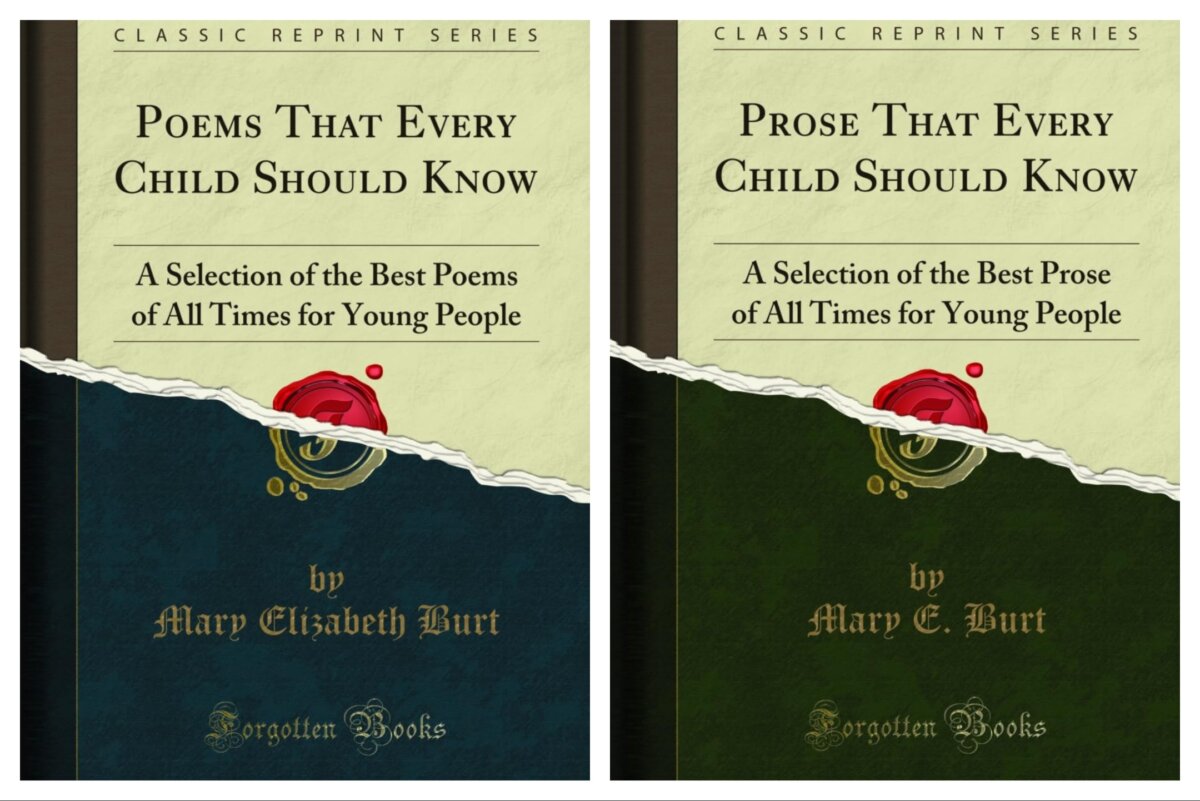
Both books are available in print and online and are well worth a look. Before we look at them, however, and what “modern children” might gain from them, let’s first meet the woman who put these books together.
The Mysterious Ms. Burt
Search online for Mary Elizabeth Burt (1850–1918), and the same curriculum vitae keeps popping up. Here is one of the longer descriptions: “Mary Elizabeth Burt was a 19th-century American educator and author, known for her contributions to children’s literature. She wrote several books focused on education and storytelling, including ‘The Story of the German Iliad’ and ‘Herakles, The Hero of Thebes.’
“Burt was deeply involved in the public school system and emphasized the importance of using stories to inspire and educate children. Her works often drew on classical and folk tales, aiming to make them accessible to young readers.”
Dig a bit more, and we find Burt was also a lecturer, a teacher, and a member of the faculty for a time at New York City’s John A. Browning School. It was founded to educate the children of prominent families like the Rockefeller children. The Browning School today is a highly regarded prep school for boys. Incidentally, this institution’s statement on “Civil Discourse” should be fixed to the bulletin boards of every school in our country.
Was Mary Burt married? Unlikely, as female teachers of that time and place were usually forbidden wedlock. Was she attractive? I can find no photos. What did her students think of her? Again, no idea.
But if we read her introductions to the poetry and prose collections she compiled, we find Mary E. Burt in every sentence. Here is a teacher and a woman who, by her passion and clear love for her profession wins our attention and admiration.
Here’s a sampling of ideas from this passionate educator.
Lessons of the Spirit
In “Poems That Every Child Should Know,” we read her broad hopes for the benefits verse will deliver to her students:
“They should store up an untold wealth of heroic sentiment; they should acquire the habit of carrying a literary quality in their conversation; they should carry a heart full of the fresh and delightful associations and memories connected with poetry hours to brighten mature years. They should develop their memories while they have memories to develop.”
By advocating specific poems children should learn, Burt also reveals herself as a teacher with a backbone:
“There are people who believe that in the matter of learning poetry there is no “ought,” but this is a false belief. There is a duty, even there; for every American citizen ought to know the great national songs that keep alive the spirit of patriotism. Children should build for their future—and get, while they are children, what only the fresh imagination of the child can assimilate.”
Burt was a product of the 19th century, when, in many schools, eloquence in speech was still a fit subject for education. She writes, “‘Prose Every Child Should Know’ is a reading book for home culture. And it is a collection of recitations for school-use.”
As with her poetry book, Burt makes a connection so often missing in education today, that of character building and the literary arts. She begins her extraordinarily long sentence denoting this connection with these words:
“What is the prose that every child should know? It is the prose that will follow him all the days of his life, the prose that ‘propagates a brain,’ ‘deals with the permanent elements of life,’ finds ‘a lesson of the spirit, a Tree of Life, in the oak and pine,’ clothes the naked soul, reveals the music which is ‘Love in search of a Word’; prose that is born in the manger, … prose which is ‘the precious life-blood of a master-spirit,”—this is the prose that every child should know.”
And just in case we think Burt too prim and serious for our modern sensibilities, here’s the opening sentence of the poetry preface: “Is this another collection of stupid poems that children cannot use?” Few writers even today would be so bold as to put misgivings about their book so humorously.
A Quick Look Inside
Space permits only a few examples from Burt’s two collections. Here’s the second selection that appears in “Prose,” a condensed child-friendly version of Washington’s copy of “Rules of Civility and Decent Behavior.”
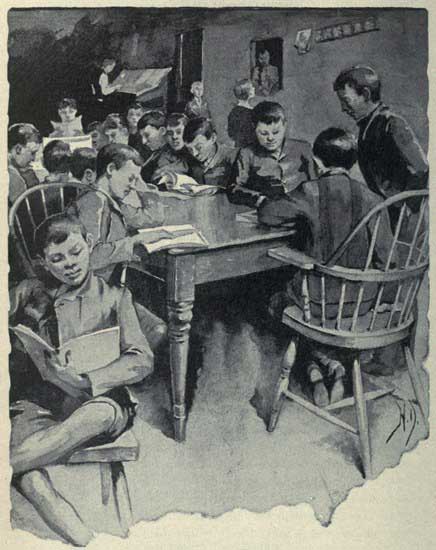
Notice that each entry is preceded by a short anecdote.
“This ‘speech’ is for Tommie, aged five, whose mother teaches him to ‘speak pieces.’ Tommie likes to learn songs and sing them to you. He will learn anything you have a mind to teach him. Our best men come from the ranks of those little boys who learn great lessons while standing at the mother’s knee.
“Sleep not when others speak. Sit not when others stand. Speak not when you should hold your peace. Turn not your back to others. Show not yourself glad at the misfortune of another. Play not the peacock. Gaze not at the marks or blemishes of others, and ask not how they came. Think before you speak.”
If we read this short passage aloud, we hear the rhythm in the sentences, which appeals to young children. Moreover, we’ve just introduced the child to anaphora, that rhetorical device in which certain words are repeated near the beginning of sentences. All those verbs followed by “not” give the passage a Churchillian ring.
Burt’s introductions in “Poems” are generally shorter. Here is her commentary on a verse for young children:
“‘Spring’s at the Morn,’ from ‘Pippa Passes,’ by Robert Browning (1812–89), has become a very popular stanza with little folks. ‘All’s right with the world’ is a cheerful motto for the nursery and schoolroom.”
The year’s at the spring,
The day’s at the morn;
Morning’s at seven;
The hillside’s dew pearled;
The lark’s on the wing;
The snail’s on the thorn;
God’s in His heaven—
All’s right with the world!
Learning by Heart
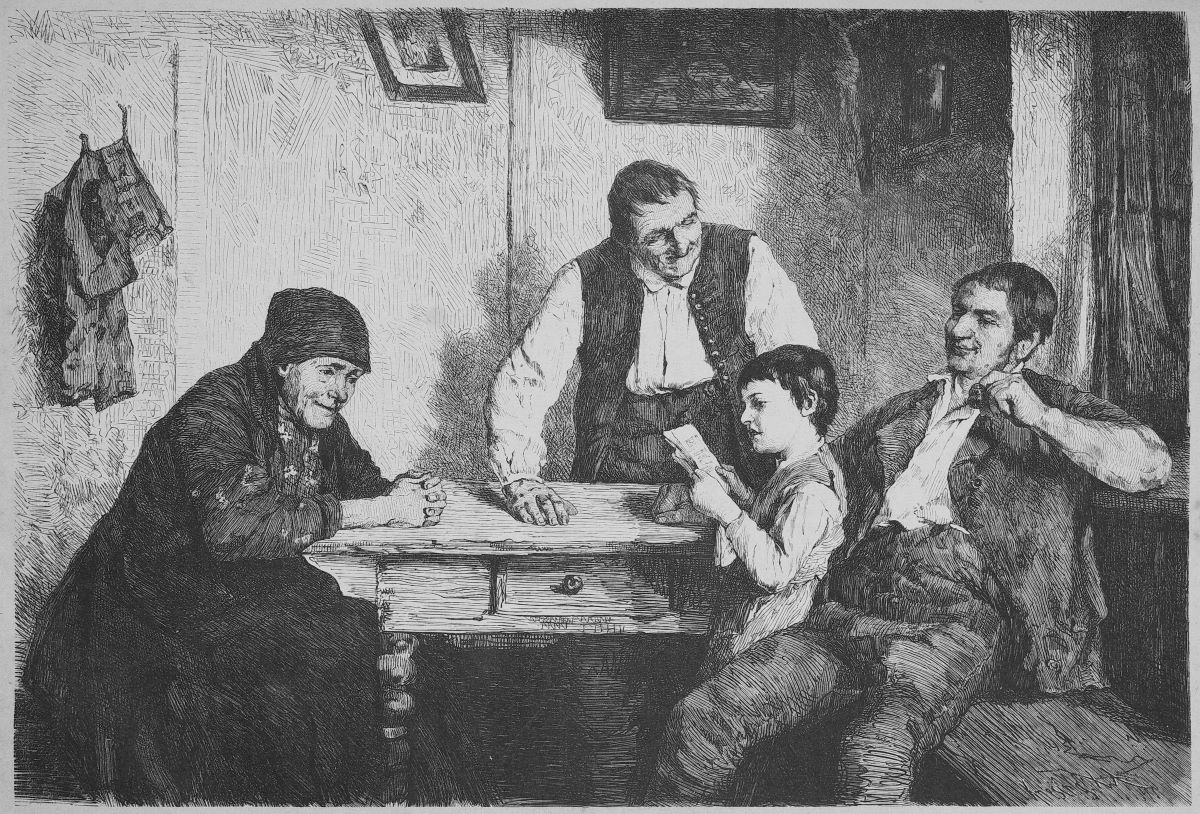
Burt’s books highlight several elements often missing in our modern classrooms. First is the historical perspective she gives us on 19th-century strategies of instruction, the importance of endowing children with the gifts of language, words, rhythms, the opportunities for exquisite usage. In a time when memorization is often ignored as a tool of learning, she reminds us of its value.
Yet whether teachers and parents ask students to memorize some of these pieces is less important than the gifts they’ll receive simply by reading and knowing them. By sharing great, time-tested poems and prose with our children and students, we not only expose them to classic literature, we also impart lessons in character building. Burt intentionally included writing that would attract children while undergirding virtue.
And, finally, most of these poems and prose passages bring an optimism and hope to the young so sorely missing in today’s culture. The “modern children” referenced by that Amazon reviewer are growing up more anxious and more depressed than previous generations and for good reason. Even to a casual observer, our culture—its music and other forms of entertainment, its social media, its 24/7 news, its dysfunctional individualism—are hardly conducive to nurturing a buoyant, resilient, and joyful attitude for living.
Henry Wadsworth Longfellow’s “A Psalm of Life” is just one of the many poems that teaches virtue and brings hope to the young. Of this poem, Burt wrote that it “is like a treasure laid up in heaven. It should be learned for its future value to the child, not necessarily because the child likes it. Its value will dawn on him.”
We’ll conclude with a nugget from this treasure:
Let us, then, be up and doing,
With a heart for any fate;
Still achieving, still pursuing,
Learn to labour and to wait.
What arts and culture topics would you like us to cover? Please email ideas or feedback to features@epochtimes.nyc.