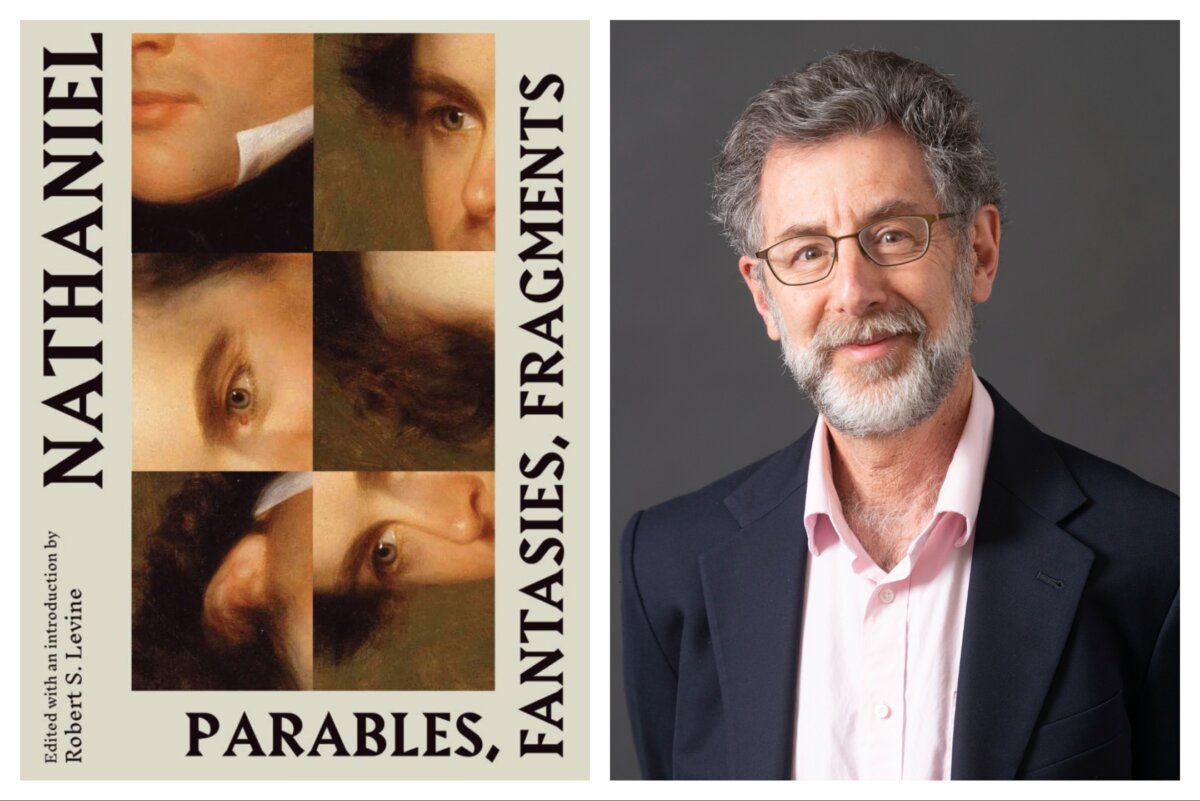
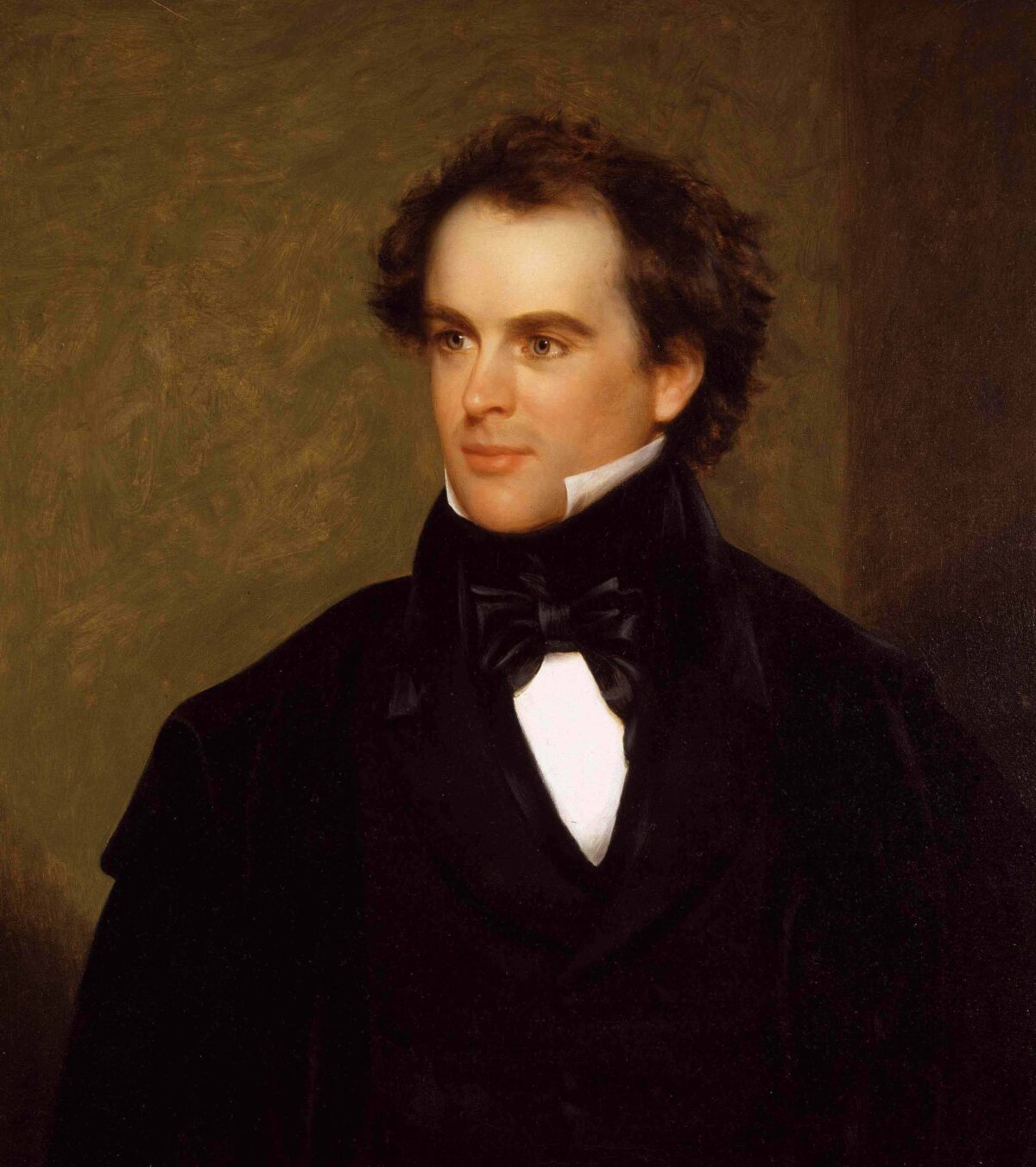
Nathaniel Hawthorne was a bit of recluse. Secluded for a long period in his bedroom on the third floor of the home he shared with his mother, two sisters, and an aunt, he was left alone with his thoughts. But what was he thinking? And what was he doing? Robert S. Levine, an author and the distinguished professor of English at the University of Maryland, gives readers a glimpse into Hawthorne’s literary activities during the early and mid-1800s.
In his new book “Nathaniel Hawthorne: Parables, Fantasies, Fragments,” published by Library of America, Levine has accumulated 200 random thoughts jotted down by the famous American author. These thoughts, which are primarily story prompts and ideas, run the thematic gamut, from the morbid to the funny to the philosophical. It is in these brief ideas—typically no more than one or two sentences—that we see exactly what Hawthorne was doing while in that third-story room.
‘A Radical Literary Experimenter’
As Levine notes in his Introduction, the 200 selections are just 10 percent of the 200,000-word-filled notebooks that Hawthorne used to collect his ideas and write his stories. These notebooks, which when published in the 19th century, though not in their entirety, became known as “The American Notebooks” and expressed the genius and the oddity of Hawthorne’s literary mind.
“By gathering these fragments separately for the first time, this volume puts on full display a relatively unfamiliar Hawthorne,” Levine explains, “a radical literary experimenter and proto-modernists who looks forward to Franz Kafka.”
Indeed, Hawthorne does seem to foreshadow Kafka with his mix of the morbid and fantastical, like using a person stuck and smoked in a chimney, to tell a tale. Or even more Kafkaesque, the idea of a poor couple being left a mansion with a brooding servant in a rich man’s will, and, upon moving into the mansion, they are tormented by the “darksome servant” only to find out at the end that the servant is the rich man.
Along with Kafka, some of the jotted down ideas are similar to what would later be Oscar Wilde’s “The Picture of Dorian Gray,” Mary Shelley’s “Frankenstein,” and F. Scott Fitzgerald’s “The Curious Case of Benjamin Button.” If unfamiliar with Kafka, readers may find “The Twilight Zone” a more apt comparison. But these hyper-morbid story ideas are primarily located in the first chapter entitled “To Make a Story.”
The seven chapters are broken up thematically and cover Hawthorne’s “overarching concerns, even obsessions.” Levine explains that the chapters, and therefore the selections, are hardly chronological, though they nearly all originate from a 10- to 15-year period. The chapters cover writers and the art of writing, the relationship between men and women, the human mind, and death. The chapter entitled “Fantasies” proves an accurate description, as the ideas deal with ghosts, magical elixirs, and even an auction of virtues and vices held at the fictional Vanity Fair.
Levine explains that “most of the selections in this volume come from a period in Hawthorne’s life when he thought of himself as a misfit and failure.” For readers who may be aspiring writers, this should be an encouragement. It should also be a lesson that one should continue to work at and hone their craft regardless of the results. This book demonstrates what great writers and creatives do—they jot down their ideas. And, as Levine describes, the ideas found in his notebooks at times found themselves used in his published works.
An Imagination Wandering Freely
But as the book title suggests, these 200 selections are not solely initial ideas for stories. The “parables” are thought-provoking, even those which are only one or two sentences, like “Cannons transformed to church-bells” or “Moonlight is sculpture—Sunset, and sunlight generally, painting” or “To inherit a great fortune. To inherit a great misfortune.”
Levine explains that Hawthorne’s notebooks are filled primarily with real-life recollections, like those of his surroundings or his family, but added that being secluded with his notebooks provided him the security to “let his imagination wander freely.” Readers will certainly witness a wild and brilliant imagination. Considering the many and varied ideas and ponderings, there is little wonder to why he became one of America’s most treasured authors.
“Nathaniel Hawthorne: Parables, Fantasies, Fragments” is a delightful rummage through the creative and philosophical mind of a literary genius. Readers who may only be minimally familiar with Hawthorne will certainly find a new appreciation for him.
The book is a quick and easy read, but to read it as a book is certainly not the purpose or, at least, not the sole purpose behind this collection of notes. I contend there are several ways to use this book: one, as an encouragement and guide for aspiring writers (jot down your ideas—no matter how bizarre); two, as a way to ponder the realities of life, virtue, death, and relationships; and three, as potential prompts for story ideas on just about any theme. Or one could purchase it as a collectible simply because it is Hawthorne.
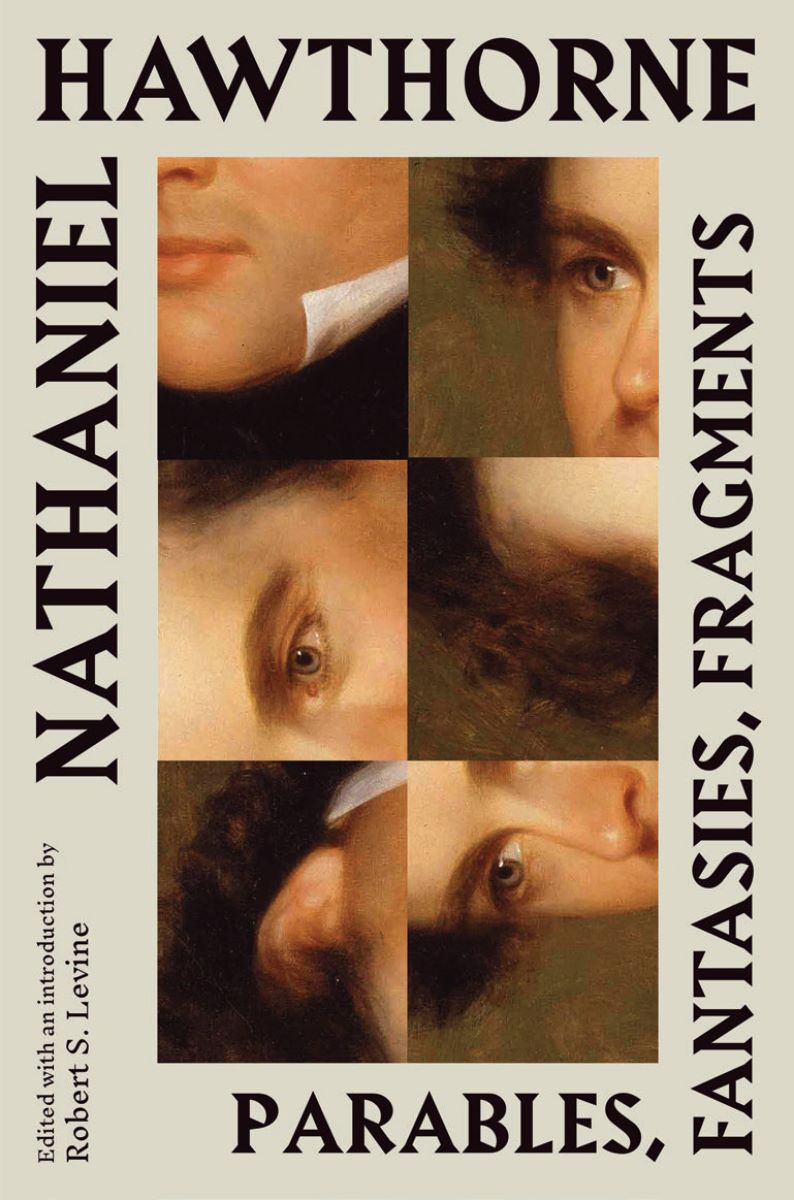
‘Nathaniel Hawthorne: Parables, Fantasies, Fragments’
By Robert S. Levine
Library of America: Oct. 27, 2026
Hardcover, 89 pages
What arts and culture topics would you like us to cover? Please email ideas or feedback to features@epochtimes.nyc.