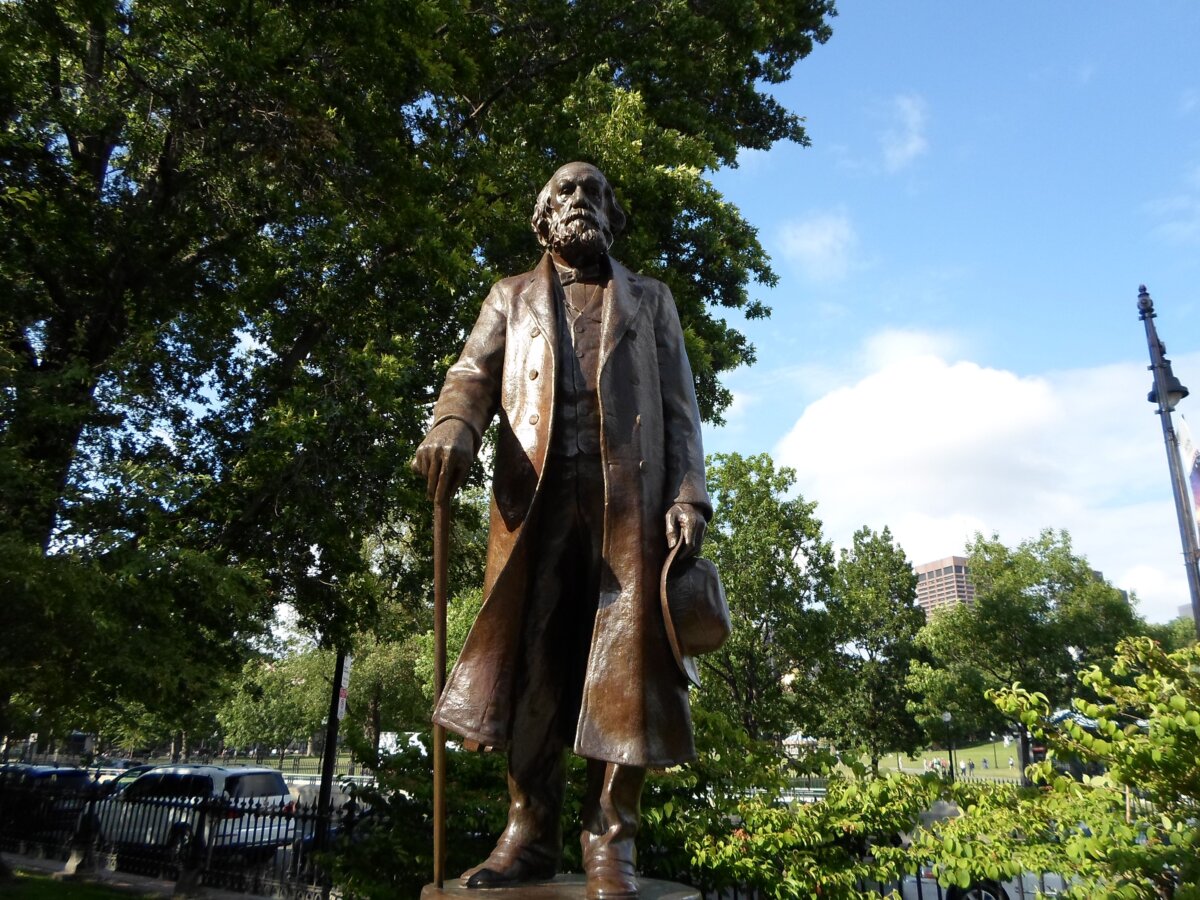
Time is an erratic housekeeper. It burnishes some reputations, keeping them glittering down through the ages. Others go unpolished and unbuffed, leaving a once prominent figure dull and covered with dust.
Ask Americans today to identify Edward Everett Hale (1822–1909), and a few may remember him as the author of the classic story “The Man Without a Country.” Fewer still will recollect him as one of the great social reformers of his time.
Yet this is the man of whom Mark Twain wrote the day after Hale’s death, “I had the greatest esteem and respect for Edward Everett Hale, and the greatest admiration for his work. I am as grieved to hear of his death as I can ever be to hear of the death of any friend, though my grief is always tempered with the satisfaction of knowing that for him the hard, bitter struggle of life is ended.”
This is the man whom Theodore Roosevelt once described as “an American of whose life all good Americans are proud.” Though not close friends, the two met on several occasions and corresponded during Roosevelt’s White House Years.
Twain once wrote of Roosevelt that “he was far and away the worst president we have ever had.” The president is reported to have said of America’s most prominent author that he’d like to skin Twain alive. Yet these two men, and countless numbers of their contemporaries, knew and revered the life and work of Hale. To understand why, let’s pull out a cloth and a jar of Wright’s Silver Cream, and see what’s hidden beneath the tarnish of time.
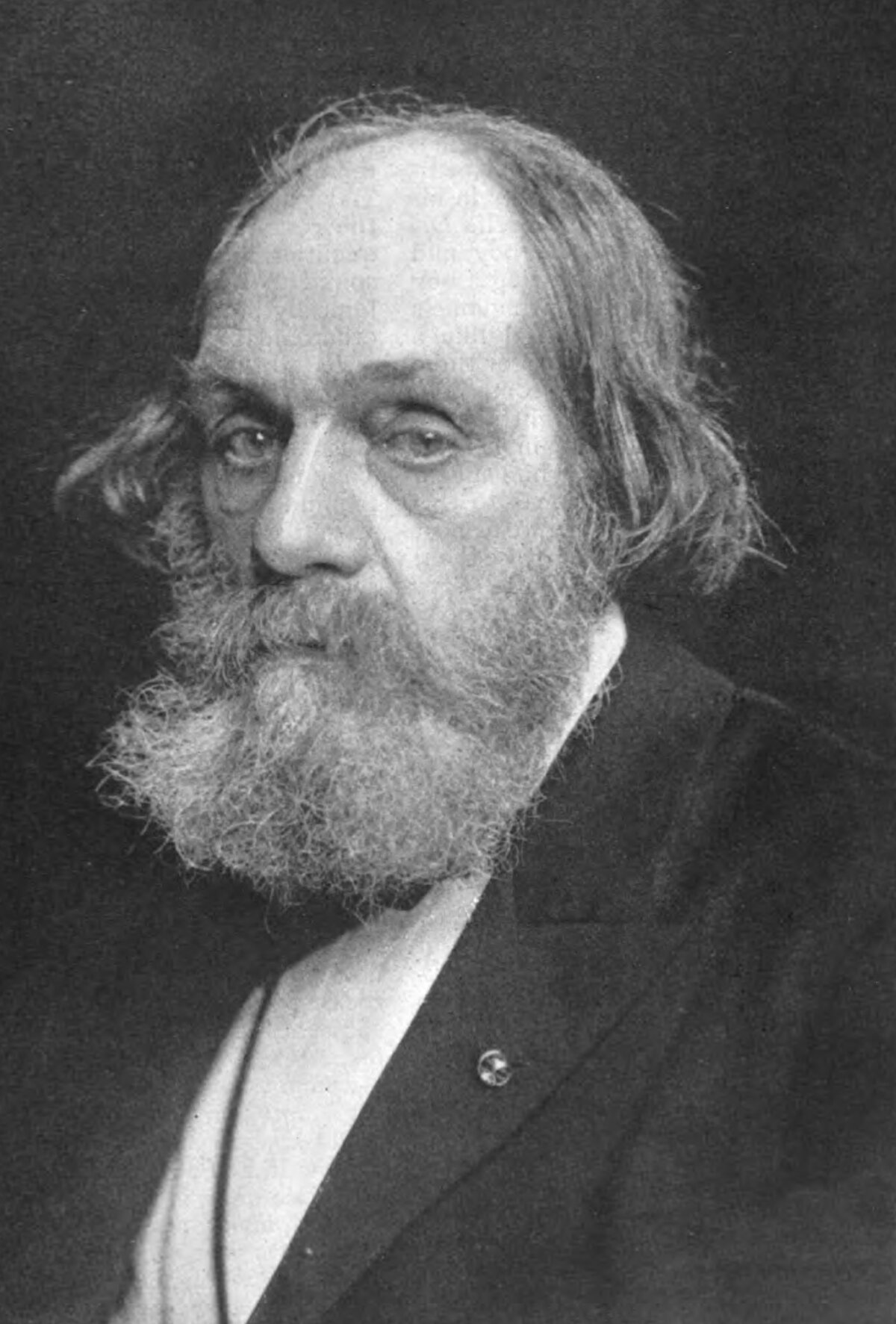
Pen in Hand
On Hale’s statue in the Boston Public Garden is this inscription: “Man of Letters-Preacher of the Gospel-Prophet of Peace-Patriot.”
In the latter half of the 19th century, Hale was one of the most famous writers in the United States. He wrote short stories and novels and is credited as an early creator of science fiction. Yet, he also published books and essays on everything from education to childcare to social reform and science.
Even as a child, Hale was considered a literary prodigy, a talent encouraged by the circumstances of his birth and home life. His father, Nathan Hale, named for the earlier and more renowned member of the clan who had died declaring “I only regret that I have but one life to lose for my country,” was editor and owner of a newspaper, The Boston Daily Advertiser. An uncle was a minister and famous orator. Daniel Webster, the most famous speaker in a time when elocution was taught in schools and valued in public life, was a frequent visitor to the Hale household. In sum, it was a home that placed a high premium on the English language.
Having graduated from Boston Latin at age 13, Hale entered Harvard College. Though unhappy with the curriculum and the lecture style of teaching—he preferred a more casual approach to education based on exploration and self-study—he graduated second in his class. Perhaps more importantly for his future, he continued honing his writing talent, winning two Bowdoin Prizes for excellence in composition and being selected as class poet at commencement.
A Lend a Hand Reformer
Over the next 60 years, Hale wrote more than 150 books, tracts, and pamphlets. Many of these had to do with improving society. He was an outspoken abolitionist, a defender and proponent of Irish immigrants, and a tireless promoter of universal public education. Written to garner support for the Union in the Civil War, “The Man Without a Country” became a classroom staple for decades after the war’s end.
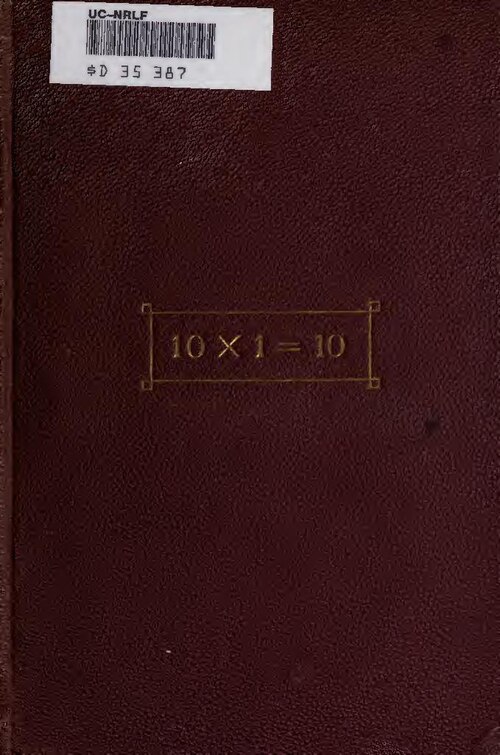
Another of Hale’s stories that won renown was his 1870 novel “Ten Times One Is Ten,” an excellent example of the link that connected the man of letters to the reformer. First serialized in Hale’s magazine Old and New and inspired by the life of his long-deceased friend, Frederick William Greenleaf, the novel tells the story of 10 mourners at a funeral who swap stories about the deceased, Harry Wadsworth, and how he’d helped them along the path of life. They then decide to set up a club to honor him under the motto, “Look up and not down. Look forward and not back. Look out and not in. Lend a hand.”
As these 10 convert others to the cause of altruism and compassion, the movement spreads, first locally and then around the world. Hale concluded his book by writing of this mass conversion of hearts: “It comes simply as man after man and woman after woman lead such unselfish lives, as all of us see sometimes, as all would be glad to live, as dear Harry Wadsworth led while his short life went on.”
This story caught fire with the public, and soon Harry Wadsworth clubs appeared all across the United States and abroad, reaching 800 organizations at its peak, large and small groups established to help those in need. Operating first out of Hale’s publishing office, within a few years a Ten Times One Corporation was established in different quarters. In 1898, the corporation changed its name to the Lend A Hand Society.
The work of this organization’s different groups was diverse. Some helped supply hospital out-patients with wheelchairs and special beds. Some sent books to impoverished schools in the rural South. For six years, Lend A Hand in Boston operated a dining hall for working women.
While the movement eventually faded, Lend a Hand remains a presence in Boston, where it arranges emergency assistance grants to desperate low-income families for rent, medical needs, and more.
The Preacher and the Prophet
Equally integrated into his writing and social reform endeavors was Hale’s religious faith. Even while at Harvard, he wanted to mingle life and literature with a vocation in ministry. After graduation, he declined to enter Harvard’s Divinity School and instead, through a process of hands-on experience, independent study, and instruction from other ministers, he was eventually licensed as a Unitarian minister and given a church of his own.
Hale summed up his religious beliefs as “Our Father Who Art.” Later he explained, “I can tell you in very few words what I believe. I believe that God is here now, and that I am one of his children whom he dearly loves … the truth is, that what a man needs is to live as much as he can. … For faith, the soul needs to pray simply to God, ‘Father—help me,’ and that is quite enough and to act bravely on what faith it has already.”
A few years after he retired from active church ministry, in 1903 the U.S. Senate unanimously appointed Hale its official chaplain, a post he held until his death. When asked if he prayed for the senators, Hale responded, “No, I look at the senators and pray for the country.” Though many take his remark as an insult to the Senate, Hale meant it humorously. Hale personally knew each of the senators and in general, patriot that he was, believed they were executing their duties to the best of their abilities.
One scandal that might have ruined Hale’s reputation was kept under wraps for nearly a century after his death. In the early 1880s, Harriet E. “Hattie” Freeman (1847–1930) became one of Hale’s personal secretaries. During their close work on various projects, the two came to admire each other, an admiration that gave way to affection and intimacy. Over their long association, they exchanged some 3,000 letters, parts of which were written in Towndrow’s shorthand, a 19th-century stenography. Decoded only in the early 21st century, the letters indicate a romance occurred between them.
Like so many heroes of history who don’t qualify as saints, Hale’s infidelity leaves a stain on his record of achievements and honors.
‘To Such a Work’
In looking at Hale’s life here, we’ve only hit the high points. A more extensive review would delve into his preaching and church work, his charities, his other books, and his love of America.
As for his motivation, here we can allow Hale the final word. Bidding farewell to the author, activist, and minister, the 1910 Journal of Education reviewed his life and accomplishments, then ended with a poem by Hale himself, “Send Me”:
Not mine to mount to courts where seraphs sing,
Or glad archangels soar on outstretched wing;
Not mine in union with celestial choirs
To sound Heaven’s trump or strike the gentler wires;
Not mine to stand enrolled at crystal gates,
Where Michael thunders or where Uriel waits.
But lesser worlds a father’s kindness know;
Be mine some simple service here below—
To weep with those who weep, their joys to share,
Their pain to solace, or their burdens bear;
Some widow in her agony to meet;
Some exile in his new-found home to greet;
To serve some child of thine, and so serve thee,
Lo, here am I: to such a work send me!
What arts and culture topics would you like us to cover? Please email ideas or feedback to features@epochtimes.nyc.