
Reading a dense work of poetry or philosophy can feel like hacking through brambles of barbed wire in a dreary no-man’s land of confusion. Some readers may have heard that John Milton’s “Paradise Lost” or Immanuel Kant’s “Critique of Pure Reason” is an important and significant literary work, yet they soon set the tome aside after struggling with a few pages and understanding very little.
“Hard books aren’t for me,” the reader might conclude.
But even the most experienced reader finds such works challenging, especially at the beginning, and that difficulty is no reason to abandon the project. In fact, the struggle denotes intellectual growth.
The effort is more necessary today than ever, with attention spans fracturing, media and technology engineering shallow thought, and a growing number of us suffering from cultural amnesia. Tackling hard books and complex ideas preserves the strength of one’s own mind and gives access to the stable ideas that shape civilizations, rather than just the passing winds of fashion and opinion. As author Ryan Topping noted in a recent video, “Deep reading is an act of intellectual rebellion or, better, an act of renewal for our eight-second brains.”

Wisdom doesn’t come in sound bites, memes, or shortcuts. It grows slowly, like a solid oak, from the rich soil of dense intellectual material that has been broken down ponderously and digested patiently by the mind.
But how does one begin?
Your Background Knowledge
When first approaching a difficult book, it pays to get the lay of the land. Topping calls this “reading outside-in,” and it’s a process that involves learning a little about the author’s life and the book’s title and genre.
Similarly, Tim Seyrek, a clinical psychology master’s student in Germany, recommends reading secondary literature (books or articles about the book) before diving into the primary text itself.
“Part of this is never skipping the preface, if there is one, and perhaps even learning the most important terminology used in the book in advance,” he wrote on his Substack. “For example, before reading “Critique of Pure Reason” by Kant, I read introductory literature about the author, as well as the introduction [in] the Stanford Encyclopedia [of Philosophy], and watched a few videos.” Having this rough map in his head made the reading journey much easier.
Read, Reread, and Question
The next step in reading a hard book is to recognize that there are different types of reading. One doesn’t read a Shakespeare play in the same way one reads an informational flyer. Informational reading has a simple goal: to quickly extract usable information. It’s the type of reading we use when reading a recipe, blog post, or advertisement. But this other type of reading—which we might call formational reading—is about penetrating to the depths of a meaningful text to unearth its treasures; it’s about learning how to let the text work on and shape you as a reader.

One of the main differences between informational reading and formational reading is that formational reading involves more active engagement with the text. The informational reader lets his eyes run across the page and hopes that something sticks. The active reader takes his shovel and spade and gets to work digging into the text.
Active reading means entering into a silent dialogue with the work as you read. In a 1996 book, “Helping Students Read Difficult Texts,” professor emeritus of English at Seattle University John Bean offers an excellent summary of what active reading looks like:
“When experts read difficult texts, they read slowly and reread often. They struggle with the text to make it comprehensible. They hold confusing passages in mental suspension, having faith that later parts of the essay will clarify earlier parts. They ‘nutshell’ passages as they proceed, often writing gist statements in the margins. They read a difficult text a second and a third time, considering first readings as approximations or rough drafts. They interact with the text by asking questions, expressing disagreements, linking the text with other readings or with personal experience. The bigger the fish they go after, the greater the struggle in reeling it in.”
This process of summarizing, making connections, and interrogating a book allows the reader to comprehend, remember, and benefit from it. If this sounds like a lot of work, that’s because it is. Active reading takes effort, yet it’s the only appropriate way to approach a difficult text if one hopes to be able to understand it and get something out of it.
A Conversation With the Author
The above passage is worth unpacking. Bean mentions that expert readers interact with texts by asking questions. This is an essential tactic for successfully reading a difficult work. In their book “How to Read a Book,” Mortimer Adler and Charles van Doren explain that the key to active reading is to “ask questions while you read—questions that you yourself must try to answer in the course of reading.”
The intelligent reader “talks” to the author and allows the author to “talk” back. As part of this dialogue, a thoughtful reader will play two different roles as he or she reads. Bean describes them like this: “an open-minded believer who can succumb to the text’s power and a skeptical doubter who can find weaknesses in the text.”
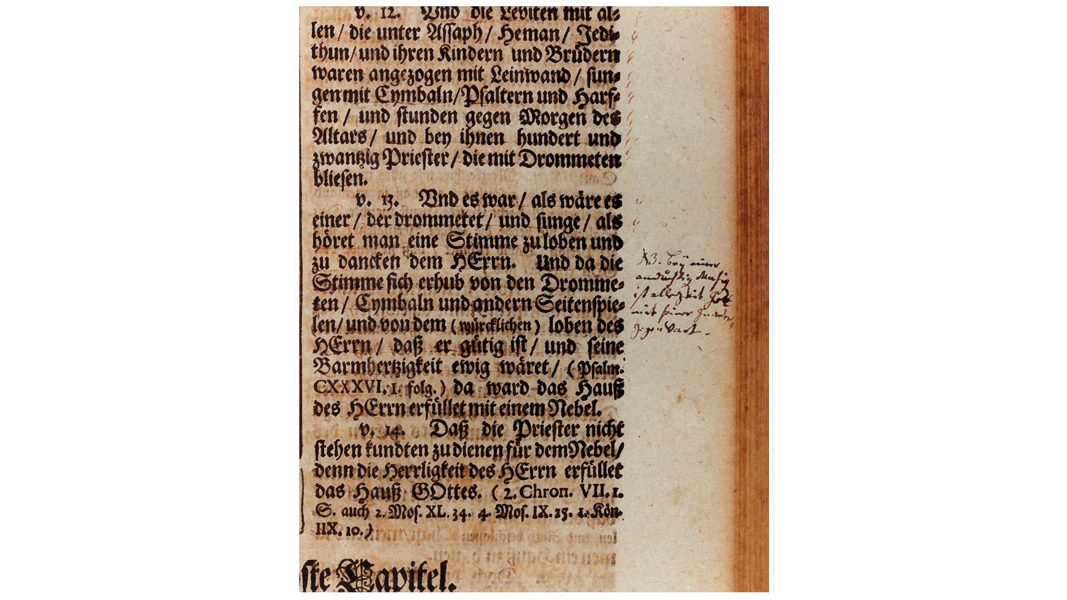
Of course, before a reader can agree or disagree with an author, he must first understand what the author’s saying. Bean makes a useful suggestion here as well. For each paragraph of the book, the reader should write down (at least, mentally) two sentences: a “what it says” statement and a “what it does” statement. The “what it says” statement is a simple summary of the paragraph—its main point or idea. The “what it does” statement aims to succinctly describe the author’s purpose for including that paragraph.
For example, a “what it says” statement might be something like: “explains that Newton believes the world operates according to fixed laws” or “proves that wealth and honor don’t give stable happiness.”
A “what it does” statement might be: “provides evidence for the author’s first main point” or “summarizes an opposing view” or “introduces a new section.”
Thinking about paragraphs in terms of both dimensions helps the reader track both what the author is saying and also how that statement or claim is embedded in a larger argument or discussion.
Scribble Away
Another way to enter into conversation with a book is through Bean’s two-page method. In this method, the reader writes two notebook pages for each chapter or section of a book: the first page summarizes and distills what the author said, which helps with comprehension. The second page includes the readers reflections or response to the author.
Similarly, it can be helpful to create columns or sections in a notebook for tracking different ideas, characters, images, devices, or themes as they appear in a work. For instance, if studying Fyodor Dostoevsky’s “Crime and Punishment,” a reader might make the following columns in his or her notebook: “Nihilism,” “Christianity,” “Raskolnikov’s values,” “Sonya’s values,” “claustrophobia,” “socialism,” “mental illness,” etc.
Whenever a relevant passage arises, the reader jots down the page number and a few notes in the appropriate column, allowing him to track the development of that theme or character over the course of the novel. This helps the reader track complex ideas and gaining insight into the author’s purpose.
Whether or not one sets up a notebook in this way, it’s essential to mark up the text itself with underlining, diagrams, and notes in the margins. This “marginalia” helps the reader create a mental map of the text, recall and locate key passages, ask questions, and enter into the dialogue we spoke of earlier.
“Every time you feel the urge to highlight or underline something, write out why you wanted to underline it in the margins,” Bean advises. “Why is that passage important? Is it a major new point in the argument? A significant piece of support? A summary of the opposition? A particularly strong or particularly weak point?”
The margins of a book are your mental playground. “Use the margins to summarize the text, ask questions, give assent, protest vehemently.” Perhaps more than anything else, this process of writing in the book will help the reader understand what’s being said and truly enter into conversation with it.
Needless to say, all these reading and notetaking strategies will require the reader to read slowly and carefully, and even reread passages. That’s an important part of a successful strategy for a difficult book. In addition, readers have to be prepared to pause when they encounter a word, reference, allusion, person, or term they aren’t familiar with. It may be necessary to look these up as they arise in order to make sense of the text.
Unfortunately, many authors—especially older ones—assumed that their readers possess a cultural literacy many of us no longer have. And so we have to be patient with the authors—and ourselves—as we work our way through alien names, places, historical references, and terms.
Reading Buddies

In addition to having a good dictionary or search engine nearby to look things up, readers can also benefit from having a friend handy. Reading aloud and with others can make books both easier to understand and easier to respond to in a meaningful way. Topping notes that he’s often seen excellent insights strike people as a result of discussing a book with others. Joining a reading group can be a great aid to tackling hard books.
In conclusion, you, too, can read great and difficult books. You, too, can climb those mountains. They don’t belong solely to people with advanced degrees or esoteric knowledge. They belong to you, as soon as you have courage to lay hold of them. It will be hard at first, but, little by little, you’ll experience the joy of growing mastery. More importantly, these works have the power to change your life.
What arts and culture topics would you like us to cover? Please email ideas or feedback to features@epochtimes.nyc.