How did an unassuming, small-framed, failed businessman manage to accomplish what a string of top-tier generals before him could not, bringing the Confederacy to its knees and defeating the legendary Robert E. Lee in the American Civil War? Was Ulysses Samuel Grant simply an opportunist who stumbled into victory or was he a destined hero from the beginning?
An Unassuming Man
Prior to the American Civil War, few people would have pegged Grant as the savior of the Union. The Ohio native had served honorably in the Mexican-American War (1846–1848), but not as a notable commander, achieving only the rank of 1st lieutenant by the war’s end.
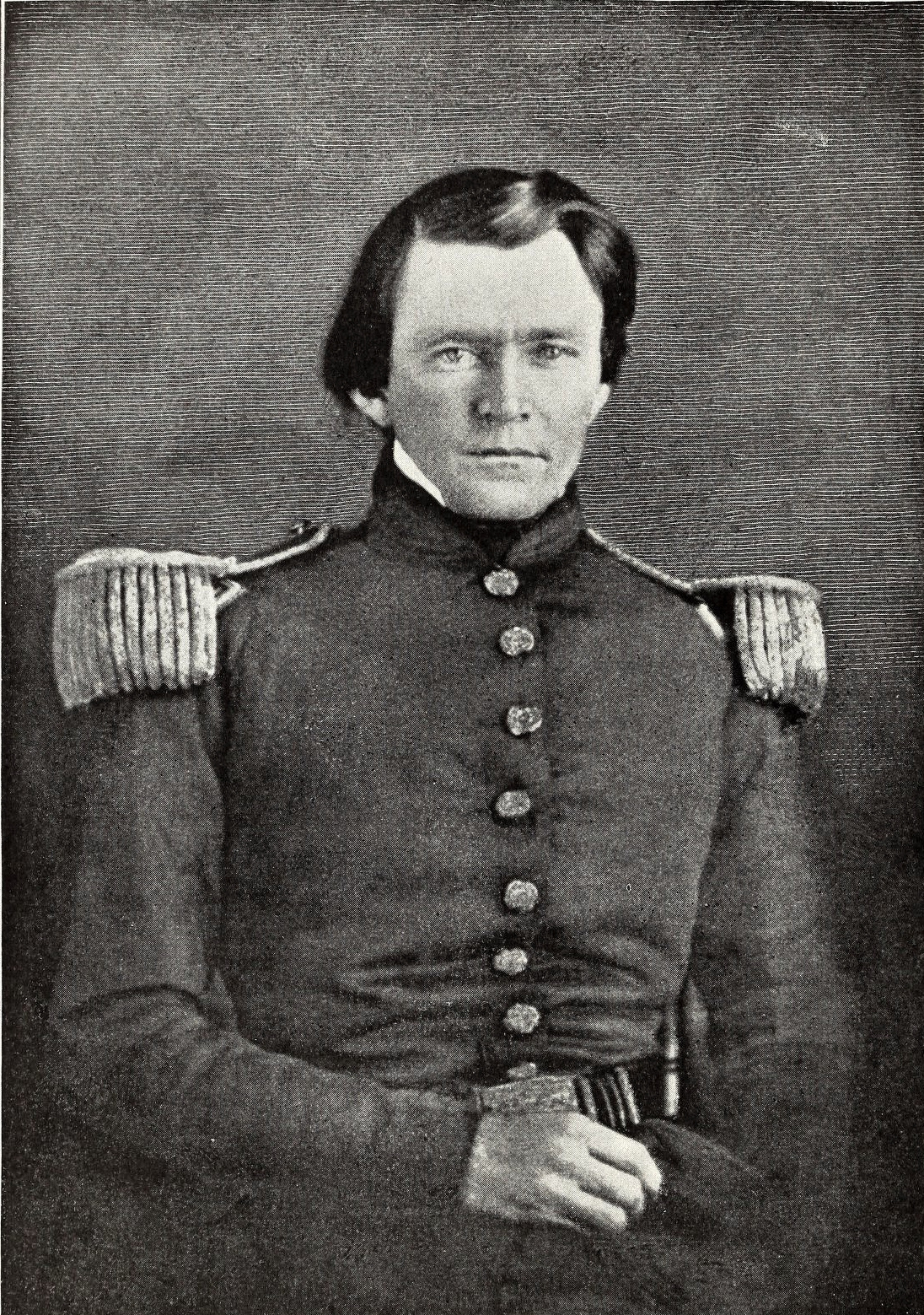
Afterwards, in civilian life, he floundered. He failed at most of what he put his hand to and, in fact, had sunk to such low estate by December of 1857 that he had to pawn his gold watch and chain for $22, possibly to afford Christmas presents for his children.
Grant’s relative anonymity and failed career prospects may have played to his advantage, however. “This was Grant’s secret weapon: a studiously low profile masking his own good character, ability and drive,” wrote scholar Jim Stickney in the January 2016 issue of America’s Civil War magazine.
That said, a few perceptive observers glimpsed Grant’s sterling quality earlier. Confederate Gen. Richard S. Ewell warned, “There is one West Pointer, I think in Missouri, little known, and whom I hope the northern people will not find out. I mean Sam Grant. I knew him well at the Academy and in Mexico. I should fear him more than any of their officers I have yet heard of. He is not a man of genius, but he is clear-headed, quick and daring.”
Ewell summed up Grant’s courageous, stalwart, and relentless character—not flashy, not brilliant, yet practical and dogged—that would allow him to succeed where others had failed.
Grant’s character can best be described as steady and balanced in all regards.
In Stickney’s words, “He was shy, but not coy; pleasant and affable, but not gregarious; dignified, but not aloof; self-confident, but not sanctimonious; purposeful, but not ambitious; sensitive, but not sentimental. Grant was at once placid and a grand latent force.” He was honest and direct—not a charismatic leader, not one to seek the showers of men’s praise, yet a man who inspired extreme confidence in those who grasped his reliability, focus, and sound judgment.
Calm, Collected, and Confident
Among those who trusted him unquestioningly was President Abraham Lincoln himself, who saw in Grant’s even-keeled determination the path to victory for the Union armies. Grant’s characteristics of steadiness, determination, and a sense of honor displayed themselves from the very beginning of the war. After being recommissioned as an officer in the Union Army in April of 1861, Grant began capturing Confederate forts on the Tennessee River, earning him the notice of his superiors, including Lincoln.
He escaped a sticky situation at the Battle of Shiloh, turning a failing defensive situation into a successful counterattack. He also sieged and captured Vicksburg, Mississippi, effectively splitting the Confederacy in two and giving the Union control of the Mississippi.
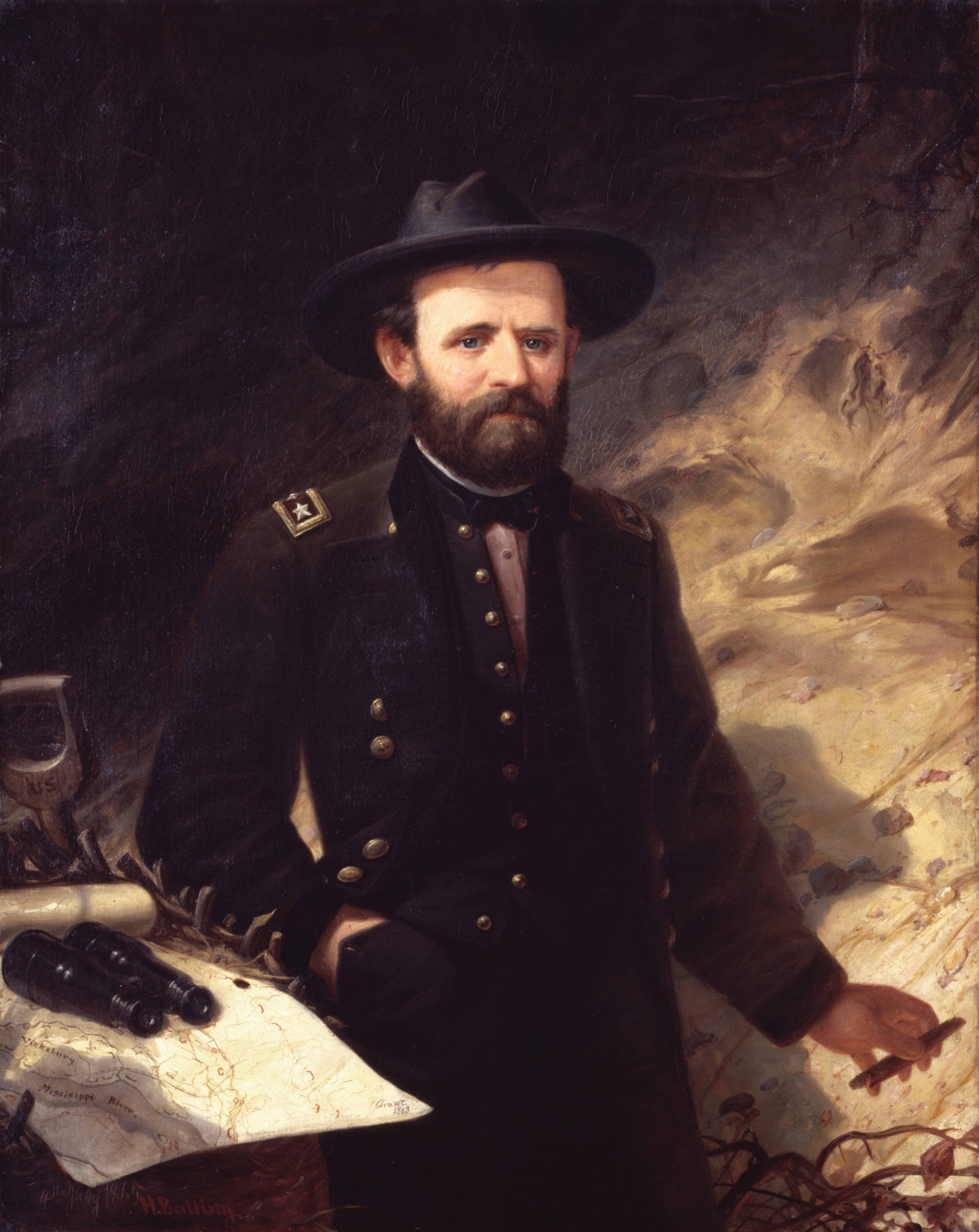
As the war bludgeoned on, Grant climbed the ranks, each new victory a stepping stone to the next and to a position of higher authority. By the beginning of 1864, he was Lincoln’s best general. Lincoln appointed him general-in-chief in March of that year.
It was all but impossible to ruffle the indomitable Grant. He remained collected and in possession of himself no matter the circumstances—even in the chaotic, crushing hellfire of battle, even when everything was going wrong. He once calmly wrote a dispatch even as a shell exploded directly in front of him. “If his plan goes wrong he is never disconcerted but promptly devises a new one,” Gen. William T. Sherman said.
Sherman also highlighted Grant’s razor-sharp focus: “Grant … fixes in his mind what is the true objective and abandons all minor ones. … He dismisses all possibility of defeat. He believes in himself and in victory.” With quiet confidence, Grant maintained unflinching courage and endured the pains and deprivations of the field alongside his men.
Grant’s leadership style included clear communication that reflected his character and mindset: lucid, forthright, determined. “There is one striking feature of Grant’s orders; no matter how hurriedly he may write them on the field, no one ever has the slightest doubt as to their meaning,” observed Maj. Gen. A.A. Humphreys, Gen. George Meade’s chief of staff.
His clarity and decisiveness allowed his forces to move and adapt quickly to the shifting fog of war. As Allen Guelzo of Princeton University noted, Grant possessed a kind of sixth sense that allowed him to read a landscape and know immediately its crucial areas, its pressure points, how its contours would determine the course and flow of battle, and what ground could or could not be defended.
Humanity First
Grant possessed a strong moral code, too. He despised slavery, which is no doubt one reason he wrote in his memoirs that the Confederate cause was “one of the worst for which a people ever fought.” That conviction against slavery manifested in his actions, even when holding to the principle worked against his own interests.
During Grant’s period of financial travail before the war, his father-in-law gave him a slave, William Jones, to help the family. Grant could have chosen to sell the slave for a large sum of money, helping to pull his family from the financial crater into which they’d fallen. Instead, he chose to free Jones in 1859.
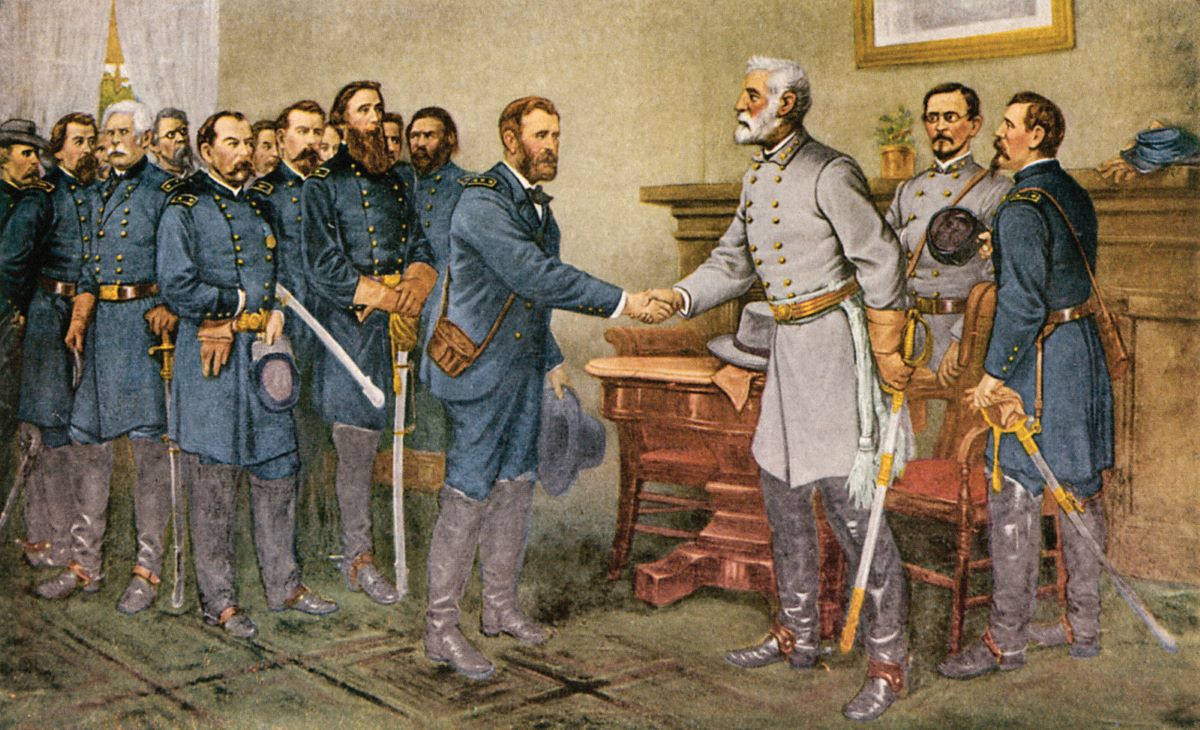
Similarly, we witness his humane treatment even of his enemies in the generous terms he offered to the beaten Lee and the Army of Northern Virginia at Appomattox Court House in 1865, near the end of the war. Grant wrote in his memoirs about the incident with transparency and a charming lack of self-consciousness, as though he were simply doing the obvious thing by treating his defeated enemy with generosity:
“As I wrote [the terms of surrender], the thought occurred to me that the officers had their own private horses and effects, which were important to them, but of no value to us; also that it would be an unnecessary humiliation to call upon them to deliver their side arms. … When [Lee] read over that part of the terms about side arms, horses and private property of the officers, he remarked, with some feeling, I thought, that this would have a happy effect upon his army.”
Grant also gladly acquiesced to Lee’s request for provisions for his starving army. In victory, he remained the gentleman, refusing to engage in triumphalist behavior. “I felt like anything rather than rejoicing at the downfall of a foe who had fought so long and valiantly.”
When Grant’s men began firing a salute of a hundred guns to celebrate the news of the surrender, he quickly commanded them to cease. “The Confederates were now our prisoners, and we did not want to exult over their downfall,” he wrote.
‘Active and Continuous Operations’
Grant’s battlefield method was perhaps not elegant, but it was effective: charge straight at the enemy and grind him down with superior manpower and resources. He understood that the larger and better-equipped Union army should attempt, in his words, “active and continuous operations of all the troops that could be brought into the field, regardless of season and weather.”
When he took over command of all U.S. forces, he changed the Union’s grand strategy to a direct and simple plan: destroy or capture Confederate armies, rather than seizing cities, and direct Union armies to coalesce and work in tandem instead of fighting independently of one another.
Grant’s determination to hound Confederate forces into oblivion was on full display during the critical Overland Campaign in which he dueled with Lee’s Army of Northern Virginia in a series of crucial battles between the Rapidan and James Rivers. These bloodstained days saw some of the most brutal fighting of the war, and both sides stacked up significant casualties.
Historian Gordan Rhea wrote that the fighting that occurred near Spotsylvania Courthouse in May of 1864 was “the most vicious bout of sustained combat ever to occur on the continent.” Similarly, historian Shelby Foote wrote of another battle during the campaign, “Never before, in this or perhaps in any other war, had so large a body of troops been exposed to such a concentration of firepower.”
Yet after each engagement, whether he had won or not, Grant refused to pull back. He kept pressing Lee, even though Union regiments were taking heavier casualties. “I propose to fight it out on this line if it takes all summer,” Grant wrote to Secretary of War Edwin Stanton.
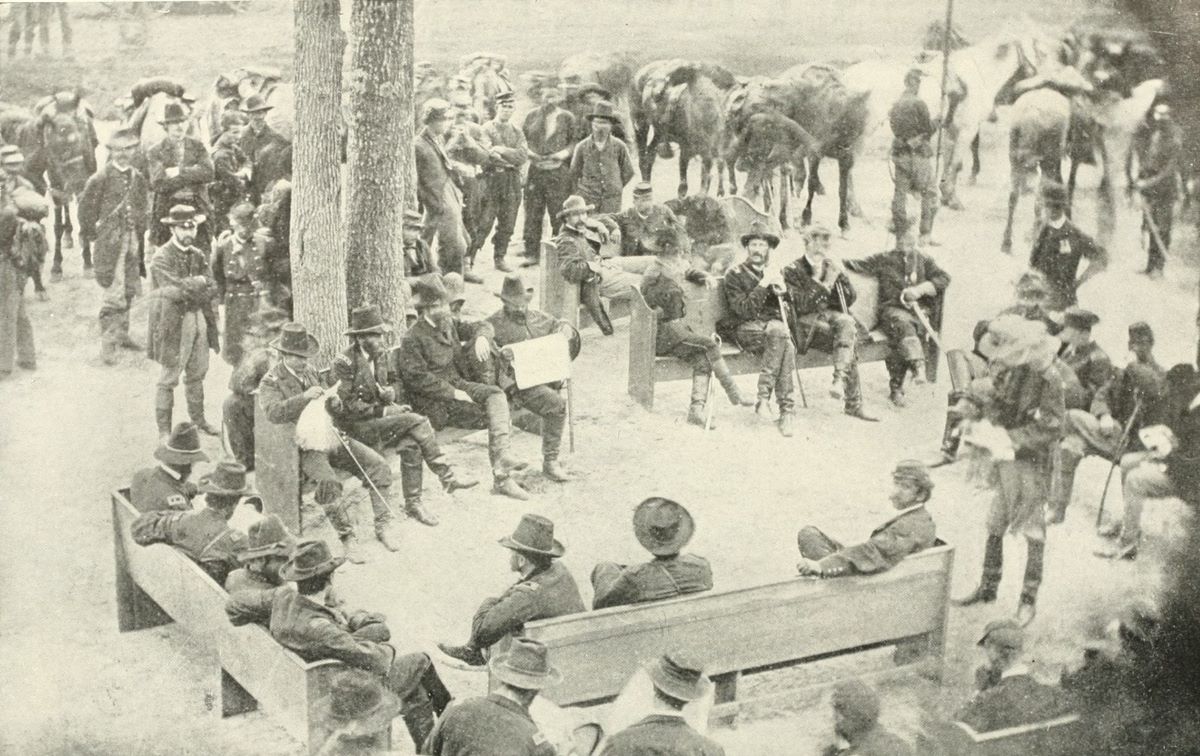
Again and again, Grant would attack and Lee would beat him, or at least fend off the aggressor. Yet Grant was convinced he could sustain losses more easily than his opponent, eventually wearing Lee down.
The plan was costly—the Union lost about 55,000 men over the course of 40 days—but it worked. As Rhea wrote, “Grant’s goal was to negate Lee’s army as an effective fighting force, and in that he largely succeeded.”
Grant eventually locked Lee into a set of fortifications in Richmond and Petersburg. After successfully besieging Lee’s position, he pursued the finest Confederate general to the Appomattox Courthouse, where Lee finally surrendered on April 9, 1865. With the Confederate’s best commander and most effective field army defeated, the war was essentially over.
What arts and culture topics would you like us to cover? Please email ideas or feedback to features@epochtimes.nyc.