



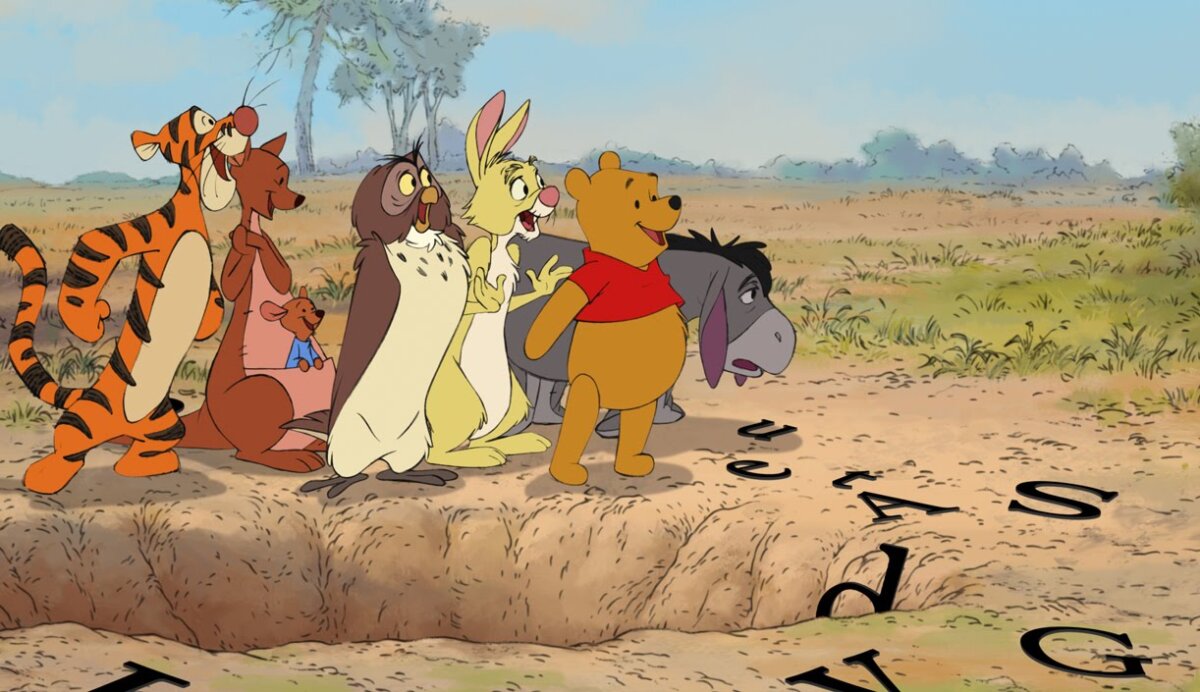
In all of literature, it is difficult to find a more recognizable and beloved set of characters than those of “Winnie-the-Pooh” by A.A. Milne. Oct. 14 marks the 100th anniversary of the book’s publication, when Winnie-the-Pooh was first introduced to readers by being unceremoniously dragged down the stairs by Christopher Robin.
It’s such a simple story; the greatest danger the characters encounter consists of imaginary encounters with Heffalumps. Yet, “Winnie-the-Pooh” has continued to capture the hearts of children and adults alike with ease. In fact, the story is so enchanting that other writers can’t help but wish they had thought of it themselves, and it seems so simple that they can’t quite understand how they hadn’t thought of it before.
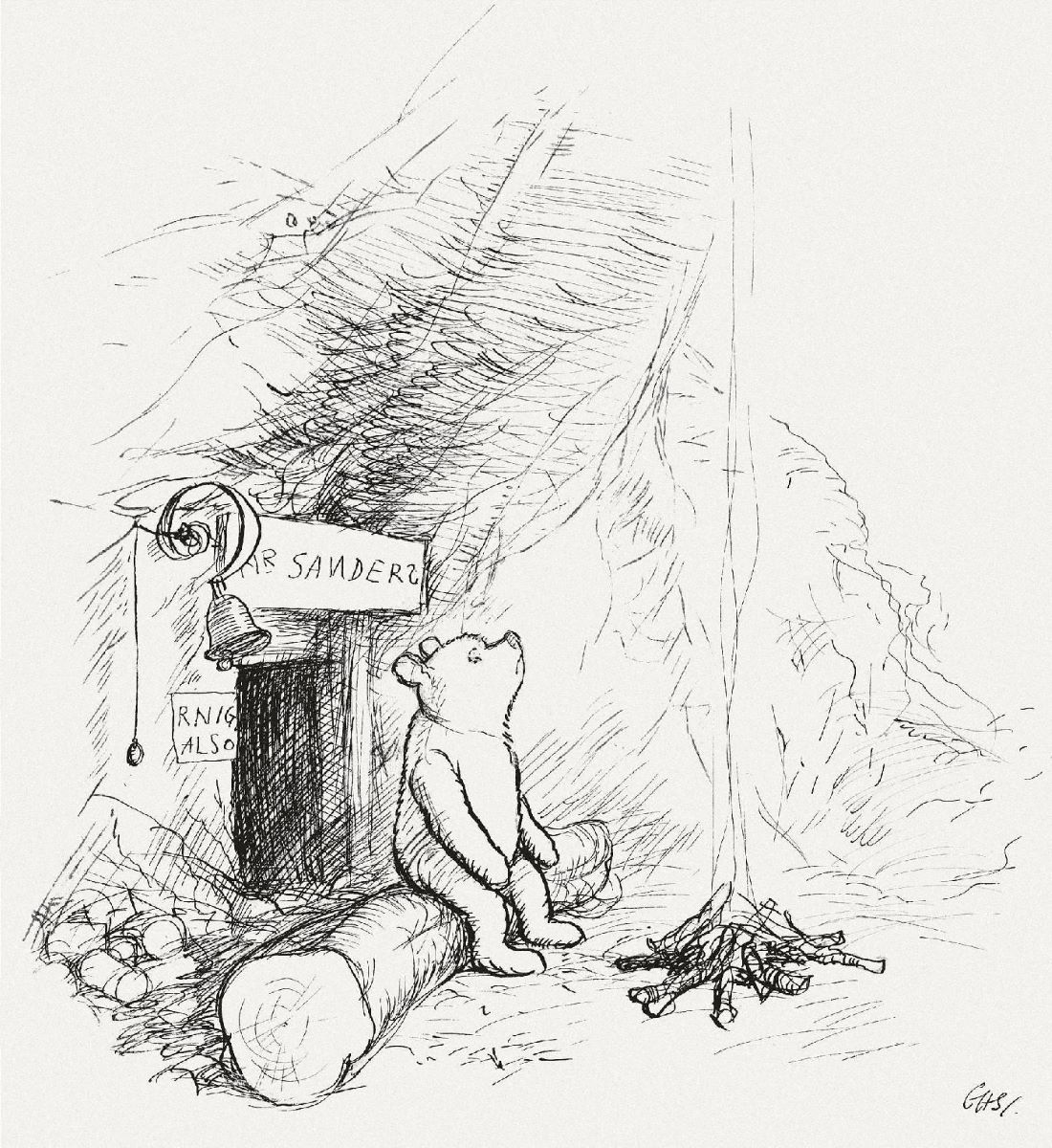
But a closer look at the pages of Milne’s classic story reveals something more than just stories of a bear and his friends getting into amusing scrapes. The Disney version of “Winnie-the-Pooh,” while charming, can only hold so much appeal for adults because it is so simplified. The primary lure of going back and watching the “Winnie-the-Pooh” movies is nostalgia. The books, however, are some of the only ones that will repeatedly cause me to laugh out loud every time I return to them.
Their pages hold a lively wit and a profound understanding of human nature. The story is easily grasped by young minds, but it contains wonderfully droll humor and draws out the subtleties of human interactions, such that I notice new things every time I read it. It fits Italian novelist Italo Calvino’s definition of a classic as “a book that has never finished saying what it has to say.”
Imperfect Characters
For a group of animals living in an imaginary forest, the way Winnie-the-Pooh and his friends interact is fundamentally human. They are by no means perfect, and, in fact, Disney smooths out some of their rougher edges. The book depicts them as far less two-dimensional: All of them struggle with pride in some form or another.
Eeyore addresses a speech to his “friends … including oddments” in the middle of Pooh’s party because he assumes it is being thrown in his honor. Pooh himself is frequently self-congratulatory, composing songs in his own honor such as “Anxious Pooh Song,” which begins with “3 Cheers for Pooh!”
Piglet, whenever his pride is wounded, suddenly remembers something he has to do and runs home. Rabbit tries to take charge of every endeavor, and Owl always feels the need to show off his immense learning by stringing together a great many long words to say nothing at all. Even so, we find them forgivably prideful, more so than we find our fellow man who is guilty of the same sin.
Knowledge Versus Wisdom
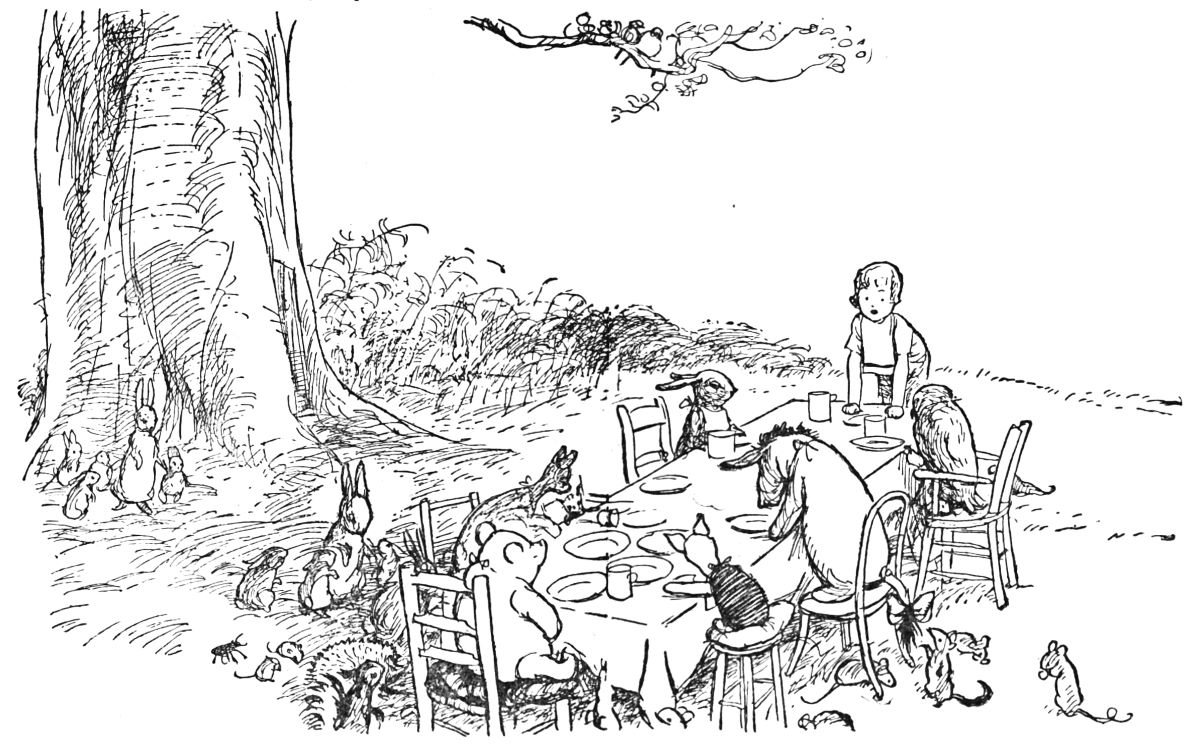
Milne also delivers an interesting commentary on education and how it can feed pride rather than foster wisdom. While Rabbit and Owl are considered learned, Pooh is universally acknowledged to be of “Little Brain.” Yet it is Pooh who thinks of creative solutions to the problems he and his friends face (he also, at times, thinks of creative ways to overcomplicate those problems), and he is something of an illiterate poet, observant and receptive to beauty.
Arguably, Pooh has a wisdom which Rabbit and Owl’s book smarts have not conferred; indeed, it is his creativity that helps him rather than doing things by the book. Thus, though Piglet observes, “Rabbit has Brain,” Pooh remarks, “I suppose … that that’s why he never understands anything.”
As Milne demonstrates, though proper respect is due to one who can spell “Tuesday,” it is quite possible to lead a life well-lived without being able to spell quite so well.
(Imperfect) Friendships
Friendship is another topic explored by the book, and while, in the movies, Pooh and Piglet are depicted as unfailingly close friends who always put each other first, the book shows their friendship to be strong in spite of occasional selfishness and personal imperfections. As in the case of human friendships, they truly do love each other, but sometimes they compete with one another or sometimes try to sneakily manipulate each other for their own selfish interests.
Both Pooh and Piglet are eager to be praised and sometimes regret that the other had a good idea before they could think of it first. In the case of the Heffalump trap they set, they are about to argue about whether honey or acorns would be better bait, but, “Piglet remembered that, if they put acorns in the Trap, he would have to find the acorns, but if they put honey, then Pooh would have to give up some of his own honey,” so he concedes to Pooh that honey would be better bait.
However, despite these moments of selfishness, they are supportive of each other and want to see the other’s success. Piglet is glad of the party thrown in Pooh’s honor, and, in “The House at Pooh Corner,” Pooh composes a poem praising his friend’s bravery. More important than a track record of perfect selflessness, they are persevering in their friendship and overlook these moments of selfishness in each other.
Similarly, the book addresses the question of how to deal with difficult people. All of the characters have some qualities that are hard to put up with, but Eeyore in particular is difficult for the others to interact with. He has a high estimation of what he is owed that is hardly ever met, and so he ends up being perennially dissatisfied. He is sarcastic, passive aggressive, and sometimes plainly rude to his friends, and yet they demonstrate that the proper response to such a friend is not to cut him off or isolate him but rather to love him persistently.
Rabbit explains that Eeyore’s unhappiness is due, not to him being neglected by others, but to Eeyore’s own expectations: “It’s your fault, Eeyore. You’ve never been to see any of us. You just stay here in this one coroner of the Forest waiting for the others to come to you. Why don’t you go to them sometimes?”
Even adults are in need of such a lesson on how to love a difficult person, feeling for them while not assuming the responsibility of guilt for their unhappiness.
While there is much to learn from these friendship dynamics, the book isn’t didactic. Rather, it consists of an exploration of how these character types would interact if they lived in close community with one another, and, in fact, many of our own communities likely very closely resemble that of Pooh and his friends. The story pokes fun at certain human interactions (often between people who take themselves too seriously) and laughs at the follies and foibles of ordinary human interactions.
Between Father and Son
The brilliance of the work stems from how such a big world came from such a small source: a nursery. The stories of Pooh and the other animals are framed within the larger story of a father telling bedtime stories to his son. The story is told in the rare second-person narration: The narrator (the father) speaks to his son or even occasionally addresses the reader, drawing us into the world as well.
Milne demonstrates a great understanding of children in showing that one of the things a child wants most is to be taken seriously, to be given responsibility, and to feel grown-up. The narrator’s story gives Christopher Robin that courtesy, setting him as the wise and just leader who takes care of the animals in the Forest (and also allowing for the inclusion of Christopher Robin’s corrections to the chronicle of events).
The narrator intentionally has the animals mirror children’s fondness for hearing stories or poems about themselves, and Christopher Robin judiciously gives praise and encouragement without being indulgent. At its core, the story is therefore one of the love and understanding between father and son.
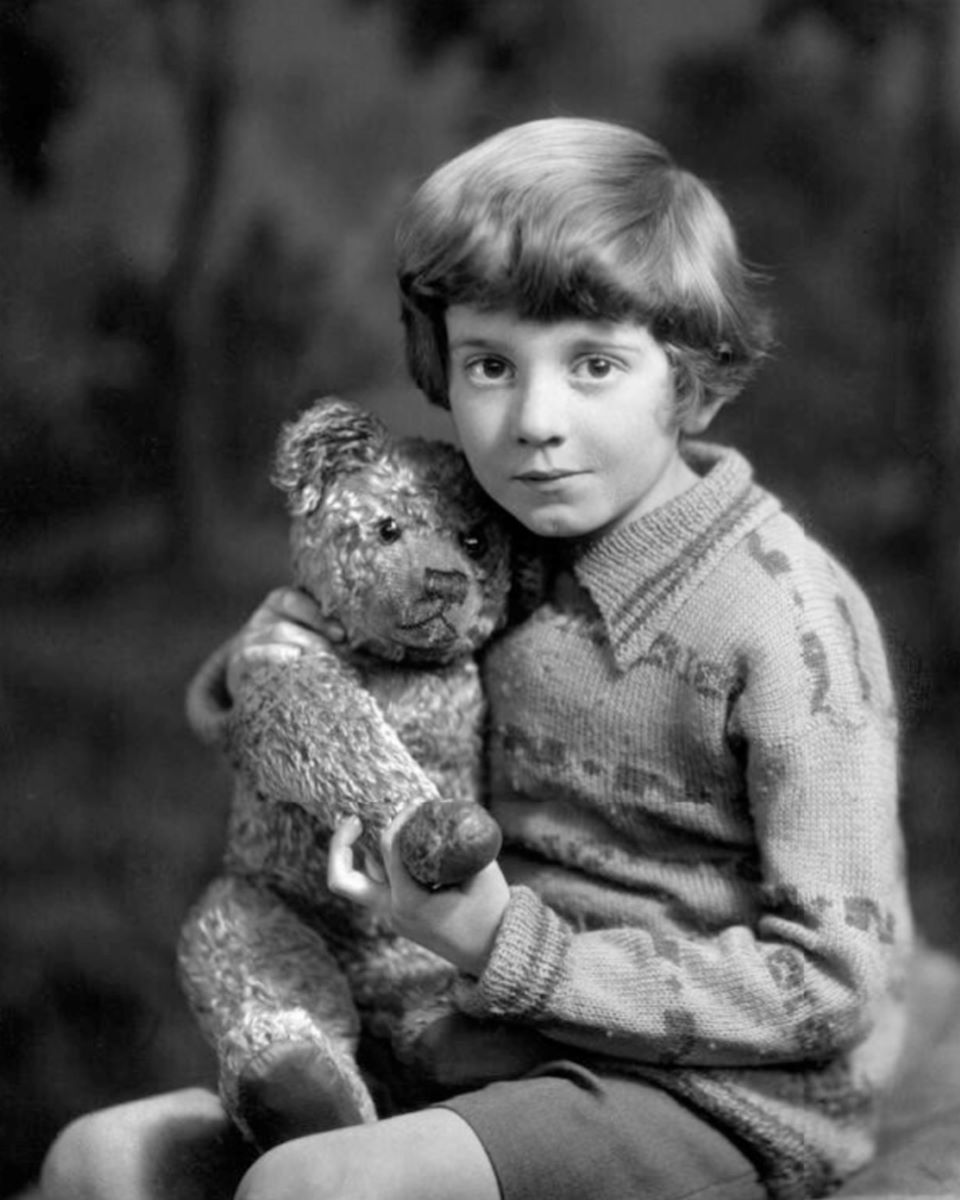
While the story and characters are simple enough to be grasped by children, the wordplay, humor, and social commentary are understood fully only with a revisiting of the Forest later in life. As C.S. Lewis wrote, “No book is really worth reading at the age of ten which is not equally (and often far more) worth reading at the age of fifty.” Milne’s works are truly timeless in that they are worth reading at all ages and in all generations.
At the end of “The House at Pooh Corner,” Christopher Robin and Pooh have one of their most famous exchanges:
“’Pooh, promise you won’t forget about me, ever. Not even when I’m a hundred.’
“Pooh thought for a little. ‘How old shall I be then?’
“’Ninety-nine.’
“Pooh nodded. ‘I promise,’ he said.”
As the Christopher Robin of these pages is now a hundred, it seems safe to say readers can join Pooh in his promise never to forget him. At 100 years, the characters of “Winnie-the-Pooh” have proven themselves unforgettable, and for many years to come, readers will continue to visit them “in that enchanted place on the top of the Forest.”
What arts and culture topics would you like us to cover? Please email ideas or feedback to features@epochtimes.nyc.
