In July of 1838, German composer Feliz Mendelssohn wrote to his friend and colleague, violinist Ferdinand David: “I should like to write a violin concerto for you next winter. One in E minor runs through my head, the beginning of which gives me no peace.” David was concertmaster of the Leipzig Gewandhaus Orchestra, and Mendelssohn was its principal conductor.
“Next winter” came and went without a new concerto, but the melody that ran through Mendelssohn’s head never left him.
In the six years between the onset of this fortuitous earworm and the completion of his Concerto for Violin and Orchestra in E minor in 1844, Mendelssohn was a busy man indeed: He conducted the premieres of symphonies by Schubert and Schuman and of operas by Donizetti, Verdi and Wagner; founded the Leipzig Conservatory of Music; composed among other works his now-famous incidental music for “A Midsummer Night’s Dream,” including the well-known Wedding March, a cello sonata, a piano trio, his “Scottish” Symphony and two volumes of “Songs without Words” for piano; and was welcomed to Buckingham Palace, where he so charmed Queen Victoria that she sang songs composed by him and his sister Fanny, to his accompaniment. He also fathered four children.
Little wonder that the concerto took its time emerging.
Throughout the concerto’s gestation, Mendelssohn was in constant touch with David, requesting and receiving advice on technical matters concerning the violin’s capabilities. Some believe that the concerto’s complex and innovative cadenza—which Mendelssohn placed in the middle of the first movement rather than the movement’s end—was co-composed by David.
Concertos are musical compositions for a solo instrument in dialogue with an orchestra or, less commonly, a wind band. Some concertos feature two or even three soloists. Think “concerto” and you will almost certainly conjure works for piano or concertos for violin, though concertos also exist for cello, tuba, oboe, timpani, clarinet, harp, guitar, double bass, horn, harmonica and virtually every other instrument you might consider. (A party game for musicians could consist of coming up with instruments that have not had concertos written for them.)
Piano and violin lead in concerto repertoire because listeners most often associate them with virtuosity. The concerto’s soloist is usually expected to display bravura skill above that of everyday instrumentalists. The piano concerto and the violin concerto differ so widely as to what the composer provides that the overall sonic character of the final product might reasonably be considered separate forms: not “concerto, subset piano and violin,” but “piano concerto” and “violin concerto.”
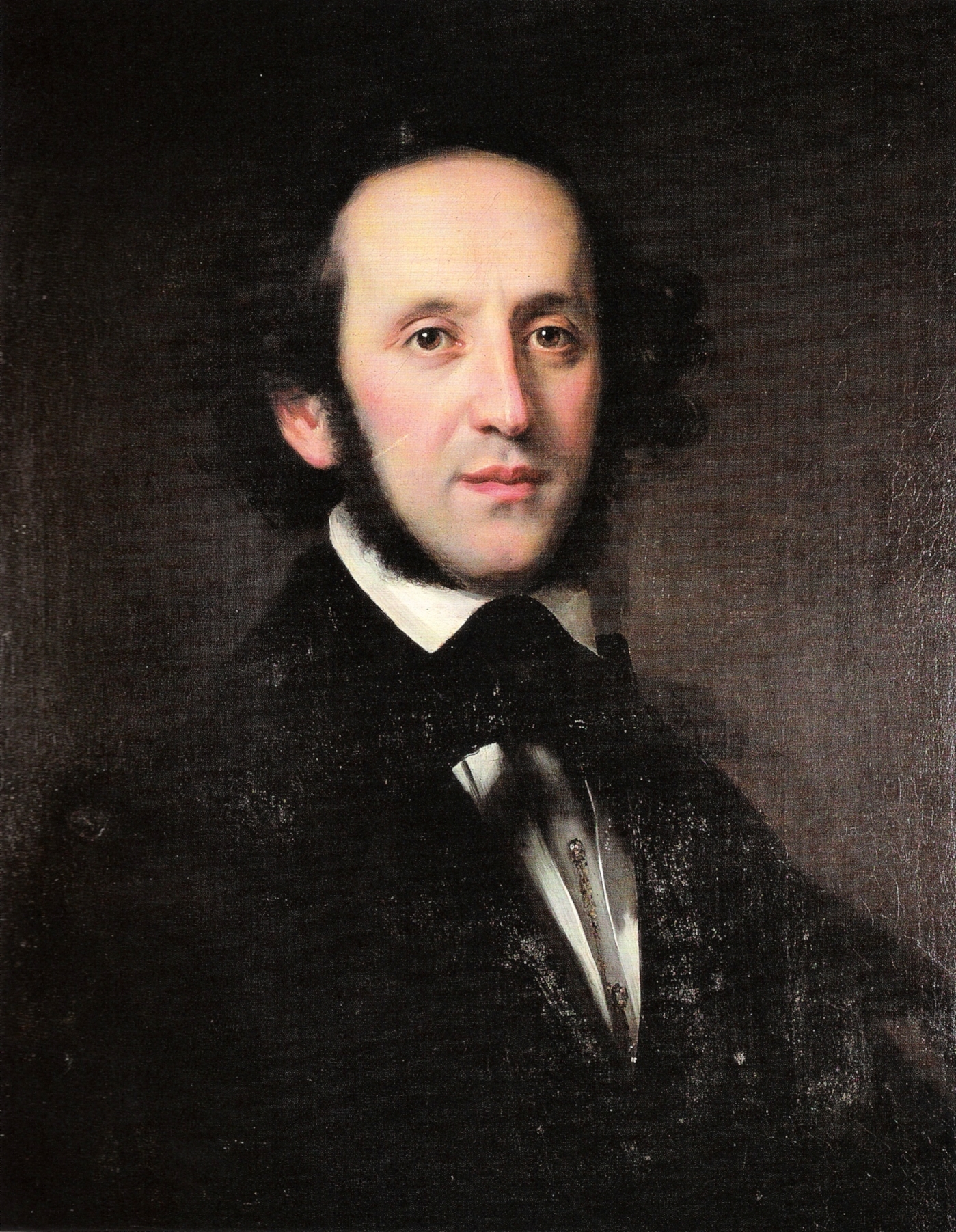 A portrait of Felix Mendelssohn, 1846, by the German painter Eduard Magnus. Berlin State Library. (Public Domain)
Violin Concerto in E Minor
The piano affords the soloist a stunning range unmatched by any other instrument, the ability to play multiple notes at once with ease, and a timbral contrast with the orchestra’s colors. The violin is strictly a treble instrument distinguished by a single melodic line (abetted at times by harmony via double, triple and quadruple stops). In addition, its color, is identical to the largest section of the orchestra—the strings—and has the unhappy potential of blending in with the violins.
To compose a viable violin concerto requires a composer skilled at melody-making and sensitive to scoring for a single-line instrument against a large-scale accompaniment. Mendelssohn had composed four piano concertos and two concertos for two pianos, none of which gained a place in the repertoire. His only previous stab at a violin concerto was a youthful one, now forgotten. Yet this one was different. He seemed born to write this mature violin concerto, overflowing with melodic invention.
Mendelssohn was a formal conservative, but he engineered quiet innovations. Whereas concertos up to that time generally began with a lengthy orchestral introduction, Mendelssohn’s dives directly into the 1839 melody, played by the soloist. And the three movements are played without the usual lengthy pauses between them.
Today we listen to Augustin Hadelich in violin and Sebastian Weigle conducting the Frankfurt Radio Symphony. (Listen)
In the first movement, Allegro molto appassionato ends but is instantly followed by a single bassoon note at 12:45, which holds things over until the start of the subsequent Andante. At 21:24, a brief pause is followed by a transitional passage recalling the concerto’s opening. This slips effortlessly into the closing Allegro molto vivace, which conjures memories of the composer’s puckish music for “A Midsummer Night’s Dream.”
Note also the incisive cadenza starting at 7:03 and how the figure at its end becomes the accompaniment for the re-entrance of the orchestra at around 8:41.
The work premiered in Leipzig March 13, 1844, with David as soloist and Neils Gade conducting. It was Mendelssohn’s penultimate masterpiece. He died two years later, following the death of his beloved sister, Fanny, but not before he composed the tragic String Quartet in F minor in response to her passing. It was his last great work.
Mendelssohn’s Violin Concerto stands alongside those of Beethoven, Brahms, and Sibelius as one of the greatest such works ever composed. The 19th-century violin virtuoso Joseph Joachim cited it as, among the major concertos for his instrument, “the most inward, the heart’s jewel.”
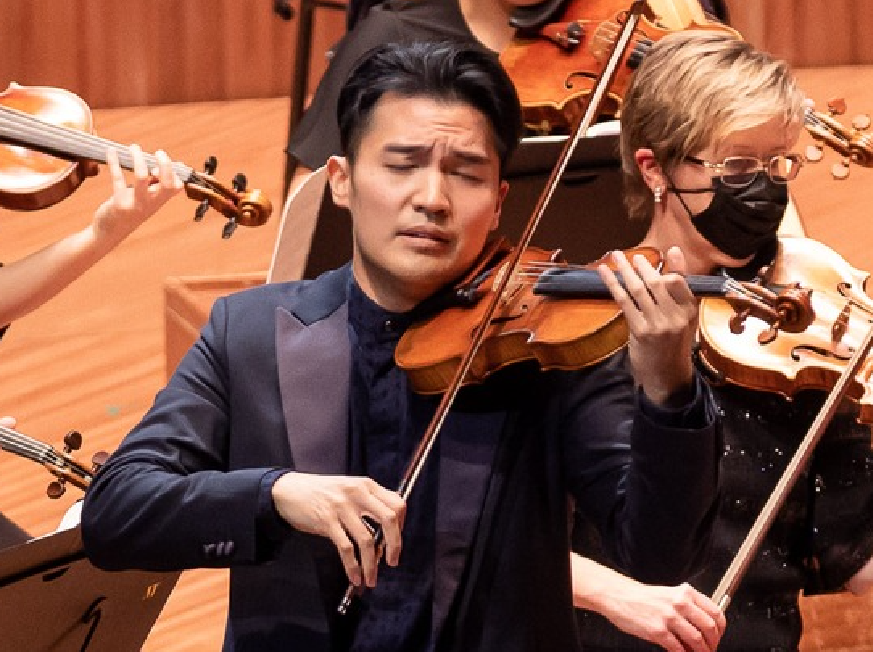 Ray Chen plays the solo in Mendelssohn’s Violin Concerto in E Minor, with the orchestra conducted by Sakari Oramo. (Cbusram/CC BY 4.0)
What arts and culture topics would you like us to cover? Please email ideas or feedback to features@epochtimes.nyc.