NR | 2h 6m | Drama, War | 1943
Most popular war films follow the front lines of combat, with rifles firing, dirt and grit (or mud), and men pressed into making decisions that arrive all too fast. Military logistics rarely gets the same treatment. The Merchant Marine lived in that gap, as shown in “Action in the North Atlantic” (1943).
Cinema had circled this lesser-known side of the war before. “The Long Voyage Home” (1940) gave audiences a convincing, weather-beaten portrait of merchant seamen who felt more like working men than heroic symbols. John Wayne carried that film with a presence tied to the sea offscreen as much as on it (as he was a real-life sailor), which helped sell the seaman’s life.
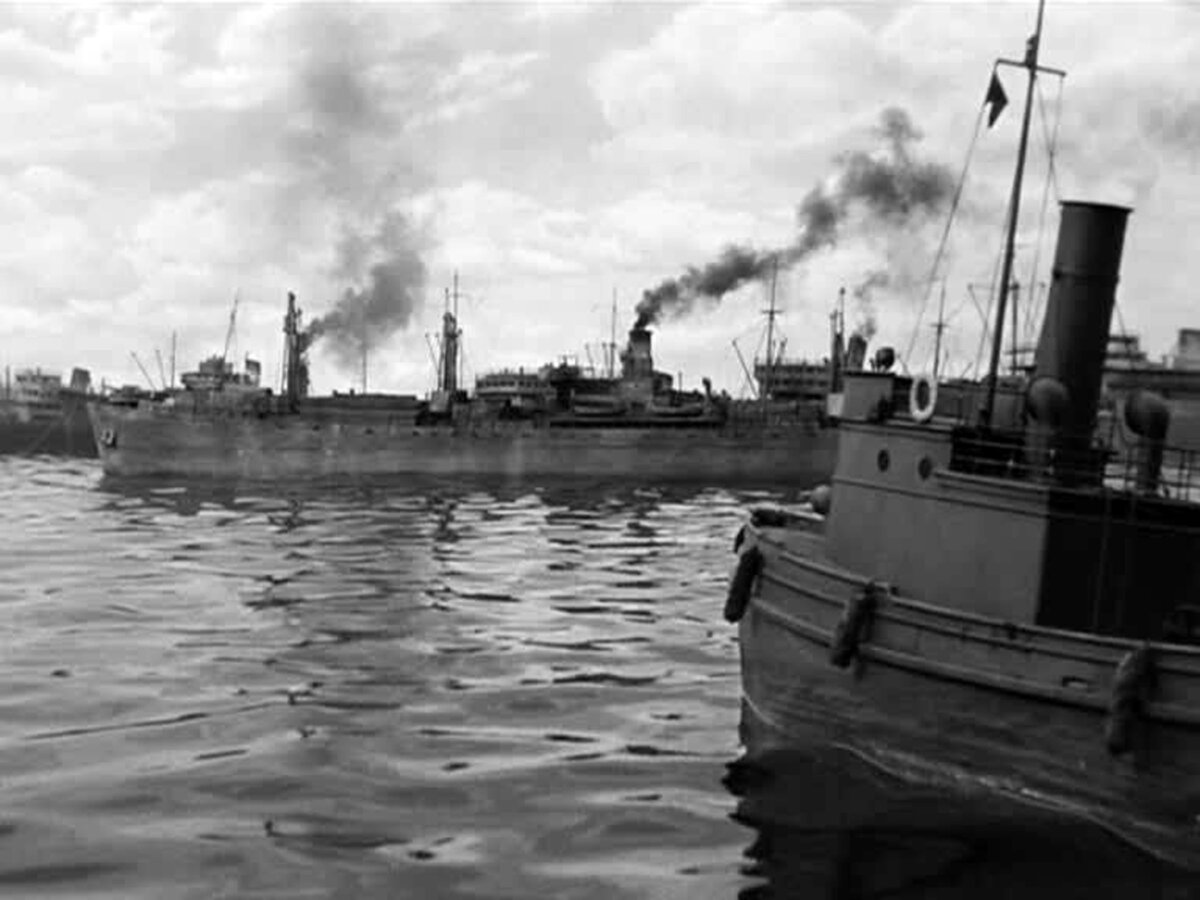
“Action in the North Atlantic” turns its attention toward the convoy lanes. Viewers feel the routine, the repetition, and the long stretches where nothing happens, while the ships still seem exposed to the German U-boats prowling the open seas.
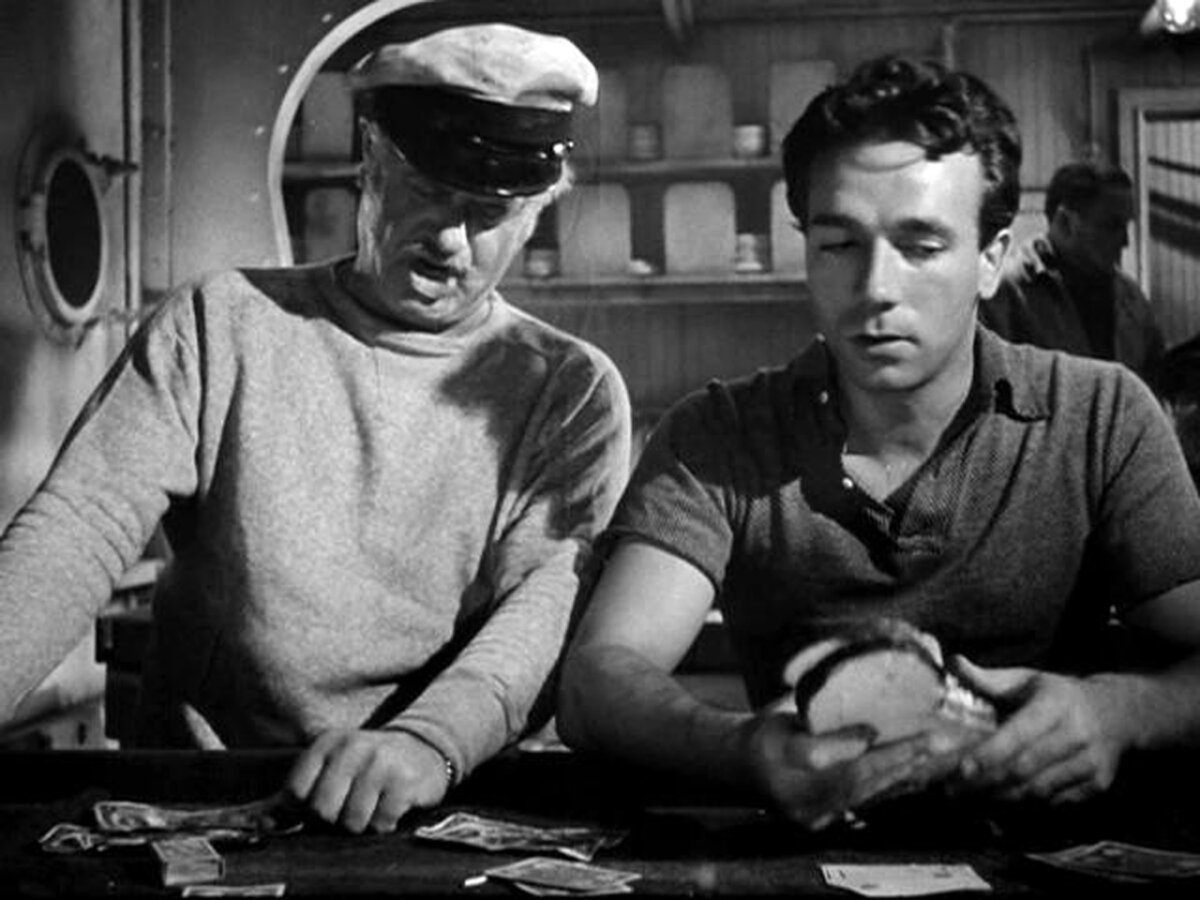
Casting helps lock that idea in place. Humphrey Bogart plays Joe Rossi, a merchant seaman in the crew operating an oil tanker, the SS Northern Star, through dangerous crossings. Bogart portrays Rossi in the day-to-day grind, while Raymond Massey runs the ship as Capt. Steve Jarvis. The result stays practical and direct, a war story told through cargo holds and engine rooms, where survival depends on keeping the ship moving, no matter what waits beyond the horizon.
Across U-boat-Infested Waters
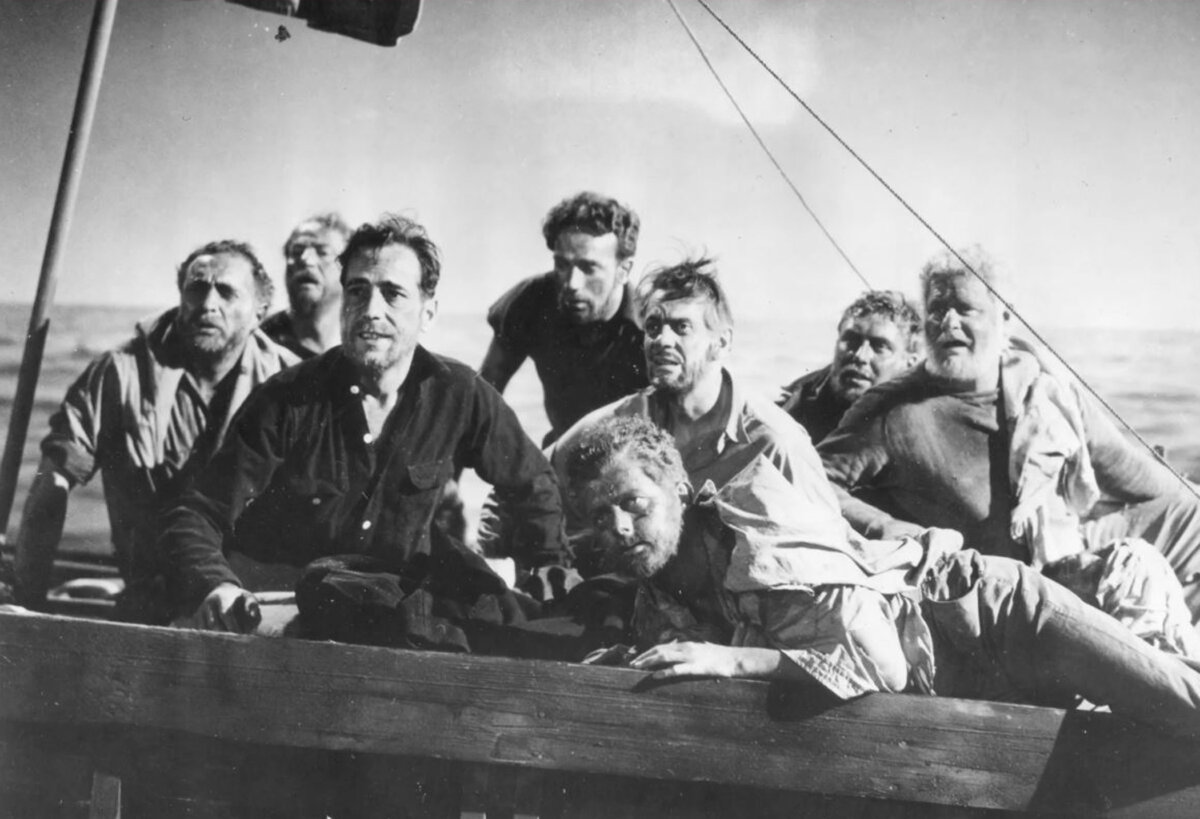
The first act opens with a major disaster. The SS Northern Star is moving along on the waves when a U-boat strikes her with a couple of perfectly placed torpedoes that pulverize her hull. Realizing that there’s no saving the ship, Jarvis, Rossi, and the surviving crew are forced to abandon ship.
After spending 11 grueling days stranded at sea, they’re spotted by a rescue team and transported back to their port. After a short recovery, Jarvis is given another command—a new cargo ship, the SS Seawitch.
Rossi and much of the same crew return, now tasked with hauling critical cargo across the North Atlantic as part of a larger convoy bound for Murmansk, Russia. The route pulls them into waters patrolled by U-boats once again, and every mile forward comes with the sense that something bad could happen at any moment. The ship carries guns and a small U.S. Navy crew to operate them.
As the voyage unfolds, the convoy faces mounting pressure and breaks apart, leaving the Seawitch to push on with limited support and strict radio silence. Jarvis holds course while Rossi works alongside the crew, dealing with damage, weather, and the constant threat of something tracking them beneath the waves.
Men, Steel, and the Open Water
Production came under wartime limits, so nearly everything was built on soundstages and in water tanks. Miniature ships stand in for convoy vessels. Deft camera work conveys an appropriately vast sense of scale and distance. The torpedo strikes and surface encounters rely on timing and framing more than raw size, which gives those moments a snap that still holds up.
The film carries a clear message. The Merchant Marine is presented as essential to keeping the war effort moving along. Scenes are arranged, from the opening tragic loss at sea to the final long push toward Murmansk, to reinforce the idea that these crossings matter.
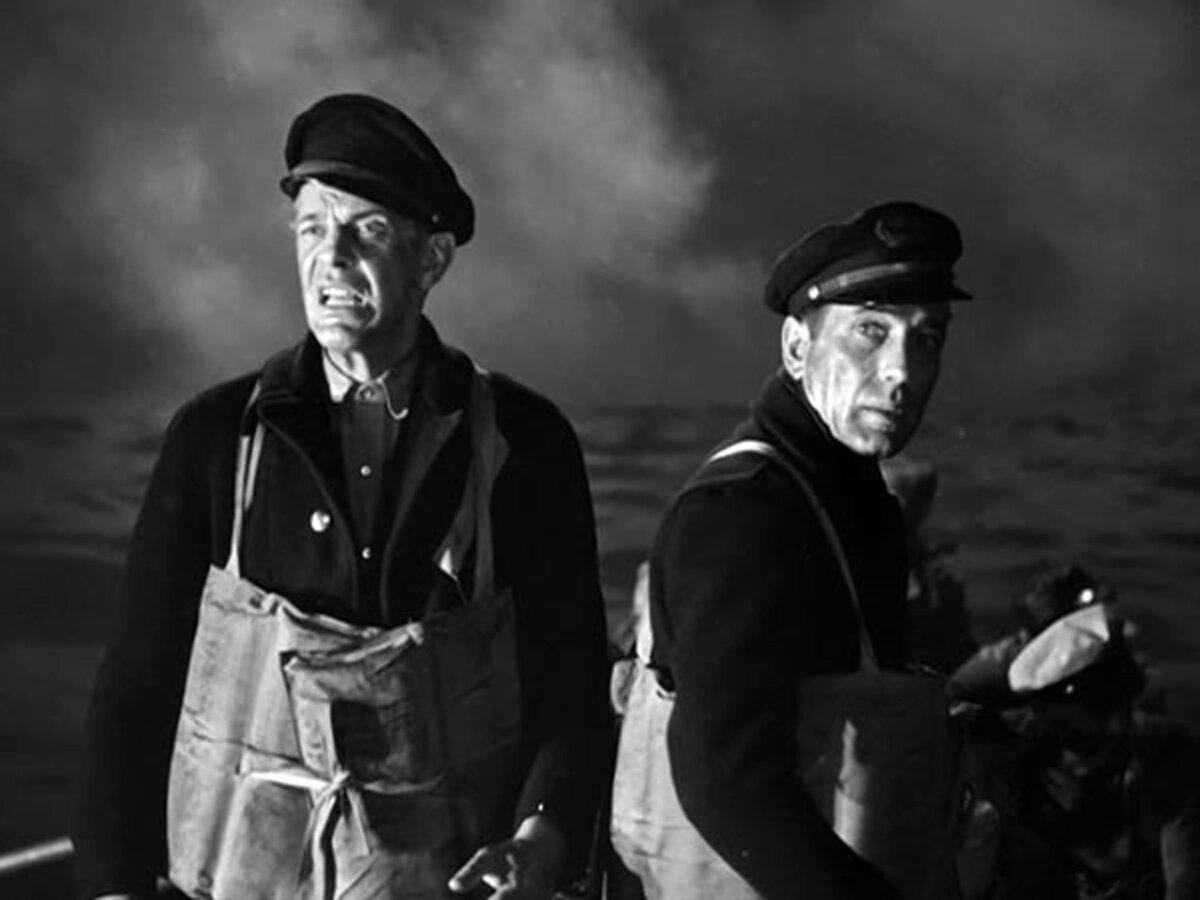
Bogart holds back a bit more than usual here and lets the crew dynamic take shape around him, while Massey keeps a firm hand on the rudder as the seasoned captain. Supporting players drift in and out of focus, giving the sense of a full crew rather than a handful of spotlight roles.
A few side threads on land slow things down, especially when the film cuts away from the voyage (such as for the obligatory romance), though they pass quickly enough to keep the main run intact.
Seen today, the film works as a piece built for its moment that still carries some pull. The craft behind the effects, the clarity of its purpose, and the attention to the work of the Merchant Marine itself give it staying power beyond its original release.
“Action in the North Atlantic” sails boldly ahead, focused on getting supplies across dangerous seas and showing what that journey demanded from the men on board.
Check out “In Which We Serve” for another perspective on the ship’s destruction scenes.
“Action in the North Atlantic” is available on Amazon, Apple TV, and YouTube.
‘Action in the North Atlantic’
Directors: Lloyd Bacon, Byron Haskin, Raoul Walsh
Starring: Humphrey Bogart, Raymond Massey, Alan Hale
Not Rated
Running Time: 2 hours, 6 minutes
Release Date: June 12, 1943
Rated: 3 1/2 stars out of 5
What arts and culture topics would you like us to cover? Please email ideas or feedback to features@epochtimes.nyc