



View the print-ready version of this recipe.
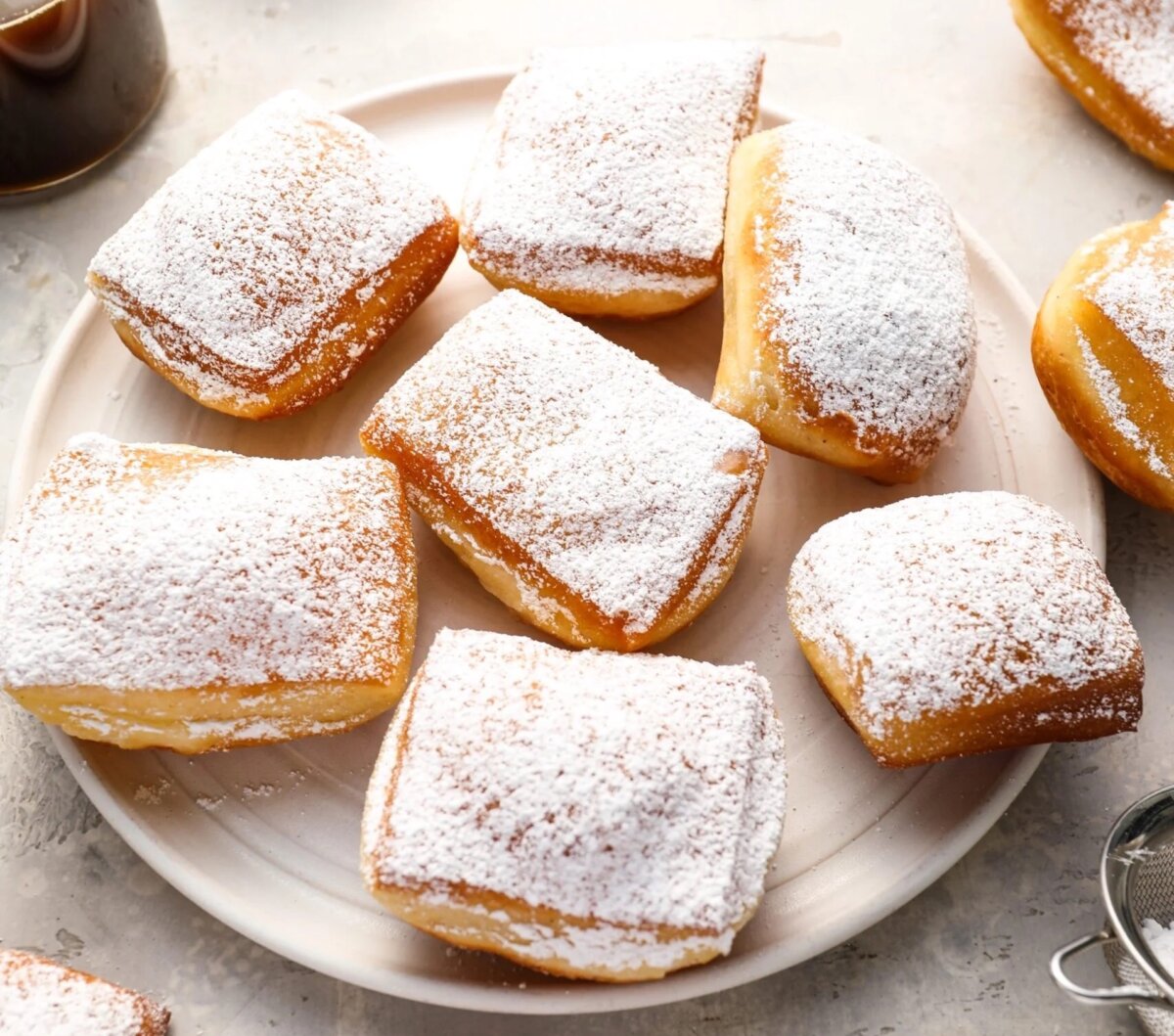
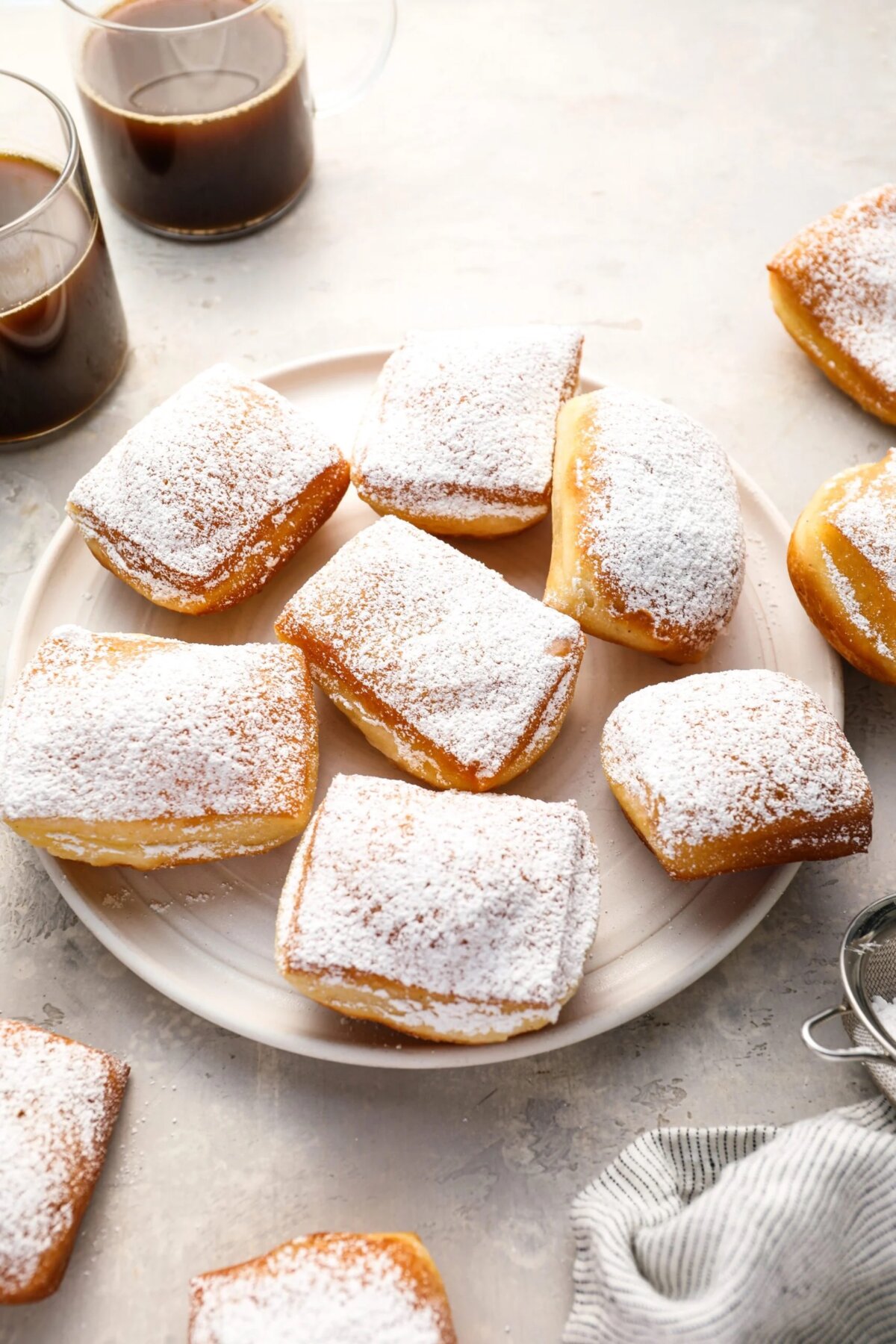
When you bite into a fresh beignet—still warm, impossibly light, and showered in powdered sugar—it’s such a treat. Brought to Louisiana by the French, beignets are a New Orleans staple, made famous by spots like Café du Monde.
You might be surprised to learn how easy beignets are to make. The dough comes together quickly, enriched with egg yolks and a hint of nutmeg for that classic flavor, then fries up into those signature puffed squares best eaten warm—preferably with powdered sugar getting everywhere.
Whether you’re making them for Mardi Gras, brunch, or just because you’re in the mood for something fun, these homemade beignets bring that New Orleans café-style experience right into your own kitchen.
What You’ll Need To Make Beignets
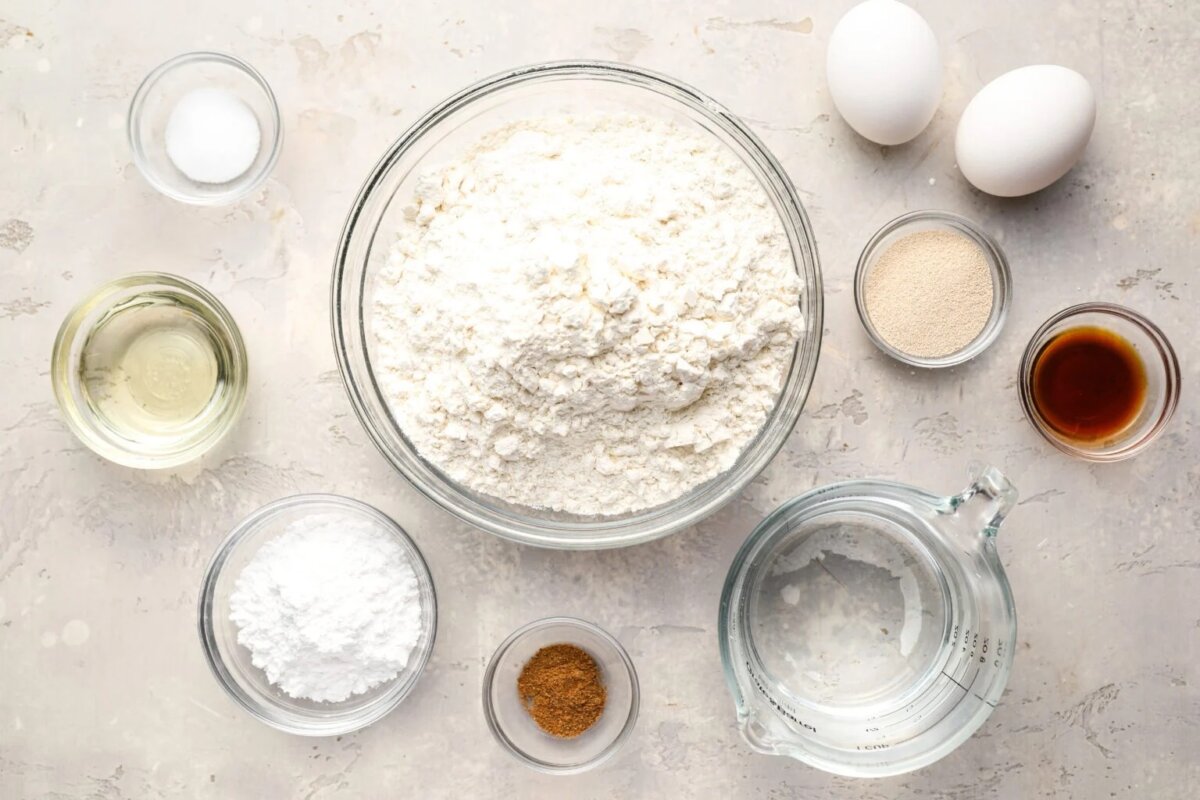
- Warm water and yeast: Warm water activates the yeast so the dough can rise and become light and airy. The water should feel warm to the touch (about 100–110 degrees F); too hot can kill the yeast. Instant yeast works best for ease, but active dry yeast can also be used—just allow a bit more time for rising.
- Flour, salt, and nutmeg: The dry base of the dough. Flour provides structure while keeping the beignets tender, salt enhances flavor and balances the sweetness, and nutmeg adds the subtle warmth that gives beignets their traditional taste. Measure the flour carefully (spoon and level) to avoid a dense dough.
- Confectioners’ sugar: Adds a hint of sweetness to the dough and is essential for the classic powdered sugar coating.
- Egg yolks and vanilla: Enrich the dough, adding tenderness and depth of flavor.
- Vegetable Oil: Used both in the dough and for frying.
Step-By-Step Instructions
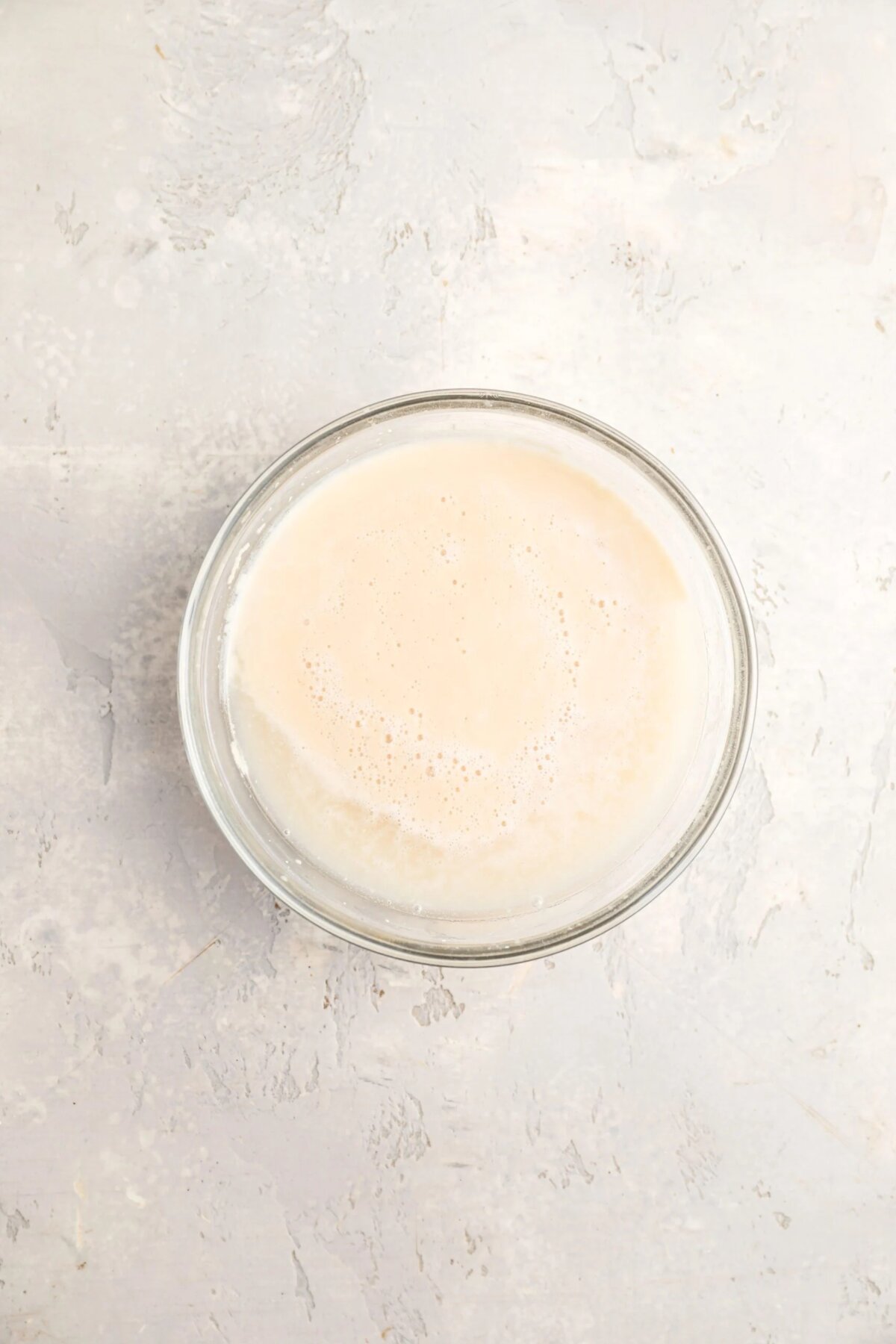
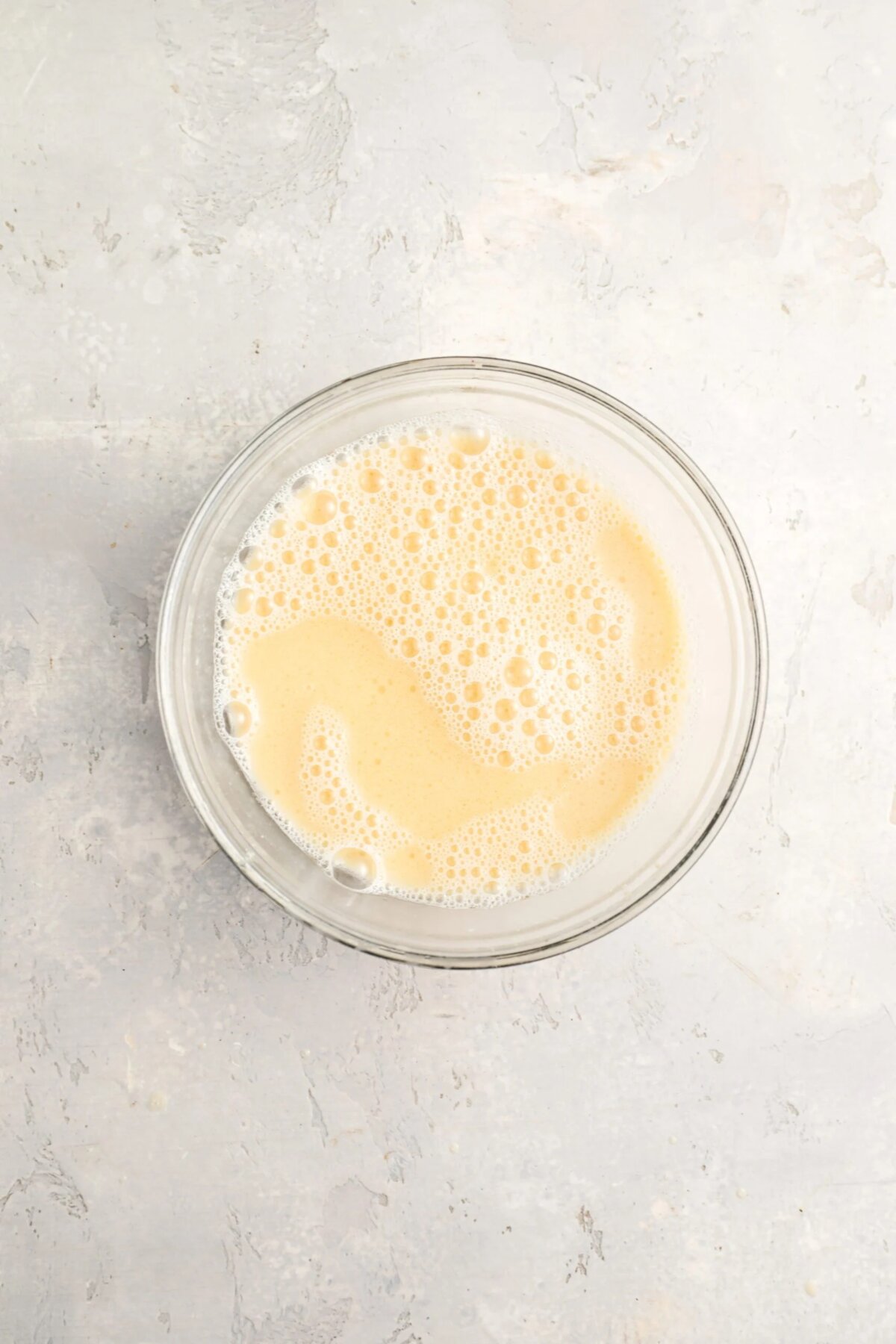
Step 1: Activate the yeast and mix wet ingredients. In a small bowl, stir together the water and yeast and let sit until foamy, about 5 minutes. The mixture should look bubbly—this means the yeast is active and ready to go. (If nothing happens after 10 minutes, the yeast may be inactive, so it’s best to start over.) Add the egg yolks, oil, and vanilla, and whisk with a fork until combined.
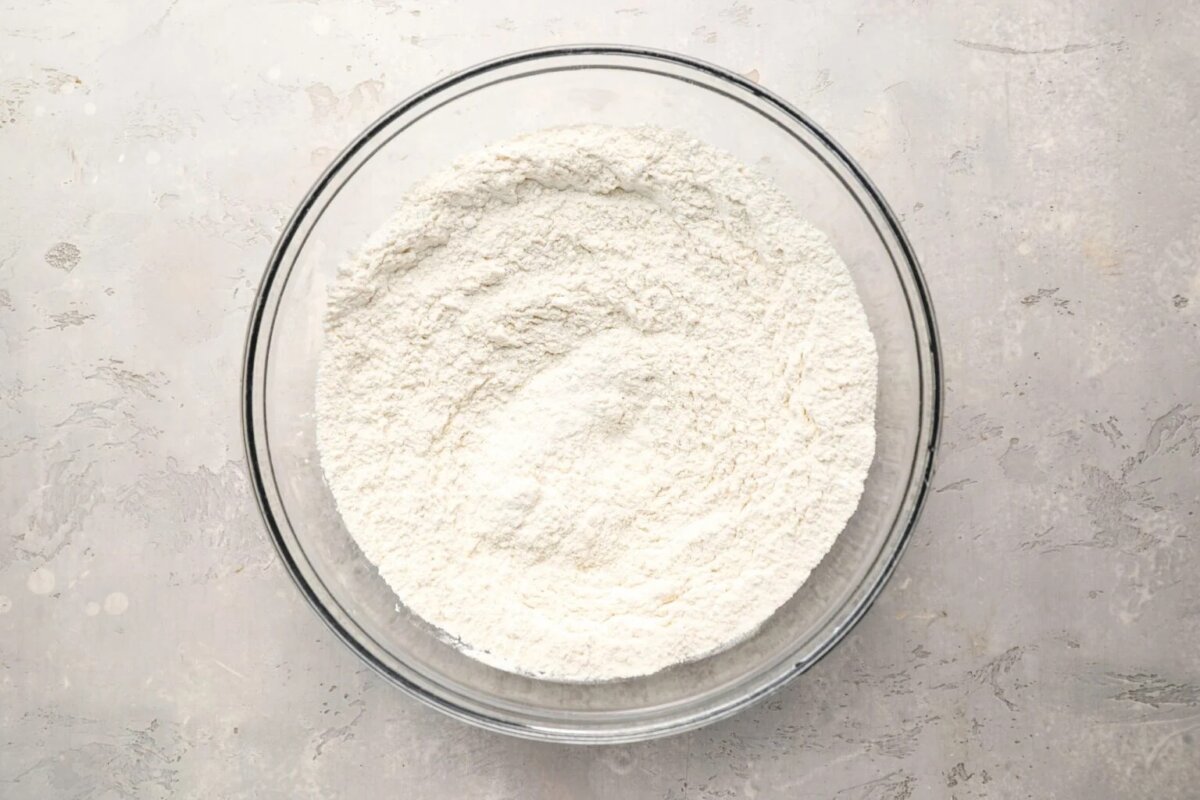
Step 2: Mix the dry ingredients. In a large bowl, whisk together the flour, sugar, salt, and nutmeg.
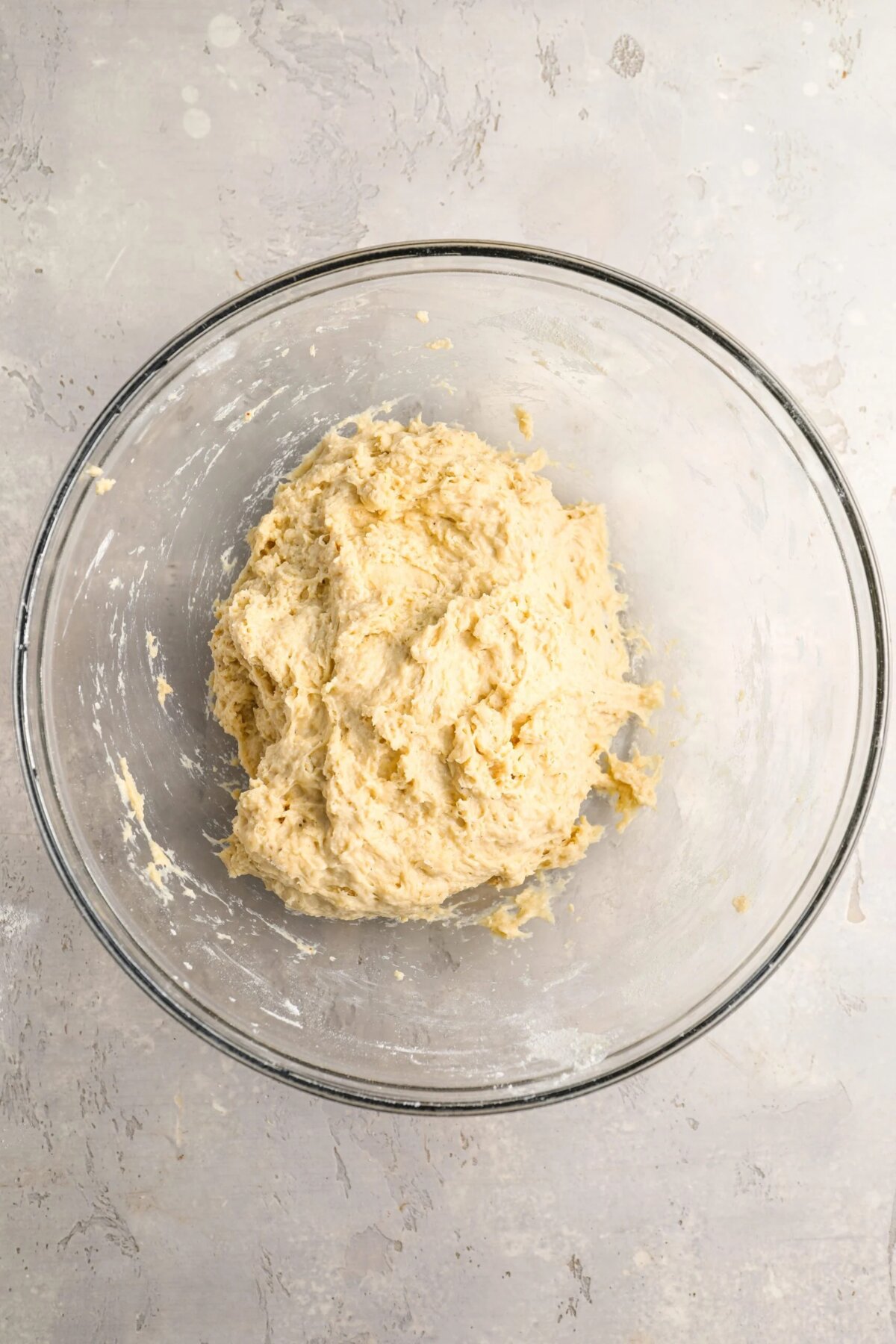
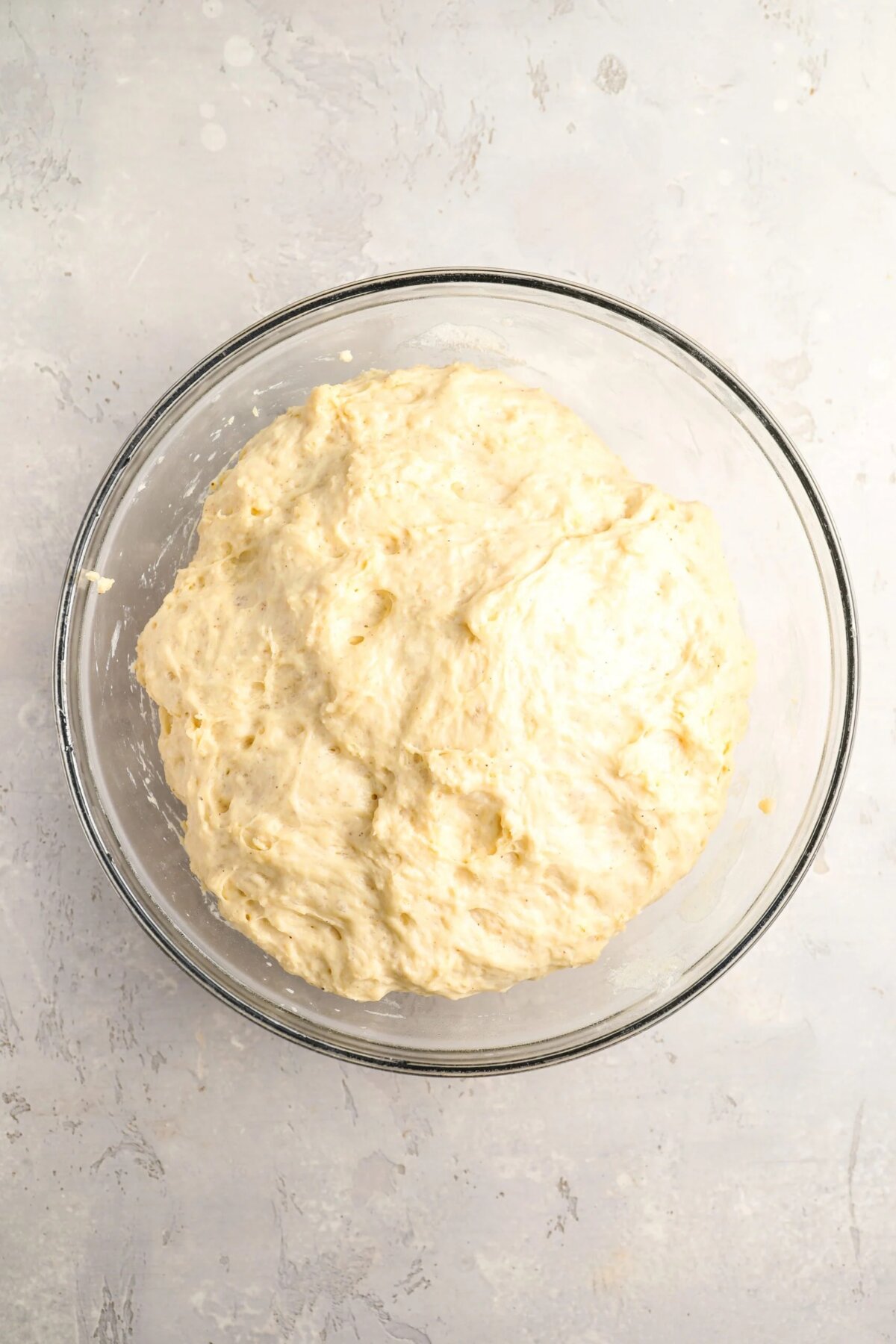
Step 3: Mix the dough and let rise. Pour the liquid into the flour mixture and stir with a rubber spatula until a sticky dough forms. A rubber spatula is ideal for sticky dough—it helps scrape the sides clean and mixes gently without overworking it. Cover the bowl with plastic wrap and let it rise in a warm spot until doubled in size, 1 to 2 hours. The dough can be made a day ahead and refrigerated; just let it sit out on the counter for about an hour before rolling out and cutting.
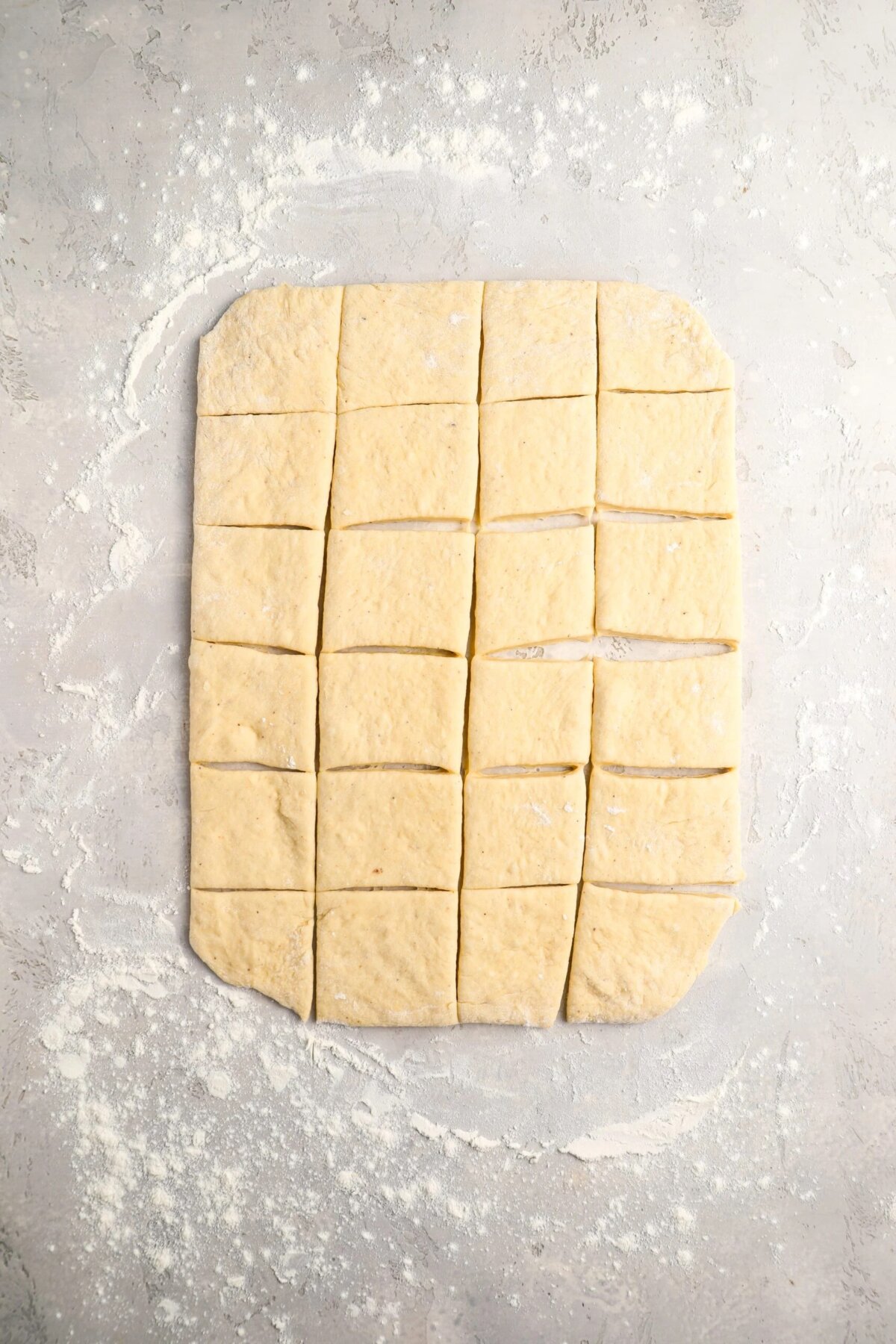
Step 4: Roll and cut the dough. Generously dust a clean countertop and your hands with flour. Turn the dough out onto the counter and give it a light dusting of flour, too. Pat it into a 1/4-inch-thick rectangle (about 10 x 12 inches), making sure it isn’t sticking—add more flour to the counter and your hands as needed. Using a pizza wheel or a very sharp knife, cut the dough into 24 two-inch squares and transfer them to the floured baking sheet, leaving a little space between each one. Lightly dust the squares with flour.
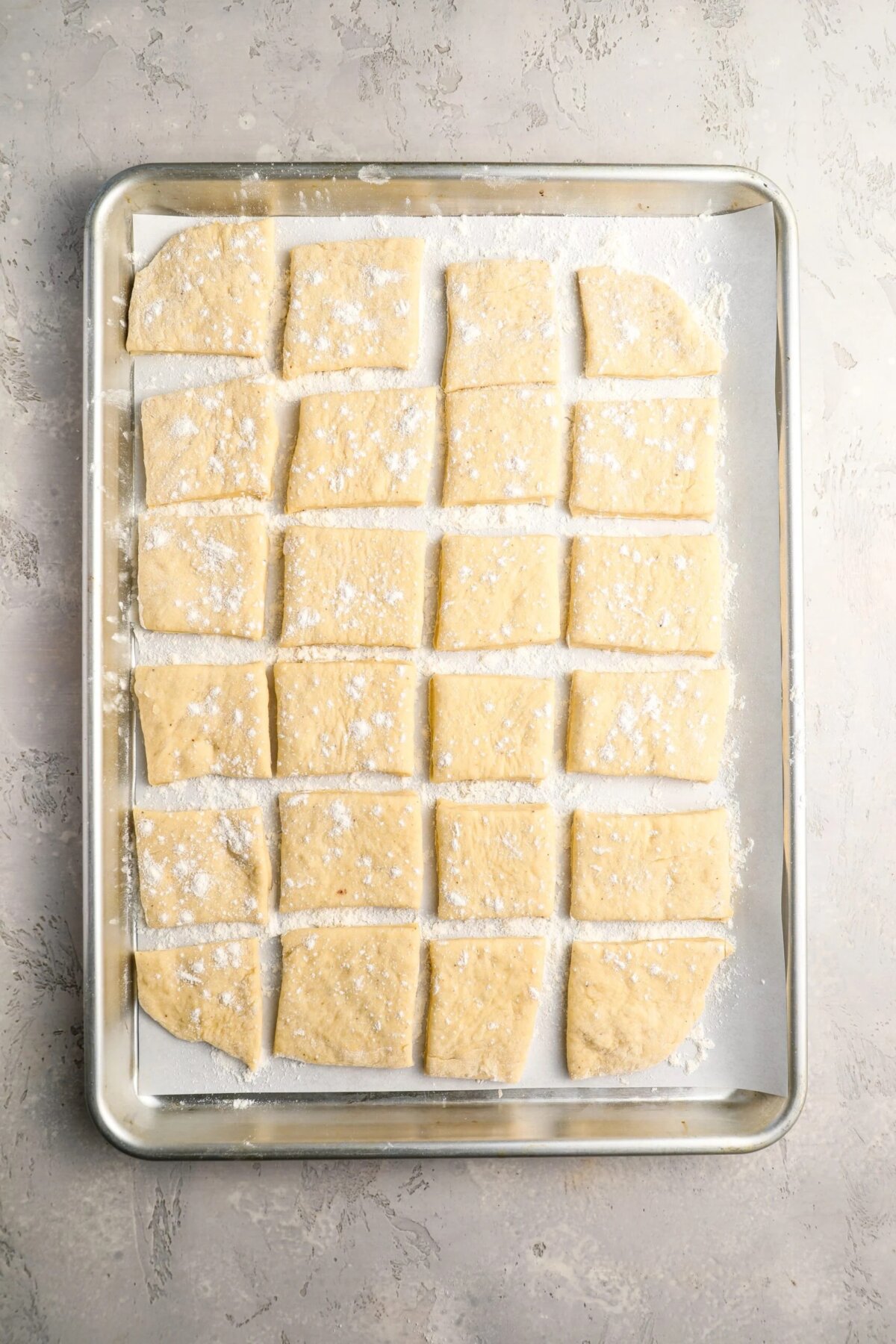
Step 5: Fry the beignets. In a large Dutch oven or heavy pot, heat about 2 inches of oil to 350 degrees F. (No thermometer? Drop in a 1-inch cube of bread—it should sizzle and turn golden in about a minute.) Fry 5 to 6 beignets at a time, flipping once, until golden brown, about 3 minutes total. Adjust the heat as needed to keep the oil between 325 degrees F and 350 degrees F.
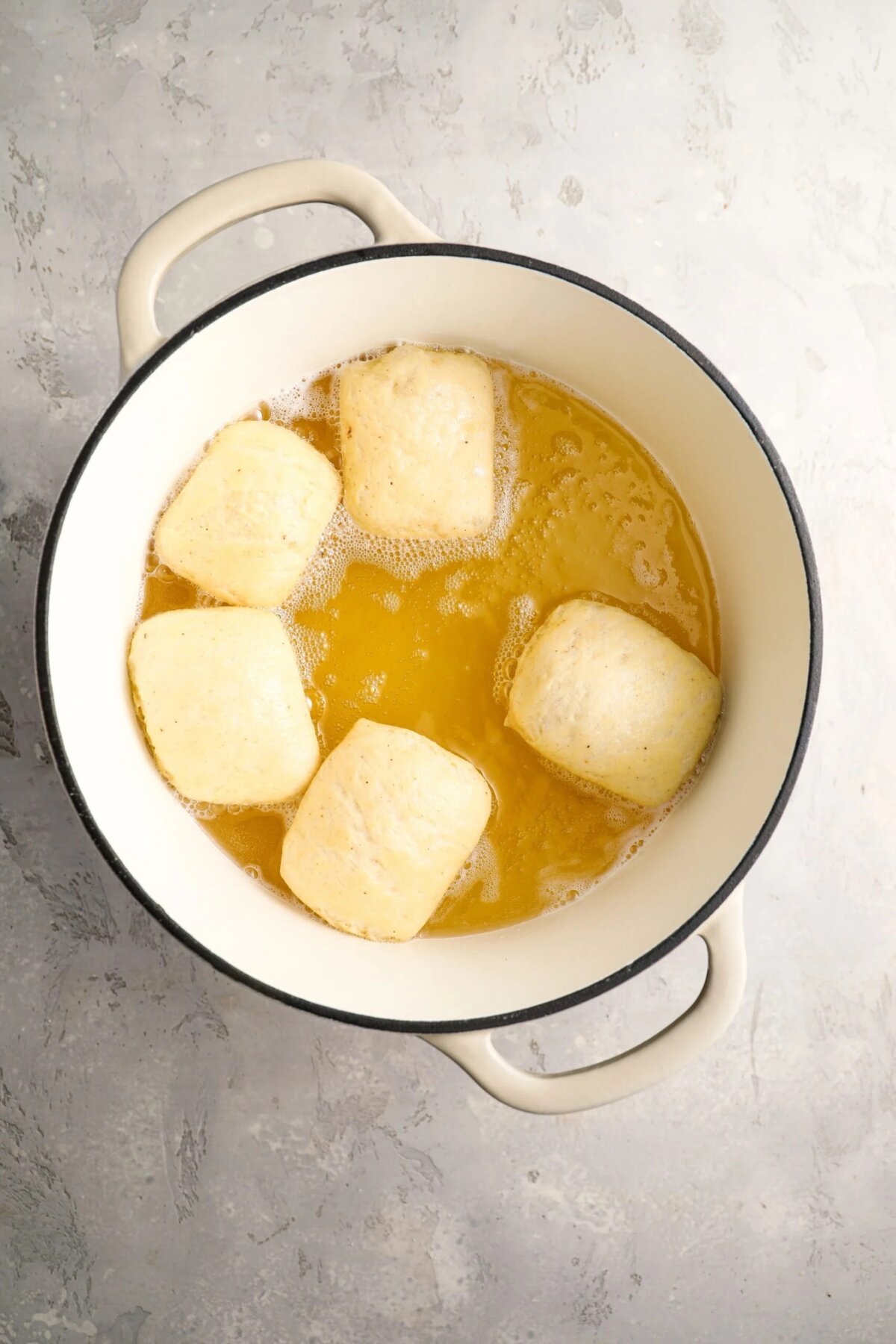
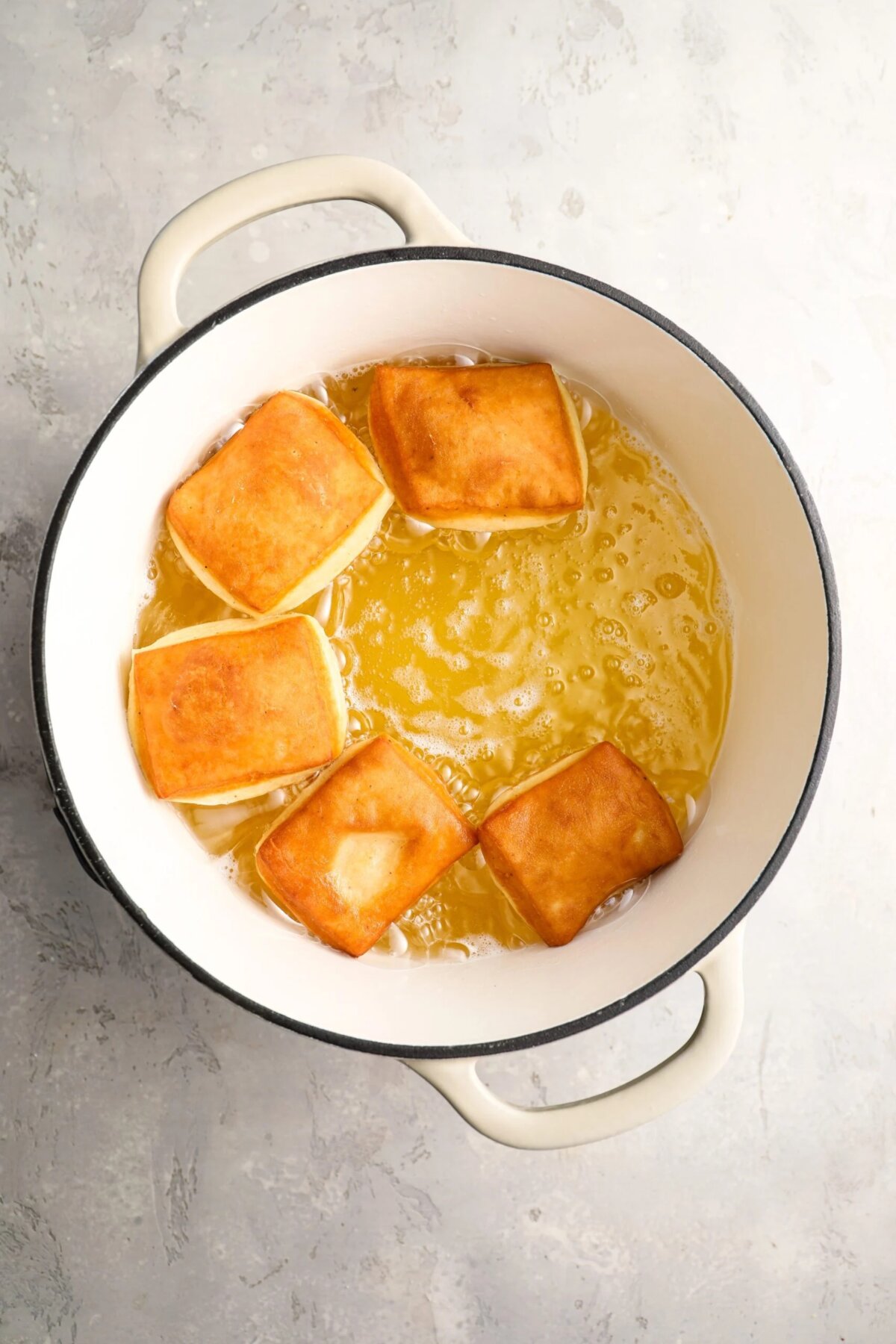
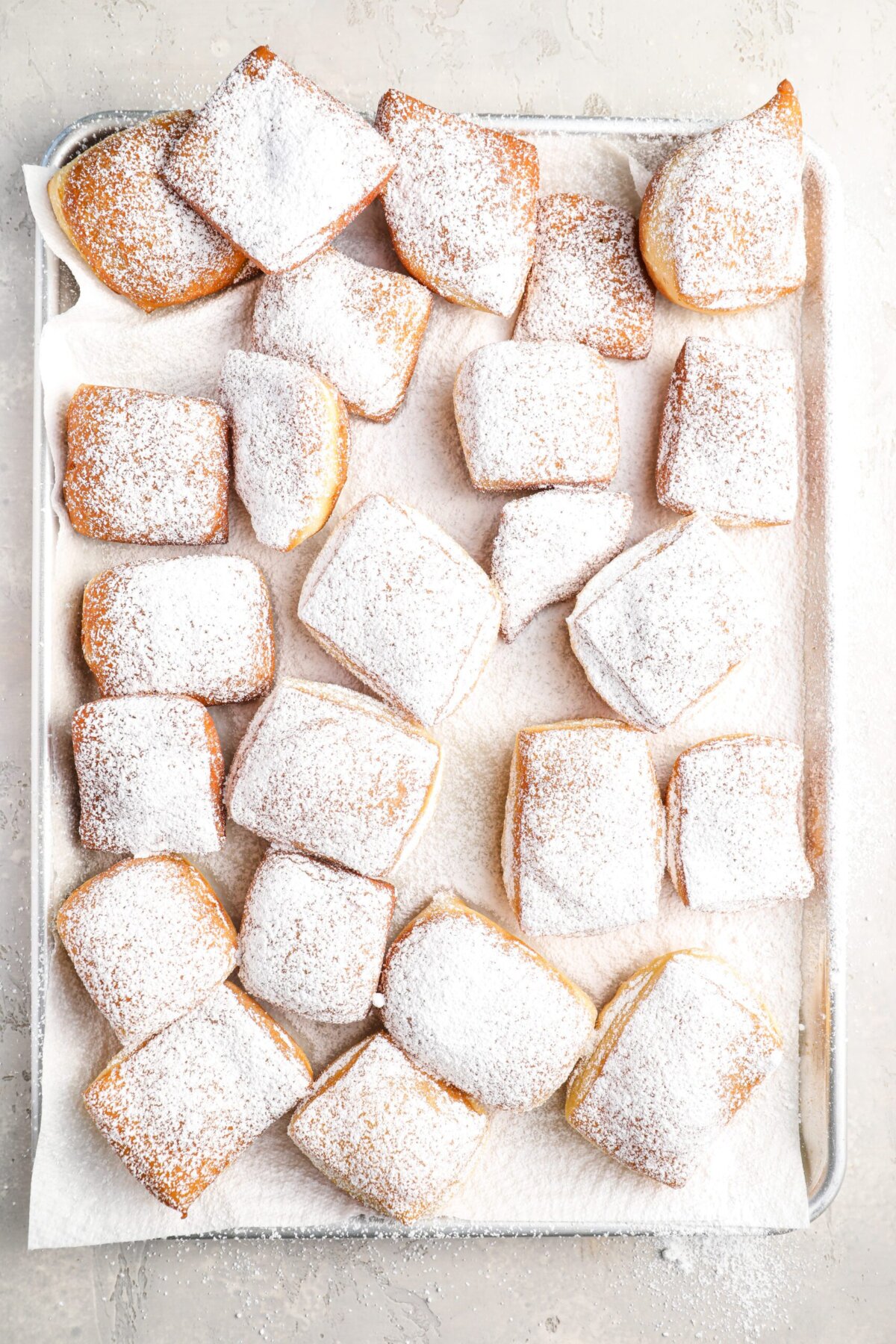
Step 6: Dust and serve. Transfer the beignets to the paper towel–lined sheet to drain. While still warm, dust the beignets generously with confectioners’ sugar using a fine sieve (dusting them while warm helps the sugar stick). Serve them right away and enjoy!
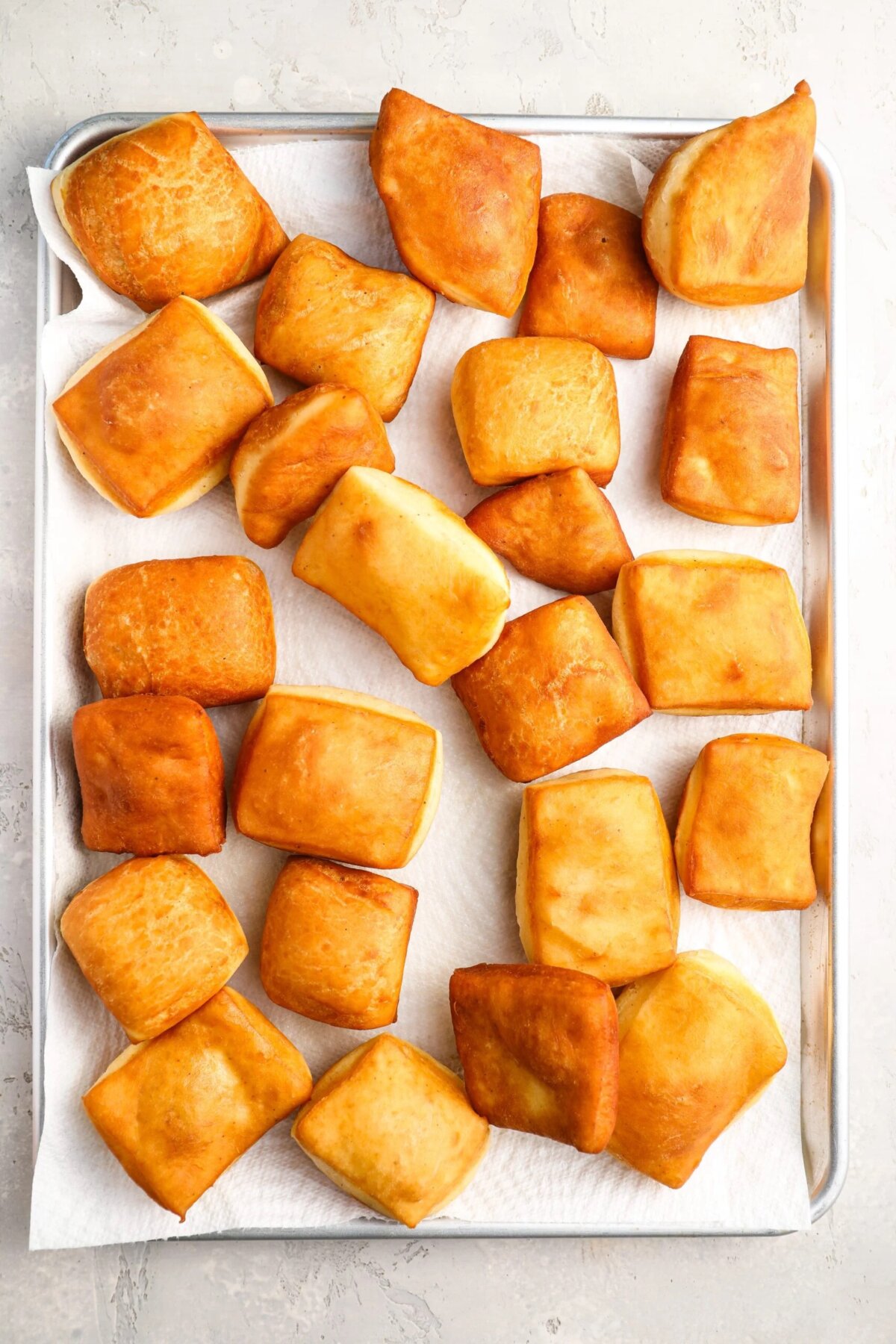
Beignets
Makes 24 beignets
Prep Time: 30 minutes
Cook Time: 15 minutes
Total Time: 45 minutes, plus 1 to 2 hours for the dough to rise
- 1 cup warm water, heated to about 110 degrees F/43 degrees C (see note)
- 1 tablespoon instant/rapid-rise or active dry yeast (note that this is more than 1 packet)
- 3 cups all-purpose flour, spooned into measuring cup and leveled-off
- 1/4 cup confectioners’ sugar, plus more for coating
- 3/4 teaspoon salt
- 1/2 teaspoon ground nutmeg
- 2 large egg yolks
- 2 tablespoons vegetable oil, plus about 2 quarts more for frying
- 1 teaspoon vanilla extract
Combine the water and yeast in a small bowl and let sit until foamy, about 5 minutes. Meanwhile, in a large bowl, combine the flour, sugar, salt, and nutmeg. Whisk to combine and set aside.
Add the egg yolks, 2 tablespoons of oil, and vanilla to the water/yeast mixture and whisk with a fork until combined.
Add the liquid mixture to the flour mixture and stir with a rubber spatula until the dough comes together. It should be a bit sticky. Cover the bowl with plastic wrap and let the dough rise in a warm spot on the countertop until doubled in size, 1 to 2 hours.
Line a baking sheet with a few layers of paper towels. Line another baking sheet with parchment paper and dust heavily with flour. Generously dust a clean countertop and your hands with flour. Scrape the dough out of the bowl onto the counter and dust the dough with flour. Pat the dough into a 1/4-inch-thick rectangle (it should be about 10 x 12 inches in size), making sure the bottom doesn’t stick, and add more flour to the counter and your hands as needed. Using a pizza wheel or very sharp knife, cut the dough into 24 two-inch squares and transfer to the floured baking sheet, leaving a little space between the squares. Sprinkle the squares lightly with flour.
Add enough oil to a large Dutch oven or heavy pot to measure about 2 inches deep and heat over medium heat to 350 degrees F (175 degrees C). (If you don’t have a candy/deep-fry thermometer, drop a 1-inch cube of bread in the oil; if it sizzles when you drop it in and takes about 1 minute to get golden brown, the oil is at the right temperature.) Place 5 to 6 dough pieces in the oil and fry until golden brown, about 3 minutes, flipping halfway through frying. Adjust the heat, if necessary, to maintain the oil temperature between 325 degrees F and 350 degrees F (165 degrees C and 175 degrees C). Using a slotted spoon, transfer the donuts to the paper towel-lined baking sheet. Repeat with the remaining donuts.
Using a fine sieve, dust the beignets generously with confectioners’ sugar. Serve warm.
Notes
Warm water helps activate the yeast. The temperature doesn’t need to be exact so no need to use a thermometer; just try to get it about the temperature of bath water. (If you place your hand under the stream of water in the faucet, it should feel hot but you should be able to leave your hand there without it stinging.)
Nutritional information was calculated assuming that approximately 1/4 cup of the oil is absorbed into the donuts when frying and 1 tablespoon confectioners’ sugar was used to dust the finished donuts.
Make-Ahead Instructions: The dough can be made a day ahead of time and refrigerated. Let it sit out at room temperature for about an hour before rolling out and cutting.
Nutrition Information
Calories: 100kcal, Carbohydrates: 14g, Protein: 2g, Fat: 4g, Cholesterol: 12mg, Sodium: 52mg, Fiber: 1g, Sugar: 2g
This article was originally published on OnceUponaChef.com. Follow on Instagram
Dear Readers: We would love to hear from you. What topics would you like to read about? Please send your feedback and tips to features@epochtimes.nyc.
