NR | 1h 18m | Documentary | 2005
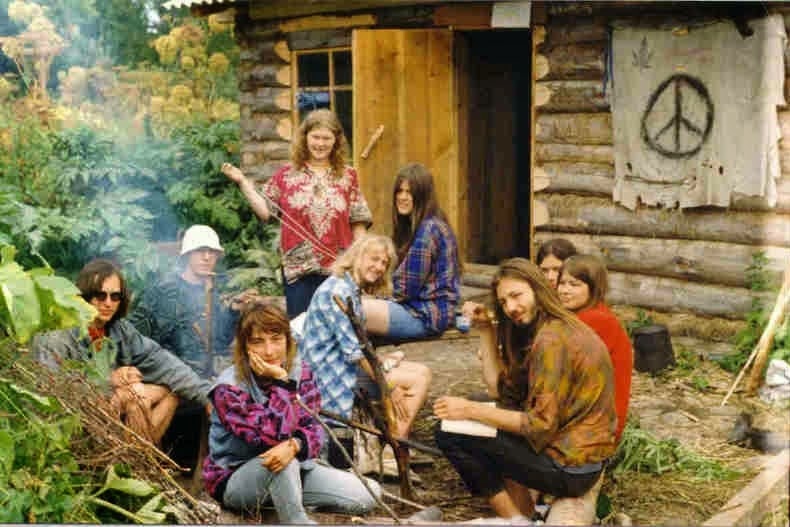
The engrossing documentary “Commune” returns to theaters for its 20th anniversary. Compiled from archival 16mm film stock, black-and-white home movies, old photographs, and new images, “Commune” has a refreshing, handcrafted quality. Due to the content, it’s reminiscent of Martin Scorsese’s history-making documentary “Woodstock.”
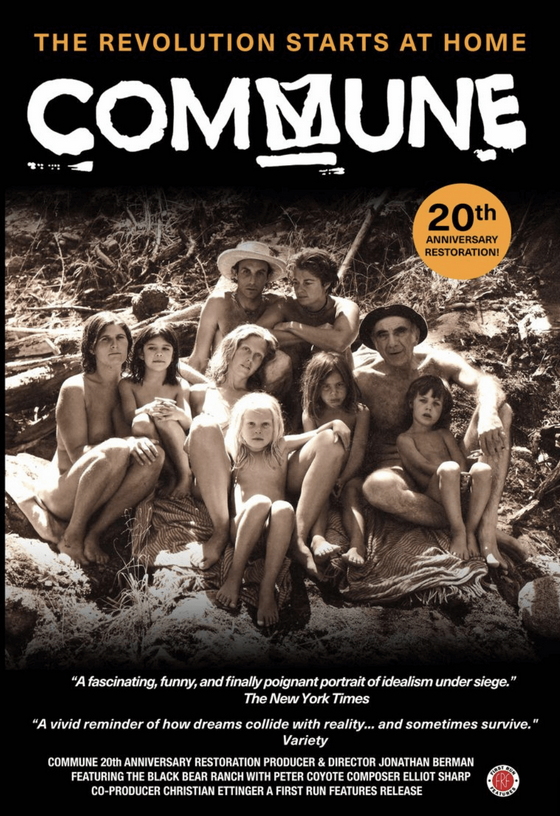
Founded in the summer of 1968, the 80-acre Black Bear Ranch was intended to be a utopian, cooperative-living experiment. Jonathan Berman’s portrait of the famed, titular, prototypical American commune tells the story of Richard and Elsa Marley, who founded it on the site of an old abandoned mining town in Siskiyou County near Mt. Shasta in Northern California.
1960s American Communes
Starting at age 5, I lived on a commune for a few years. One of my father’s Art Institute of Chicago art class models—trust-fund debutante, Daughter of the American Revolution, and direct descendant of Col. Shaw (played by Matthew Broderick in the movie “Glory”)—owned the Ashley Falls, Massachusetts, acreage, which housed the main house, hunter cabin, and barn. The late Martha Shaw, an ardent follower of “Grandmother of the Counterculture” Mildred J. Loomis’s natural living philosophy, had decided to start a commune. She was dating jazz saxophonist Sonny Rollins at the time. My family lived in the (unrenovated) barn.
You’d be hard-put to find a more liberal milieu: original 1960s heavily bearded hippie-artists embracing the back-to-the-land zeitgeist along with Timothy Leary’s psychedelic dictum of “tuning in, turning on, and dropping out.” Musicians jammed in the barn, there were bonfires with the local motorcycle gang, playwright Sam Shepard was hanging around with his omnipresent thick sheaf of scripts, and everybody got stuck in the notorious 1969 Woodstock New York State Thruway traffic jam.
For my parents and their various leftist Ivy League-dropout friends (painters, poets, sculptors, musicians, and intellectuals), commune-living seemed like an excellent idea at the time. No one knew any better. It all felt very cutting-edge and benevolent. Little did the East and West Coast hippie factions understand that the cultural phenomena of free love, drugs, rock-n-roll, and even internal subversion of the Civil Rights Movement had been scripted and planned by Soviet communists decades prior. The collective deleterious effect it had on American society unfolded like clockwork. More later on how Karl Marx’s communist influence begat 1960s American communes.
‘Commune’
Situated nine miles out from the nearest town, in pristine wilderness, the Black Bear countercultural utopian haven was based on the principle of “free land for free people.” They hoped to discover a new mode of human existence for like-minded anti-establishment types. These social-conformity resisters were immediately up against local law enforcement, not to mention the FBI’s intention to dismantle progressive movements in the 1960s.
Hilariously, locals suspected that the hippie ranchers were cultivating cannabis early on. Authorities stormed the place and, like Arlo Guthrie’s “Alice’s Restaurant,” “took twenty-seven eight-by-ten color glossy photographs with circles and arrows and a paragraph on the back of each one explaining what each one was, to be used as evidence against us.” It turns out those were just tomato plants.
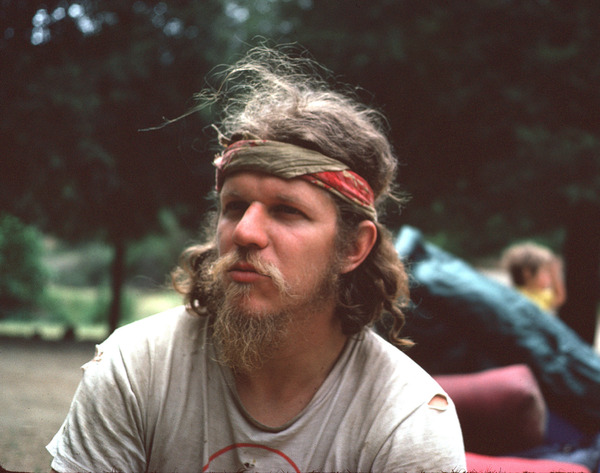
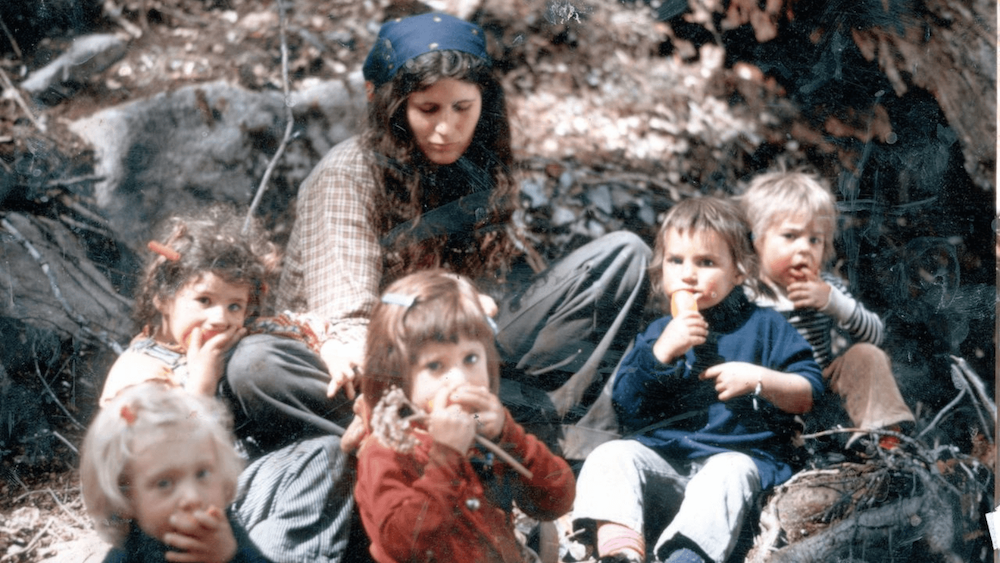
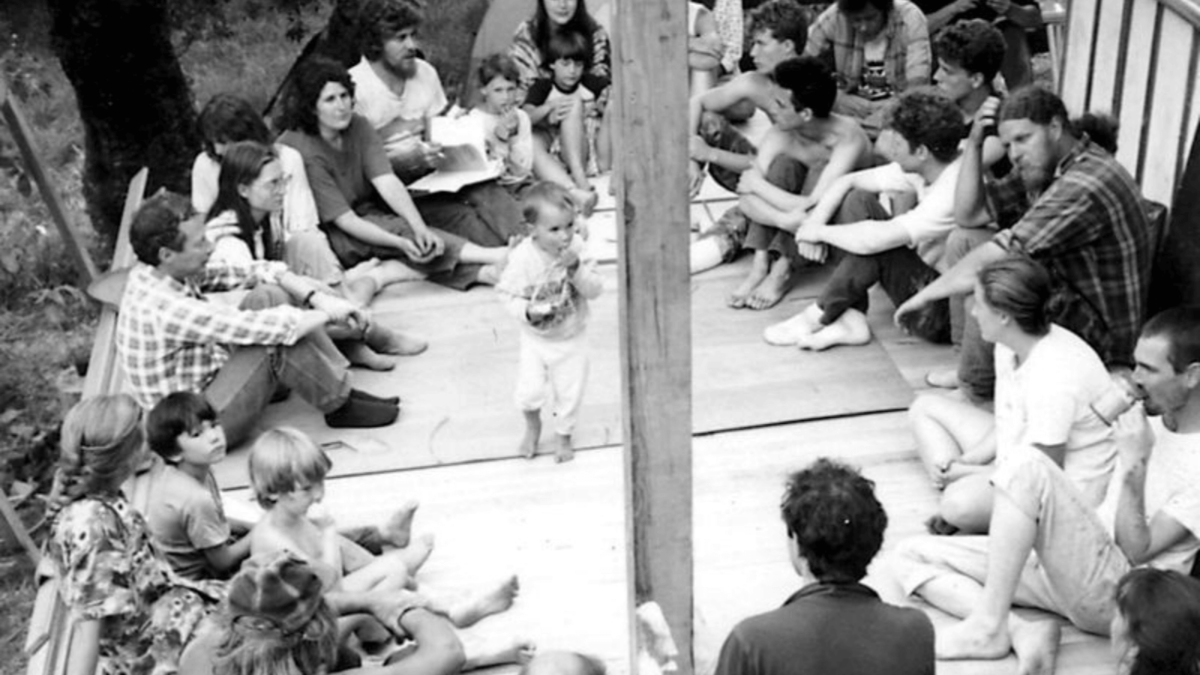
“The road to hell is paved with good intentions,” and, as was the case with most 1960s American communal experimentation, Black Bear Ranch had the same starry-eyed naivety. The Marleys bought the land for $22,000, planning to house around a dozen kindred spirits. Upward of 40 happy, hand-holding, “Kumbaya”-humming, hog-raising, high-on-life-and-pot, hairy hippies turned up, hailing from Berkeley and various left-leaning communities in California. Membership quickly expanded from 40 to 100.
Early Black Bear members attempted to fundraise by trying to lean on and guilt-trip various wealthy showbiz countercultural and nonconformist posers who were making lots of money off that pose. That included Frank Zappa and the Mothers of Invention, The Monkees, and actor James Coburn. Coburn was wildly entertained until one particularly zealous activist-rancher poured gasoline in his fountain and set the whole thing on fire. Coburn threw a fit and flung them all out on their collective ears.
Speaking of showbiz, well-known commune dweller and actor Peter Coyote talks about how they all went there wanting to learn how to be something other than a “consumer or an employee.”
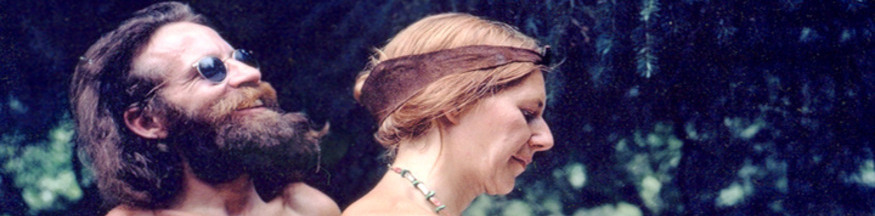
The Black Bear-ians barely survived their first winter of six-foot snowdrifts. They trudged 10 miles into town on jerry-built snowshoes for kerosene and matches. Feminism was still in its infancy, but by listening to some of the men talk, one can sense how current gripes about “the patriarchy” got started.
One photo of a bra-wearing woman wielding a chainsaw and doing heavy construction shows the collective attempt to figure out from scratch the best practices of how humans should interact and who should play what roles. Speaking of bras, throughout, there were few. Nudity was very big in communes.

Anthropological
The film is nonjudgmental and refreshingly anthropological. What’s captured is how Black Bear was an escape attempt for those unsatisfied with conventional American ways of life. What’s not discussed is how the seeds of the movement were sewn by two men: Marx (1818—1883) and Italian communist Antonio Gramsci (1891–1937).
Gramsci came up with the blueprint that became the foundation for the cultural Marxist movement in modern America, later dubbed by the 1960s German student activist Rudi Dutschke as “the long march through the institutions.”
In the 1930s, Gramsci wrote about a “war of position.” Socialists and communists would subvert Western culture from the inside, resulting in complete social upheaval. In simpler terms, its purpose was to gut American morality and implode the nation via internal moral rot, thus making it vulnerable to a communist takeover. This was his back-to-the-drawing-board response to the failure of Marx’s initial theory, wherein the decidedly sociopathic Marx hypothesized that proletarians would unite and take down the bourgeoisie worldwide.
Nostalgia
Berman eventually caught up with some former Black Bear-ians in a string of interviews shot in the early 2000s. The former hippies now work in law, alternative medicine, acupuncture, biochemistry, and publishing. They have fairly normal lives that feature California homes with swimming pools, greenhouses, and fruit trees. Peter Coyote went on to act in feature films by topflight Hollywood directors Steven Spielberg, Brian De Palma, and Barry Levinson.
However, all are nostalgic and look back fondly on their life-enriching Black Bear days. One member born at Black Bear admits the environment was supportive: “I had a lot of mothers growing up,” she says. It worked for some, for others not so much. Some left, started nuclear families, and got conventional jobs.
Lessons Learned
The takeaway is, “only in America.” Only with the privilege of being able to bask within the powerful framework of American freedom could there be experimentation with living situations that were ultimately intended, unbeknownst to most Americans, to evolve into political systems that remove freedom from the equation altogether.
Early on at Black Bear, Richard Marley tried to get some organization going, constructing chalkboards, making signs, and posting questions about rules. The next day, he found it all dismantled, and realized that anarchy ruled. Someone suggested an orgy. Everyone immediately agreed. Turned out, none of them knew, back then, what an orgy was. Some people thought it was cool, and others got wildly jealous of their partners.
Black Bear Ranch was a great clown show of experimentation, but it also was ground zero for things like deforestation protests, the ripple effect of which continues today and was recently chronicled in the documentary “Fairy Creek.”
Little did all involved realize that the 1960s counterculture movement was a direct result of Soviet communist planning and scheming. Like a cancerous infestation, Soviet communism infiltrated American institutions, from the disrupting of the nuclear family via the concepts of free love and feminism, to embedding pedophile priests in seminaries (for more on the topic of priests, watch the movie “Spotlight“) to changes in education that eventually led to our current dilemma of drag-queen-story-hours for kindergarteners. Nothing was left out and subversion crept in everywhere: the government, the military, American culture, religion, art, and so on.
“Free love” sounded fun when American commune dwellers thought it was all about nubile, attractive, young, consenting American adults. The real, Soviet concept of free love looked much different. If everything belongs to the state, then a 16-year-old girl has no right to her own body. She can’t reject the advances of a lecherous 70-year-old man without being reported to the authorities.
The communism that spawned hippie communes has led, ultimately, to the worst atrocities the world has ever seen. Marx’s endgame was to completely annihilate humanity. But living with questions and seeking answers with courage is always a good idea.
By and large, the participants of Black Bear Ranch were on a collective hero’s journey. By daring to try and live an extreme alternative, they arrived at balanced bliss, are generally doing what they love, and escaped the American rat race, which is why they went there in the first place. That’s all to say, in the pioneering spirit and freedom of America, communes were a fun experiment. For a time.
That said, while communes aren’t the answer for society writ large, there are still plenty of them left. Hippies are a hoary (still hairy) and entrenched worldwide subculture. There’s Acorn Community (Virginia), Auroville (Tamil Nadu, India), Dancing Rabbit Ecovillage (Missouri), Findhorn Ecovillage (Scotland), and The Farm (Tennessee), to name a few.
They’re all well-intended. Maybe it’s time for a new documentary to explore any new lessons learned.
‘Commune’
Director: Jonathan Berman
Documentary
MPAA rating: Unrated
Running Time: 1 hour, 18 minutes
Release Date: July 26, 2005
Rating: 3 1/2 stars out of 5
Would you like to see other kinds of arts and culture articles? Please email us your story ideas or feedback at features@epochtimes.nyc