



In Chicago, everyone we know is Irish on St. Patrick’s Day. We set up corned beef to slow-cook, put folding chairs and hand warmers in the trunk, and head out to a local parade. After our fill of Irish dance and music, we return to the warm, spicy aroma of that low-simmered corned beef.
A cold glass of Guinness keeps the cook company while the rest of the meal comes together. Cabbage wedges and carrot chunks get added to the meat; small potatoes boil to tenderness in salted water. Irish soda bread warms gently in the oven.
We happily prepare the same menu every year. Never gets old. Leftovers? That’s a different story. Sometimes, I concoct corned beef hash for a breakfast skillet. Often, bits of corned beef and chopped cabbage get added to pasta for an easy dinner. When there’s enough beef left for pretty slices, sandwiches are on the menu.
Corned beef starts with fresh beef brisket and a curing brine that includes salt, spices, and sugar. Before refrigeration, the cure helped preserve meat. Today, it’s the flavor and texture of cured meat that draws us to it. Be aware that sodium nitrite is added to the brine to prevent bacterial growth and to give the meat its characteristic pink color.
Cured corned beef needs to be fully cooked before serving. My preference is to simmer a corned beef to tenderness with the steady heat of a low oven. A slow-cooker works, too, but be sure the setting is on low.
Either method will surprise you when you lift the lid, as the meat will shrink quite a bit. As the brisket cooks, it releases liquid into the pot. Take advantage of the liquid to simmer carrots, onion, and cabbage in it for the traditional boiled dinner accompaniments.
Most of our local supermarkets offer sales on corned beef in anticipation of St. Patrick’s Day. If you prefer lean corned beef, purchase those labeled “flat cut” rather than the point cut, which tends to be fattier and less appealing when sliced for sandwiches.
Serve the boiled corned beef and vegetables with horseradish mayonnaise made from equal parts prepared horseradish and mayonnaise. Grainy mustard smeared on a chunk of corned beef is delicious, too.
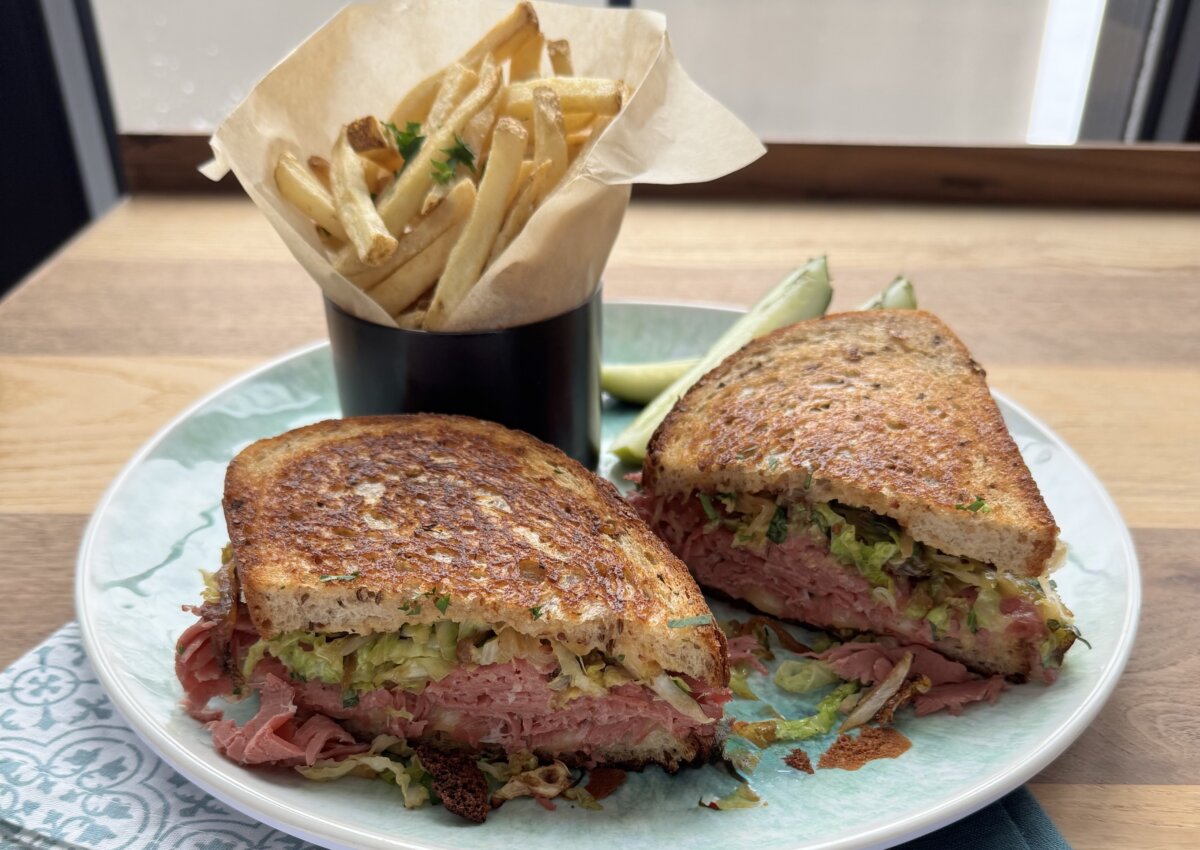
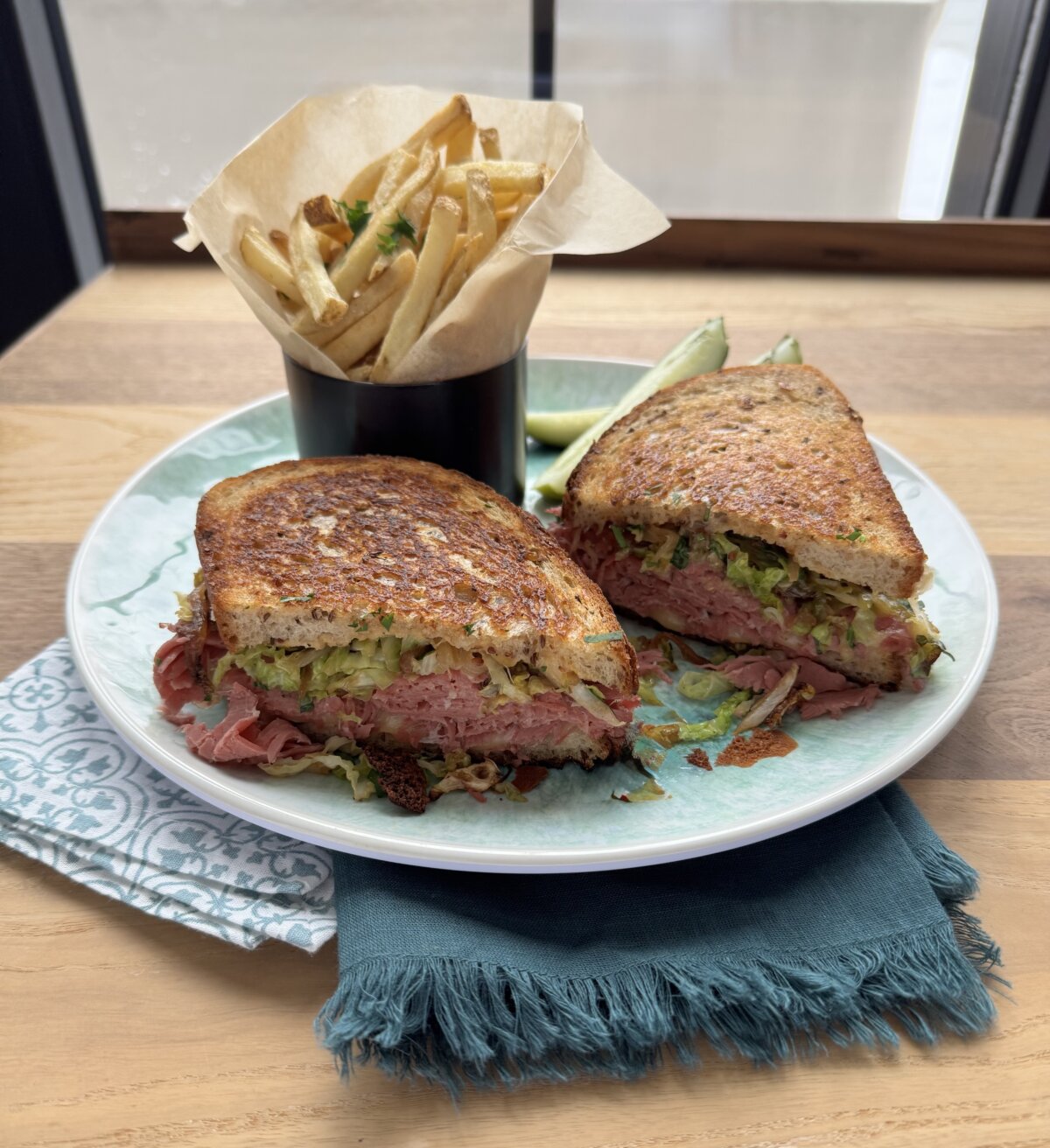
Chill any leftover corned beef before slicing it thin for sandwiches. Then cook the sandwiches in a hot cast-iron skillet to crisp the bread and warm the meat. Serve the sandwiches with frozen French fries jazzed up with bits of parsley, coarse salt, black pepper, and parmesan shreds.
Happy St. Patrick’s Day indeed!
Slow-Simmered Corned Beef Meal
Serves 6
- 1 corned beef brisket, 4 to 5 pounds
- 6 whole cloves
- 3 bay leaves
- 3 cloves of garlic, halved
- 1 teaspoon whole black peppercorns
- 6 small yellow onions, peeled
- 6 medium-size carrots (about 1 pound), trimmed, peeled, halved crosswise
- 1 small head of green cabbage, cored, halved, cut into 1-inch wide wedges
- 2 to 3 pounds of small red potatoes
- Salt
For Serving
- Prepared horseradish, mayonnaise, and grainy mustard
Heat oven to 325 degrees F. Put corned beef into a large Dutch oven. Add cold water to cover. Add cloves, bay leaves, garlic, and peppercorns to the pot.
Cover the pot, and set it in the center of the oven. Cook, turning the meat once or twice, until a fork is almost easily removed, about 3 hours.
Add onions and carrots to the pot. Continue to simmer, covered, for 30 minutes. Add cabbage and simmer until meat and all vegetables are tender, about 30 minutes more.
Meanwhile, scrub potatoes clean and place in a large saucepan. Add cold water to cover. Add 1 teaspoon of salt. Heat to a boil, then reduce heat to a simmer. Cook, partly covered, until a knife inserted into a potato comes out easily, about 20 minutes. Drain off water and cover the pan to keep potatoes warm.
Use tongs to transfer corned beef to a cutting board. Remove vegetables with a slotted spoon to a serving bowl; ladle some hot pan liquid over the vegetables. Slice beef thinly and place on a rimmed serving dish. Ladle a little hot pan liquid over the meat. Serve everything with potatoes and condiments.
Griddled Corned Beef and Fontina Sandwiches
Serves 4
Serve these sandwiches with frozen French fries, cooked according to the package and tossed with salt, fresh pepper, chopped fresh parsley, and shredded parmesan.
- 1/2 small head (12 ounces total) of savoy or green cabbage
- 1 medium-size (8 ounces) onion, chopped
- 2 tablespoons of vegetable oil, such as avocado oil
- Salt, freshly ground pepper
- 1/4 cup chopped fresh parsley
- 1/4 cup mayonnaise
- 3 tablespoons mango chutney, bottled fig spread or 2 tablespoons balsamic vinegar
- 2 tablespoons whole grain Dijon mustard
- 8 large slices of rye bread
- 1 1/2 pounds of thinly sliced corned beef (6 ounces per sandwich)
- 8 ounces of thinly sliced fontina or havarti cheese (2 ounces per sandwich)
- 8 tablespoons butter, softened
- Dill pickles, for serving
Very thinly slice or shred the cabbage. You will have about 4 cups. Halve, then thinly slice the onion.
Heat oil in a large nonstick skillet. Add onion; cook and stir until richly golden, about 6 minutes. Stir in cabbage; cook and stir until wilted, 4 or 5 minutes. Season with 1/4 teaspoon of salt and several grinds of fresh pepper. Remove from heat and stir in parsley.
Mix mayonnaise, chutney, and mustard in a small bowl. Add salt and pepper to taste.
Spread dressing on one side of all bread slices. Top four slices of the bread with the warm cabbage mixture, then the sliced corned beef. Top with sliced cheese. Top with a second slice of bread. Butter the top of the bread.
Heat a large, well-seasoned cast-iron skillet until a drop of water sizzles on contact. Add the sandwiches, buttered side down, in a single uncrowded layer. Butter the top of the sandwiches.
Cover the skillet and cook over medium heat until the bottom of the sandwich is golden, about 3 minutes. Carefully flip and cook the other side, about 2 minutes more. Use a large spatula to transfer to a cutting board; cut in half. Serve with dill pickles.
Dear Readers: We would love to hear from you. What topics would you like to read about? Please send your feedback and tips to features@epochtimes.nyc.
