With every passing year, alternative forms of education are becoming more popular in the United States. The COVID-19 pandemic spurred an exodus from the public school system.
American parents saw the potential benefits of private school, “unschooling,” “deschooling,” and homeschooling. Opponents of public schooling declared that it developed during the Industrial Revolution along prison guidelines with the purpose of creating good factory workers.
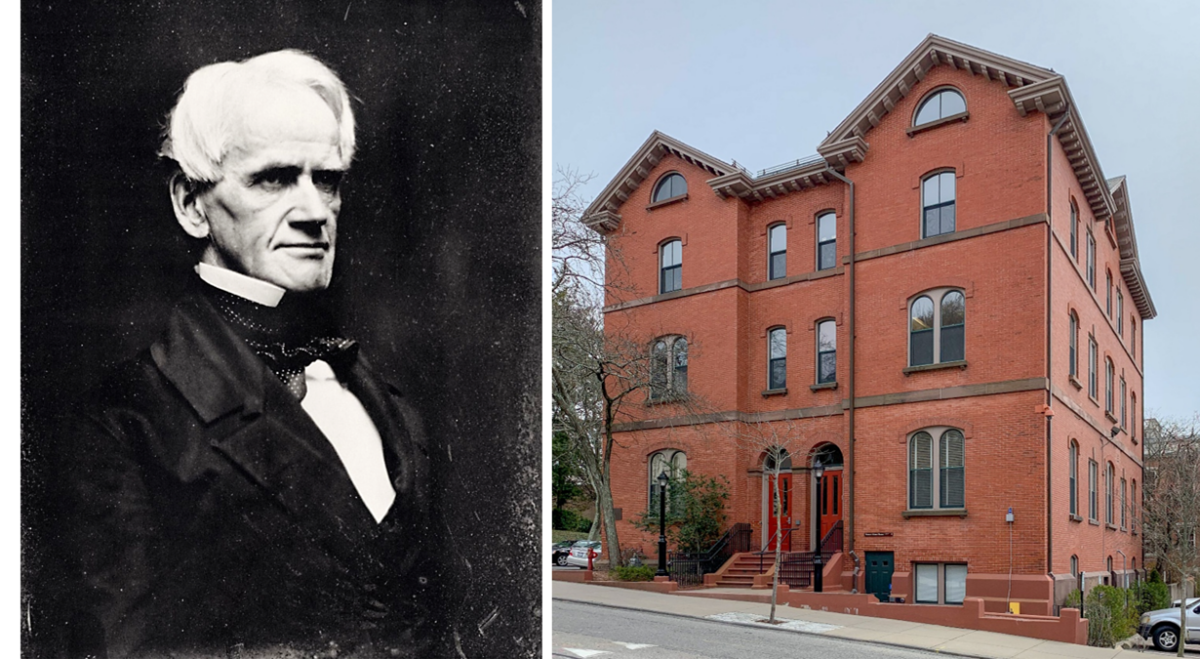
However, the original intent of the free public school system was much nobler and purer than that. Its chief proponent was Horace Mann (1796–1859).
A Self-Educated Man
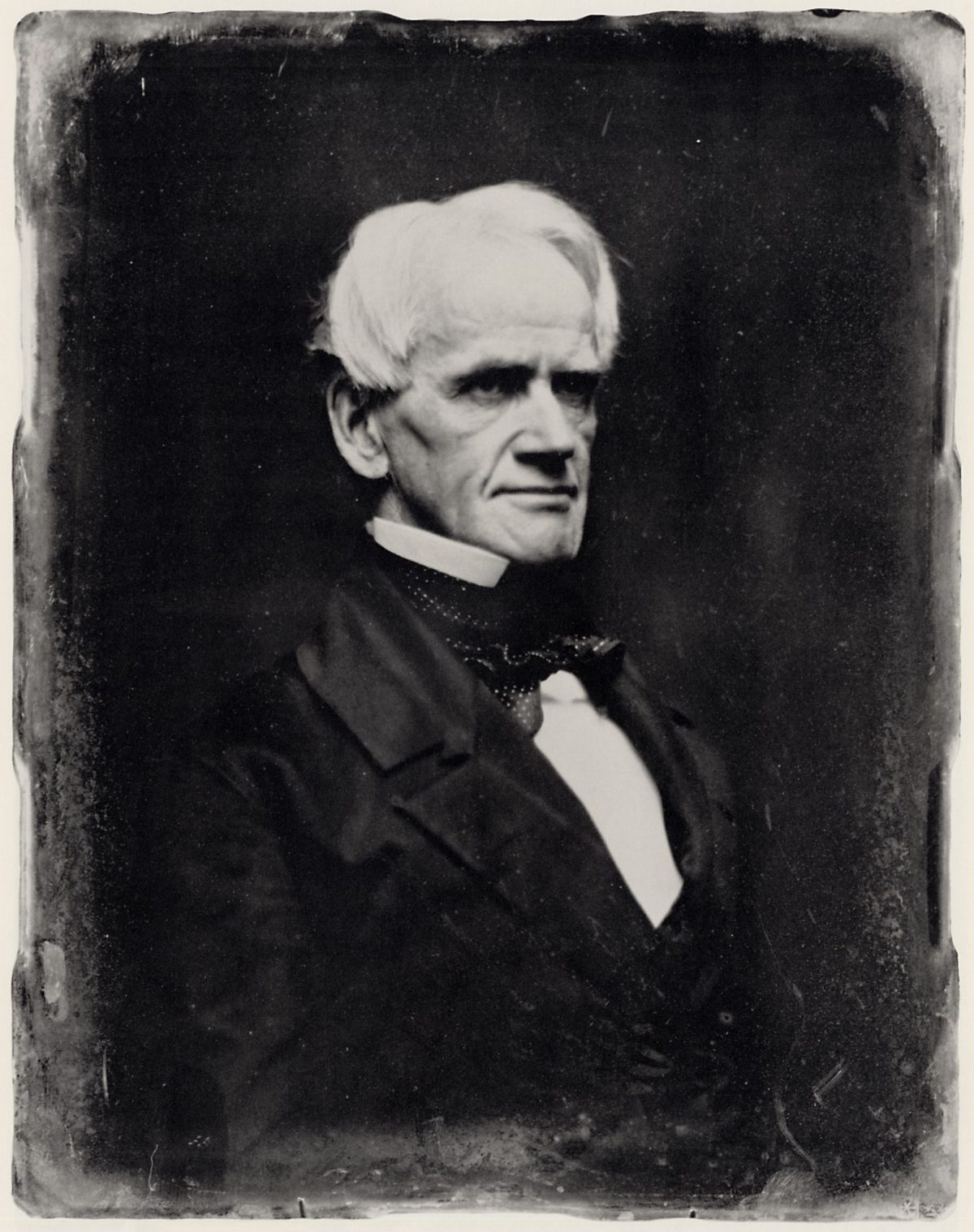
Perhaps it’s no coincidence that the man who is now called the Father of American Education had little formal education himself. Born on May 4, 1796, Horace Mann grew up on a farm in Franklin, Massachusetts.
His family was so poor that he had to braid straw to earn his schoolbooks. Between the ages of 10 and 20, he had no more than six weeks of formal schooling every year from instructors whom he described as “very good people, but very poor teachers.” Instead, he educated himself by studying at the Franklin Public Library, the first public library in America. Access to this public resource inspired his later conviction to supply free educational resources to American children.
Local minister Samuel Barrett (1795–1866) tutored Mann in Latin and Greek. This education helped him get into Brown University in Providence, Rhode Island, at the age of 20. He studied politics, education, social reform, and languages for three years and graduated in 1819 as class valedictorian.
After graduation, Mann studied law privately with a lawyer in Wrentham, Massachusetts, taught Latin and Greek at Brown for a year, and eventually attended Litchfield Law School. He was admitted to the bar in Dedham, Massachusetts, where he began distinguishing himself as a gifted orator and champion for social causes.

In 1827, Mann was elected to the Massachusetts state legislature, where he served until 1833. He moved to Boston and was elected to the state senate. He served as this body’s president in the 1836-1837 fiscal year.
From 1837 through 1848, he served as secretary of the new Massachusetts Board of Education. Mann was passionate about education. He believed that “other reforms are remedial; education is preventative.” To focus on this goal, he resigned from all other political or business interests.

He studied the conditions of every school in the state and established reforms in the school system that would one day become the model for public schools nationwide. He eventually resigned from the secretaryship to join the U.S. Senate as a Whig.
Unitarian Principles
Mann was raised in a Congregational church, which taught the strict Calvinistic Christian doctrines central to most New England communities. He lost faith in these teachings at age 14, after a minister at his brother’s funeral said his brother would go to hell because he was swimming on a Sunday. He used his older brother’s funeral to preach condemnation of mankind’s depraved nature.
In his early adulthood, he joined the Unitarian Church, a growing Christian denomination in New England. This denomination espouses in the kind, benevolent nature of God, holds that human nature is basically good, and denies the trinity, which is professed in the sect’s very title.
He may have been introduced to this belief system by his language tutor Barrett, who became a leading Unitarian minister. His first legal case was to defend a Unitarian minister’s right to alternately use the pulpit of Dedham’s First Parish Church with the Congregationalist minister.
Mann’s Unitarian faith shaped his personal, political, and professional life. As a politician, he embraced the progressive, justice-minded causes of abstinence from alcohol, legislation against gambling, founding institutions for the mentally ill, women’s rights, and the abolition of slavery.
As a senator, he became one of Congress’s most outspoken voices against slavery. At this time, many politicians remained silent and hoped that the evil of slavery would eventually stop.
Non-Sectarian Values
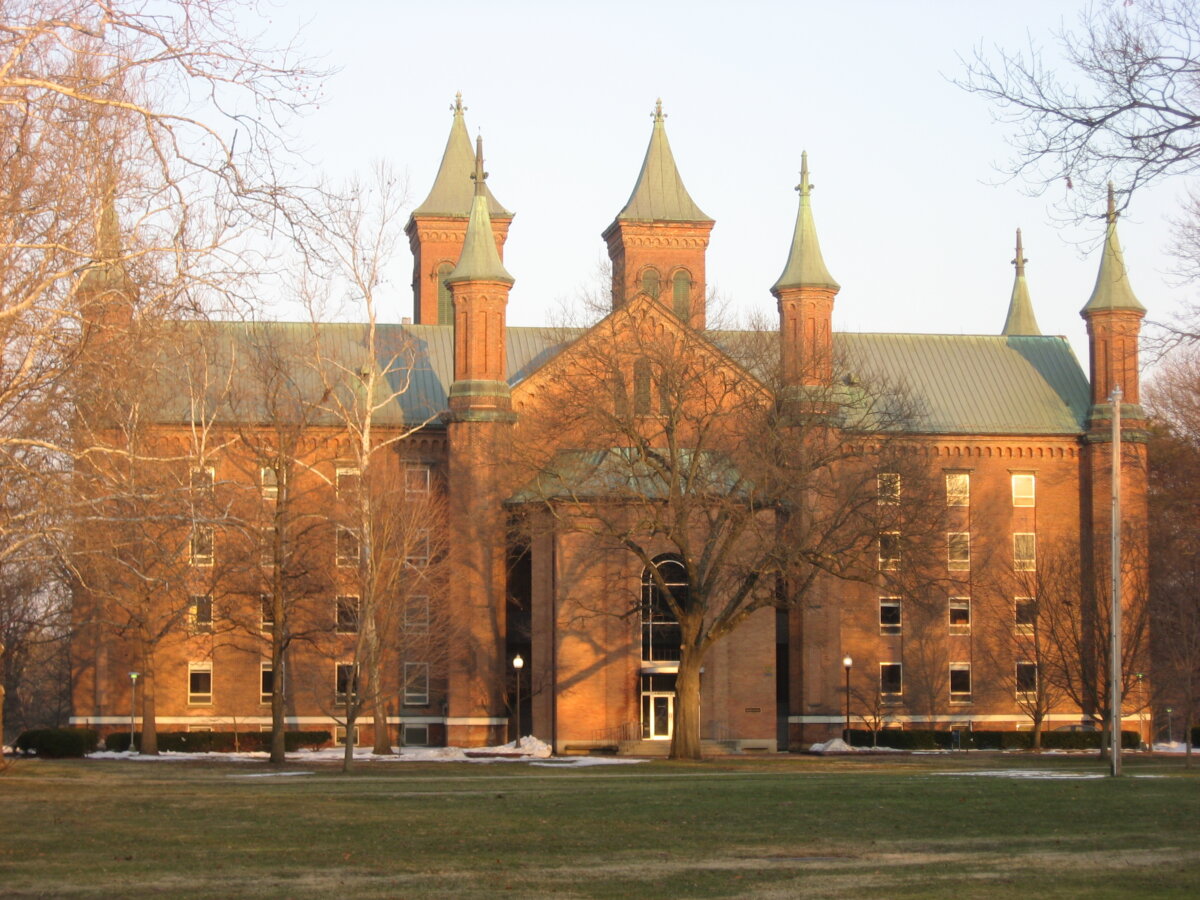
In 1852, Mann’s career had come to a crossroads. He decided to run for governor of Massachusetts, representing the anti-slavery Free Soil Party. He was also offered the post as president of the new Antioch College in Yellow Springs, Ohio.
He lost the election, so he accepted the school position. Antioch was one of the first colleges to afford equal opportunities to men and women, both as students and teachers. Mann remained in this position until his sudden death of typhoid fever in 1859 at the age of 63.
Many felt that he died due to years of fighting bitterly for a cause. This cause, non-sectarianism, had been one of his fiercest battles on the board of education.
Horace Mann believed in the then-revolutionary idea that education shouldn’t be connected to any one religious sect, to the exclusion of all other doctrines. Instead, he held that the only fair, democratic approach would be to teach a non-sectarian form of morality founded in basic Christian doctrine.
He saw this ecumenical approach as a truly American way of embracing the core beliefs of decency, justice, faith, honesty, honor, and love, which most citizens held at that time.
Any doctrines or dogmas specific to a particular denomination or sect were excluded, since they would only offend other denominations. Because of his efforts, Bibles were included in all schoolrooms.
Mann’s public school system not only taught the minds but also endeavored to nourish the souls of American children, without attempting to indoctrinate them in a particular religious creed.
Horace Mann’s views on merciful nurturing instead of fear-based teaching came from a love of education and a deeply sensitive heart for his fellow man. His goals for education represent the American motto “E pluribus unum,” which means “Out of many, one.” The United States of America combined many different cultures and ethnicities into one proud nation.
Shortly before his death, Mann gave a commencement speech to Antioch’s 1859 graduation class. His words remain Antioch College’s motto to this day, but they speak to every American citizen: “Be ashamed to die until you have won some victory for humanity.”
Please check out this amazing family Mann was part of that raised America to a cultural renaissance—Elizabeth, Mary, Sophia, and Nathaniel Hawthorne.
What arts and culture topics would you like us to cover? Please email ideas or feedback to features@epochtimes.nyc