To design the perfect cupola for Florence’s new cathedral, Santa Maria del Fiore, the famed engineer Filippo Brunelleschi (1377–1446) traveled to Rome. The ancient building that most captured his attention was the Pantheon: a 142-feet-high temple with a coffered concrete vault.
Brunelleschi made copious sketches of the impressive structure, which remains the world’s largest unreinforced concrete dome. The drawings later proved essential to accomplish engineering feats that earned him a reputation as one of history’s best architects.
Among the many who followed Brunelleschi’s example was the younger Leon Battista Alberti (1404–1472), a prolific, history-loving polymath whose groundbreaking contributions fueled the Italian Renaissance.
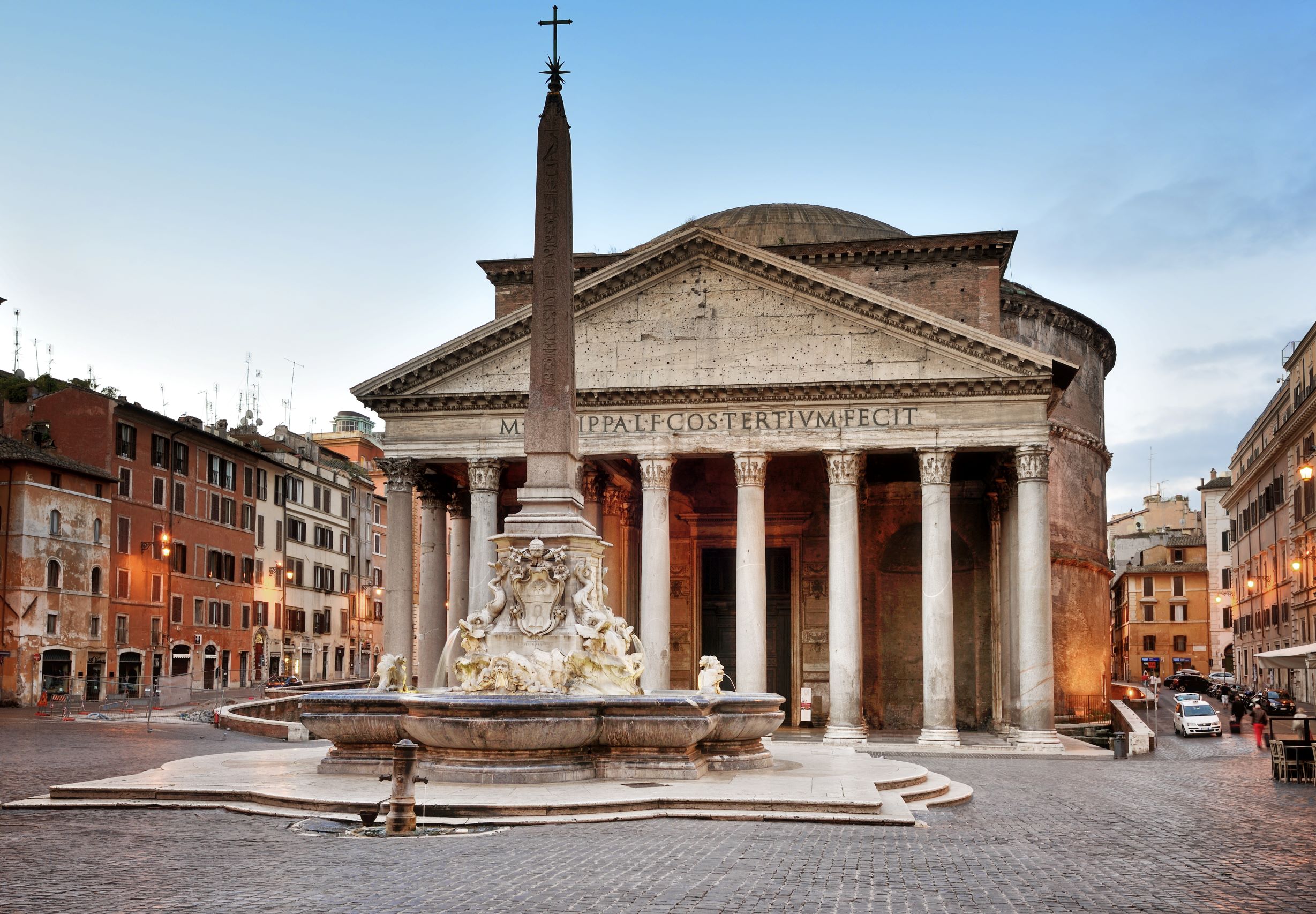 The Pantheon presents a standard temple front with a triangular pediment (structure above the lintel, or roof) sitting above a row of eight columns forming the front of the portico. The massive concrete dome rises behind the portico, supported by thick brick and concrete walls shaped as a drum. (picturepixx/Shutterstock)
The Humanists and the Renaissance
In the words of the eminent Florentine scholar-poet Angelo Poliziano (1454–1494), Alberti was “a man of rare brilliance, acute judgment, and extensive learning.”
Most details about Alberti’s life come from the popular “Lives of the Artists” by Giorgio Vasari (1511–1574). An accomplished artist, Vasari decided to write the biographies to pay homage to “those who, when art had become extinct, first revived, and then gradually conducted her to that degree of beauty and majesty” that he observed in his native Italy.
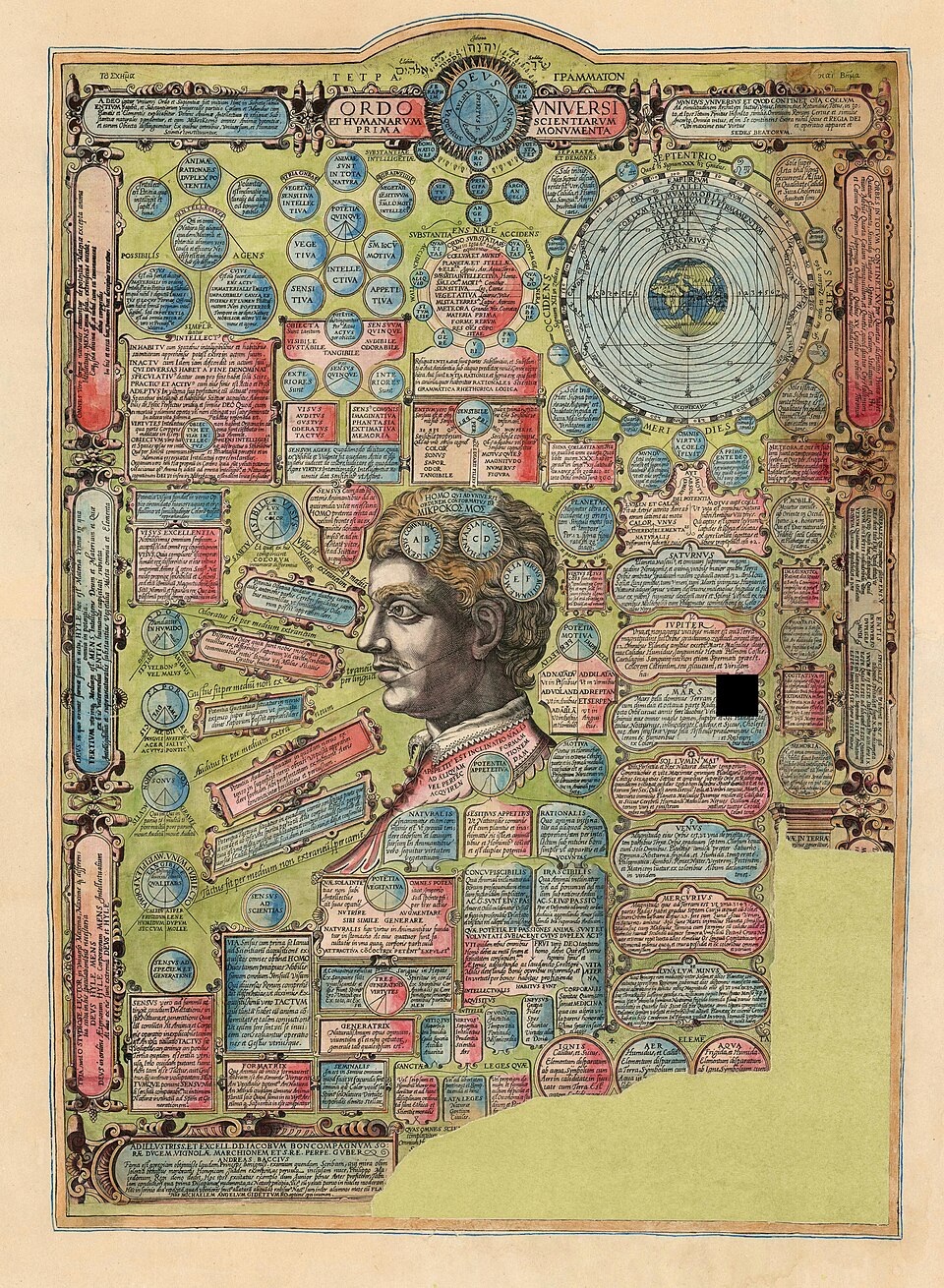 “Broadside of Humanist Cosmography,” 1585, by Gerard de Jode. This graphic of the Renaissance Humanist perspective examines how man perceives the world and how the universe—including the planets and elements—shape man. (Public Domain)
This desire to celebrate and imitate genius animated the Italian Renaissance. The period, which roughly lasted from 1300 to 1550, sparked countless breakthroughs in art, literature, and politics. Its leading figures prized human creativity to an unprecedented degree, hence their zeal for history, from which they could learn plenty about awe-inspiring achievements and great individuals. They became known as “humanists,” a title Alberti embodied wholeheartedly.
Exile, Writing, and the Papal Court
After fleeing Florence for political reasons, Alberti’s wealthy parents relocated to Genoa, where he was born in 1404. Despite his family’s unfavorable situation, Alberti received a top education. As a teenager, he was sent to boarding school at Padua, where he trained in Latin and literature. The 15th century saw the reemergence of lost texts by Cicero, Plato, and other ancient authors. The study of literature thus broadened to include these long-lost sources, which influenced a new generation of historically minded intellectuals.
Like similar wunderkinds, Alberti showed unusual enthusiasm for learning. He mastered his subjects with enviable ease, taking especially to writing. At age 20, he wrote a comedy in Latin. His style was so sophisticated that, for more than a century, the script was mistaken for an original by a Roman playwright.
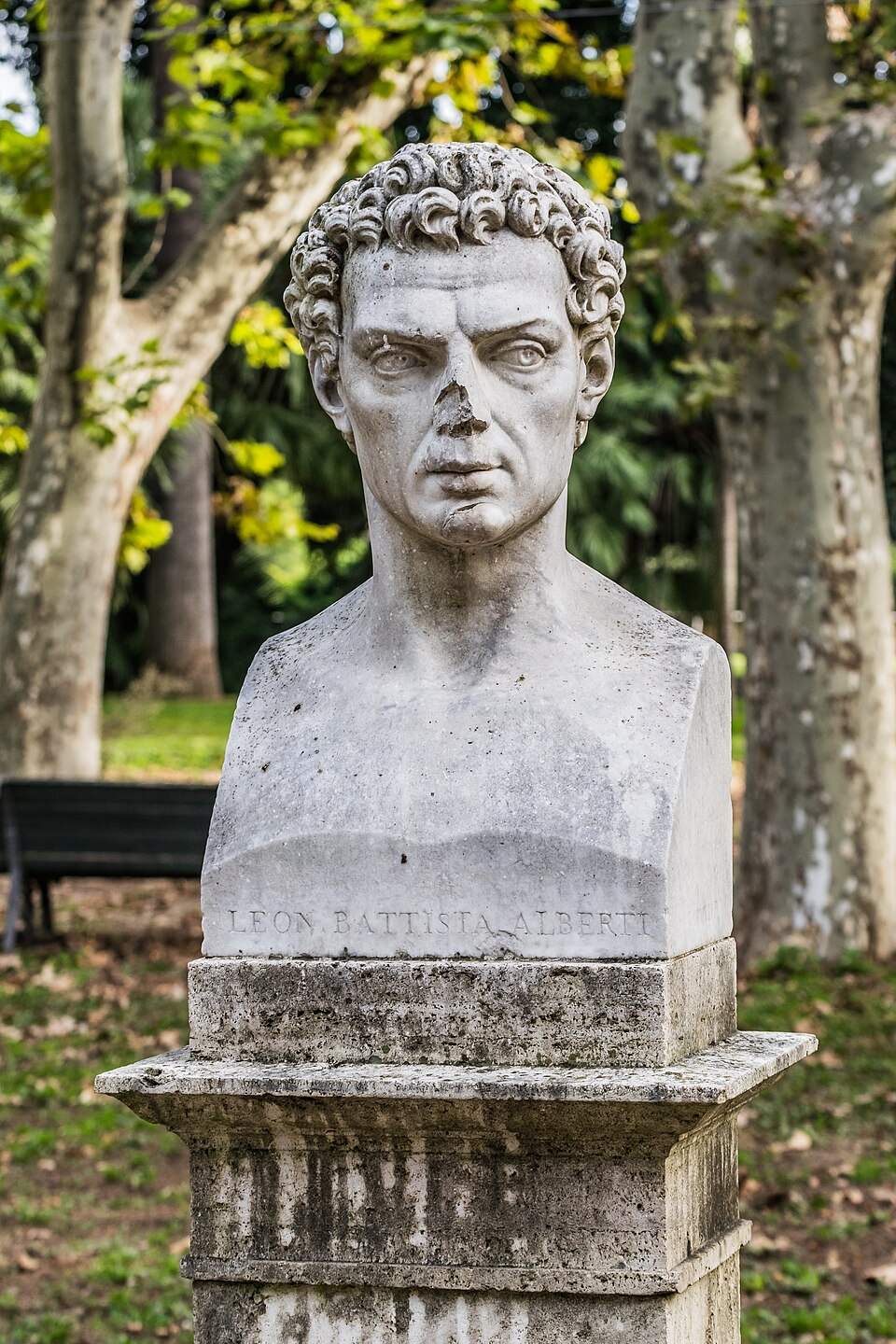 A bust of Leon Battista Alberti in the garden of Villa Borghese in Rome. (Krzysztof Golik/CC BY-SA 4.0)
Academics eventually brought Alberti to Bologna, where he studied law at one of the best universities of the time. Yet law was not for him. After taking holy orders in the Catholic church, he accepted a job as a literary secretary to the papal court. The new employment called him to Rome, where he advised several popes throughout a tumultuous epoch.
The Career of a Polymath
Alberti’s lifelong aim was to beautify the world. His devotion to beauty inspired a wide range of works. He wrote scientific, artistic, and philosophical treatises, including the first ever book on Italian grammar and an essay on cryptography, the science of encrypting sensitive information, which Brunelleschi and other inventors applied widely to protect their unpatented inventions.
Of Alberti’s works, three on visual art were especially influential. The first was published in 1450. It described painting as a mathematical art. “On Painting” also contained the first detailed explanation of linear perspective: a technique used to create the illusion of three-dimensionality on a two-dimensional surface. Alberti attributed the technique to Brunelleschi, who had invented it while brainstorming the cupola of Santa Maria del Fiore. Yet Alberti shared it with the wider world, thus making it an integral part of any artist’s practice, then and now.
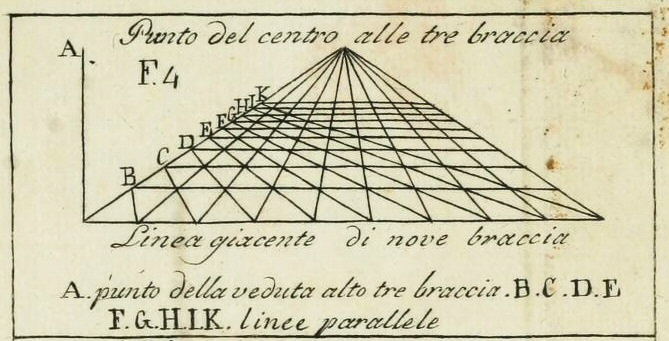 In “Della Pittura,” Alberti described artistic concepts such as a “vanishing point,” which created a three-dimensional effect on a flat surface. (Public Domain)
Alberti’s treatise on sculpture was less influential, although it explained some of the same principles. In both works, he stressed the need to learn from nature, which he deemed the best available source of symmetry and harmony. For Alberti, the overarching aim for painters and sculptors should be to imitate nature as closely as possible. This interest in natural realism found its first articulation in the ancient Greeks, who loved telling stories about the illusory powers of impeccable imitation in painting and sculpture.
Although Alberti dabbled in painting and sculpting, his main gift was writing. He studied contemporary theories and examined as many past works as he could. But, as Vasari noted, he “gave his attention … much more fully, to writing on these subjects, to which he was by nature more inclined than to the practice of art.”
Vasari admitted that many bested Alberti in technical know-how.
“[Yet] no artist of later times has been able to surpass him in his style and other qualities as an author,” he said.
The polymath’s favorite tool was the pen, which seems far mightier than the chisel or the paintbrush, not to mention the sword.
‘On the Art of Building’
A similar emphasis on nature and harmony permeated Alberti’s treatise on architecture, a trade which he considered a synthesis of art, science, and philosophy.
Written in Latin, Alberti’s “On the Art of Building” borrowed concepts from the renowned Roman architect Vitruvius (circa 80 B.C.–15 B.C.), who wrote a similar 10-book volume. Vitruvius, in turn, took inspiration from his ancient Greek predecessors, whose devotion to harmony defined great buildings like the Parthenon.
“On the Art of Building” was the first systematic Latin study of architecture in almost a millennium. Alberti intended the work “not only for craftsmen but also for anyone interested in the noble arts.” His wide-ranging discussions treat technical matters like material supplies and construction practices, along with more general topics like the social importance of architecture, the history of urban planning, and the philosophy of beauty.
Alberti defined beauty as “a form of sympathy and consonance of the parts within a body, according to definite number, outline, and position.” In other words, beauty is the harmony of all parts in relation to one another and the whole they form.
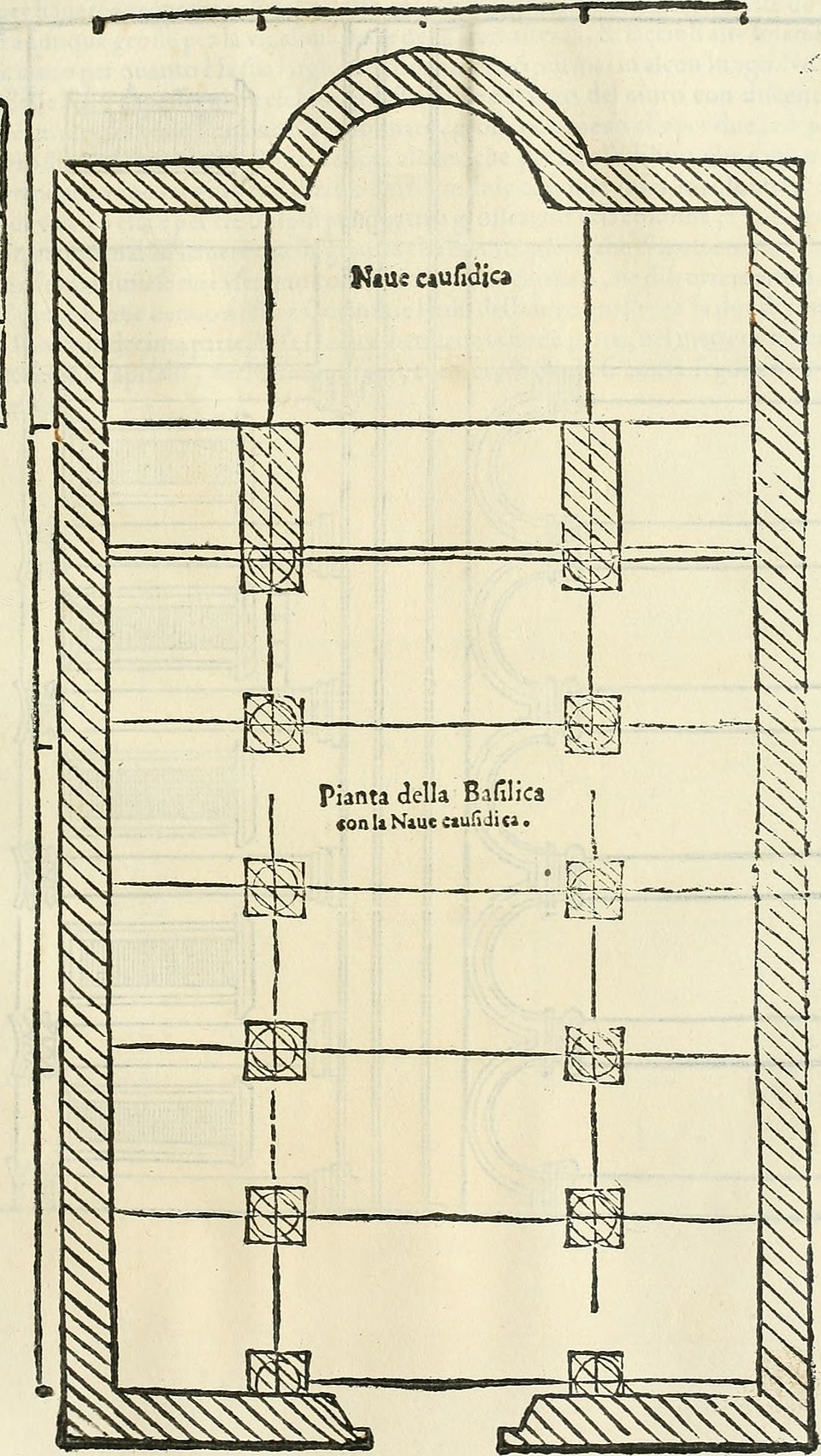 Creating harmonious shapes with circles, rectangles, and squares was paramount to Alberti. He illustrated a recommended basilica shape in a 1565 edition of “On the Art of Building.” (Public Domain)
For Alberti, the circle was the most harmonious shape. In a section on sacred spaces, he described the circle as the most appropriate shape for churches, baptistries, and other religious buildings, which were meant to reflect the unity of a divine cosmos.
The architect also discussed the square, hexagon, octagon, decagon, dodecagon, and three variations of a rectangle, all of which are derived from the circle and are therefore spiritually significant. According to Alberti, any structure, religious or otherwise, should integrate these ideal forms.
Alberti’s Projects
Little is known about Alberti’s architectural work. Nonetheless, the few projects he led illustrate his philosophy in practice.
The first recorded commission arrived in 1446, when Alberti was asked to design the façade of Florence’s Palazzo Rucellai, one of the first buildings to showcase Renaissance architectural principles. In addition to dividing the façade into proportional sections, Alberti also introduced two Greco-Roman elements (pilasters and entablatures), which he symmetrically arranged on the Palazzo’s exterior.
Four years later, Alberti was employed to renovate the Tempio Malatestiano, a Gothic church in Rimini, Italy. The façade was never finished, but it further shows integration of ideal shapes, this time with semicircular arches and triangular gables.
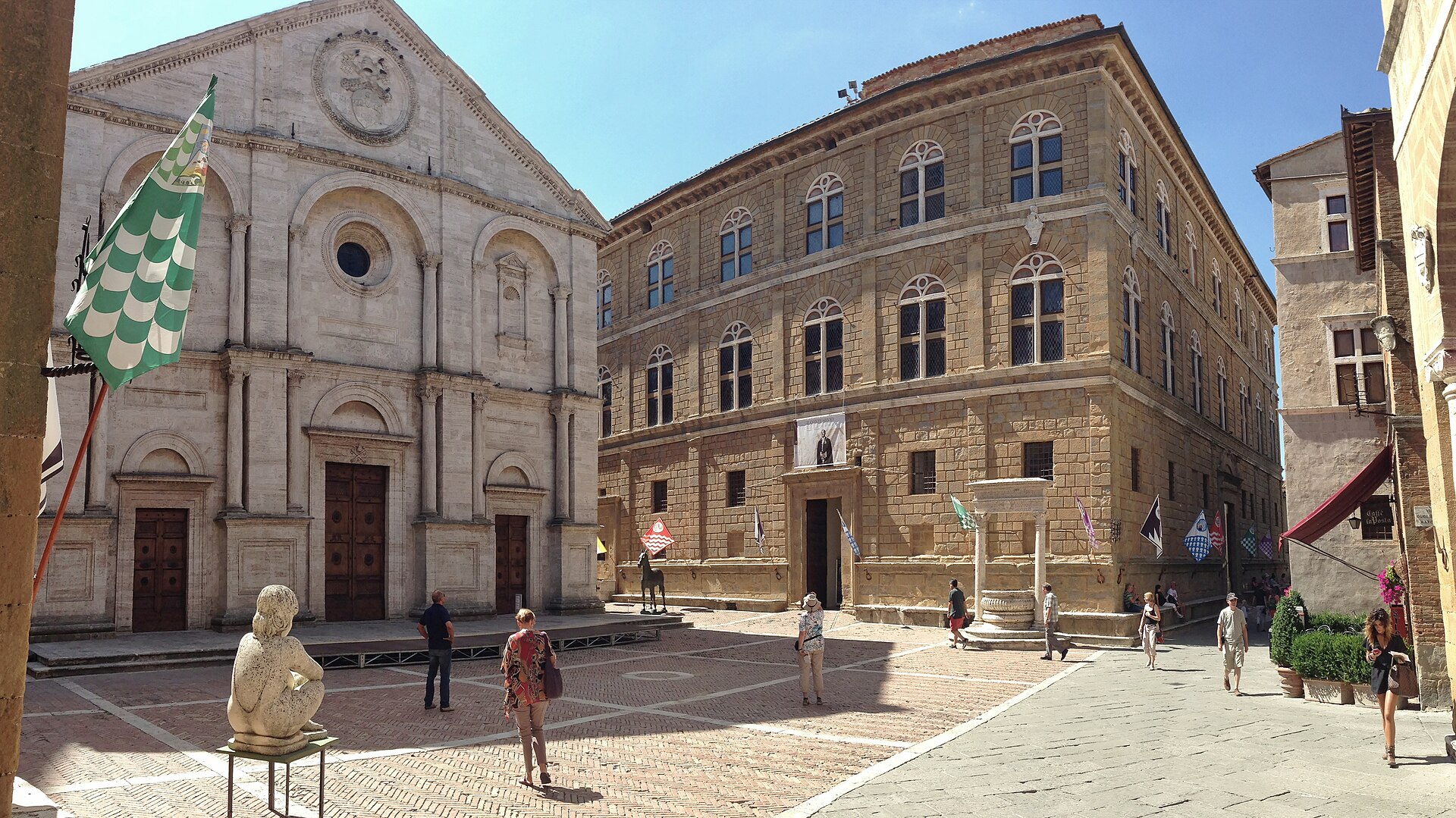 Tucked into the Tuscan countryside is Pienza, a planned city that Alberti designed. Piazza Pio II is the central square. (Oschirmer/CC BY-SA 3.0)
In Rome, Pope Nicholas V (1397–1455) contracted Alberti to design an urban basin for a major Roman aqueduct. Alberti’s simple design was replaced centuries later by the monumental Fontana di Trevi.
Around 1459, Alberti was asked to oversee the renovation of the tranquil Tuscan town of Pienza, home to another Pope, Pius II (1405–1464), who knew the architect well. With dozens of new or refurbished buildings, Pienza was the first town to be planned and rebuilt wholly according to Renaissance ideals.
Santa Maria Novella
The most famous building that bears Alberti’s mark is Florence’s church of Santa Maria Novella, which continues to captivate visitors as they make their way from the eponymous train station to the city’s heart.
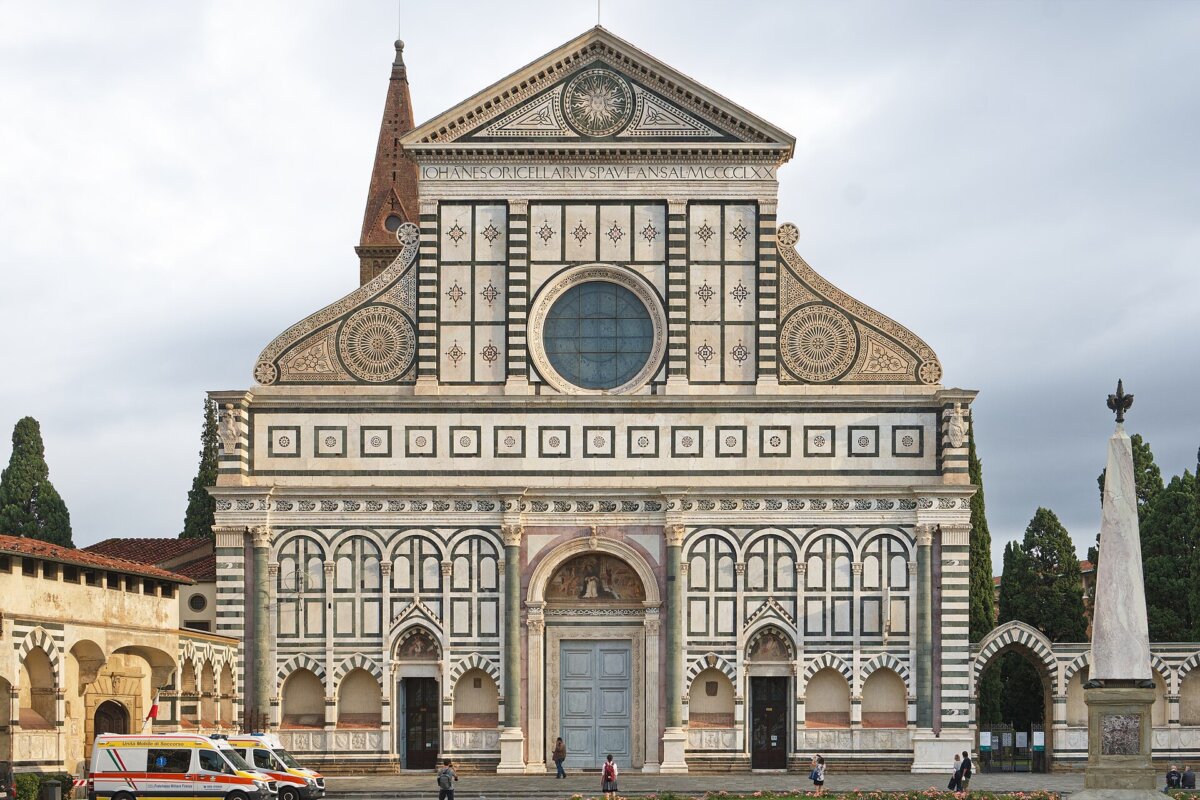
His main contribution was again to the church façade. The lower level had three doorways and six Gothic niches made from the same greenish marble found in some of Florence’s most famous churches. The Gothic structure also included a centrally located circular window.
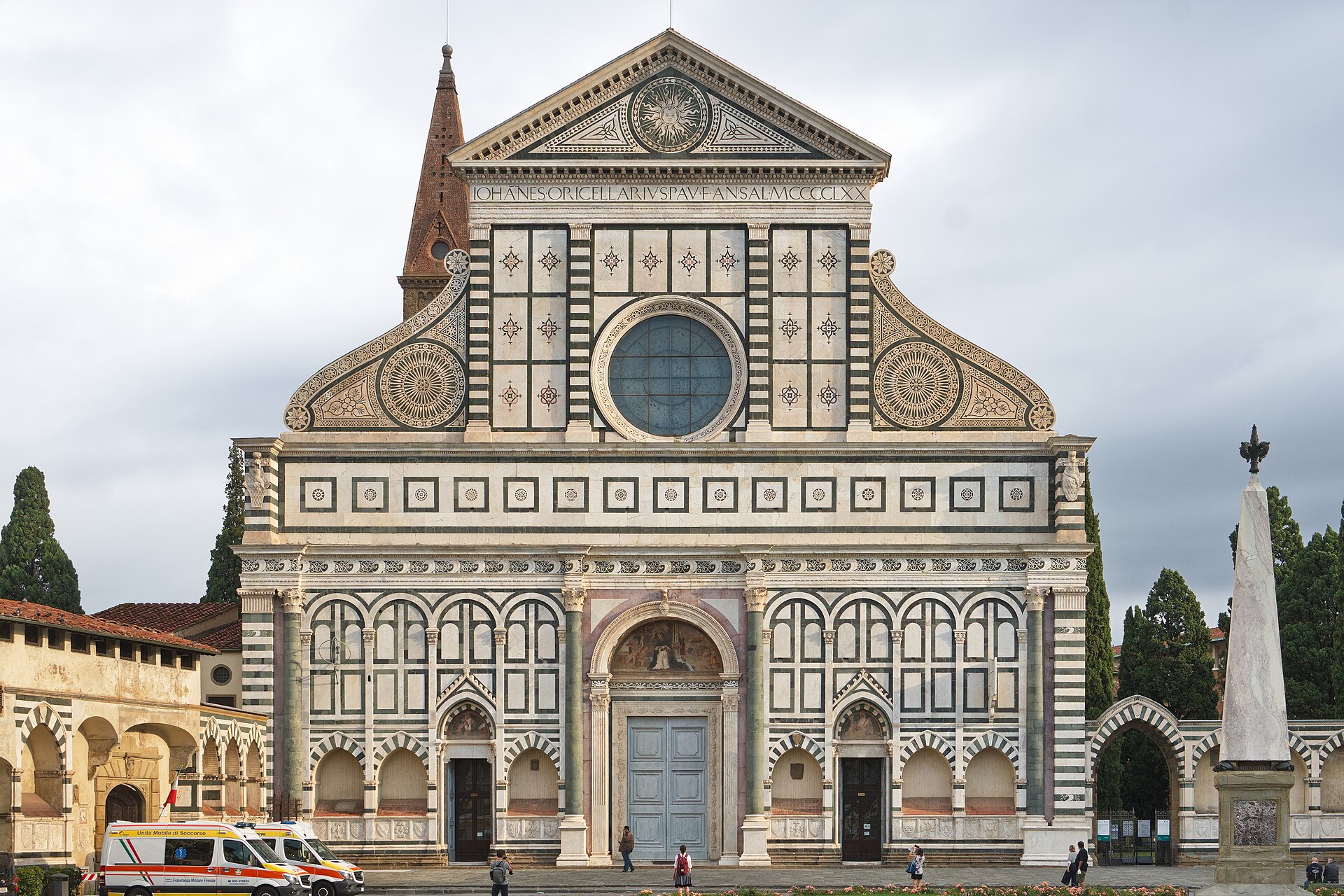 The front facade of Santa Maria Novella Church in Florence, Italy. Leon Battista Alberti completed it in 1470. (Armin Kleiner/CC BY-SA 4.0)
Alberti embellished these original elements with classical decorations. First, he attached four columns with Corinthian capitals to the lower façade. Corinthian capitals were a Roman trademark. Their ornate crowns symbolized prowess and prosperity.
His next addition was a frieze: a wide horizontal section supported by columns. Friezes are found on Athens’s Parthenon and virtually every major Greek or Roman temple. Whereas the Greeks decorated their friezes with bas-reliefs, Alberti chose a recurring pattern of tiled squares, in which he inscribed the name of the church’s patron: Giovanni Rucellai.
The architect topped the frieze with a pediment: a triangular gable typical of Greco-Roman structures. The pediment was built around the central window, which remained the upper façade’s focal point. On the pediment’s two corners, Alberti added two s-shaped scrolls, which had never been used before. The slanted scrolls widened the upper section and avoided visual discrepancies between it and the wide base. They also illustrated Alberti’s fascination with harmonious balance between divergent elements.
To finish it off, the architect designed an ornamental tiled sunburst. Ornamentation was usually sculpted. But by choosing flat tiles, Alberti sacrificed depth and texture in favor of chromatic variety. The dazzling ornamentation remains one of the façade’s most appealing details.
Unity and Beauty
Alberti wasn’t interested in copying the past. He appreciated the value of Greco-Roman architecture, but he also knew that his times demanded innovation. The same went for Brunelleschi, Leonardo da Vinci (1452–1519), and the countless masters who have stirred artists’ imaginations ever since the Renaissance.
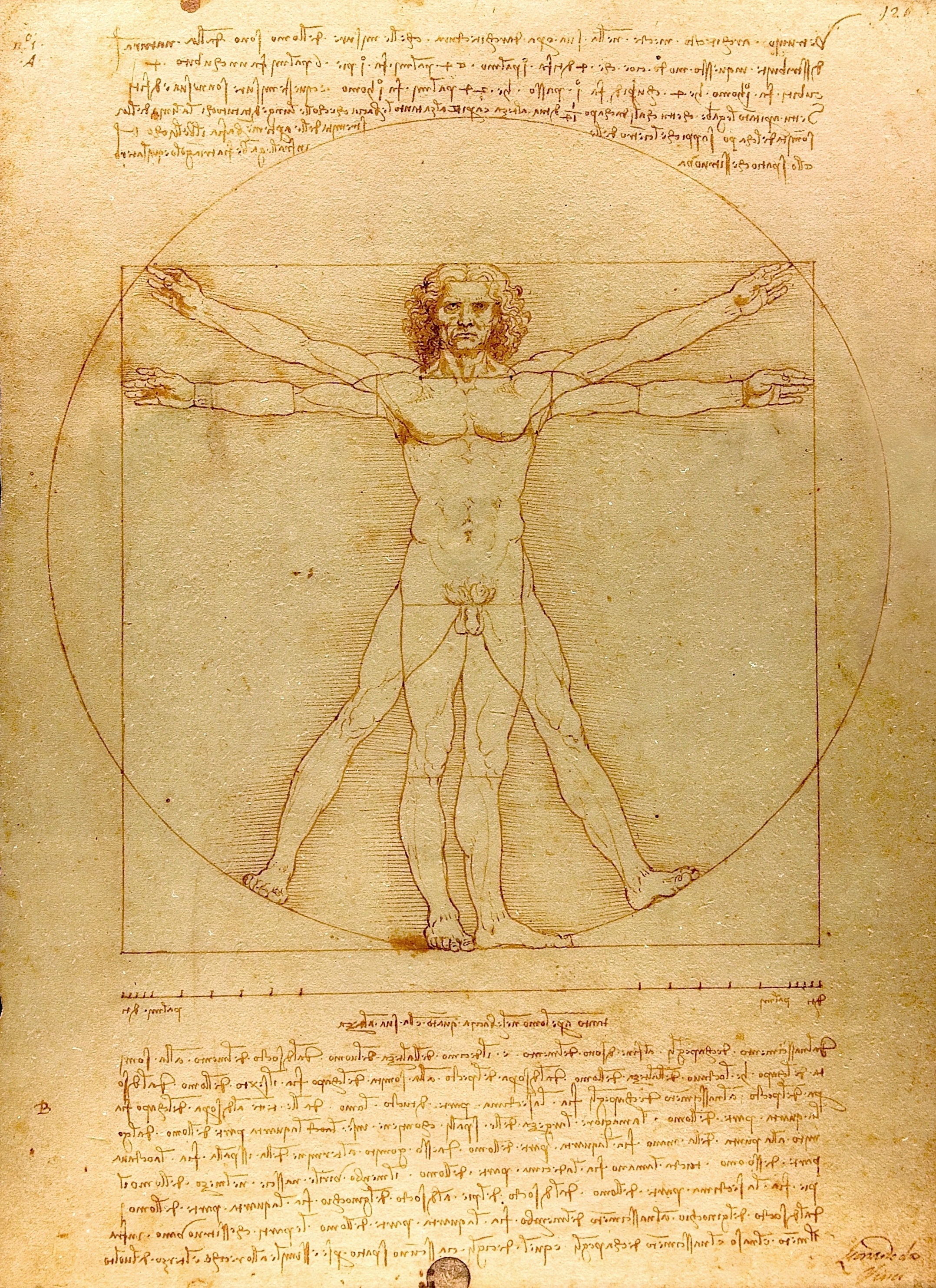 “Vitruvian Man,” circa 1492 by Leonardo da Vinci. Ink and wash on paper. Gallerie dell’Accademia. (Luc Viatour)
Classically minded architects still cite Alberti as a role model, not least because of his passionate statements about beauty. In his words:
“Most noble is beauty … and it must be sought most eagerly by anyone who does not wish what he owns to seem distasteful. What remarkable importance our ancestors, men of great prudence, attached to it is shown by the care they took that their legal, military, and religious institutions—indeed, the whole commonwealth—should be much embellished.”
For the architect, beauty wasn’t merely an aesthetic feature. It was a reflection of divine creation, cosmic unity, and humanity’s potential for virtue. Seven centuries later, his ideas continue to inspire.
What arts and culture topics would you like us to cover? Please email ideas or feedback to features@epochtimes.nyc.