Traditional Culture

The Breakers: Grace and Grandeur

BY Sarah Isak-Goode TIMEMay 16, 2026 PRINT

At the pinnacle of American society’s Gilded Age, few figures embodied the duality and competing impulses of the era more vividly than two sisters-in-law. While Alva Vanderbilt Belmont wielded wealth as an instrument of power, Alice Vanderbilt could not have been more different.

Alice was, in many ways, the conscience of the Gilded Age Vanderbilts. Born into a prominent but modest Cincinnati family with roots stretching back to early colonial America, she brought to the Vanderbilt dynasty something no amount of money could buy: genuine grace.

As her sister-in-law Alva Vanderbilt maneuvered for headlines, Alice remained deliberately apart from it all, known to the press not for spectacle but for generosity and devotion to family. Her charitable work was considerable: She donated generously to the YMCA, the Red Cross, the Salvation Army, and several New York churches.

Faith shaped Alice’s life from early on. It was while teaching Sunday school at St. Bartholomew’s Episcopal Church that she first met Cornelius Vanderbilt II, the man she would marry and stand beside as matriarch of America’s most powerful family for over six decades. Alice oversaw the construction of grand estates, including The Breakers in Newport, Rhode Island.

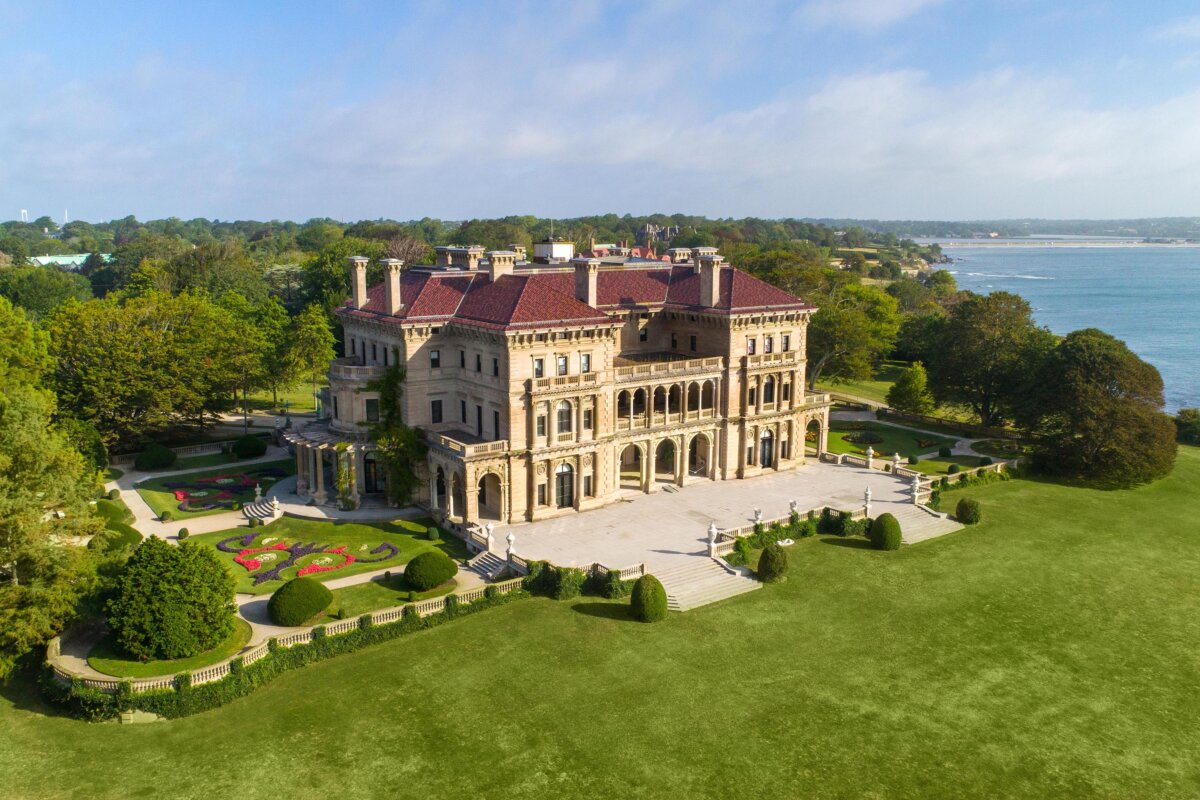
When Alva and William Kissam Vanderbilt commissioned Richard Morris Hunt to design Marble House, the result was a marble palace reminiscent of the White House, built over four years. The mortar had barely dried on its completion when Alice and Cornelius, president and chairman of the New York Central Railroad, hired Hunt for an even grander undertaking.

For Alice, it was an implicit challenge. She and Alva had spent nearly two decades as rivals, vying for dominance in Gilded Age New York and Newport society. The rivalry was driven by stark differences in personality: Alva was domineering and fiercely ambitious, while Alice remained the composed and reserved wife of the family patriarch. Their competition found its fullest expression not in drawing rooms or dinner parties, but in stone and marble. What Alice had built in its place—The Breakers—would be their answer to everything Alva had done.

Constructed between 1893 and 1895, The Breakers was modeled after a 16th-century Italian palazzo, with one intention: to surpass Marble House in every measure. Where Marble House had 50 rooms across four floors, The Breakers answered with 70 rooms across five. Where Alva had spent $11 million, Alice spent more than $12 million. Inside, the mansion delivered on every ambition: soaring 50-foot ceilings in the Great Hall, rich marbles, gilded rooms, and interiors layered with ornately carved marble, gilded wood, painted ceilings, statuary, stained glass, and Italian tapestry.

Today, the Breakers remains the grandest of Newport’s summer cottages and a symbol of Vanderbilt power at the height of the Gilded Age. Recognized as a National Historic Landmark in 1994, the estate is now preserved and operated by the Newport Preservation Society as a museum open to the public year-round.
The Breakers
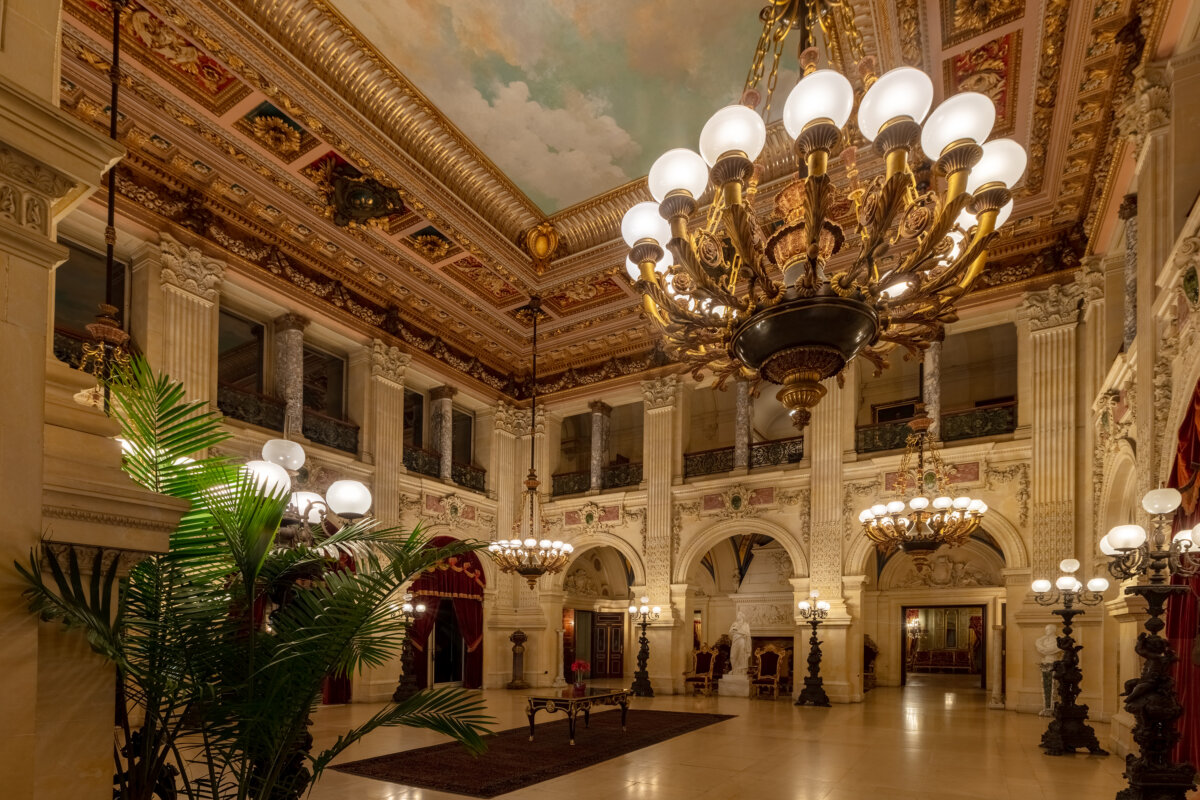
The Great Hall rises 50 feet in each direction, inspired by an open-air courtyard and crowned by a ceiling painted to resemble the sky. Walls of carved Caen limestone line the space, with Vanderbilt family crests woven discreetly into the details. Above each of the six doors, limestone figures celebrate human achievement in art, science, and industry, including the Vanderbilt’s architect, Richard Morris Hunt, representing architecture. (The Preservation Society of Newport County)
Epoch Times Photo
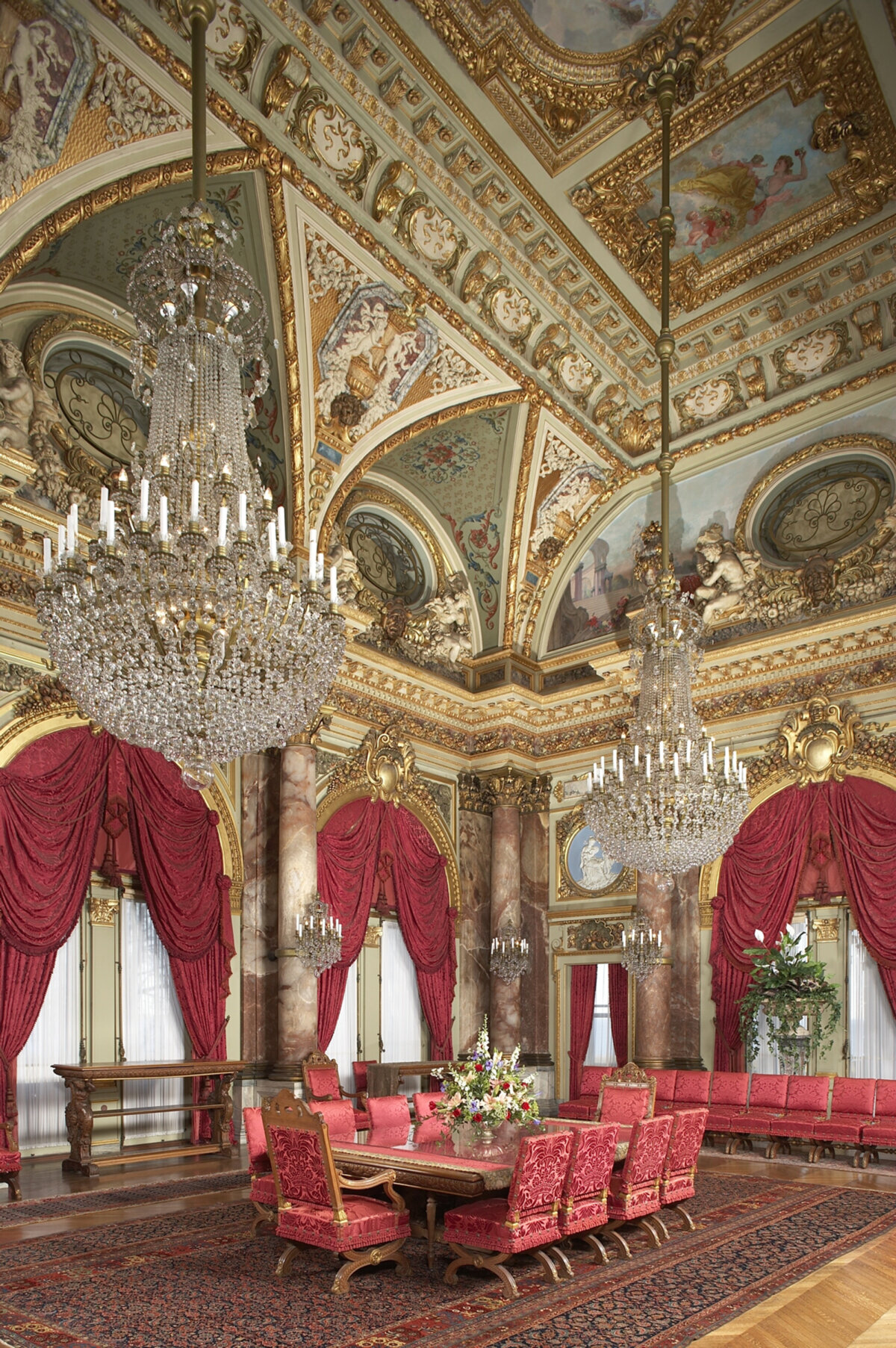
The grandest room in the house, the two-story dining room spans 2,400 square feet and can seat 34 at a carved oak table. Twelve alabaster Corinthian columns support a colossal gilt cornice. A ceiling painting of Aurora, the goddess of dawn, is framed by 22-karat gold leaf detailing, while two magnificent chandeliers hung with hand-cut crystals illuminate the room below. (The Preservation Society of Newport County)
The Breakers
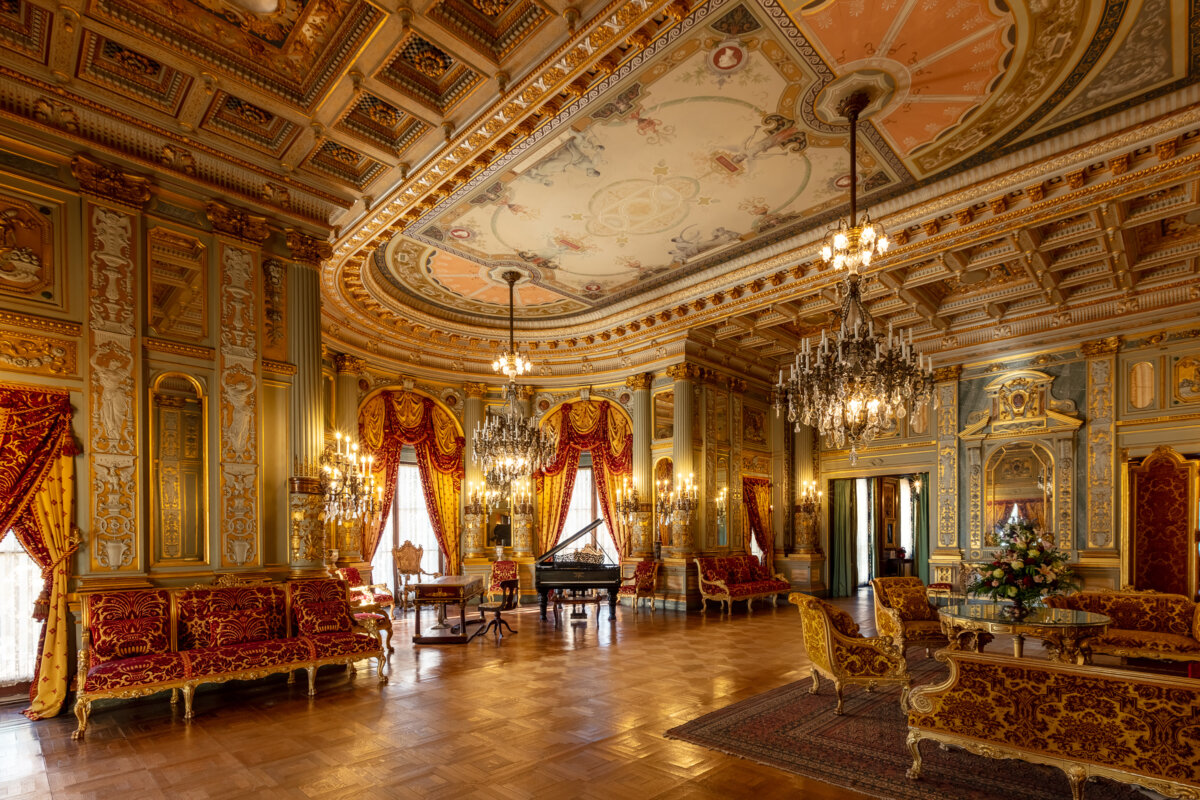
The ornate Music Room features eight platinum leaf panels depicting classical mythology and a silver-and-gold gilt-coffered ceiling edged with inscribed molding. Here, Cornelius played violin while Alice played the room’s Second Empire French mahogany ormolu-mounted piano. The space also appeared in HBO’s “The Gilded Age,” serving as the Russell family ballroom during the Season 1 finale. (The Preservation Society of Newport County)
The Breakers
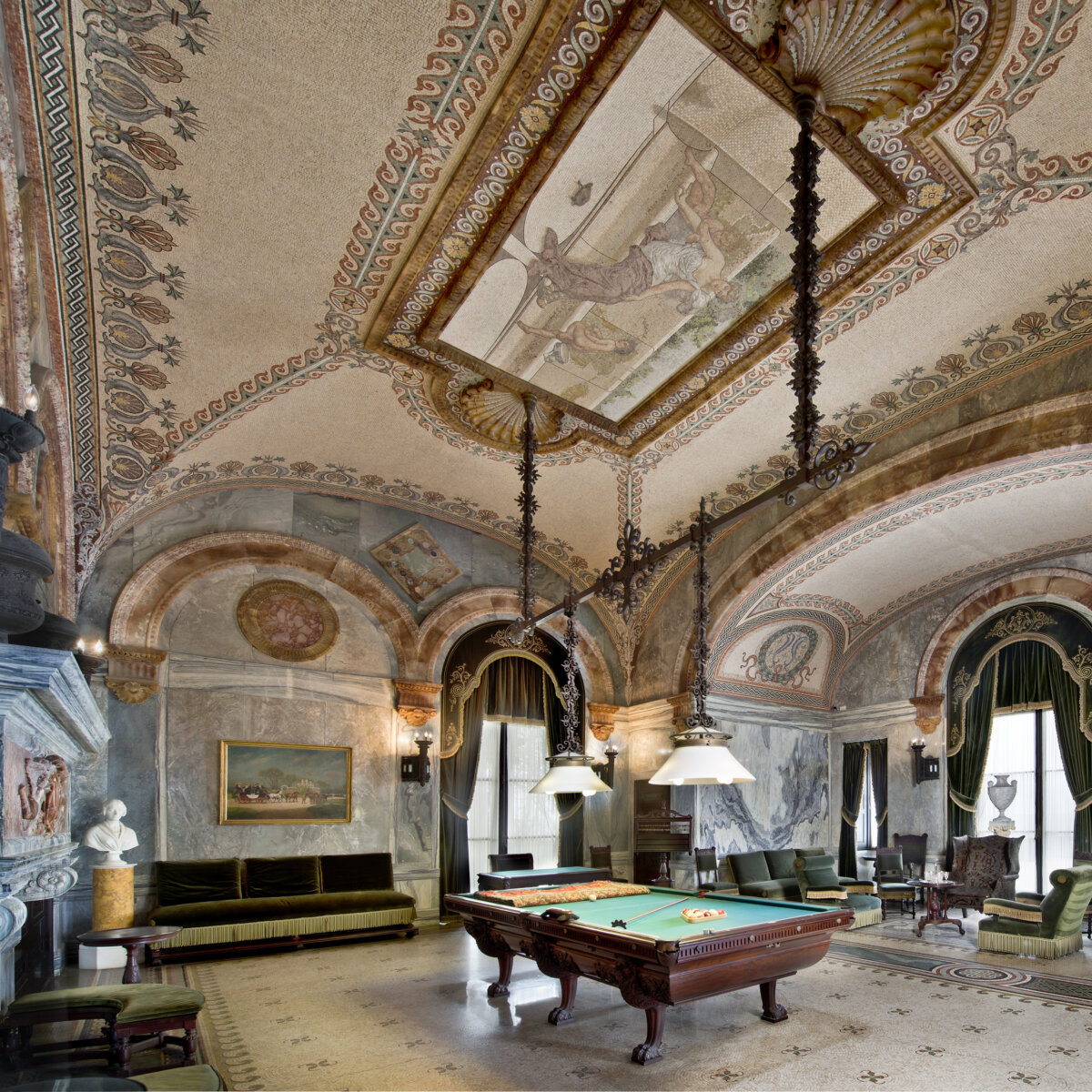
Also featured in “The Gilded Age,” the billiard room is wrapped in Cipollino marble, prized since Ancient Rome for its dramatic wavy bands of white, green, and gray. The hand-laid mosaic tile floor features a repeating pinwheel pattern of four acorns and oak leaves, symbolizing the “little acorn to a mighty oak” concept and reflecting the growth of the Vanderbilt fortune. (The Preservation Society of Newport County)
The Breakers
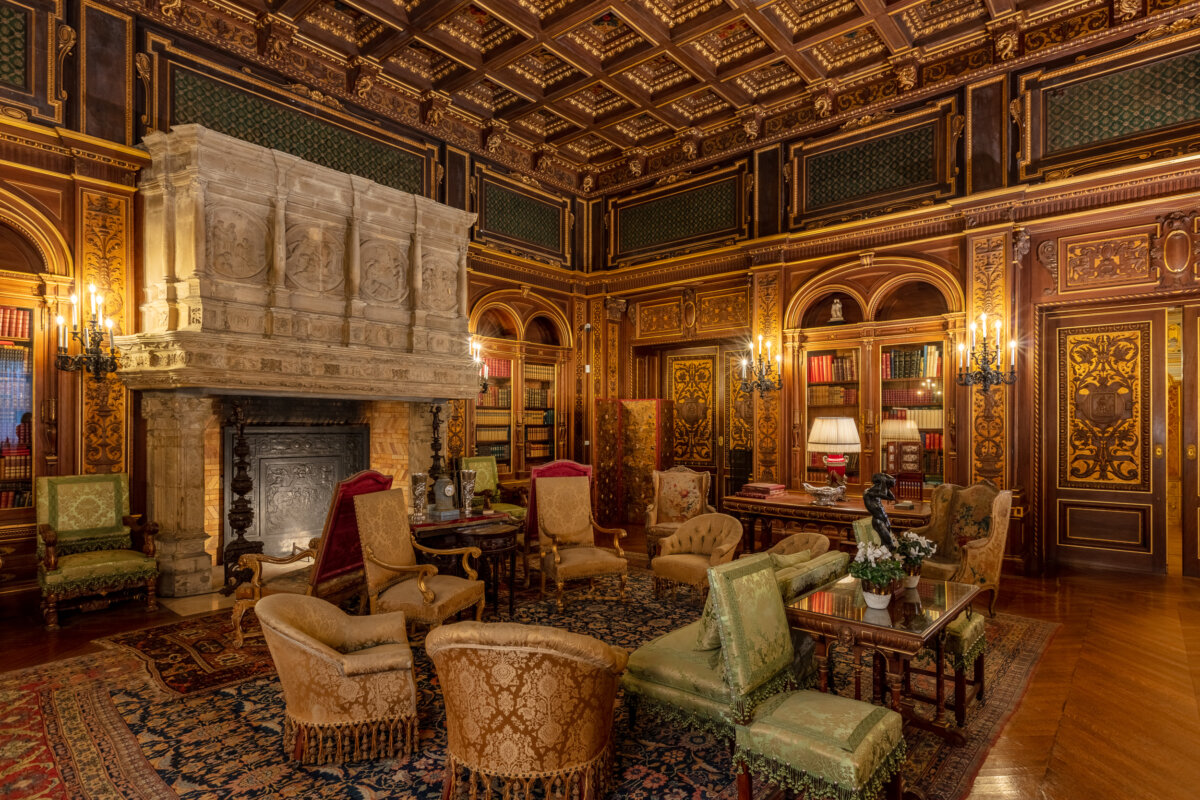
The library features coffered ceilings painted with dolphins, Renaissance symbols of love and protection. The walls of Circassian walnut paneling are detailed with gold leaf to resemble a leather-bound book. Green Spanish leather, embossed with gold, lines the space between the ceiling and paneling. The 16th-century French fireplace carries the inscription “I laugh at great wealth, and never miss it; nothing but wisdom matters in the end.” (The Preservation Society of Newport County)
The Breakers
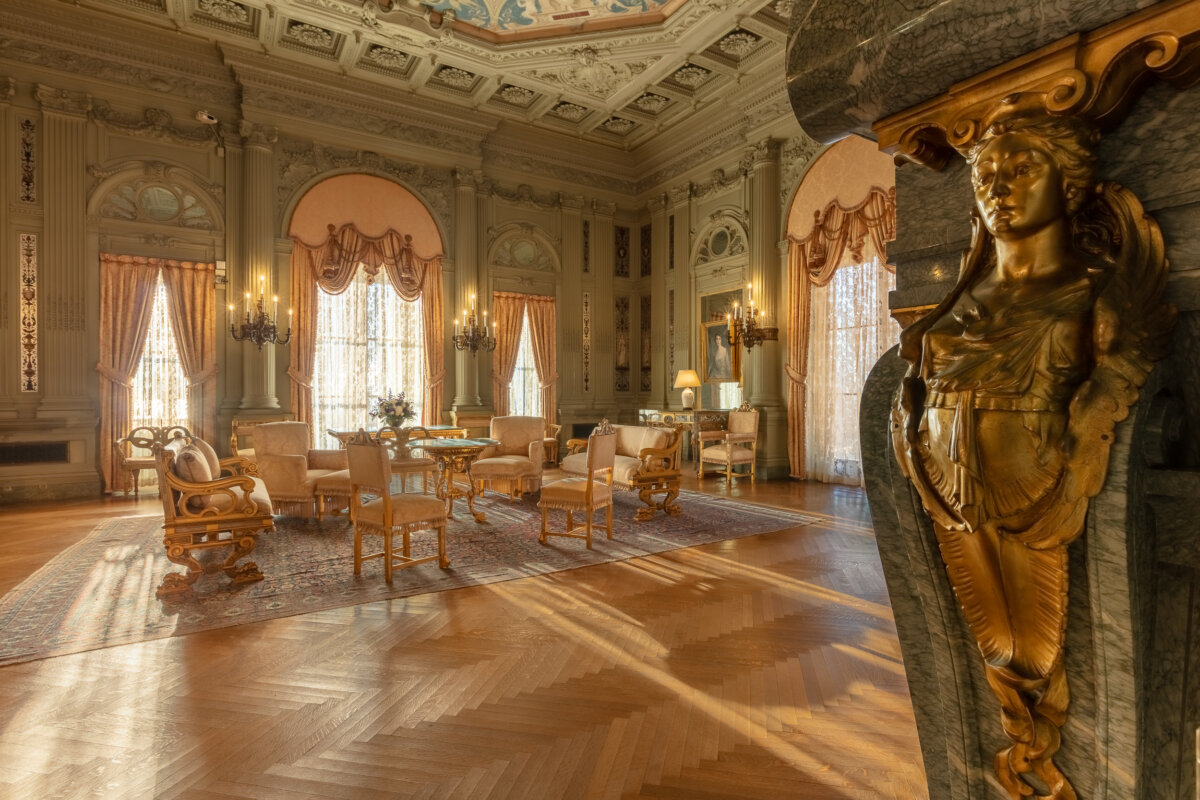
Designed for family gatherings, the Morning Room faces east to catch the rising sun while offering views of the Atlantic. All interior woodwork and furnishings were designed and crafted in France. Adorning the walls are panels depicting Greek goddesses. Originally thought to be silver leaf, the panels were later confirmed to be platinum, which was rarer than gold at the time and chosen because it does not tarnish. (The Preservation Society of Newport County)

What arts and culture topics would you like us to cover? Please email ideas or feedback to features@epochtimes.nyc.

Sarah Isak-Goode is a writer and art historian rooted in the Pacific Northwest. Her name—pronounced EYE-zik-good and meaning "good laugh"—hints at the warmth she brings to everything she does. Equal parts scholar and storyteller, Sarah brings the past to life through a distinctly human lens, exploring what connects us across the centuries. Away from her desk, she feeds her curiosity through traveling, painting, reading, and hiking with her dog, Thor.
You May Also Like