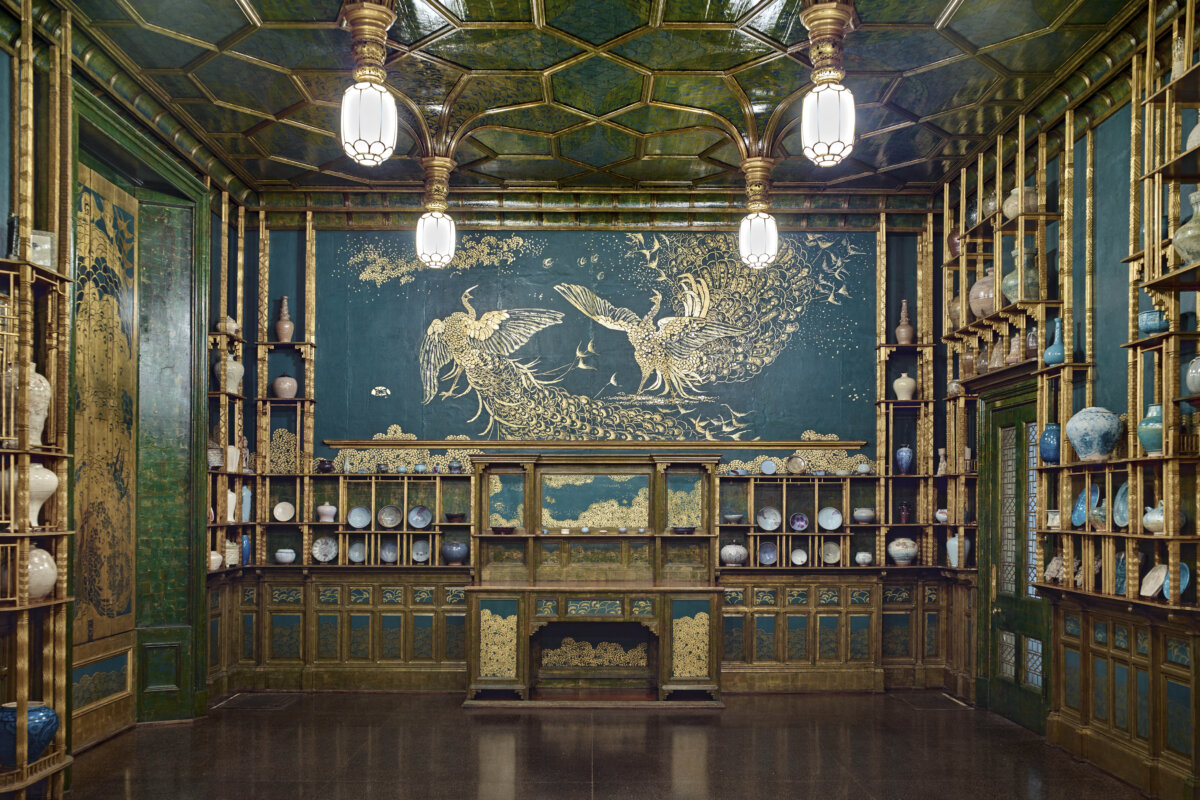
James McNeill Whistler’s fantastical “Harmony in Blue and Gold: The Peacock Room” is a mesmerizing masterpiece of the late-19th-century Aesthetic movement. Conceived 150 years ago, it is arguably among the first art installations. Originally an immersive decorative scheme for the London dining room of a wealthy shipowner, it now resides at the Freer Gallery of Art in Washington, one of two institutions that make up the Smithsonian’s National Museum of Asian Art. Combining eastern and western aesthetics, contemporaneous and historic art, the room is as vital and relevant today as it was when made in 1876 and 1877.
A trailing motif found throughout the Aesthetic movement in both Britain and America is the peacock feather. Prominent examples of the latter include Louis C. Tiffany’s mosaic of peacocks for the Havemeyer home in New York City and John La Farge’s stained glass windows, now in the Smithsonian American Art Museum’s collection. The bird’s ethereal plumage inspired artists due to its dazzling colors and iridescence, along with its symbolism of renewal and immortality.
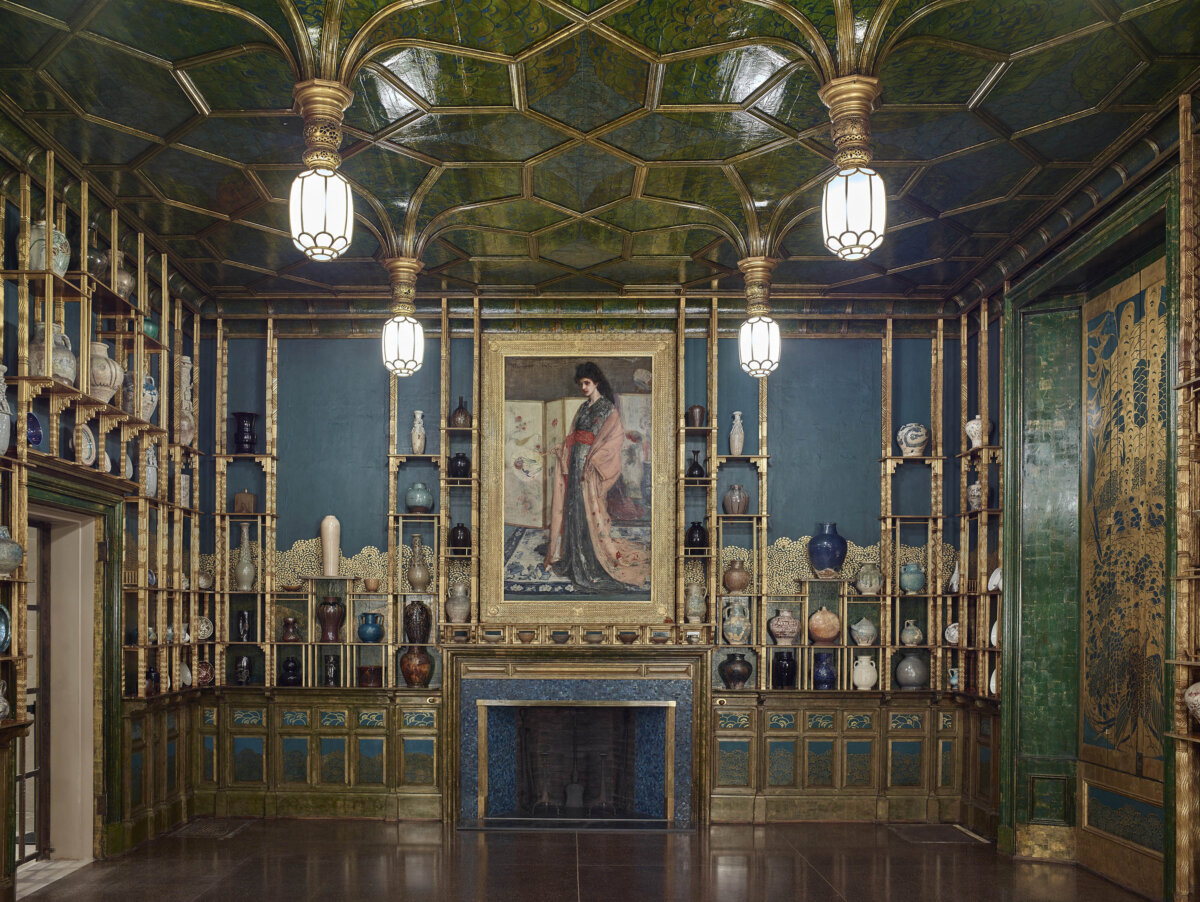
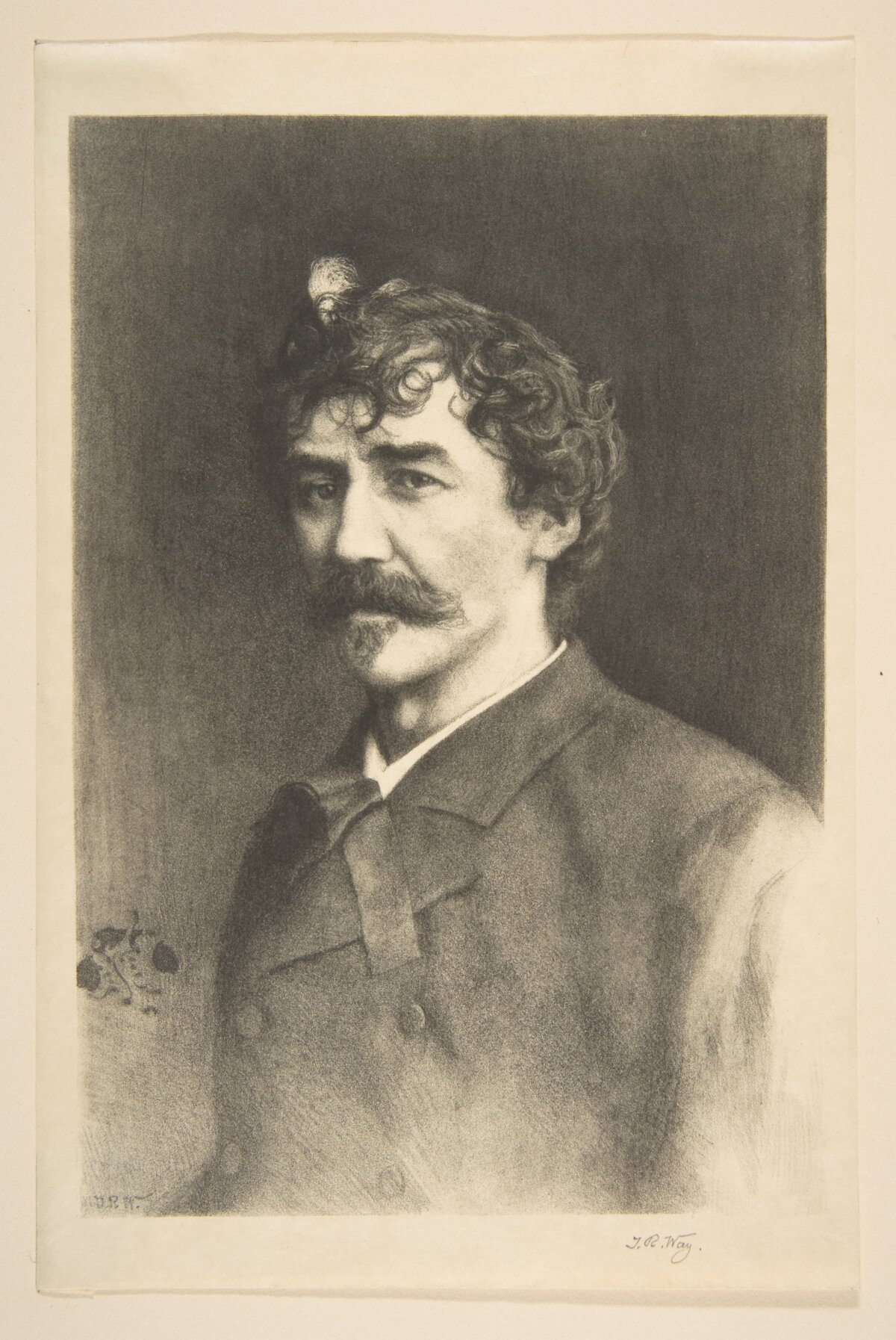
The most famous artwork from the period with a peacock theme is this room. Whistler (1834–1903) was born in Lowell, Massachusetts. His family moved to Tsarist Russia for his father’s job, and young Whistler studied at the Imperial Academy of Fine Arts in St. Petersburg. After spending time in Paris as an adult, he moved to London in 1859 and lived there for the rest of his life. Japanese art was a significant influence on his unique style and aesthetic theory, and he gave his works, including “Harmony in Blue and Gold: The Peacock Room,” musical titles. Gifted and prolific, Whistler was also known for having a tempestuous personality.
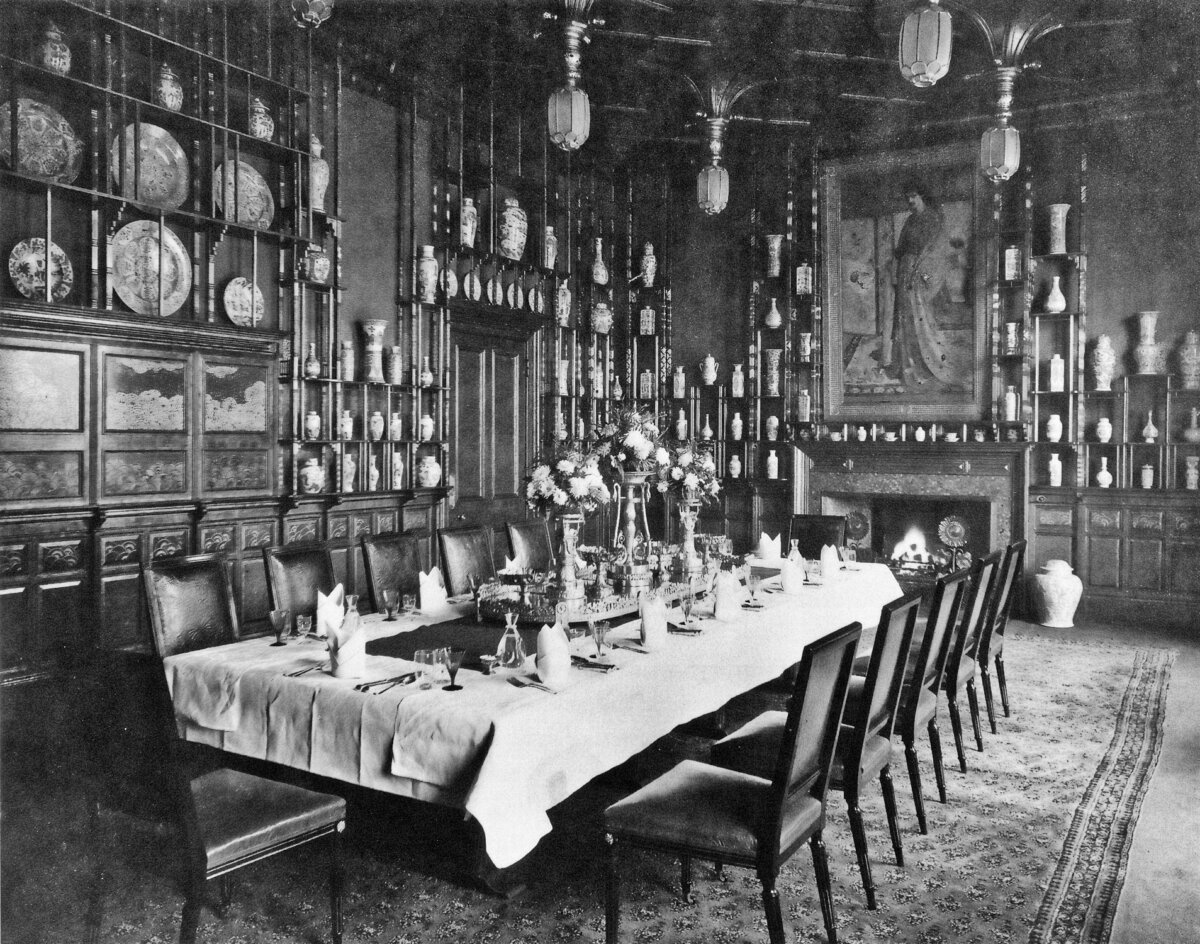
Leyland’s ‘Porcelainzimmer’
The patron of “The Peacock Room” was shipping magnate Frederick Leyland (1831–1892), a prominent art collector. The room’s origin dates to his purchase of a grand London home, 49 Princes Gate. Leyland had a collection of blue-and-white Chinese porcelain, mostly dated to the Kangxi era (1662–1772) of the Qing dynasty, and decided to remodel the dining room into a “porcelainzimmer,” an opulent room or cabinet used for displaying porcelain. He hired British architect Thomas Jeckyll (1827–1881), who, like Whistler, incorporated Japanese elements into his work, to design the room’s interior. Jeckyll devised a plan that included an intricate lattice of carved shelving to house the ceramics as well as antique Dutch gilt leather wall hangings.
Whistler’s painting “The Princess from the Land of Porcelain” hung over the dining room’s mantlepiece. Leyland, an early supporter of Whistler, had procured this oil-on-canvas several years previously. It shows a Western woman in a kimono surrounded by Chinese and Japanese objects that the artist collected himself. The model was the Anglo-Greek beauty Christina Spartali (1846–1884), sister of Pre-Raphaelite painter and muse Marie Spartali Stillman. Jeckyll designed the pair of gilded sunflower andirons under the painting.
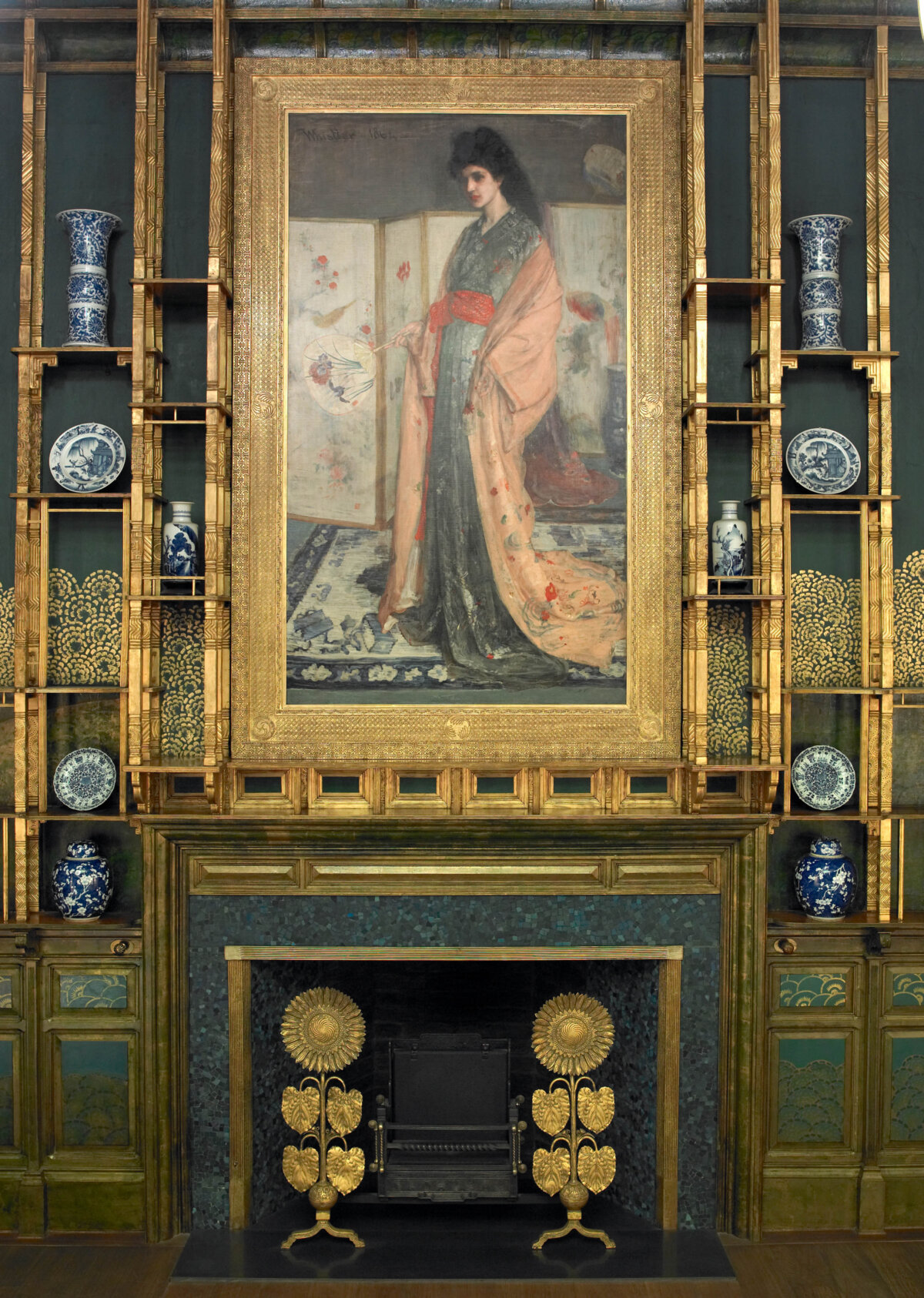
Unfortunately, Jeckyll was taken ill during the project. Whistler, who was painting decorative panels for the house’s entrance hall, offered to finish work on the dining room. Leyland agreed to Whistler’s suggestion to modify the room’s color scheme, as the artist believed that the red roses on the leather wall hangings were unharmonious with the palette of “The Princess from the Land of Porcelain.”
The Tempest and the ‘Liverpool Medici’
The plan was that while Leyland was at his home in Liverpool, Whistler would retouch the leather with yellow paint and embellish the cornice and wainscoting with a wave pattern that echoed the design in the departed architect’s leaded-glass door. However, the Smithsonian explains:
“During Leyland’s absence, Whistler grew bolder with his revisions. He covered the ceiling with squares of dutch metal (imitation gold leaf) and a lush pattern of peacock feathers, gilded the spindle shelving, and painted an array of magnificent peacocks on the inside panels of the shutters.”
Considering this decorative interior as a three-dimensional painting, Whistler added a blue rug to the floor, signed his work multiple times with his butterfly emblem, and gave the whole room a formal artistic title: “Harmony in Blue and Gold: The Peacock Room”
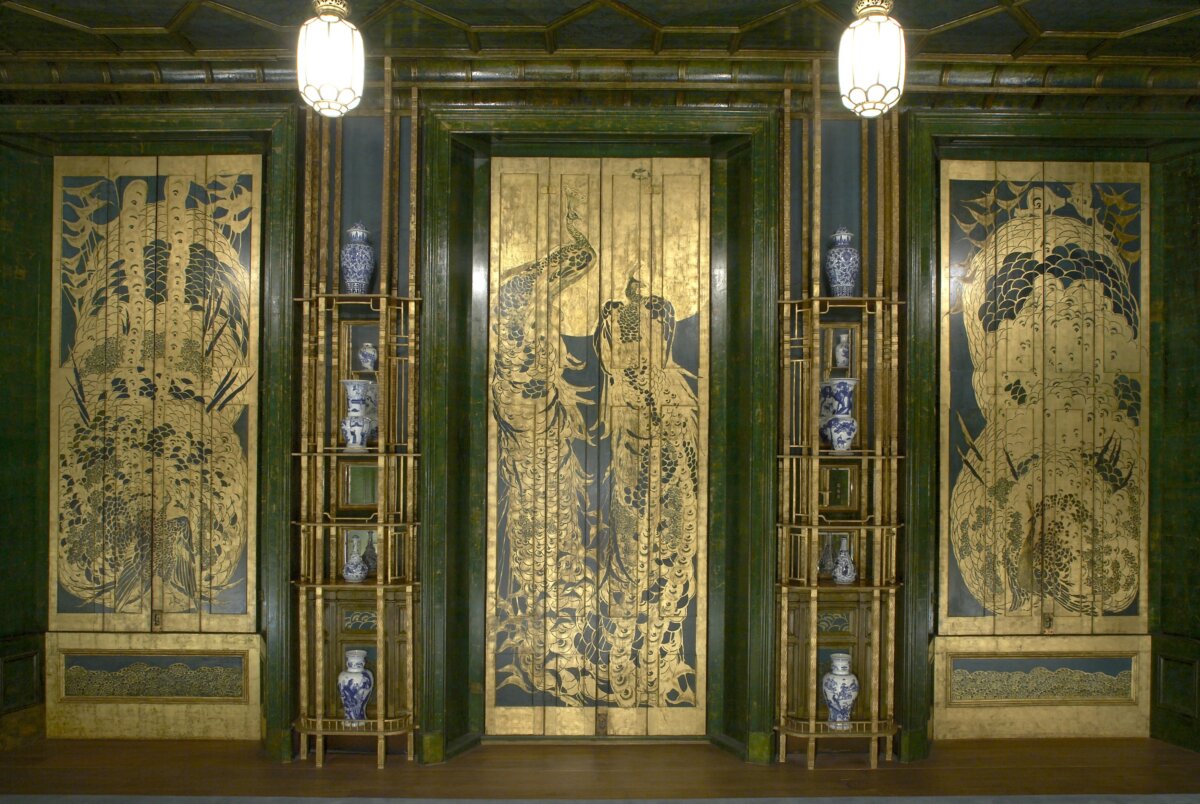
Whistler believed that such a transformation, though unsolicited, merited an enlarged fee. Leyland, shocked by Whistler’s improvisations that left nearly every surface green, gold, or Prussian blue, refused to pay it. This led to a heated dispute. A sum was finally settled on, though Whistler remained dissatisfied, and the friendship between the two men was ruined.
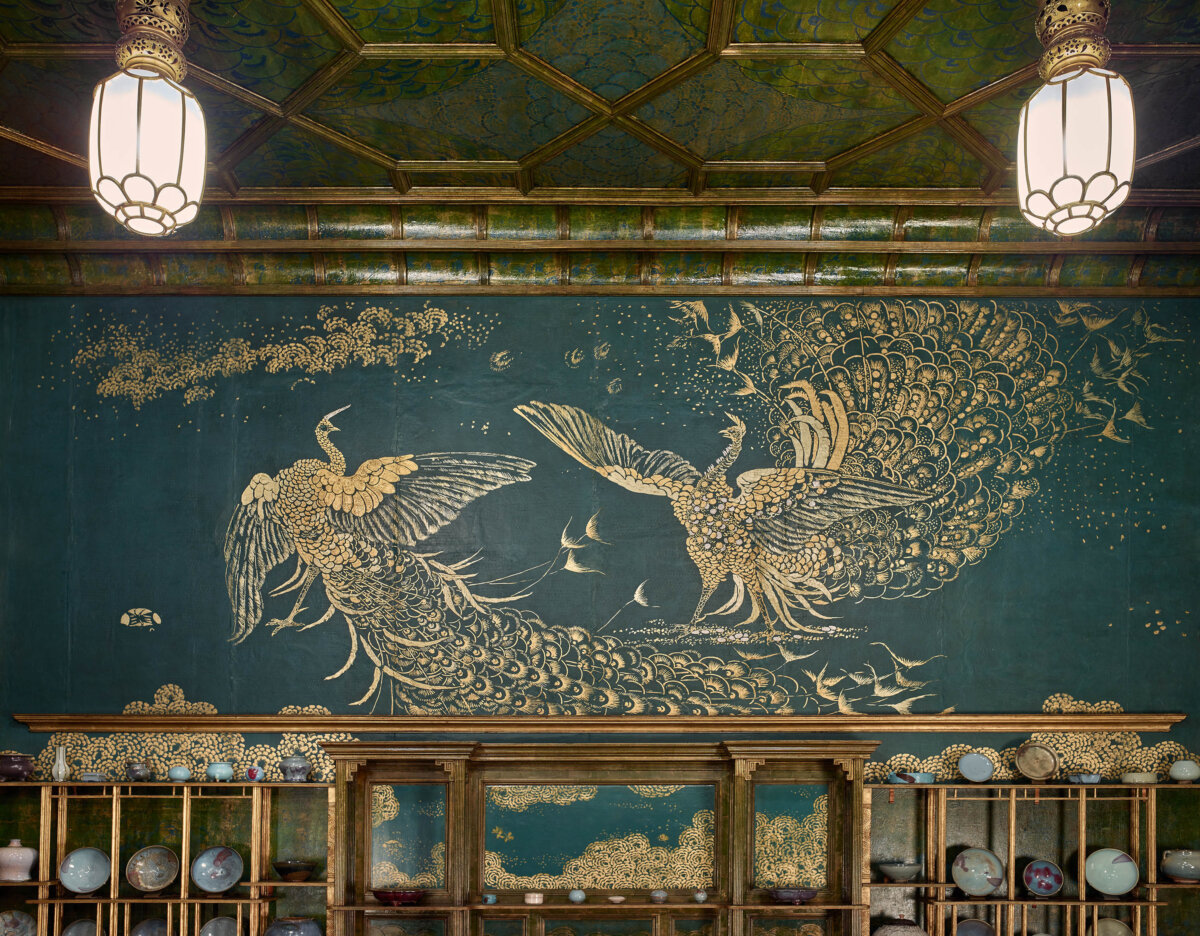
This clash was immortalized in an allegorical mural depicting two fighting peacocks that Whistler added to the dining room wall opposite his “Princess” painting. The imperious bird on the right is Leyland; silver throat feathers evoke his uniform of white ruffled shirts. Whistler is embodied by the ill-used peacock on the left. This peacock has a silver crest feather, a reference to Whistler’s famous single white forelock. The artist titled this specific artwork “Art and Money; or, The Story of the Room.”
Despite the clash between patron and painter, Leyland kept “The Peacock Room” intact. It was sold to the American railroad tycoon and art collector Charles Lang Freer (1854–1919), who was also a patron of Whistler, 12 years after his death. Freer had already bought the “Princess” painting in a separate transaction.
A Re-envisioned Room
“The Peacock Room” was shipped to Freer’s house in Detroit. Reinstalled, it was used to display Freer’s collection of Asian and Middle Eastern pottery. After Freer’s passing, the room was moved for a final time and reassembled at the Freer Gallery of Art. The Gallery opened to the public in 1923, and “The Peacock Room” is one of its most visited spaces.
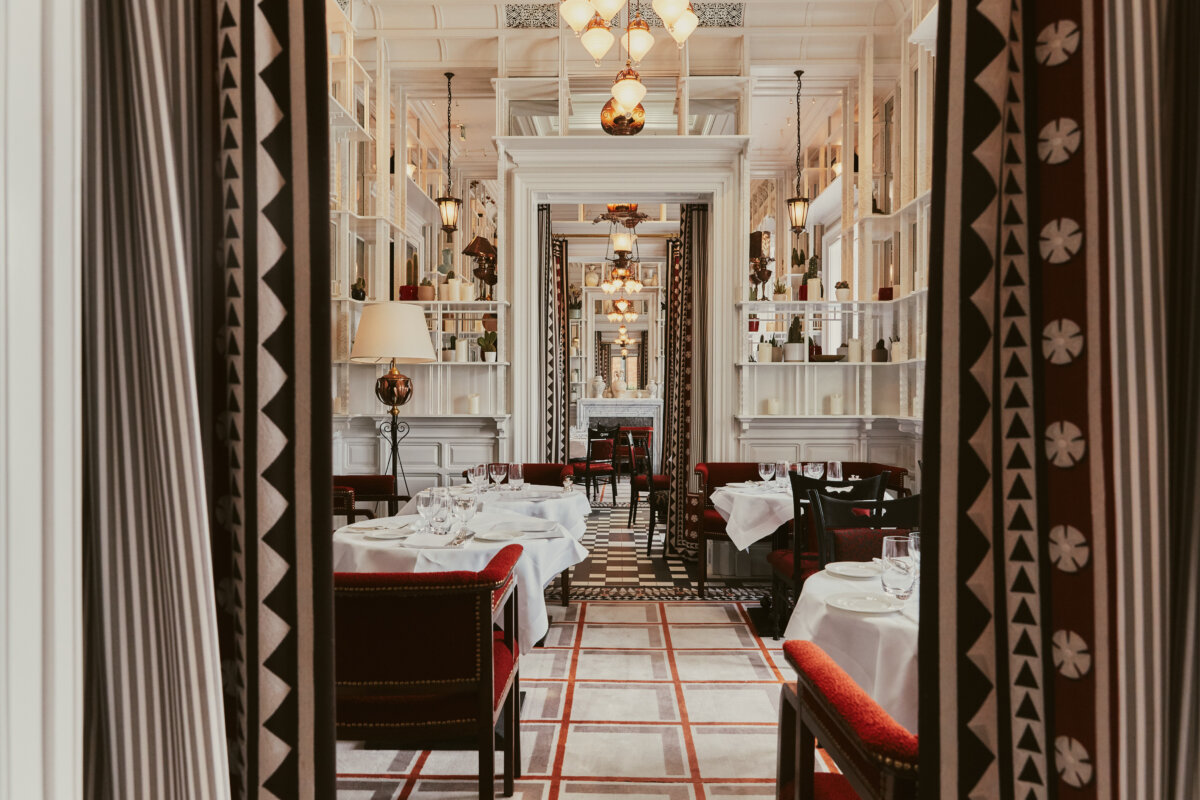
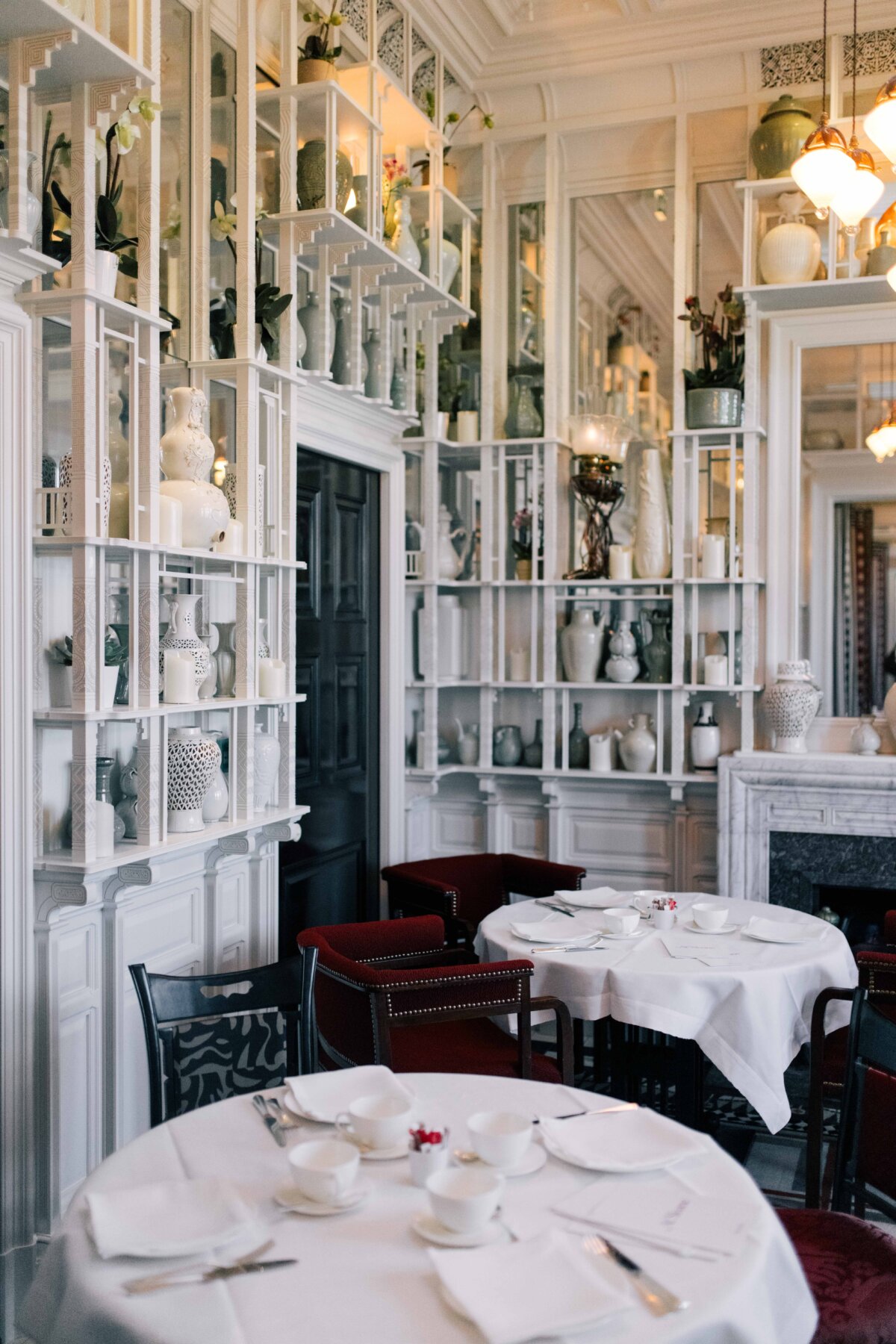
Whistler’s work continues to inspire visitors, artists, and designers. In 2023, At Sloane, a boutique London hotel, opened the doors of its red brick Victorian building to guests. Conceptualized by renowned French designer François-Joseph Graf, its restaurant is an ode to “The Peacock Room;” Graf and his team visited the original and took measurements. The designer handpicked 300 Chinese vases to arrange on latticed and spindled shelving. However, he put his own stamp on the space, changing the shelving color to white and lining the walls behind with antique mirrors. Just like Whistler, Graf combined different periods and styles. His vision includes motifs from the Wiener Werkstätte and Neo-Grec components based on ones at Villa Kérylos. The popularity of this dining area speaks to people’s continued appetite for pure beauty.
What arts and culture topics would you like us to cover? Please email ideas or feedback to features@epochtimes.nyc.