

Online retail titan Amazon notched its worst losing streak in almost 20 years over the company’s increasing spending plans on artificial intelligence-related capital expenditures.
Shares of Amazon registered their ninth consecutive session loss at the Feb. 13 closing bell, finishing down 0.41 percent to a nine-month low of $198.79.
The stock posted a weekly decline of 4.71 percent, adding to its year-to-date drop of 12 percent.
This is the longest losing streak for the company since July 2006. The company has tumbled about 18 percent over the nine-session slump, erasing approximately $463 billion in market valuation.
Amazon’s latest woes can be traced to the tech giant’s plans to spend $200 billion this year on data centers, semiconductors, and other equipment for its AI infrastructure buildout.
The projection puts Amazon among other AI hyperscalers—Alphabet, Meta Platforms, Microsoft, and Oracle—that have said they plan to increase capital expenditures by hundreds of billions in 2026.
“As a result of the hyperscalers’ continued jockeying for dominance in the intensifying AI race, combined capital expenditures (capex) from the five firms are expected to exceed a staggering $600 billion in 2026,” Jeff Buchbinder, chief equity strategist for LPL Financial, said in a note emailed to The Epoch Times.
Since the beginning of the AI boom, this has typically been bullish for financial markets. However, investors are increasingly concerned that massive investments will not yield comparable returns.
Additionally, rising capex spending could leave Amazon with depreciating chips and servers, exacerbating its expenses in the coming years.
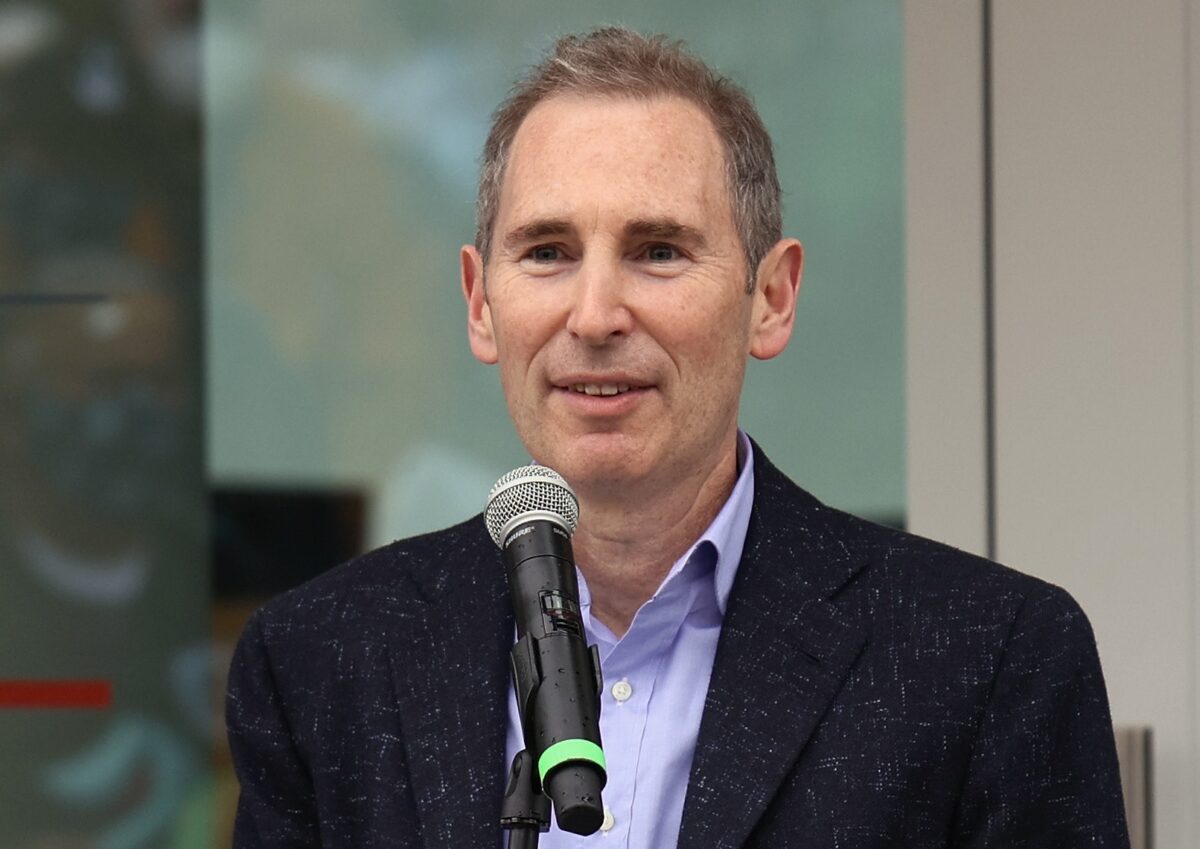
But Amazon CEO Andy Jassy, speaking on a Feb. 5 earnings call, urged everyone to be patient.
“This isn’t some sort of quixotic top-line grab,” Jassy told analysts and shareholders. “We have confidence that these investments will yield strong returns on invested capital. We’ve done that with our core AWS business. I think that will very much be true here as well.”
AI Debt
The issue of how capex is funded has become another source of consternation.
While companies have mostly depended on their strong cash positions to cover these costs, a growing chorus of tech behemoths is turning to debt markets to raise funds.
This week, Google-parent Alphabet sold a rare 1 billion British pound ($1.37 billion) 100-year bond that attracted notable demand.
In November, Amazon issued its first $15 billion bond since 2022. Oracle plans to raise up to $50 billion from capital markets.
“Low leverage has been a key theme of the AI spending cycle, and while these behemoths have capacity to take on debt, potentially dwindling cash flows will place more scrutiny on the metric,” Buchbinder said.
Worries are evident in the tech-heavy Nasdaq Composite Index, which is down 3 percent this year.
But market watchers remain bullish on Amazon, with the stock maintaining a moderate-buy rating from MarketBeat. Analysts also see an upside of almost 45 percent over the next 12 months.
Still, amid the “software scare”—the dominant fear that AI is evolving so quickly that it could dismantle the conventional software industry—investors are taking another look at assets, said Christian Hoffmann, head of fixed income at Thornburg Investment Management.
“A major theme related to AI is the ‘software scare,’ which is still playing out in equity markets,” Hoffmann said in an emailed note to The Epoch Times.
“As those fears get repriced, investors are reassessing assets and applying greater scrutiny to their underlying exposures.”
Wall Street might be in the early days of witnessing a key stage of the AI cycle: rotations.
This could be the start of institutional investors and retail traders rotating out of the tech sector, reallocating their capital to other areas as valuations stretch thin and anxiety traverses the market.
The blue-chip Dow Jones Industrial Average recently topped 50,000 and is up 3 percent year-to-date. The broader S&P 500 is flat this year. The Russell 2000—an index of small-cap stocks—has surged more than 6 percent.
 Friends Read Free
Copy
Facebook
Tweet
Friends Read Free
Copy
Facebook
Tweet