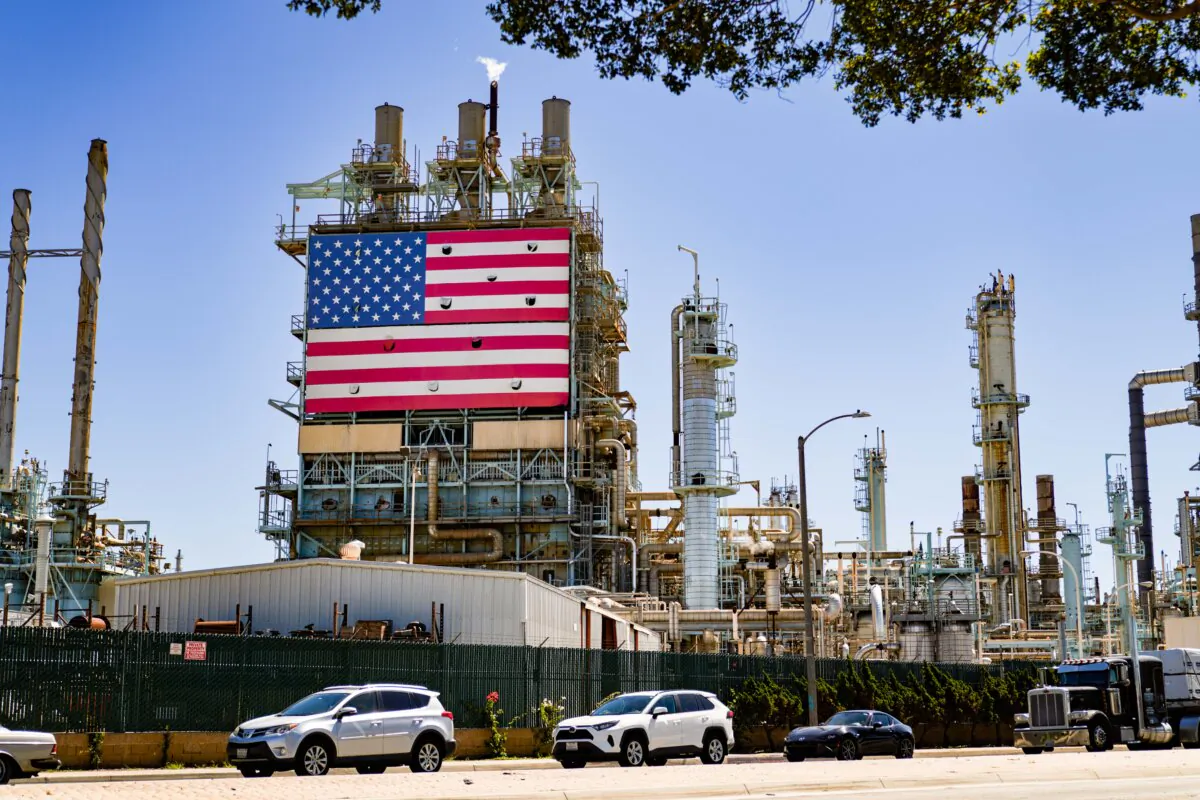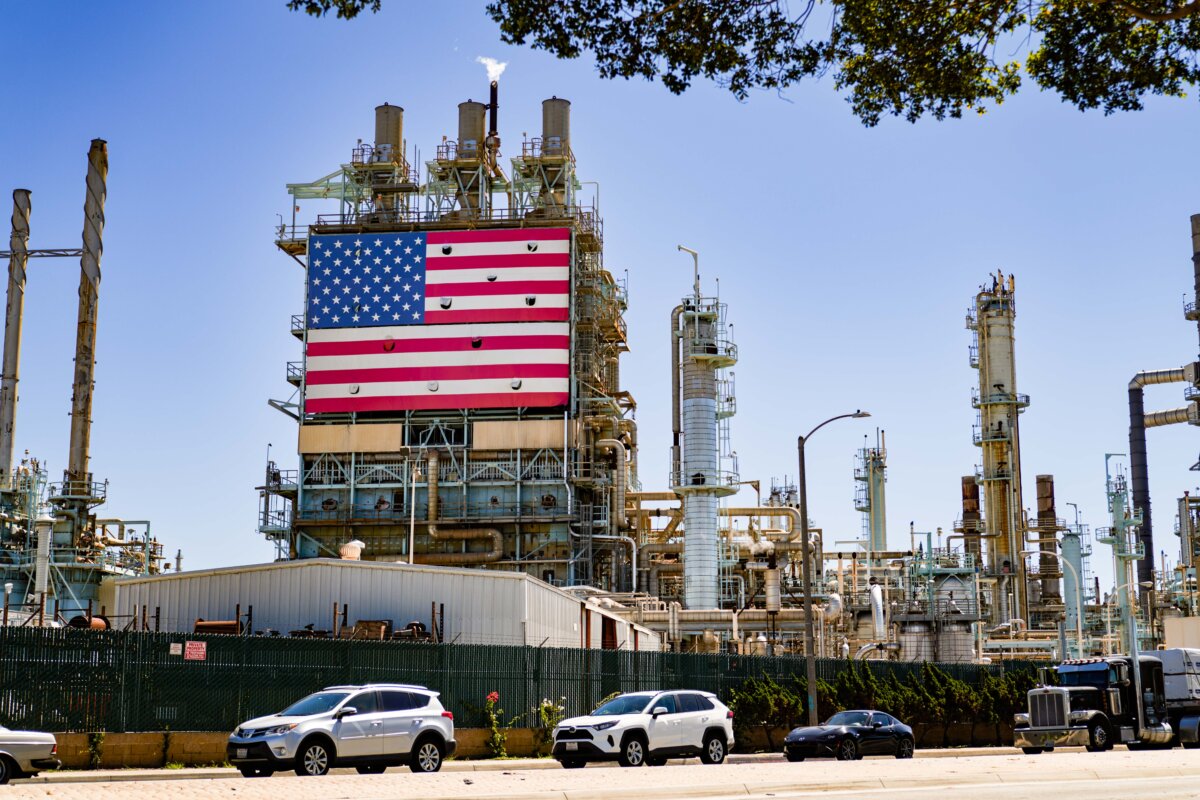

Because of its archaic refining infrastructure, America’s oil industry is in the curious position of shipping much of what it extracts to foreign refineries for processing, while importing what it can refine from abroad.
There has not been a major new refinery built in the United States since 1977, and many existing refineries are designed to process heavy crude oil of the type extracted in Canada, Mexico, Alaska, and off the Texas coast. However, due to the rise of fracking technology, approximately 80 percent of the oil produced in the Lower 48 states is now light crude, which America often ships out to European refineries.
That is beginning to change, industry experts and insiders say.
Recently, Houston-based America First Refining announced that it would break ground later this year on a refinery in Brownsville, Texas, which will process American light shale crude into what the company says will be among the cleanest fuels in the United States.
“By building the first new refinery in 50 years, we’re ensuring more American energy is refined here at home, supporting domestic jobs, strengthening our supply chain, and reinforcing long-term energy security,” Trey Griggs, president of America First Refining, told The Epoch Times.
“This facility is engineered for the type of energy America is producing today—cleaner, lighter shale oil—which allows for more efficient processing and reduces reliance on foreign inputs.”
When fully operational, the Brownsville refinery will redirect 60 million barrels annually from foreign refineries to domestic processing, the company stated.
Griggs said his project is backed by a long-term, 20-year offtake agreement, as part of what he calls “the largest structured energy transaction in U.S. history.” The refinery is supported by a capital commitment from Indian industrial conglomerate Reliance Industries.
The project is expected to break ground later this year and come online by 2029. In addition, the refinery will use hydrogen produced in the refining process to power operations, thus reducing carbon dioxide emissions.
New Refining Capacity
Expanding America’s ability to process light crude is desperately needed, energy analysts say.
“This is a refinery that should have been built 20 years ago,” Phil Flynn, senior market analyst at The Price Futures Group and author of The Energy Report, told The Epoch Times. “And it’s a refinery that is taking advantage of our home field advantage.”
America’s existing refineries were built at a time when heavy crude dominated.
“The heavier crude at that time was cheaper—lighter crude was not that abundant in this country until the shale revolution,” Flynn said. Processing light crude, he said, “creates an issue” for refineries designed for denser, more viscous product.
“Our refiners can run it, but they have to mix it with heavier oil,” he said. “There are other refineries around the globe that actually refine it better, so we end up exporting the lighter stuff and importing the heavier stuff.”
Previous plans to invest in new refineries were often hampered by the volatility in oil prices, Flynn said. The sharp decrease in oil prices between 2014 and 2016, from $100 per barrel to $50, led more than 600 U.S. oil companies to file for bankruptcy.
However, developers are now better able to lock in prices, stabilizing cash flows. And the current rise in oil prices due to the war in Iran may spur more investment in new American refineries.
“I think the ability to lock in prices today is much better, much more transparent than it was years ago,“ Flynn said. “Even if the war ended tomorrow and oil prices crashed back down, they’d be able to continue to produce oil because they’ve locked in these higher prices.”
With 131 refineries currently in operation, the United States has long been the global leader in oil processing capacity, but it has lost ground because of a combination of an aging infrastructure and constricting regulations, including new laws in California that caused a major refinery to close.
“China has caught up with us in terms of refining capacity, so given what’s happening in California and given their reductions in refining capacity, it’s really serious that we add more refining capacity,” Trisha Curtis, chief economist for the American Energy Institute and CEO of PetroNerds, told The Epoch Times.
Support From Trump Administration
The Biden administration’s antipathy toward fossil fuels made many oil companies reluctant to invest capital in new drilling, refining, or transportation infrastructure. One of President Joe Biden’s first actions upon taking office was to revoke permits for the Keystone Pipeline, which had begun construction under the first Trump administration and would have moved more than 800,000 barrels of crude daily from northern U.S. states and Canada to oil refineries on the Gulf Coast.
Its closure cost those who had invested in the project billions of dollars. However, a possible revival of this pipeline is currently under discussion with the Trump administration.
Energy analysts say that much of the impetus now to modernize America’s energy infrastructure is the result of strong support from the Trump administration for the expansion of domestic energy.
“You have an administration that is for building things and is very much for energy dominance in the U.S., and building refining capacity is part of that,” Curtis said. “We have a recognition that we haven’t built anything in a long time, and we’ve lost the muscle capacity.”
“We’ve atrophied that, and we have to build not just refineries but ships, we have to build manufacturing capacity,” she said. “We certainly need more energy and more processing so that we control our own destiny.”
America First Refining also credits the Trump administration for its support and says thousands of jobs will be created by the Brownsville refinery.
“This is a historic project on multiple levels that was made possible through President [Donald] Trump’s leadership and the resurgence of an America First energy policy,” Griggs said. “At its core, this project is about aligning American energy production with American infrastructure, ensuring we fully capitalize on our domestic resources while strengthening national and economic security for decades to come.”
Despite the recent push for electrification and alternative fuels, transportation remains the key driver of demand for oil refineries. Vehicle miles traveled in North America, global aviation, and marine shipping volumes continue to expand, according to a March 18 report by Oil & Gas 360.
The output of U.S. refineries is currently about 45 percent gasoline, 30 percent diesel, and 10 percent jet fuel, the report states. The rest becomes propane, butane, asphalt, lubricants, and fertilizers.
 Friends Read Free
Copy
Facebook
Tweet
Friends Read Free
Copy
Facebook
Tweet