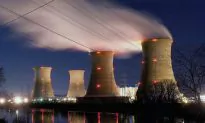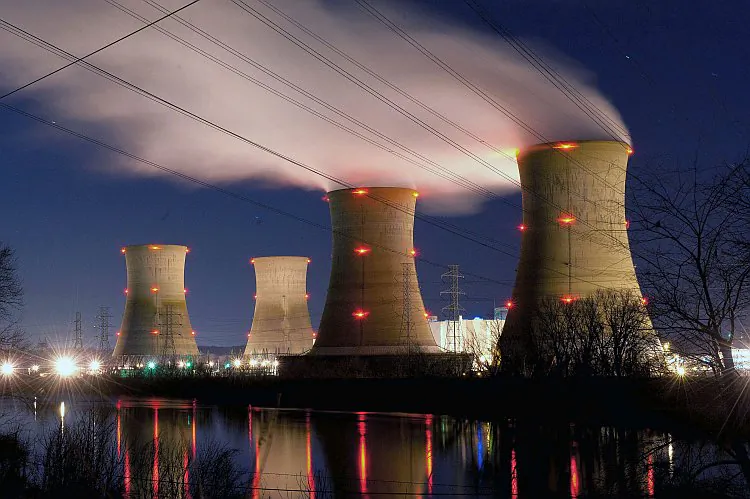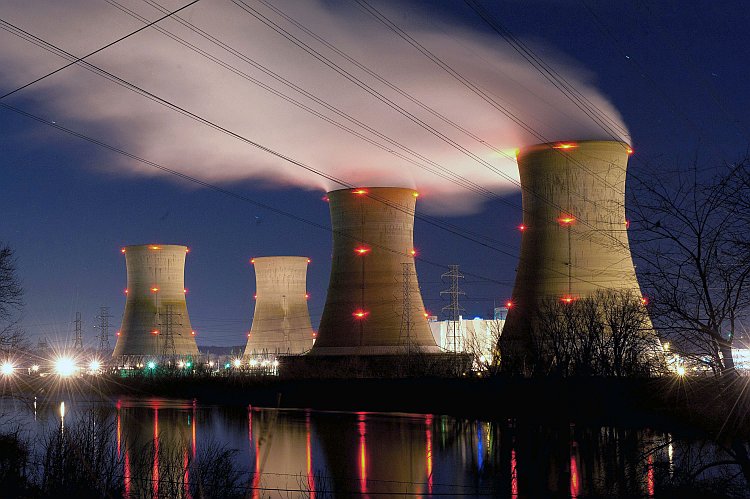

SEATTLE—The Department of Energy has invested billions of dollars to encourage U.S. companies to make enriched uranium, which is essential for advanced nuclear reactors. Last month, $2.7 billion went to three companies for centrifuges and processing plants to produce fuel for reactor cores.
Yet a fuel crunch that could hobble President Donald Trump’s “nuclear renaissance” initiatives may loom as soon as 2028, several experts warned during the two-day U.S. Nuclear Industry Council’s 13th annual Advanced Reactors Summit in Seattle that concluded on Feb. 12.
“If America wants to lead in advanced reactors, we have to do the nuclear fuel here,” Centrus Energy Senior Vice President Patrick Brown told more than 400 nuclear industry professionals on Feb. 12. “Make no mistake about that. Unfortunately, we’re really building from zero.”
Right now, he said, less than 1 percent of the nuclear fuel that the nation’s 94 commercial reactors annually consume is produced domestically, and that is exclusively dedicated to the Pentagon. The nation’s commercial nuclear energy industry is “completely reliant on foreign imports” of enriched uranium, he said, primarily from Kazakhstan and Canada.
Those imports include up to 5 percent from Russia that will not be available soon. In response to Russia’s invasion of Ukraine in 2022, Congress in 2023 banned U.S. companies from importing Russian uranium. That ban goes into full effect on Jan. 1, 2028.
Brown said that with the global nuclear fuel market already constrained, domestic industry’s scramble to revive enrichment—a process American companies invented and once dominated—is now a race to have supply available to meet demand as new reactors come online.
Because that demand—spurred by the president’s May 2025 executive orders to license 10 new reactors by 2030 and quadruple commercial nuclear energy output by 2050—is likely to outpace domestic fuel production until the early 2030s, he said a timing shortage will emerge in 2028.
He said that that’s when it will be apparent that the problem is there’s not enough non-Russian supply of enriched uranium to replace even the relatively small amount it now produces in a tight market in which restrictions on one supplier affect the entire market.
Fortunately, Brown said, the industry and the Trump administration recognize that there is an approaching gap between burgeoning demand and static supply, and they have deemed restoring domestic capacity to enrich uranium a national security priority akin to “a second Manhattan Project.”
Industry Must Respond
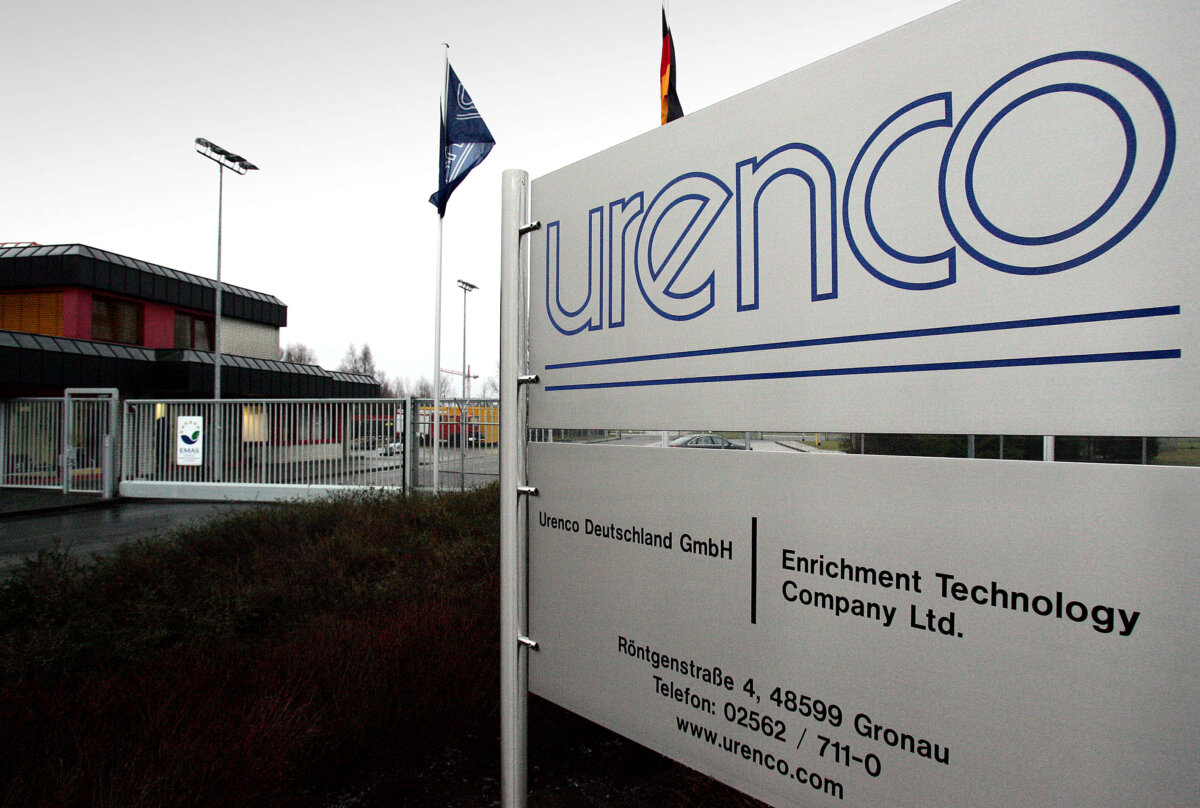
The nation’s domestic nuclear fuel supply chain got a $2.7 billion boost when the Department of Energy on Jan. 5 issued awards to three domestic companies to enrich low-enriched uranium and high-assay low-enriched uranium.
Securing $900 million awards each to build uranium enrichment plants are California-based General Matter in the former Paducah Gaseous Diffusion Plant in western Kentucky; North Carolina-headquartered Orano Group’s Federal Services operation in Oak Ridge, Tennessee; and Maryland-based Centrus Energy’s uranium enrichment plant in Piketon, Ohio.
Brown said that unlike the array of demonstration projects the Department of Energy is sponsoring, such as the Reactor Pilot Program that has 10 companies vying for federal funding if they can demonstrate functionality of their designs by July 4, 2026, enriching uranium is not a new process.
“We’re not here to do science experiments, right?” he said. “We’re here to go big or go home. We’re not going home. The era of demonstration is over. We are moving on to large-scale commercial production.”
Centrus is already licensed to produce low-enriched uranium and high-assay low-enriched uranium in its Ohio plant, he said. Its Technology and Manufacturing Center in Oak Ridge, Tennessee, is the only domestic manufacturer of centrifuges needed for the enrichment process. It is ready to gradually scale up production.
“We have the site,” Brown said. “We have the facility. We have the room to expand [at the Piketon plant].”
He noted that the plant is demonstrating with 18 centrifuges what could be replicated by thousands.
“Our technologies are proven and are actively producing [high-assay low-enriched uranium] today,” he said.
The Department of Energy award is designed to induce a long-term “demand signal” for investors and utilities, he said, by assuring them that there will be ample domestic supply of enriched uranium available should they incorporate nuclear power into their grid expansion plans.
However, Brown said, the Piketon plant and other projects nationwide are not expected to reach peak production until the early 2030s, meaning that there could be more demand than supply until production can catch up.
Although the Department of Energy funding is critical in seeding domestic capacity to be self-sufficient in producing nuclear fuels, how swiftly that can be achieved is now up to the industry itself, he said, encouraging operators to begin negotiating “off take” agreements with Centrus and others engaged in uranium enrichment so they can secure their fuel supply and processors can commit to ramping up with confirmed orders.
“This is the chicken-and-the-egg problem that [the Department of Energy] was trying to solve,” Brown said. “They said, ‘Build the capacity and the advanced reactor development will come while we’re building it.’ That’s the message. So we need firm contracts to proceed to build further. So let us know. We’re ready.”
 Friends Read Free
Copy
Facebook
Tweet
Friends Read Free
Copy
Facebook
Tweet