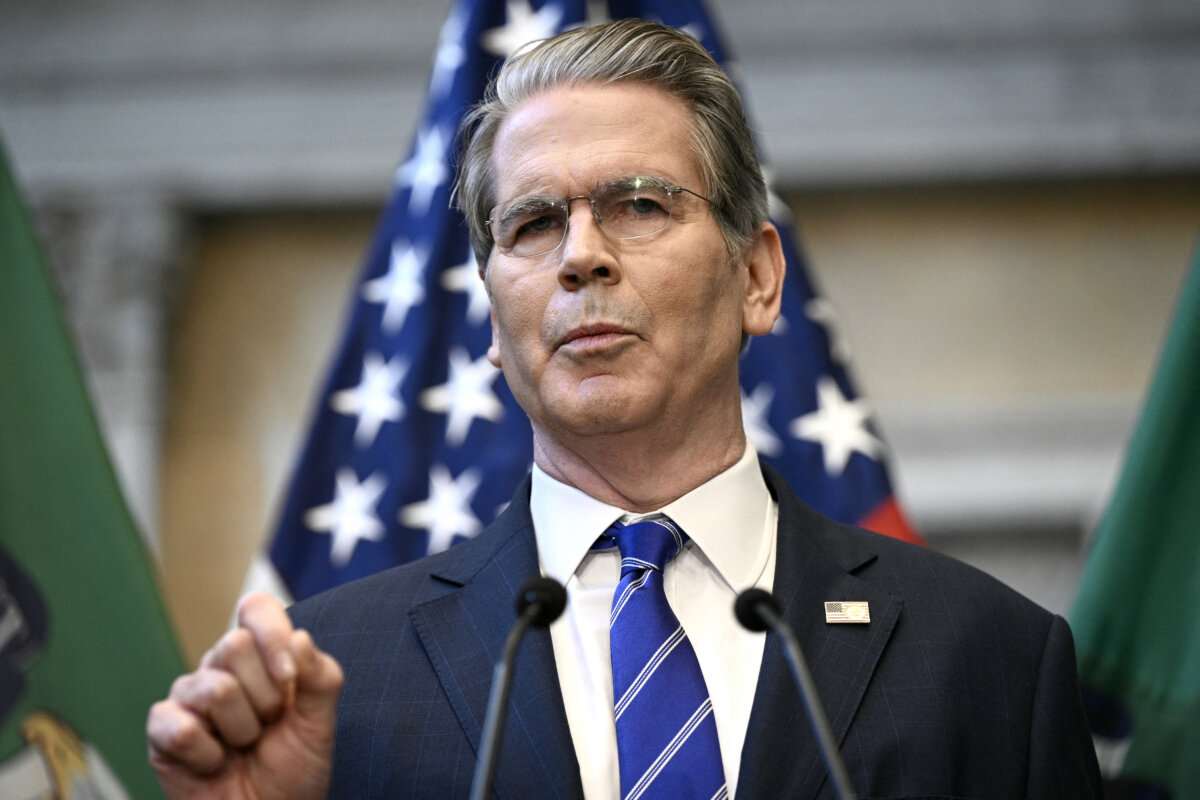
Treasury Secretary Scott Bessent said he will meet with a Chinese delegation in Malaysia next week.
Bessent accused the Chinese regime of initiating “a substantial unprovoked escalation” last week by imposing sweeping export controls on rare earth minerals.
The Trump administration has since rebuked Beijing for these actions, threatening a 100 percent tariff on Chinese goods entering the United States.
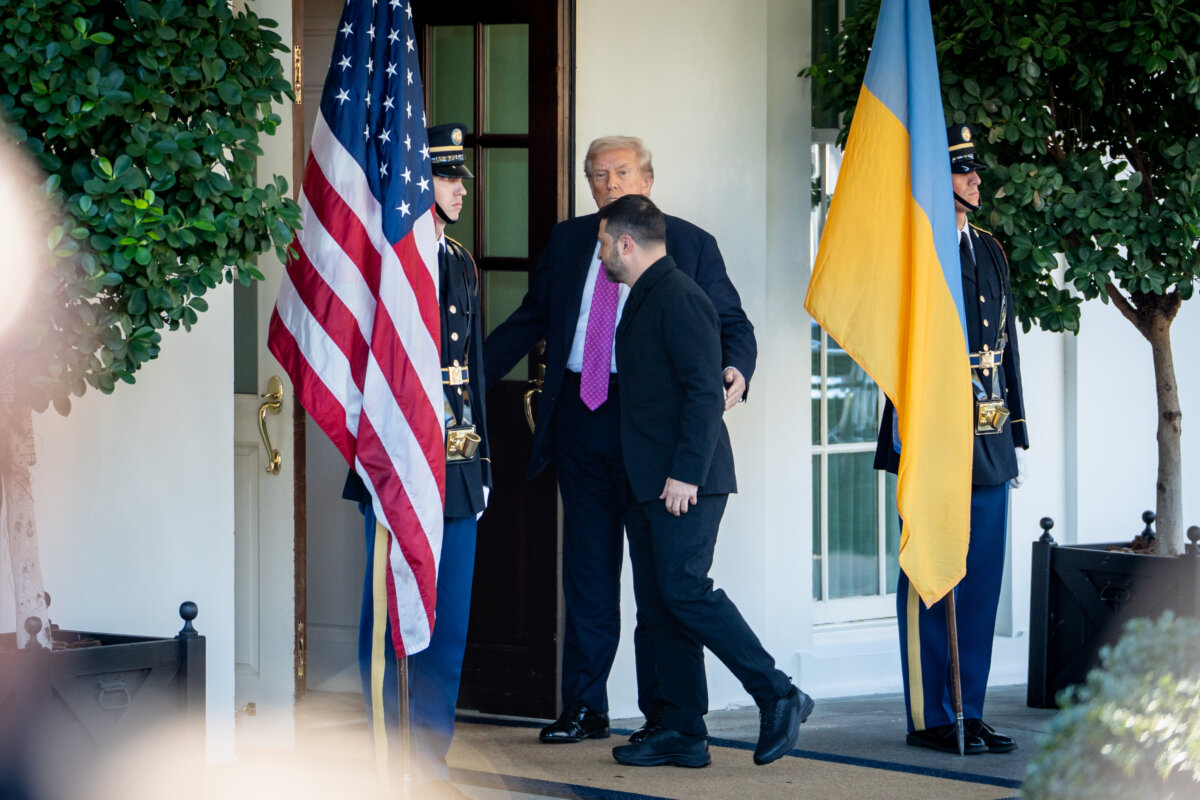
During a bilateral meeting between President Donald Trump and Ukrainian President Volodymyr Zelenskyy at the White House on Oct. 17, Bessent told reporters that he had meetings with Vice Premier He Lifeng during this week’s International Monetary Fund and World Bank meetings. They will also talk later in the day.
Bessent confirmed that he, the vice premier, and a delegation will gather in Malaysia “probably a week from tomorrow” to prepare for the meeting between Trump and Chinese leader Xi Jinping in South Korea later this month.
“I think that things have de-escalated,” Bessent said.
“We hope that China will show the respect that we have shown them, and I am confident that President Trump, because of his relationship with President Xi, will be able to get things back on a good course.”
This comes shortly after Bessent stated that China “can’t be trusted.”
At a press conference at the Treasury Department on Oct. 15, Bessent, alongside U.S. Trade Representative Jamieson Greer, stated that rare earths and magnets had stopped flowing from China.
“This should be a clear sign to our allies that we must work together, and work together we will,” Bessent told reporters.
“We are not going to let a group of bureaucrats in Beijing try to manage the global supply chains.”
The president, meanwhile, said during his meeting with Zelenskyy that the United States is in a “strong position” after threatening to implement an additional triple-digit tariff on Nov. 1.
“I think we’ll make a deal that will be good for both. I think we will do something,” he said.
“But you have to understand, we never got anything from China. It was a one-way street for many years.”
Still, in an interview with Fox Business, broadcast on Oct. 17, Trump stated that his proposed 100 percent tariff is “not sustainable,” adding that “they forced me to do that.”
The president confirmed that he will meet with Xi in South Korea on the sidelines of the Asia-Pacific Economic Cooperation (APEC) summit.
“I think we’re going to be fine with China, but we have to have a fair deal. It’s got to be fair,” he said.
This year, the United States and China have had several rounds of talks to de-escalate trade tensions and eventually carve out an agreement.
Both sides agreed to reduce their tariffs this past spring. U.S. officials lowered tariffs on Chinese goods from 145 percent to 30 percent, while Chinese tariffs on U.S. products were decreased from 125 percent to 10 percent.
Bessent Advocates Tougher Stance on China
Bessent believes the International Monetary Fund (IMF) and the World Bank must adopt tougher positions on China and its state-driven economic practices.
According to a statement to the IMF’s steering committee, Bessent argued that the IMF needs to improve its country surveillance activities, and the World Bank needs to stop supporting China and allocate its resources to nations with more dire needs.
“The IMF should not shy away from asking difficult questions, more clearly highlighting internal and external imbalances, deepening its understanding of how industrial policies in large economies such as China contribute to those imbalances, explaining their potential harmful spillovers, and recommending appropriate corrective actions,” Bessent wrote.
While he did not point to China directly, Bessent criticized the crisis lender for allowing “recalcitrant creditors off the hook too easily” amid debt restructuring negotiations. This behavior produces economic stress and worsens liquidity levels in debtor nations, the secretary noted.
“In these situations, IMF programs cannot be effective if there are creditor countries within the membership that are exacerbating the very liquidity stress that IMF programs seek to address,” Bessent said.
“Furthermore, IMF resources must not be considered as a piggy bank to repay creditor countries that made a bad bet but refuse to take the loss.”
Sovereign debt restructuring was a considerable theme during this week’s annual meetings held in Washington.
Economists and policymakers proposed faster and more transparent frameworks for resolving debt crises impacting low-income and conflict-affected countries, such as Ghana and Ukraine.
 Friends Read Free
Copy
Facebook
Tweet
Friends Read Free
Copy
Facebook
Tweet