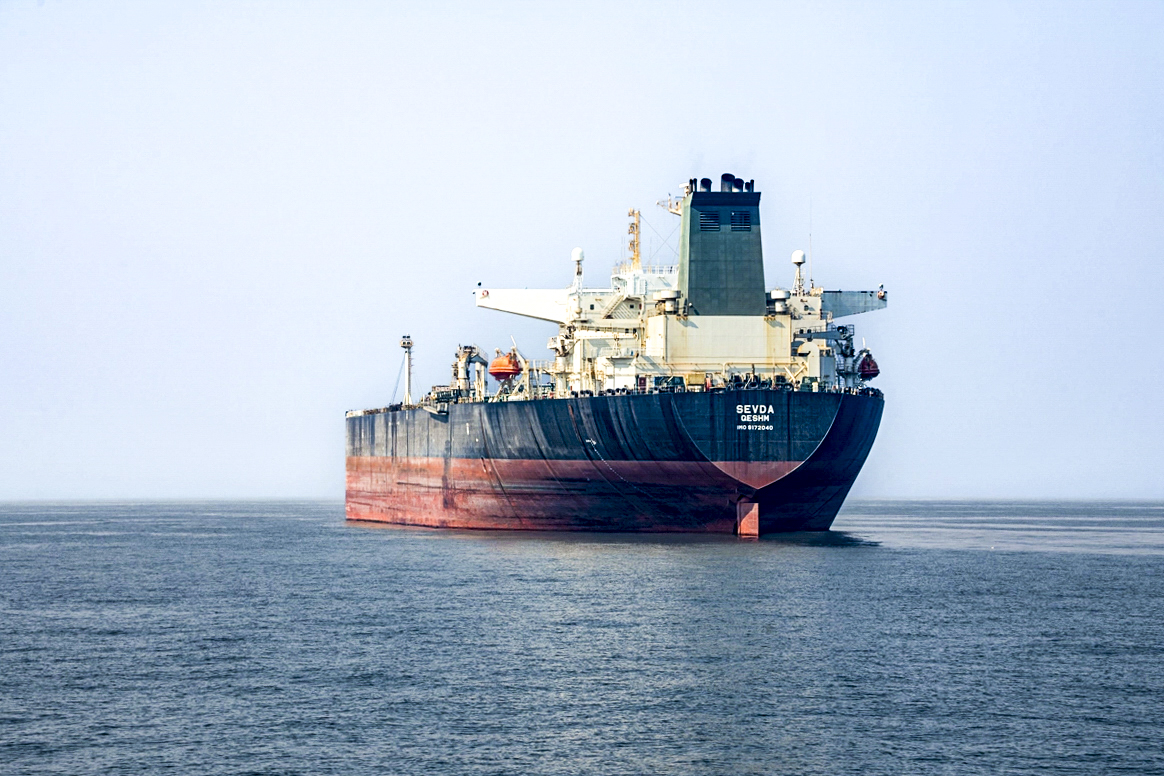

A barrel of Brent crude oil topped $100 again for the first time since July as the U.S.–Iran conflict fuels global energy supply concerns.
Brent—the global seaborne benchmark for oil prices that is more sensitive to geopolitical tensions—rose 3 percent to almost $101 per barrel on Sept. 9 in overseas trading.
The international benchmark, which carries a higher risk premium, has risen 14 percent over the past month and nearly 66 percent this year.
U.S. crude prices are also eyeing $100 again as a barrel of West Texas Intermediate oil climbed 3 percent to almost $96 on the New York Mercantile Exchange. It has also jumped 16 percent since early August and has rocketed 67 percent year to date.
Investors are becoming increasingly concerned that retaliatory attacks between Washington and Tehran in recent weeks could threaten global supply chains.
American forces destroyed five Iranian crude tankers on Sept. 9 in response to two attempted attacks on a U.S. warship, U.S. Central Command said in a statement.
The White House has also intensified economic pressure on Iran through Operation Economic Outcast, a new sanctions package that targets various sectors in the country.
As well as pricing in a war-related risk premium, energy markets are watching supply moving through the Strait of Hormuz.
Data from Dutch bank ING suggest flows in the Gulf channel are at about 10 million barrels per day, or 50 percent of pre-war levels.
“These volumes now look far more in line with what the US previously indicated was moving through the vital choke point,” ING commodity strategists wrote in a Sept. 8 note.
Another key factor is that China, the world’s largest petroleum importer, is accelerating its crude oil imports.
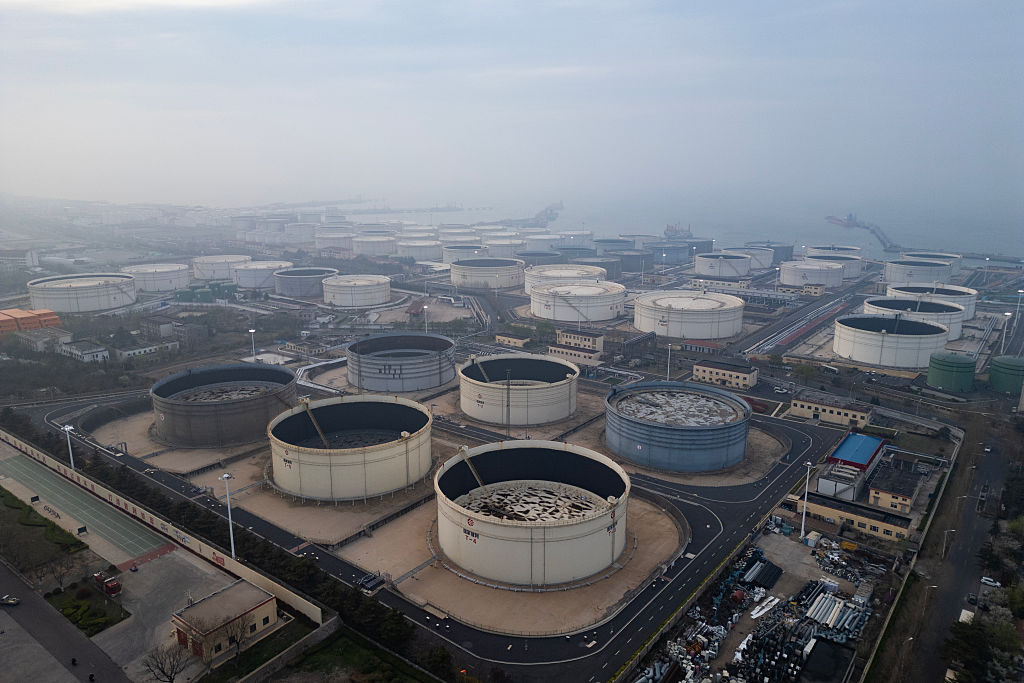 A group of oil tanks stores imported crude oil at Qingdao Port Crude Oil Terminal in Qingdao, China, on April 12, 2026. (Getty Images)
“China’s still‑sizeable crude inventories mean lower import levels are broadly sustainable—a dynamic the market may actually need, particularly if Middle East escalation triggers renewed supply disruptions,” the ING strategists added.
Pain at the Pump
Businesses and consumers are also feeling the pain of surging oil prices.
As of Sept. 9, the national average for a gallon of gas is about $4.23, according to the American Automobile Association. This is up 32 percent from the same time a year ago.
Diesel also hit an all-time high of $5.94 per gallon midweek, up from $3.70 last year.
While gas accounts for more than half of the cost of gasoline, diesel’s recent ascent has been driven by strife in Eastern Europe.
Ukraine and Russia have engaged in tit-for-tat strikes, with Kyiv targeting refining infrastructure that is moving capacity offline. Moscow also prohibited diesel exports in June.
 A woman walks outside a shopping mall as black smoke rises from the area of the Russian oil producer Gazprom Neft’s Moscow oil refinery on the south-eastern outskirts of Moscow on June 18, 2026. (AFP via Getty Images)
This could risk reviving inflationary pressures—at home and abroad—and force central banks to raise interest rates.
These headwinds have weighed on U.S. stocks this week, as the leading benchmark averages were red across the board to kick off the holiday-shortened trading week. They were also down as much as 0.5 percent midweek.
The 3-2-1 gasoline crack spread—the differential between crude, gasoline, and diesel prices—remained elevated at around $61.
Market watchers monitor the spread to spot shifts in crude, gas, and heating oil prices and their potential impact on refinery stocks. The spread has historically ranged between $10 and $25, and anything above $40 signals low supply, strong demand, and tight refining capacity.
Current conditions have lifted profit margins for U.S. Gulf Coast crude refiners.
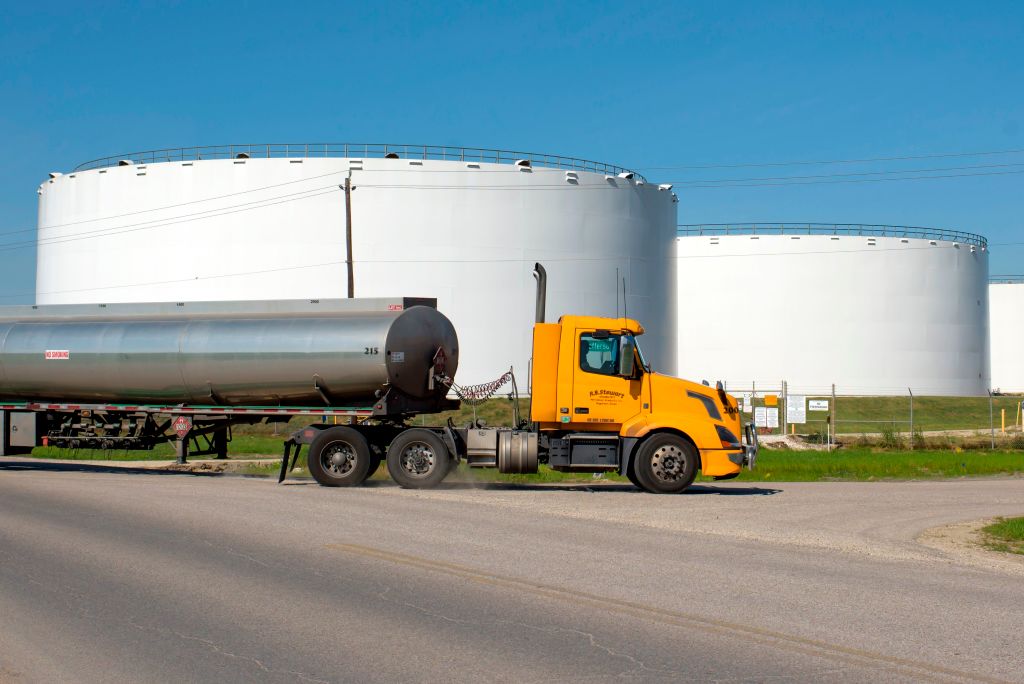 A truck drives past an oil storage facility next to the Phillip 66 oil refinery in Houston, Texas, on April 21, 2020. (Mark Felix/AFP via Getty Images)
 Friends Read Free
Copy
Facebook
Tweet
Friends Read Free
Copy
Facebook
Tweet