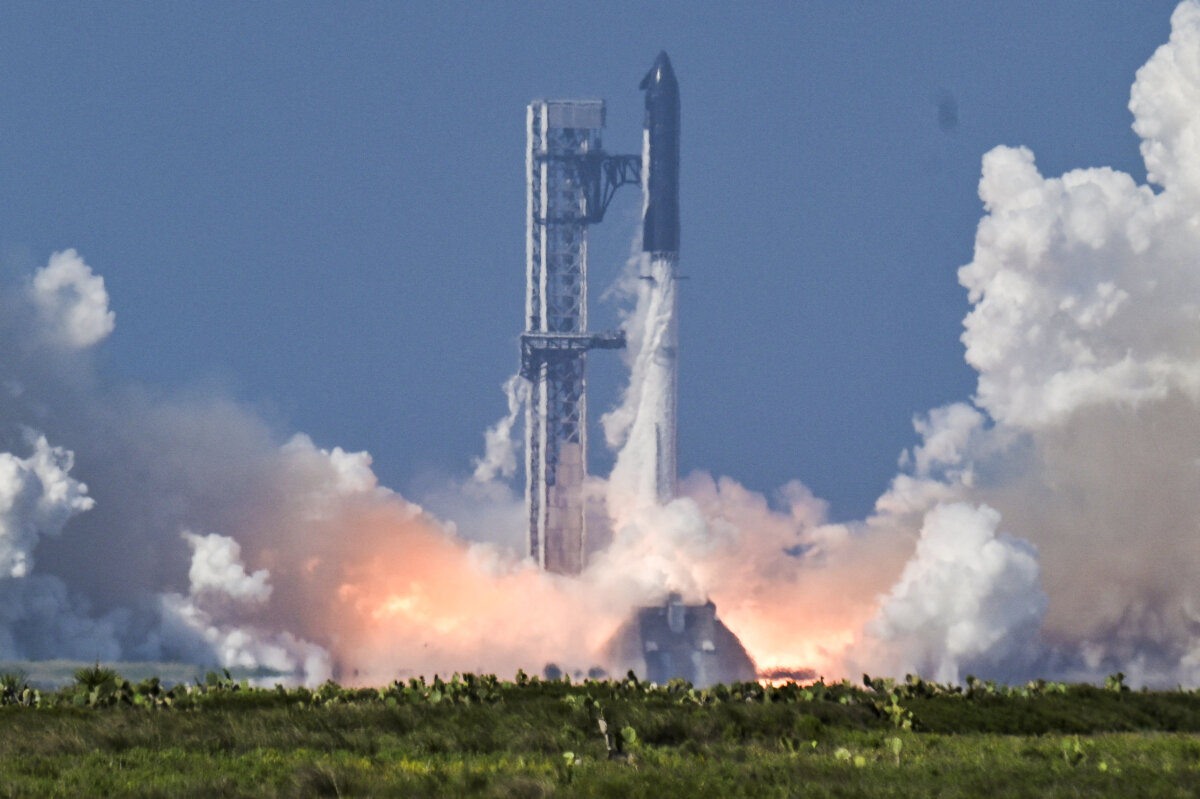

SpaceX is set to make its highly anticipated debut on Wall Street this week.
Founded in 2002 by Elon Musk, SpaceX has grown into a vertically integrated space and communications company that builds rockets, launches payloads, and operates the Starlink satellite network. Its business spans commercial and government missions, human spaceflight, and global broadband, all aimed at driving down the cost of accessing and operating in space.
The initial public offering (IPO) is set to be not only one of the most exciting in recent memory but also the biggest on record.
Perceptions are mixed, from bulls anticipating a long-term opportunity to bears bracing for a pullback.
Here is what to know about SpaceX going public.
SpaceX Offering
The rocket and satellite company filed its S-1 prospectus with the Securities and Exchange Commission for an IPO.
SpaceX targets a fixed price of $135 per share and aims to raise at least $75 billion from the offering. There is an option to increase the total to nearly $86 billion if investment bankers underwriting the deal exercise their allotment options after witnessing surging demand.
It is offering 555,555,555 shares and valuing the company at about $1.77 trillion. This would immediately make SpaceX one of the most valuable publicly traded companies in the world, alongside Saudi Aramco, Meta Platforms, and Tesla Motors, although not as valuable as Nvidia, Alphabet, Apple, and a few others.
Musk will control more than 82 percent of the voting power following the sale, although he is required to hold onto all of his shares for one year.
June 11 will be the IPO pricing date. The first day of trading will be June 12, and the company will be traded under the ticker “SPCX” on the Nasdaq.
The $1.77 Trillion Valuation
SpaceX justified its more than trillion-dollar valuation by describing itself as a vertically integrated space, communications, and artificial intelligence‑compute infrastructure platform that will be the backbone of the next decade’s artificial intelligence (AI) and connectivity boom.
For now, however, Starlink will be the chief money maker for the company. Last year, it generated 61 percent of SpaceX’s $18.7 billion revenue.
The push into AI could be a loss leader, the company acknowledged. SpaceX, which absorbed xAI earlier this year, registered a $6.4 billion loss in this area, tied to research and development.
Ultimately, markets are valuing SpaceX in three primary domains: high-growth global broadband, AI computing, and launch dominance.
“We believe that our current space efforts will catalyze transformative breakthroughs that could reshape terrestrial industries and lead to the emergence of new trillion-dollar markets on the Moon, Mars, and beyond,” the company’s filing stated.
The Buildout
Net proceeds, according to the prospectus, will be used to continue the SpaceX buildout and cover day-to-day expenses.
The $75 billion will be used to expand its AI compute infrastructure, scale up the Starlink satellite constellation, and enhance launch infrastructure and vehicles. Some of the proceeds will also be dedicated to general corporate purposes and a partial repayment of a $20 billion bridge loan.
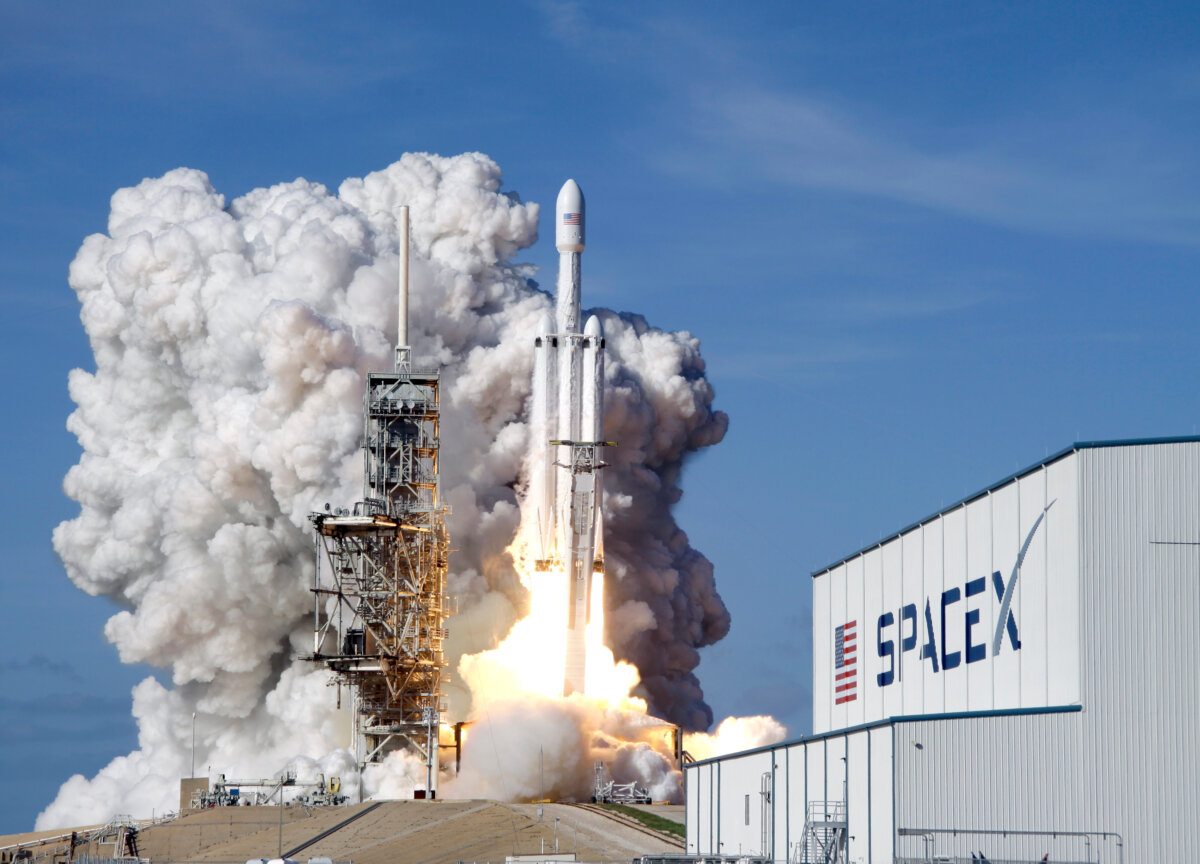
“All of this adds up to a future-focused company with no shortage of opportunities and risks whose size, profitability, and ambitious timelines set it up for a potentially volatile introduction to public markets,” Thomas Shipp, head of equity research at LPL Financial, said in an emailed note to The Epoch Times.
“By lowering the cost of transportation to orbit and leveraging expertise gained by managing the existing constellation of Starlink satellites, SpaceX looks to sidestep existing power bottlenecks restraining the AI race with a solar powered network of satellites.”
Retail Access
SpaceX’s debut will not be confined to Wall Street behemoths, as retail investors will have an opportunity to participate in the long-awaited IPO.
The company has allocated about 30 percent, or $22.5 billion, of its IPO offering to retail investors.
It has selected a handful of brokerage firms to distribute shares in the IPO to armchair traders in the United States: Charles Schwab, E*Trade, Fidelity Investments, Robinhood Markets, and SoFi.
Eligibility will vary by brokerage. Fidelity, for example, lowered its minimum account funding requirements to $2,000, from $500,000.
Additionally, platforms have warned against selling IPO shares within two weeks of the offering—also known as flipping. Sellers who do so risk being banned from future IPOs.
Still, the market’s performance over the past few trading sessions—the Nasdaq composite index slipped another 1 percent on June 9—suggests that traders may be taking profits and trimming holdings to build a cash position for SpaceX.
Bucking the IPO Trend
IPOs usually experience a spike on their first day of trading. They then typically drift sideways during a cooling-off period that can last several weeks.
On average, IPOs underperform the broader market in the first three months after their debut.
Cerebras Systems, the semiconductor maker, priced its shares at $185. The stock then opened at $350 on May 14 and closed at $311. It has since fallen by approximately 27 percent.
 Friends Read Free
Copy
Facebook
Tweet
Friends Read Free
Copy
Facebook
Tweet