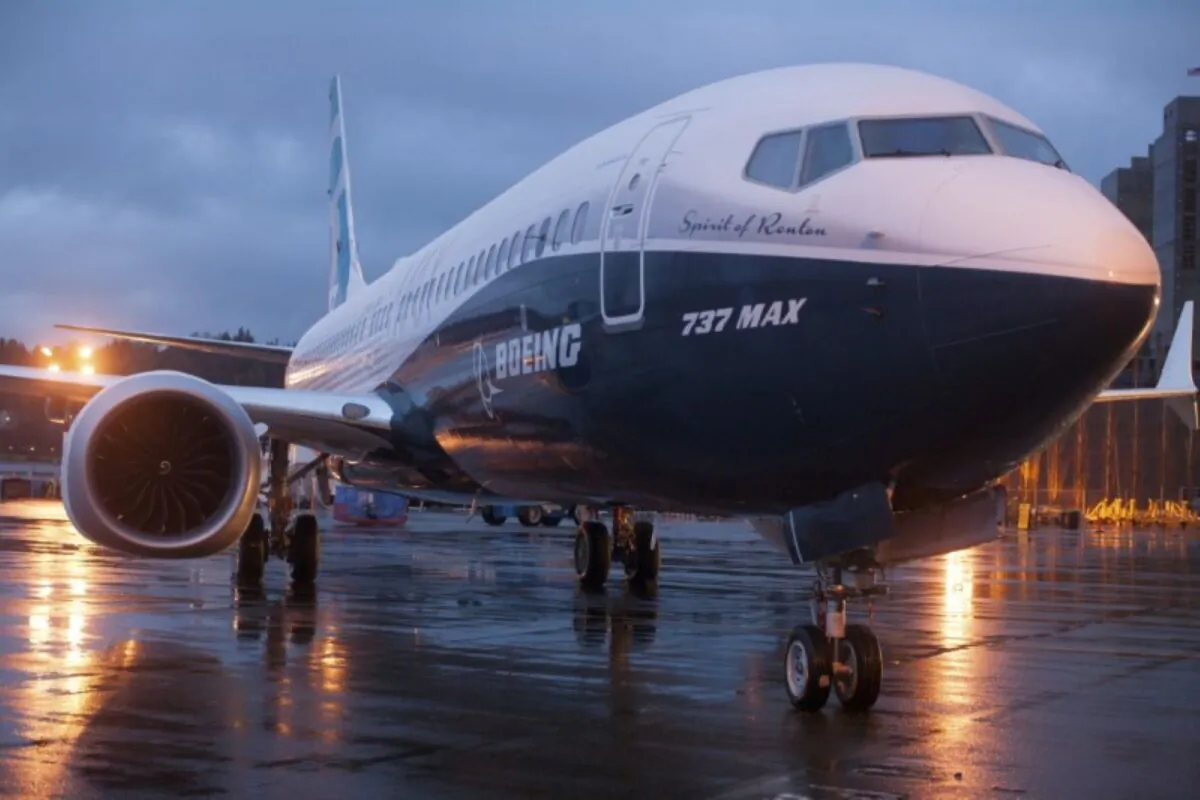

The Federal Aviation Administration has ordered operators of Boeing 737 Max jets to address a fault in the aircraft’s environmental control system that can cause the cabin to become dangerously hot.
In an order issued Feb. 24, the FAA said it received two reports of in-flight incidents involving “excessive cabin and flight deck temperatures that could not be controlled by the flight crew using existing procedures.”
Investigators traced the problem to a tripped circuit breaker in the jet’s standby power control unit, according to the order. The circuit supplies power to functions related to air conditioning and cabin pressurization.
The FAA said the tripped breaker can generate an electrical ground signal that commands actuators to close both ram-air deflector doors. Those doors cover inlets that funnel cooling air to the jet’s air-conditioning heat exchangers.
When the doors close, the 737 Max’s air system can “supply excessively hot air to the cabin and flight deck,” potentially leading to “uncontrollable, excessively high temperature,” the FAA said.
“This condition, if not addressed, could lead to injury or incapacitation of flight crew and passengers,” the agency added.
The FAA is giving operators of all in-service 737 Max aircraft—including the Max 8, Max 8-200, and Max 9—a total of 30 days to update their aircraft flight manuals with new procedures for pilots to follow if the issue occurs.
The directive applies to 2,119 airplanes worldwide, including 771 registered in the United States, the agency said.
The Feb. 24 order takes effect immediately, bypassing the FAA’s typical notice-and-comment rulemaking process. The agency is nevertheless accepting public comments through April 10.
Boeing said it supports the directive and is “advancing an engineering solution to eliminate the possibility of this electrical fault.”
Boeing is also awaiting certification for the 737 Max 7 and Max 10. The company said it expects the fix to be ready for those variants before they are certified and does not anticipate the issue will affect the certification timeline.
The order comes as Boeing continues to operate under heightened regulatory scrutiny following a string of safety and quality incidents involving the 737 Max program.
Last October, the FAA allowed Boeing to produce 737 Max jets at a rate of up to 42 aircraft per month, above the level the company had been producing at after a near-catastrophic in-flight incident.
In January 2024, the FAA capped 737 Max production at 38 per month after a door plug on a nearly new 737 Max 9 blew out of an Alaska Airlines flight shortly after departing Portland, Oregon. A subsequent National Transportation Safety Board report found Boeing failed to reinstall key bolts on the door plug before the aircraft left the factory.
Prior to that, the Max program was damaged by two fatal crashes in 2018 and 2019 that killed 346 people and led to a nearly two-year worldwide grounding. Production was later disrupted by the COVID-19 pandemic, supply-chain constraints, and a labor strike at Boeing’s main factories in the Seattle area in 2024.
For now, the FAA said it still maintains enhanced oversight of Boeing’s production processes, including on-site inspectors, regular audits, and tighter monitoring of safety and quality metrics.
Reuters contributed to this report.
 Friends Read Free
Copy
Facebook
Tweet
Friends Read Free
Copy
Facebook
Tweet