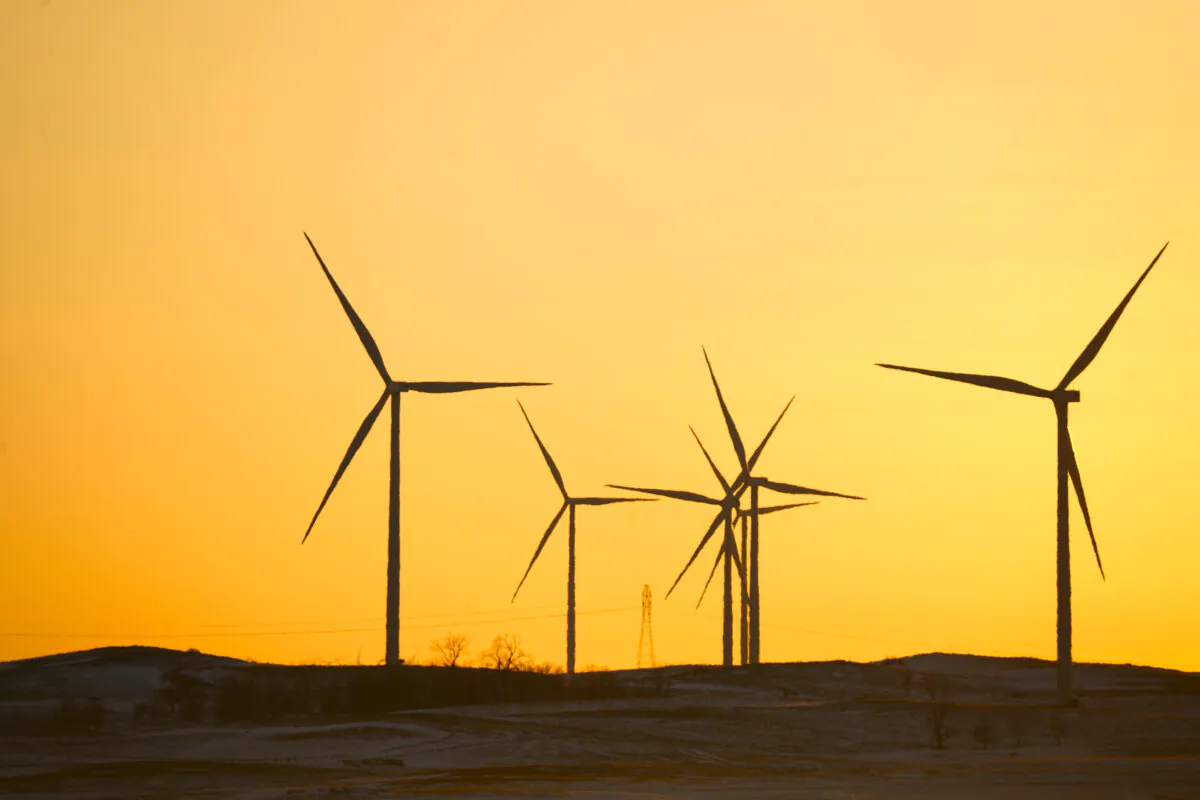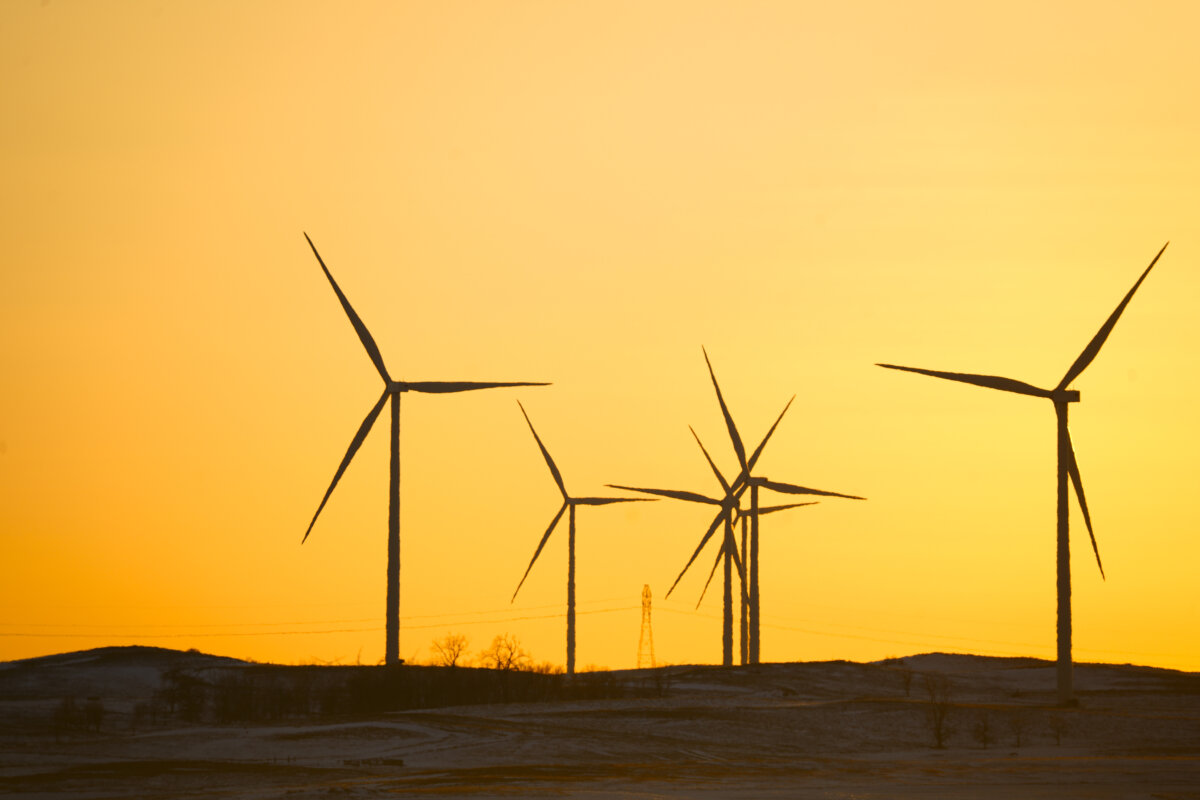

The Department of the Interior (DOI) is implementing four policy measures to end what it calls special treatment for “unreliable energy sources” such as wind and to ensure affordable, reliable energy development nationwide, the agency said in a July 29 statement.
Unlike fossil fuels that can generate power at all times, sources such as wind are dependent on weather conditions, making them unreliable.
The department said it is “evaluating whether to stop onshore wind development on some federal lands and halting future offshore wind lease sales.” The department said it will also “study how constructing and operating wind turbines might affect migratory bird populations.”
Under the Biden administration, promoting wind power was a major policy focus. President Joe Biden set a target of 30 gigawatts of wind power capacity for the United States by the end of this decade. As part of this, his administration announced several wind power projects.
Complying with Interior Secretary Doug Burgum’s July 29 order, the DOI’s first measure called for identifying policies biased in favor of wind and solar energy and for ceasing support for energy supply chains that are under the control of foreign rivals, the agency said.
The second measure involves restoring Congress’s mandate to consider all uses of public land and waters equally, the DOI said.
For instance, in October 2023, the Biden-era Bureau of Ocean Energy Management announced a Draft Wind Energy Area in the Gulf of Maine spanning 3.5 million acres, according to an Oct. 19, 2023, statement from the National Centers for Coastal Ocean Science.
At the time, the organization said the area presented a “promising opportunity for offshore wind development, with a capacity of over 40 gigawatts.”
The DOI said it will consider terminating the Wind Energy Area designation for the 3.5 million acres to safeguard “coastal environments and local economies from unchecked development.”
The agency will also work toward balancing energy development with other land uses such as recreation and grazing.
Thirdly, the DOI will discuss offshore wind development with stakeholders such as tribes, coastal towns, and the fishing industry.
The final measure involves assessing the consequences of wind turbines on the mortality rates of migratory birds.
Burgum said the DOI’s latest policies “represent a commonsense approach to energy that puts Americans’ interests first.”
“Leveling the playing field in permitting supports energy development that’s reliable, affordable, and built to last,” he said. “We’re also making sure tribes and local communities have a real seat at the table. This move is about responsible energy growth that works for every American.”
President Donald Trump signed an executive order on July 7 to end federal subsidies for wind and solar energy projects. In the order, Trump highlighted the unreliability of these energy sources and dependence on foreign-controlled supply chains.
‘No Clear Purpose’
The Trump administration’s policies on wind power have faced opposition from Democrats and environmental groups.
A coalition of 18 Democrat-led states filed a lawsuit on May 5 challenging a Jan. 20 presidential memorandum issued by Trump.
The memo suspended all new offshore wind power leasing on the outer continental shelf while also ending related permitting actions.
The states argued in the lawsuit that the nationwide suspension of wind energy projects was unlawful and politically motivated, threatening the United States’ energy security, job growth, and “climate progress.”
In May, a coalition of 10 environmental groups filed a legal brief in support of the states in the lawsuit, according to a May 15 statement by advocacy group Earthjustice.
The Trump administration’s ban cuts off “permitting for wind projects of all types pending completion of a vague review that has no clear purpose, timeline, or avenue for public participation,” the brief states.
“By obstructing responsible wind energy development, the Wind Directive and its implementation undermine efforts to meet state climate and energy targets, while increasing reliance on fossil fuels,” it reads.
The Department of Transportation is tightening safety rules related to wind turbines.
On July 29, the agency said it will restore safety recommendations on turbines built near highways and railroads previously overruled by the Biden administration.
Transportation Secretary Sean Duffy and his team have identified that a safety recommendation was overruled by the previous administration for dozens of wind projects, even though there were concerns that the turbines could interfere with radio spectrum frequencies, thus posing safety risks, the agency said.
 Friends Read Free
Copy
Facebook
Tweet
Friends Read Free
Copy
Facebook
Tweet