
The Federal Reserve’s holdings of Treasury bills—with maturity dates of 30 days to one year—have increased substantially since the start of 2026, according to an Epoch Times review of the central bank’s assets.
Since sliding below $6.6 trillion late last year, the Fed’s overall balance sheet has been on a modest upward trajectory—and the composition of its purchases has changed.
Year-to-date, its total holdings have risen about 2 percent to above $6.74 trillion, the highest level since March 2025.
By the week ending Aug. 20, the Fed held almost $538 billion in Treasury bills, up 130 percent from the start of the year, when holdings stood at about $233 billion.
While notes and bonds still represent about half of the balance sheet—$3.62 trillion—purchases of securities with maturities ranging from two to 30 years have been tepid.
The Fed has acquired just $57 billion in these Treasury securities, an increase of only 1.5 percent since the beginning of the year.
Monetary policymakers announced their reorientation in December to manage market liquidity.
Initially, the Fed began buying approximately $40 billion in short-term bills. Recent data suggest the central bank has spent more than $20 billion on T-bills.
The decision came shortly after officials chose to stop shrinking their holdings and allow Treasury and mortgage bonds to mature without being replaced.
But it also coincides with the Treasury Department’s strategy of repurchasing long-dated government bonds and issuing short-term debt.
From January to July, the Treasury has issued approximately $413 billion in net new T-bills, and Goldman Sachs estimates it could exceed $800 billion by the year’s end.
The Treasury’s record debt buybacks—more than $200 billion in the first half of the year—aim to bolster market liquidity, stabilize cash balances, and manage refinancing risk.
It recently said that it plans to borrow more than $1.3 trillion in the coming months.
According to the Aug. 3 refunding estimates, the Treasury expects to borrow $739 billion in privately held net marketable debt in the July–September quarter.
It also anticipates borrowing $628 billion from October to December.
‘Unimpressed’
Based on movements in the U.S. government bond market, investors are demanding higher compensation for holding long-duration securities.
On Aug. 13, the Treasury conducted a $25 billion sale of 30-year bonds at an interest rate of 5.216 percent, the most since 2001.
Treasury Secretary Scott Bessent announced last week that the government would expand its debt buybacks to at least $4 billion, up from the current $2 billion schedule, beginning next month.
While Bessent believes traders “have nothing to do” during a thin August trading period, market watchers suggest bonds are signaling mounting worries over persistent inflation, fiscal challenges, and growing competition from corporations issuing debt to fund their artificial intelligence (AI) buildout.
“In our estimation, this is an attempt to prevent yields from rising, which would impact rates on consumer credit cards, home loans and auto loans, as well as borrowing costs for businesses,” Joseph Brusuelas, chief economist at RSM, said in an Aug. 25 research note.
“But the bond market remains unimpressed, and we have not observed a meaningful and sustained decline in interest rates.”
Other economic observers suggest yields could simply be returning to 1990s levels after almost 20 years of ultra-low interest rates.
“There is more room for the term premium to normalize before this adjustment is complete,” Lawrence Gillum, chief fixed income strategist at LPL Financial, told The Epoch Times in an emailed note.
“Moreover, while 5 percent may seem high, Treasury yields were around these same levels (or higher) before the aberrant zero interest rate environment post the Global Financial Crisis.”
On Aug. 25, Treasury yields were lower across the board. The benchmark 10-year yield fell below 4.65 percent. The 20- and 30-year yields declined to around 5.17 percent.
The 2-year, which typically tracks Fed policy expectations, decelerated to 4.2 percent.
Eyes on Jackson Hole
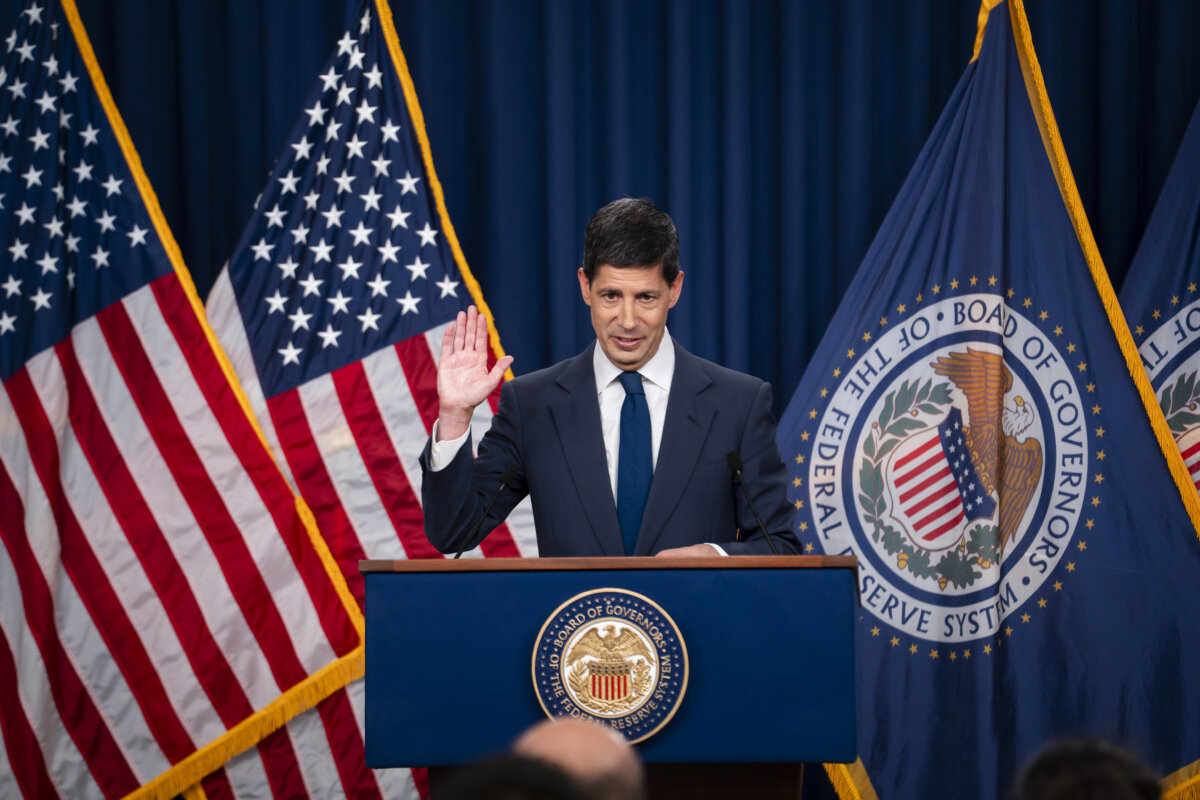
Fed Chairman Kevin Warsh is set to deliver his first keynote address at the central bank’s annual Jackson Hole Economic Symposium.
Warsh has made it clear that he wants to refrain from issuing forward guidance as much as possible.
But financial markets will comb through his prepared speech for any allusions to the bond market or hints on upcoming monetary policy decisions.
“This could be his most important speech yet,” Jay Woods, chief market strategist at Freedom Capital Markets, said in a note emailed to The Epoch Times.
Investors largely expect the Fed to leave interest rates unchanged at the September Federal Open Market Committee policy meeting.
Traders are also split on whether officials will follow through on a rate hike at all this year, according to CME FedWatch data.
But while interest rates will be the focus for investors, the latest developments in the bond market could also take center stage.
Warsh has long maintained that the Fed’s balance sheet should be used only in true emergencies, with conventional rate policy carrying most of the load.
That position matters for equities because the post‑crisis and pandemic rounds of quantitative easing—also known as QE—delivered a massive liquidity boost to risk assets.
“Now we must listen to what he says about QE, [quantitative tightening], and the balance sheet on top of the ‘many’ Fed officials that pushed for a hike according to the Fed minutes,” Woods said.
 Friends Read Free
Copy
Facebook
Tweet
Friends Read Free
Copy
Facebook
Tweet