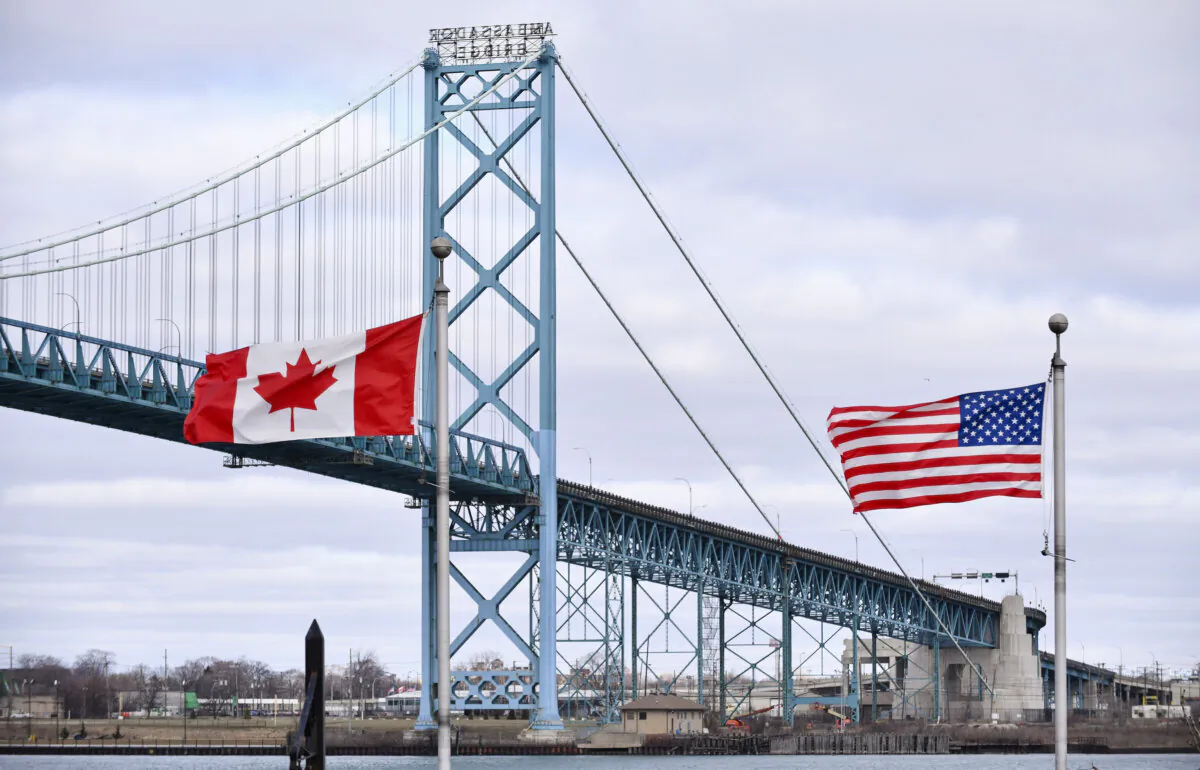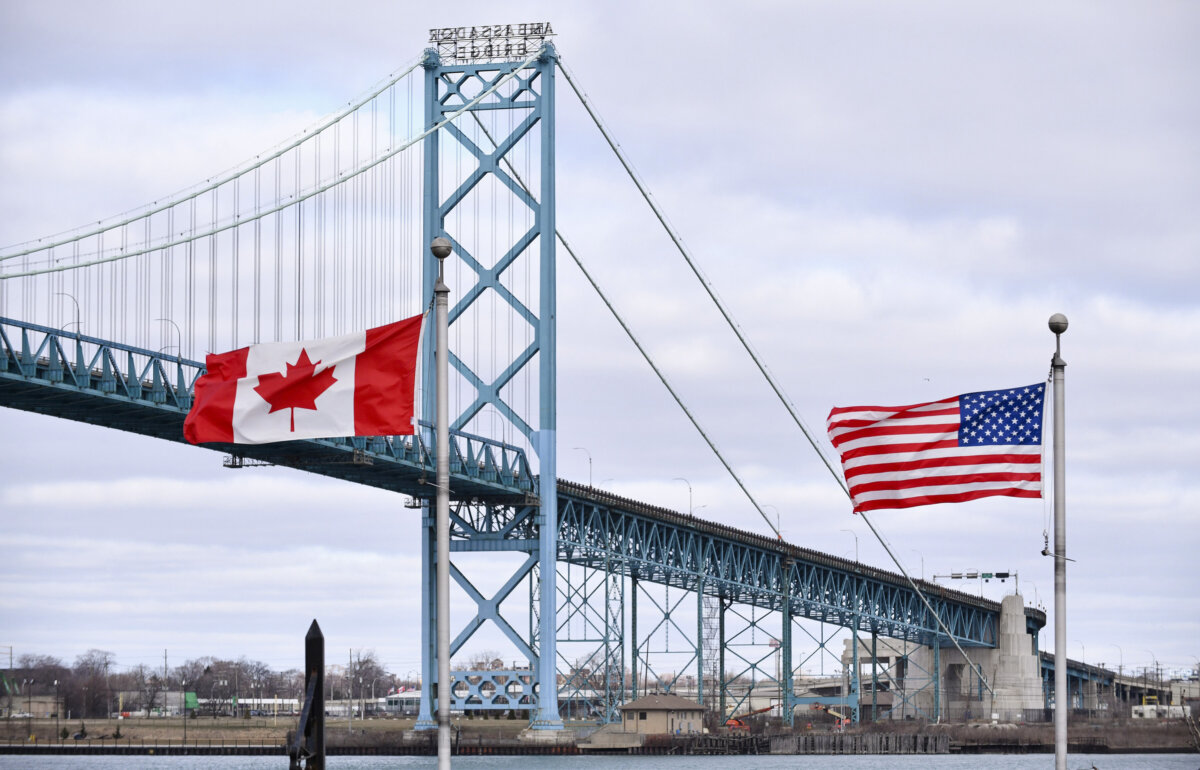

Canada has announced it is countering Washington’s tariffs by imposing dollar-for-dollar counter-tariffs on hundreds of American goods amounting to CA$27.6 billion (US$19.9 billion).
The new tariffs announced by Canadian Finance Minister François-Philippe Champagne during an Aug. 25 press conference will come into force on Sept. 8, increasing costs for imported American items ranging from seafood to furniture.
“[New U.S.] tariffs will have real consequences for Canadian workers, businesses, and communities across our nation. Canada must respond, and today we are in a proportionate, targeted, and strategic way,” Champagne said.
Champagne also promised CA$7.5 billion in federal support for businesses affected by the tariffs.
The announcement comes after trade talks between Ottawa and Washington collapsed on Aug. 21, with Washington imposing 50 percent tariffs on US$20 billion Canadian exports to the United States beginning on Aug. 22. The U.S. tariffs, affecting approximately 5 percent of Canadian exports to the United States, apply to a range of products including electronics, alcohol, dairy, paper, plastics, and furniture.
Champagne said counter-tariffs will be introduced on a sliding scale of 15, 25, and 50 percent, with the highest levies applied to specific dairy products, cosmetics, and select lumber products.
American steel and aluminum products, which were formerly subject to a retaliatory tariff of 25 percent, will now rise to 50 percent as well. Canadian steel and aluminum are currently subject to 50 percent sectoral tariffs by the United States.
Ottawa has published an extensive list of items that will be affected by counter-tariffs.
Champagne said the “vast majority” of the products affected by the retaliatory tariffs could be substituted with a Canadian product.
Canada had announced its intention to introduce counter-tariffs on Aug. 22. U.S. President Donald Trump said on Aug. 24 that his country will be imposing new 50 percent tariffs on Canadian cars, trucks, and auto parts beginning in 2027. Canadian autos are currently subject to 25 percent U.S. tariffs.
In a statement on Aug. 25, the White House said, “Canada has been ripping off the United States for decades,” and that Trump “is done letting them get away with it.”
“Last week, the U.S. offered Canada the most preferential market access of any country on Earth, with deep cuts on steel, aluminum, autos, lumber, and more. Instead of partnership, Canada chose unreasonable demands, walk-backs, and flat-out rejection,” the White House said.
‘Political Pressure’
Canadian Industry Minister Mélanie Joly said the items Canada is targeting with the counter-tariffs are strategic, meant to put political pressure on Washington, in addition to shielding domestic businesses from American competition.
“We’re also targeting products that will target states in the U.S., and so we’re being wise and strategic to put political pressure,” she said during the press conference.
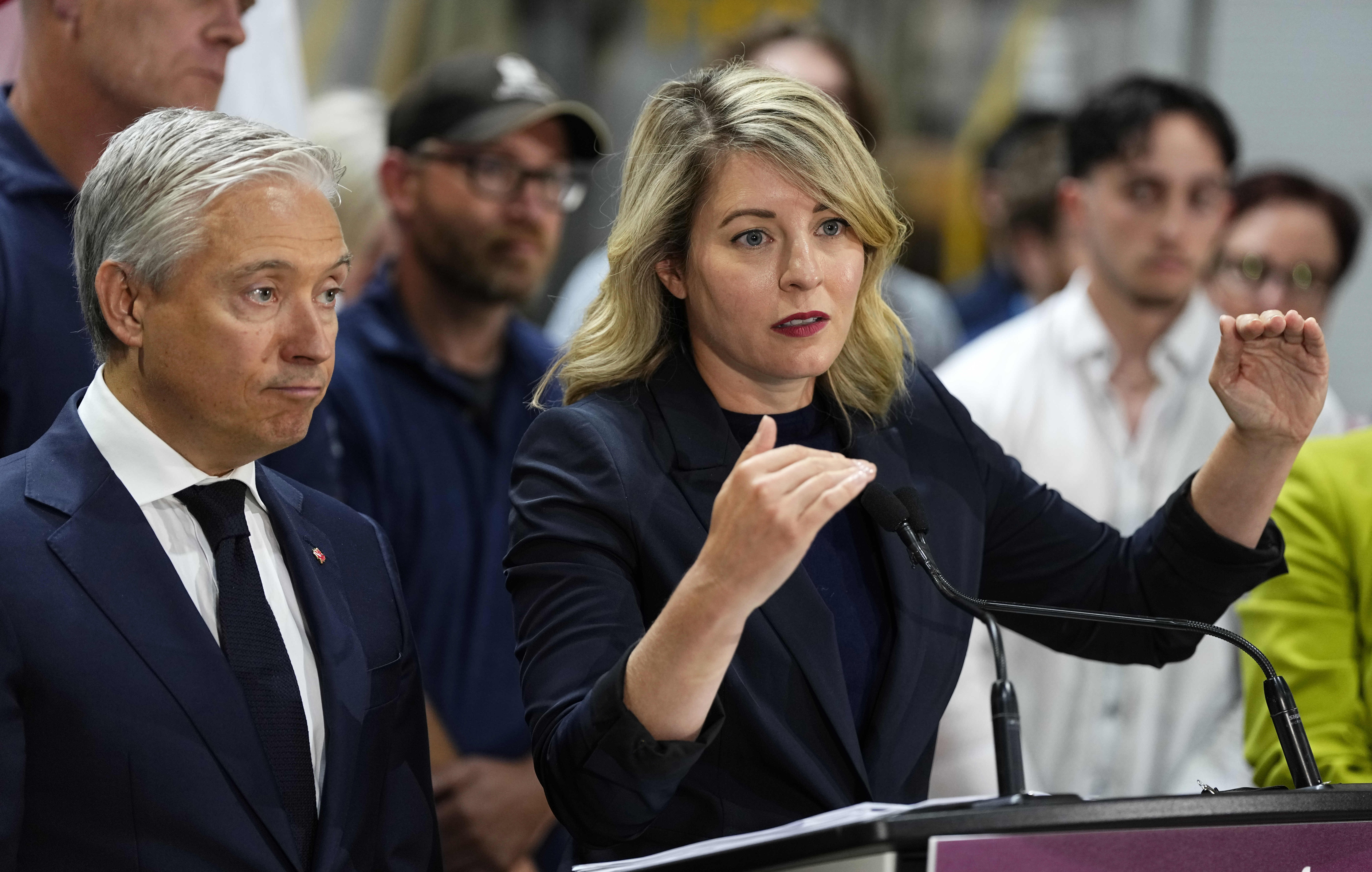 Minister of Industry Melanie Joly speaks as Minister of Finance and National Revenue Francois-Philippe Champagne looks on, during a news conference on Canada’s response to U.S. tariffs, at a roofing company in Ottawa, on Aug. 25, 2026. (The Canadian Press/Justin Tang)
“When you choose a Canadian product, you’re not only putting pressure on the U.S. right now, you’re protecting jobs,” Joly said. “That’s what you can do, and that’s how we can launch this movement of resistance to what is happening.”
Canadian Prime Minister Mark Carney said during an Aug. 24 press conference that since the U.S. economy is much larger than Canada’s, it “will be difficult to carry out dollar-for-dollar retaliation,” so instead his government will take “more targeted measures.” When asked if this includes restricting Canadian energy and critical minerals exports to the United States as Ontario Premier Doug Ford has suggested, he said he wants to take a “positive approach,” adding that, “if we need to do more, we’ll see.”
Washington said the implementation of the new 50 percent tariffs on Aug. 22 were in response to Canada’s dairy supply management system, provincial bans on U.S. alcohol, and tariffs on U.S. autos.
Ottawa has said it will protect the supply management system while defending the auto tariffs as a response to U.S. tariffs on Canadian autos, which Canada says violate the North American free-trade agreement. Ahead of the collapse of the trade talks, premiers had agreed to remove their bans on U.S. alcohol sales after being asked to do so by Carney.
After trade talks failed on Aug. 21, Carney said it was due to last-minute changes by Washington to omit medium- and heavy-duty Canadian trucks from tariff relief, U.S. objections to Canada’s French-language protection laws, and the White House wanting restrictions on Canada engaging in other international trade deals.
Washington disputes this, saying it was Ottawa that backed away from commitments at the last moment, while rejecting Carney’s characterization of Washington’s position on French-language laws, calling it a “political” move.
Help Package
Ottawa is rolling out a CA$7.5 billion relief package for workers and businesses affected by the trade war, with a specific focus on small- and medium-sized enterprises, Joly said.
The support package provides affected businesses with loan and financing programs, and allows more flexibility for workers to access employment insurance (EI).
The funding will include $1.5 billion via the Regional Tariff Response Initiative, disbursed through regional development agencies for non-repayable cash and liquidity grants and $500 million will be directed through the Business Development Bank of Canada (BDC) for immediate cash-flow and working capital loans.
Jolie said another $2 billion is earmarked for the new Canada Strong Diversification Fund that accelerates “shovel-ready” capital maintenance projects so factories can retool and find new global markets and $3.5 billion has been set aside for rapid response funding and EI extensions to help affected workers access income support.
Eligible employers will also be able to obtain up to $1,000 for every employee to help cover the costs of training and administration in the execution of EI work-sharing and retention programs.
“We’ll win by strengthening our economy here, by making what we need, and by facilitating buy Canadian, hire Canadian, and build Canadian,” Joly said.
Conservative Party Leader Pierre Poilievre said on Aug. 25 that he’ll work with the government and other parties to oppose Washington’s tariffs, while calling on the Liberal government to recall Parliament and to release the details of the proposed deal that Carney walked away from on Aug. 21.
He also reiterated his call for Ottawa to lower taxes to support economic growth in Canada, including temporarily suspending gas taxes and scrapping the industrial carbon tax.
“As the U.S. hikes tariffs, we must lower taxes for Canadians,” Poilievre said.
 Friends Read Free
Copy
Facebook
Tweet
Friends Read Free
Copy
Facebook
Tweet