
GE Aerospace said on March 9 that it will invest an additional $1 billion in U.S. manufacturing to keep up with growing demand in commercial aviation and defense.
To meet customers’ orders and bolster output, GE Aerospace plans to expand capacity at sites that currently assemble and produce commercial and defense engines.
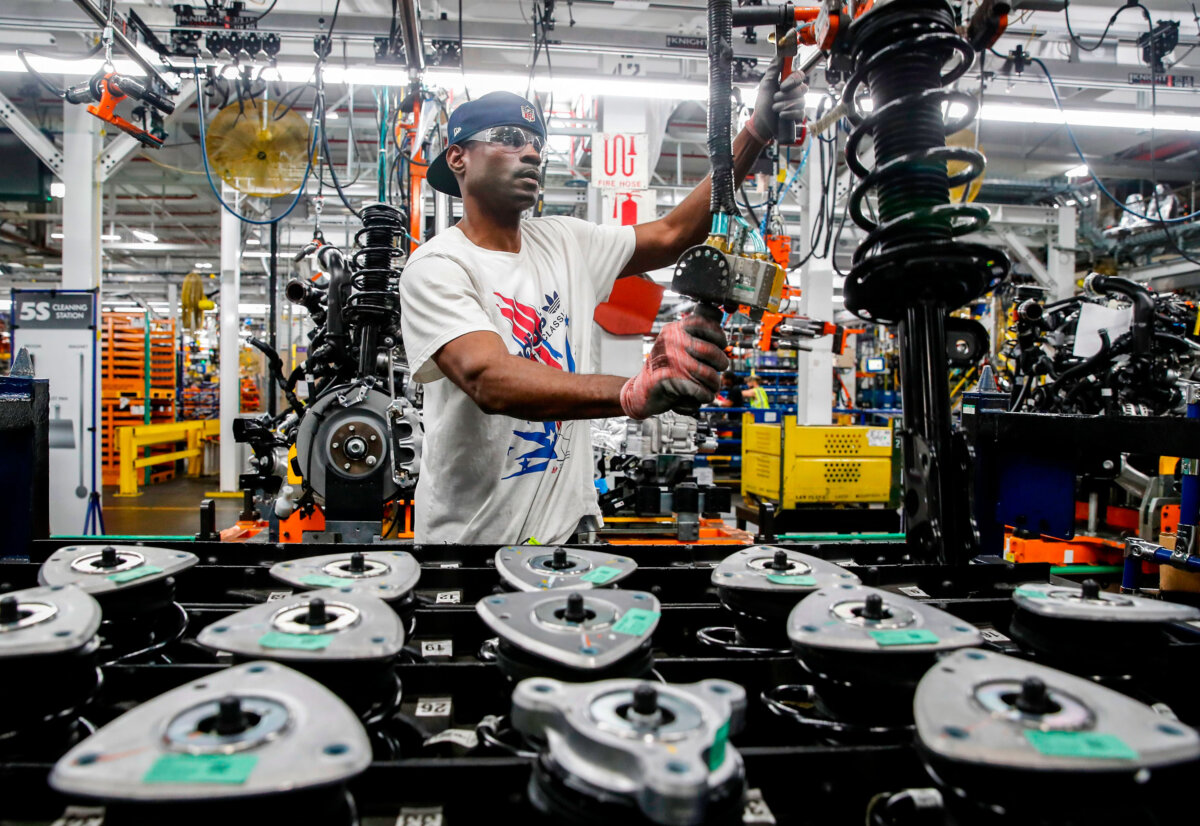
This new investment also includes upgrading facilities, purchasing new tools and equipment, and hiring 5,000 U.S. workers, including for both engineering and manufacturing positions.
This will impact more than 30 communities in 17 states, GE said in a news release.
The commitment includes $115 million for its headquarters in Cincinnati, Ohio, to enhance advanced 3D metal printing capabilities and increase test cell capacity.
It also identified several factories that would receive new investment: Lynn, Massachusetts ($40 million); Durham, North Carolina ($20 million); Madisonville, Kentucky ($10 million); and Lafayette, Indiana ($7 million).
“Maintaining U.S. aerospace leadership requires sustained investment in our people, our facilities, and the technologies that will define the future of flight,” said H. Lawrence Culp, Jr., chairman and CEO of GE Aerospace, in a statement.
Additionally, GE Aerospace is investing more than $100 million in its supply chain. GE’s latest announcement represents the second consecutive $1 billion investment.
In March 2025, the company announced plans to invest $1 billion in U.S. factories and the supply chain and hire 5,000 employees. The initiative benefited facilities in Alabama and Michigan.
US Manufacturing
Over the past year, scores of major U.S. and foreign companies have committed to bolstering America’s manufacturing base by building new factories, retrofitting existing facilities, and expanding research and development and skills training programs.
Eli Lilly announced in January that it would build a pharmaceutical manufacturing facility in Pennsylvania. This would be the drugmaker’s fourth new site as part of its broader efforts to enhance domestic production and strengthen medical supply chains.
Social media juggernaut Meta Platforms said in January that it had established $6 billion in agreements with Corning to build and operate data centers.
Germany’s Siemens Energy unveiled its expansion efforts in February for factories in Alabama, Florida, New York, North Carolina, and Texas. The $1 billion investment will fund accelerated production of grid and gas turbine equipment, creating more than 1,500 jobs.
Manufacturing’s impact on the economy has narrowed in recent decades. The industry had accounted for as much as one-quarter of economic growth in the 1970s, but has shrunk to around 10 percent today.
The Trump administration’s trade agenda aims to rebalance international commerce by onshoring and reshoring manufacturing and turning other economies into consumers.
Reading the Data
While domestic manufacturing activity has been lackluster over the past three years, various indicators suggest the industry may be turning around.
February’s Institute for Supply Management’s Manufacturing Purchasing Managers’ Index—a monthly survey depicting the sector’s prevailing economic direction—surged for the second consecutive month. But it was only the third expansion in 40 months.
The survey found 12 industries, including appliances, computer and electronic products, electrical equipment, and machinery, registered growth last month.
Its forward-looking new orders sub-index remained in expansion territory but slipped from January’s four-year high reading. Backlog orders surged to their highest level since May 2022, while export orders held steady.
Despite growing factory activity, challenges persist for these companies, mainly due to inflation.
The prices sub-index in last month’s manufacturing PMI recorded the sharpest increase since June 2022, which respondents argue is resulting in softer demand and lower profitability.
“Today, American produced commodities like steel and aluminum are the highest priced in the world, by far,” a transportation equipment executive said in the survey.
The Federal Reserve’s regional manufacturing surveys, such as the latest findings from the Minneapolis Fed, share the same theme: Inflation is the top concern for U.S. firms.
Producer inflation unexpectedly surged 0.5 percent in January. Core producer inflation, which strips out volatile energy and food, also advanced 0.8 percent.
U.S. export prices jumped 0.6 percent at the start of the year, reflecting higher prices for capital goods and industrial supplies and materials, according to the Bureau of Labor Statistics.
Manufacturing payrolls, meanwhile, have also struggled over the past few years.
After nearly three years of stagnation, U.S. manufacturing employment has slipped into decline, shedding 100,000 jobs since January 2025. The sector lost 12,000 jobs in February.
Despite mixed economic conditions in the sector, the outlook for the year ahead is at its brightest since last summer, according to the S&P Global US Manufacturing PMI released earlier this month.
“Businesses were often disrupted by extreme weather, which has clouded insights into the underlying strength of economic growth and suggests we may see some rebound once the weather clears, and it is encouraging to see manufacturers reporting improved optimism about the outlook,” Chris Williamson, chief business economist at S&P Global Market Intelligence, said in a March 2 report.
 Friends Read Free
Copy
Facebook
Tweet
Friends Read Free
Copy
Facebook
Tweet