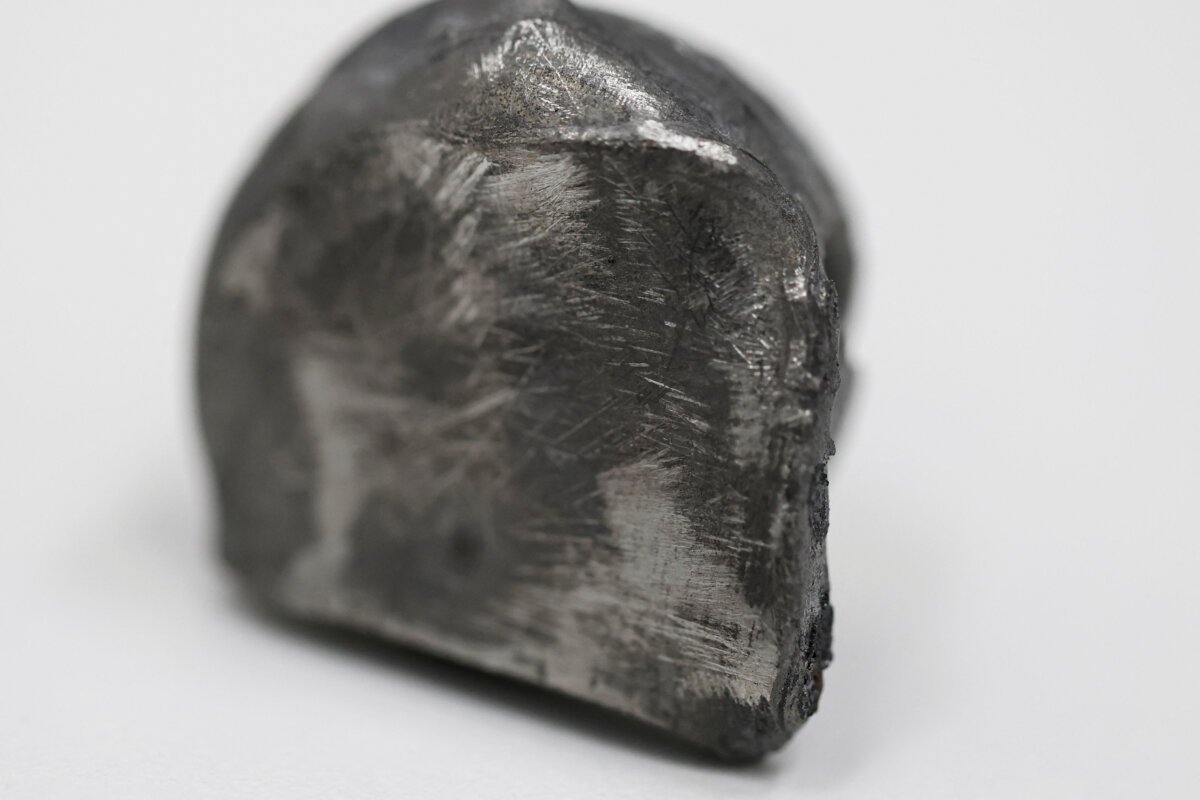

GE Vernova is working with the U.S. government to bolster domestic stockpiles of yttrium, a critical rare earth mineral facing severe global shortages following China’s export restrictions, according to CEO Scott Strazik.
Speaking at an investor day event on Dec. 9, Strazik said the gas-turbine maker—one of only three major producers worldwide—has secured enough yttrium to last into next year, though he did not specify how far into 2026 existing inventories will stretch. The company is pursuing additional supplies and investing in alternative materials to offset reliance on Chinese rare earths.
“We are very focused on it every day,” Strazik said. “We’re in good shape for the foreseeable future based on the fact that we have everything we need for this year into next year. But we will continue to be opportunistic whenever there’s an opportunity to add to the inventory.”
Global Shortages Deepen
Yttrium is used in high-temperature coatings and specialty alloys that enable gas turbines, jet engines, and semiconductor equipment to withstand extreme heat. China supplies more than 90 percent of the world’s processed yttrium, and its April decision to restrict exports—alongside six other major rare earths—has triggered cascading shortages across aerospace, energy, and chipmaking.
Although Washington and Beijing recently agreed to a new licensing regime meant to accelerate exports, traders and manufacturers say the system has not solved the bottlenecks and that shipments remain erratic. Prices outside of China for yttrium have jumped 4,400 percent this year to roughly $270 per kilogram, or about $122.50 per pound, according to Argus data, amid what some analysts describe as a global “scramble for yttrium.”
“China’s export controls have undoubtedly prompted a scramble for yttrium that continues several months on,” Argus analyst Ellie Saklatvala said in November.
The stakes are significant. The Aerospace Industries Association has stated that yttrium is essential for the world’s most advanced jet engines, and semiconductor executives warn that shortages could soon become a major bottleneck, driving up costs and lengthening production timelines.
“Shortages will increasingly become a real chokepoint,” said Richard Thurston, CEO of Great Lakes Semiconductor.
The United States imports 100 percent of its yttrium and relies almost entirely on China, according to the U.S. Geological Survey. That dependence has become a flashpoint in the rare-earth dispute between Washington and Beijing, prompting the Trump administration to accelerate efforts to rebuild a domestic and allied supply chain.
Indiana-based ReElement Technologies is one of the companies moving fastest to fill the gap. The company plans to begin producing yttrium oxide at a rate of 200 tons per year by the end of 2025—nearly half of total U.S. yttrium imports in 2024—before ramping up to 400 tons per year by March, CEO Ryan Jensen said in November.
America’s Push for More Supply, New Technologies
The push for new domestic supply comes as U.S. companies race to develop the refining technologies necessary to process strategic minerals currently dominated by China. ReElement announced on Dec. 10 that it had filed five new patent applications covering advanced separation technologies for germanium, antimony, terbium, gallium, gadolinium, yttrium, and other heavy rare earths.
“This milestone underscores how we are building the most versatile and efficient critical mineral refining platform in the world,” Jensen said in a statement. “These filings reflect our commitment to reshoring the highest-purity refining of rare earths and critical minerals back to the United States in a manner that is scalable, environmentally responsible, and globally deployable.”
President Donald Trump has vowed to end American dependence on China for rare earths within 18 months under an “emergency program” to rebuild domestic mining, processing, and refining capacity. Treasury Secretary Scott Bessent has said Beijing “made a real mistake” by threatening to weaponize the rare earth supply chain, galvanizing Western governments to accelerate alternatives.
Reuters contributed to this report.
 Friends Read Free
Copy
Facebook
Tweet
Friends Read Free
Copy
Facebook
Tweet