

Homebuying slowed this past week, despite U.S. mortgage rates sliding to the lowest level in four years.
For the week ending Feb. 20, the average contract interest rate on a 30-year mortgage was 6.09 percent, down from the previous week’s 6.17 percent, according to new Mortgage Bankers Association data released on Feb. 25.
This represented the lowest level since September 2022.
Despite falling borrowing costs, they have not been enough to stimulate homebuying across the U.S. real estate market, as total mortgage applications ticked up 0.4 percent this past week, while mortgage applications for home purchases fell by 5 percent.
“Purchase applications were down over the week but were 12 percent higher than a year ago, as the combination of lower rates and improving affordability conditions continue to support stronger demand than last year,” Joel Kan, vice president and deputy chief economist at the Mortgage Bankers Association, said in a news release.
Additionally, applications to refinance a home loan jumped 4 percent and are up 150 percent from a year ago. Homeowners were taking advantage of the downward trend in mortgage rates, which are down about 79 basis points from the same time last year.
Borrowers also sought extra savings in adjustable-rate mortgages—also known as ARMs—which change every six to 12 months during the amortization period.
“The ARM share stayed above 8 percent, as ARM rates remained more than 80 basis points below conforming fixed rates,” Kan added. “This is giving payment-sensitive borrowers or those seeking larger loans, an incentive to choose this product offering.”
Mortgage rates have been trending lower in recent days.
The average rate on the 30-year fixed mortgage slipped to 5.99 percent for the first time since early January and the second time since 2022, according to data from Mortgage Daily News.
In his record-long State of the Union address on Feb. 24, President Donald Trump touted his administration’s efforts to improve housing affordability.
“Mortgage rates are the lowest in four years and falling fast, and the annual cost of a typical new mortgage is down almost $5,000 just since I took office, one year,” Trump said.
Bond Market
A selloff in the U.S. stock market earlier this week fueled a rush to safety, with investors diving into U.S. Treasury securities. Yields decline when there is significant demand for government bonds. The mortgage market typically tracks activity in the bond ecosystem.
The benchmark 10-year Treasury yield has been holding steady at slightly above 4 percent.
“With rates holding perfectly steady today, this is the 3rd day that matches that multi-year low,” Matthew Graham, chief operating officer at Mortgage News Daily, said in a Feb. 24 note.
“All that having been said, there’s never a guarantee that tomorrow’s rates will be as low even if there aren’t any economic reports that suggest a potentially volatile response.”
Federal Reserve policy expectations continue to remain a factor for the Treasury market.
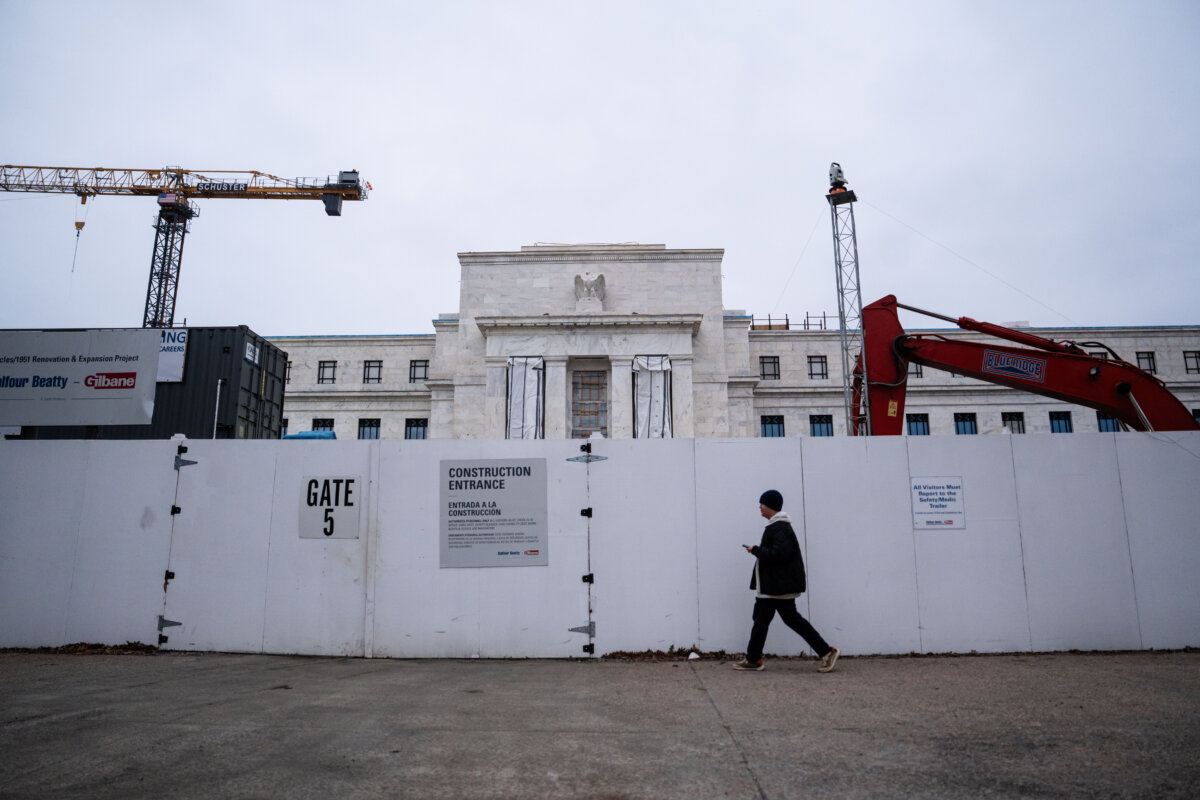
With softer inflation and a labor market not falling off a cliff, traders have been penciling in the first quarter-point rate cut of the year in June, according to the CME FedWatch Tool.
The challenge for the housing market could be growing delinquencies, says Jeff DerGurahian, head economist and CIO at loanDepot.
“Delinquencies are rising across mortgages and other consumer finance products, and student loan payments continue to pressure household budgets,” DerGurahian said in a note emailed to The Epoch Times.
“Tax refunds could provide a bit of a cushion, but the pressure on consumers is something the market will be monitoring closely.”
The average refund amount has risen by more than 14 percent to $2,476 as of Feb. 13.
Aggregate delinquency rates worsened in the fourth quarter of 2025, with nearly 5 percent of outstanding debt in some stage of delinquency, New York Federal Reserve economists said in their latest Household Debt and Credit Report.
“Transitions into early delinquency were mixed with mortgages and student loans increasing, while all other debt types held steady,” they wrote in the Feb. 10 report. “Transitions into serious delinquency ticked up for credit card balances, mortgages, and student loans while auto loans and HELOC [home equity line of credit] decreased slightly.”
Despite the increase, mortgage delinquencies are near historically normal levels, “but the deterioration is concentrated in lower-income areas and in areas with declining home prices,” the report said.
In the October–December period, total household debt increased by $191 billion to $18.8 trillion for the first time ever. Mortgage balances jumped by $98 billion to $13.17 trillion.
 Friends Read Free
Copy
Facebook
Tweet
Friends Read Free
Copy
Facebook
Tweet