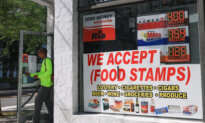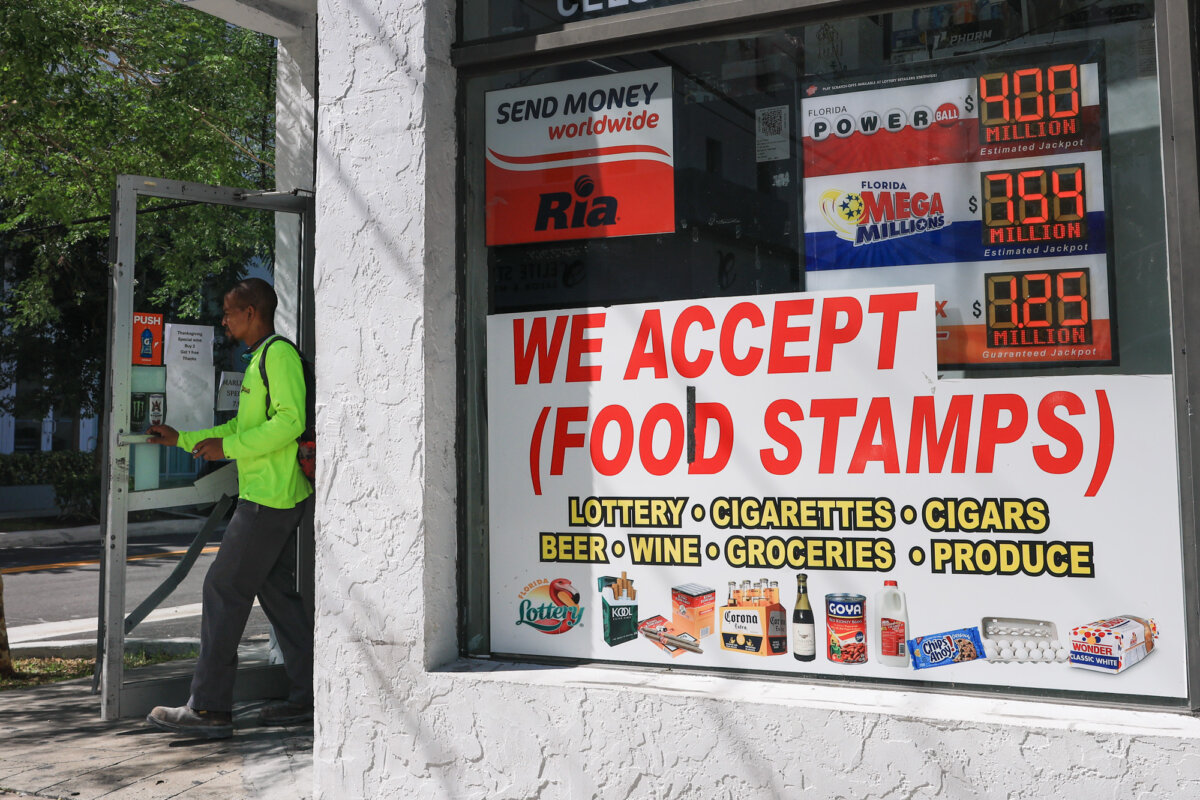

Participation in the Supplemental Nutrition Assistance Program (SNAP), commonly referred to as food stamps, has declined rapidly since changes mandated by the One Big Beautiful Bill Act took effect on July 4, 2025.
Those changes include expanded work requirements for individuals and tightened restrictions on noncitizen eligibility. States must also shoulder some of the program’s administrative costs and may face penalties for high payment error rates.
“We now have moved 4.3 million Americans off the food stamp program. A lot of that is fraud. A lot of it is people taking [part in] the program that shouldn’t have been,” Agriculture Secretary Brooke Rollins said in an April interview with Fox Business.
“Let’s move people from welfare to work. The dignity of work is a real thing in this country,” Rollins said.
Here’s a look at the participation data, job market performance, and the factors driving the decline.
Participation Decline
The number of food stamp beneficiaries declined by 12 percent—nearly 5 million—from January 2025 to February 2026, according to Agriculture Department data. That reduction yielded $730 million in savings, according to the department.
Nearly 43 million U.S. residents—about one out of eight—were enrolled in the program at the start of 2025. The number was below 38 million in February, nearing pre-COVID-19 pandemic levels.
The decline actually began in November 2025 as some states began implementing the new work requirements.
The changes will reduce federal SNAP spending by more than $180 billion over 10 years, in part by shifting some of that spending to the states through administrative cost sharing, according to projections from the Congressional Budget Office.
That 20 percent reduction is the largest in the program’s history, Sara Bleich of Harvard University wrote in an article for the Kennedy School of Government.
More Start Work or Volunteer
SNAP is funded by the federal government and costs more than $100 billion each year.
Some 64 percent of the able-bodied adults aged 18 to 64 enrolled in the program between October 2019 and February 2020 did not work at all, according to a Foundation of Government Accountability report based on federal data. Only 7 percent were working full time at that time, the report said.
The One Big Beautiful Bill Act expanded the program’s work requirements to include adults aged 55 to 64 as well as adults with children aged 14 or older. The requirements can be met by employment, job training, or volunteering at least 80 hours per month.
“Real work requirements, not voluntary referrals, are needed to move able-bodied adults from welfare to work,” the Foundation for Government Accountability stated.
Since July 2025, private businesses have been adding jobs every month, totaling 710,000 net jobs as of May 2026, according to the ADP employment report.
In May, job gains in private businesses reached a new high since January 2025, according to the report.
“Hiring was more broad-based in May than we’ve seen in the last few years. The labor market continues to show sustained momentum going into the summer hiring season,” ADP Chief Economist Nela Richardson said.
The unemployment rate held steady at just more than 4 percent over the past year, according to the Bureau of Labor Statistics. But American volunteerism hit a record high of 50 percent in 2026, according to an April CivicScience poll. This marked a steady climb from 48 percent in 2025 and 45 percent in 2024.
Americans weren’t just volunteering at a higher rate—they were volunteering more often. The survey showed that weekly and monthly volunteering both hit record highs in 2026.
Younger generations were driving the surge in volunteerism. Americans aged 18 to 29 led the pack, with 69 percent reporting volunteering, followed by those aged 30 to 44, at 54 percent.
A Gallup poll conducted during the first half of December 2025 found that 63 percent of U.S. adults volunteered time to a religious organization or other charitable cause. The share increased from 56 percent in 2021.
Participation Changes by State
SNAP participation declined in all states but Hawaii and Alaska between July 2025 and February 2026, according to The Epoch Times analysis of Agricultural Department data.
Arizona’s enrollment led the nation in plunges, down by 50 percent. Enrollment in Georgia and North Carolina declined by more than 19 percent.
Arizona and Georgia carried out expanded work requirements in November 2025, while North Carolina implemented them in December 2025.
In both New York and California, enrollment shrank by 6 percent. The two states did not begin enforcing new requirements until March and June, respectively.
Participation in Hawaii and Alaska increased by 1.9 percent and 4.5 percent, respectively. Alaska has secured waivers from the Department of Agriculture and will not implement expanded requirements until October.
Ineligible Recipients
The federal government had found about 1 million ineligible recipients from 29 states as of July 1, 2025. That includes people using dummy Social Security numbers, those enrolled in more than one state, and dead recipients, according to federal data.
Those ineligible recipients received $2.3 billion in federal dollars.
Those figures do not include the 21 states that have not shared data with the federal government.
The federal government estimated an additional $3 billion in potential fraud, waste, and abuse each year.
Other Drivers
The new rules exclude participation by some lawful residents, such as refugees, asylum seekers, and victims of human trafficking.
Undocumented immigrants remain ineligible for the program.
Only U.S. citizens, lawful permanent residents (after a five-year waiting period), Cuban and Haitian entrants, and Compact of Free Association citizens from the Marshall Islands, Micronesia, and Palau are eligible for the program.
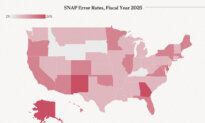
The act also imposes penalties for erroneous payments—in which states disbursed allowances to the wrong individuals or the wrong amounts. The food stamp program incorrectly disbursed nearly $11 billion in 2024, according to federal data.
Given that the federal government covers the majority of food stamp costs, states had “little incentive” to control the program’s costs and improve outcomes among recipients, the American Enterprise Institute stated in a 2024 report.
Starting in October 2027, states with payment error rates higher than 6 percent will pay a penalty of 5 percent to 15 percent of total benefits. This reinstates a previous requirement that has not been used since 1964.
Based on 2024 federal data, only nine states would not face a penalty.
“Illegal aliens have been removed from the rolls and requirements restored for able-bodied adults—safeguarding benefits for Americans who truly need them,” the White House said in a June 10 statement.
Lawrence Wilson contributed to this report.
 Friends Read Free
Copy
Facebook
Tweet
Friends Read Free
Copy
Facebook
Tweet