

Honda has posted its first annual operating loss in years after recording nearly $9.98 billion in electric vehicle (EV)-related losses, prompting the company to suspend major EV investments in North America and redirect resources toward hybrid vehicles.
The Japanese carmaker said on May 14 that its operating loss for the fiscal year ending March 31 totaled 414.3 billion yen ($2.7 billion), reversing a profit recorded a year earlier.
The company attributed the loss primarily to canceled EV development projects, writedowns tied to U.S. electric vehicle operations, and provisions connected to shifting market demand away from fully electric models.
Honda’s EV-related losses reached 1.57 trillion yen ($9.98 billion) during the fiscal year.
The automaker said it moved quickly to reorganize its EV strategy as market conditions changed.
Honda President and CEO Toshihiro Mibe told reporters on May 14 that the company will “indefinitely suspend” its planned comprehensive EV value chain project in Canada.
Honda did not announce large-scale layoffs tied to the restructuring but said it will redirect manufacturing capacity in Ohio toward gasoline-electric hybrid vehicles and make all North American auto plants capable of producing hybrid models.
The company also said its battery joint venture with LG Energy Solution will convert part of its EV battery production lines to hybrid battery production to support rising hybrid demand.
Honda executives said tariffs, semiconductor shortages, and lower vehicle sales also pressured earnings in the automotive division during the year.
“Although the automobile business faced a harsh business environment, including higher tariff burdens and lower unit sales due to factors such as semiconductor supply shortages, we implemented company-wide cost reductions as one team,” Mibe said.
Honda said that excluding EV-related losses, operating profit would have totaled 1.039 trillion yen ($6.5 billion).
Hybrid Vehicles, EV Investment
Honda said it will spend more on hybrid vehicles and cut planned spending on electric vehicles. The company plans to launch, starting in 2027, a new generation of hybrid models built on redesigned platforms and powered by updated hybrid systems.
This includes 15 next-generation hybrid models globally by fiscal year 2030, focusing heavily on North America.
Honda also unveiled two prototype hybrid vehicles—the Honda Hybrid Sedan Prototype and the Acura Hybrid SUV Prototype. The carmaker said the new hybrid lineup will improve fuel economy by more than 10 percent.
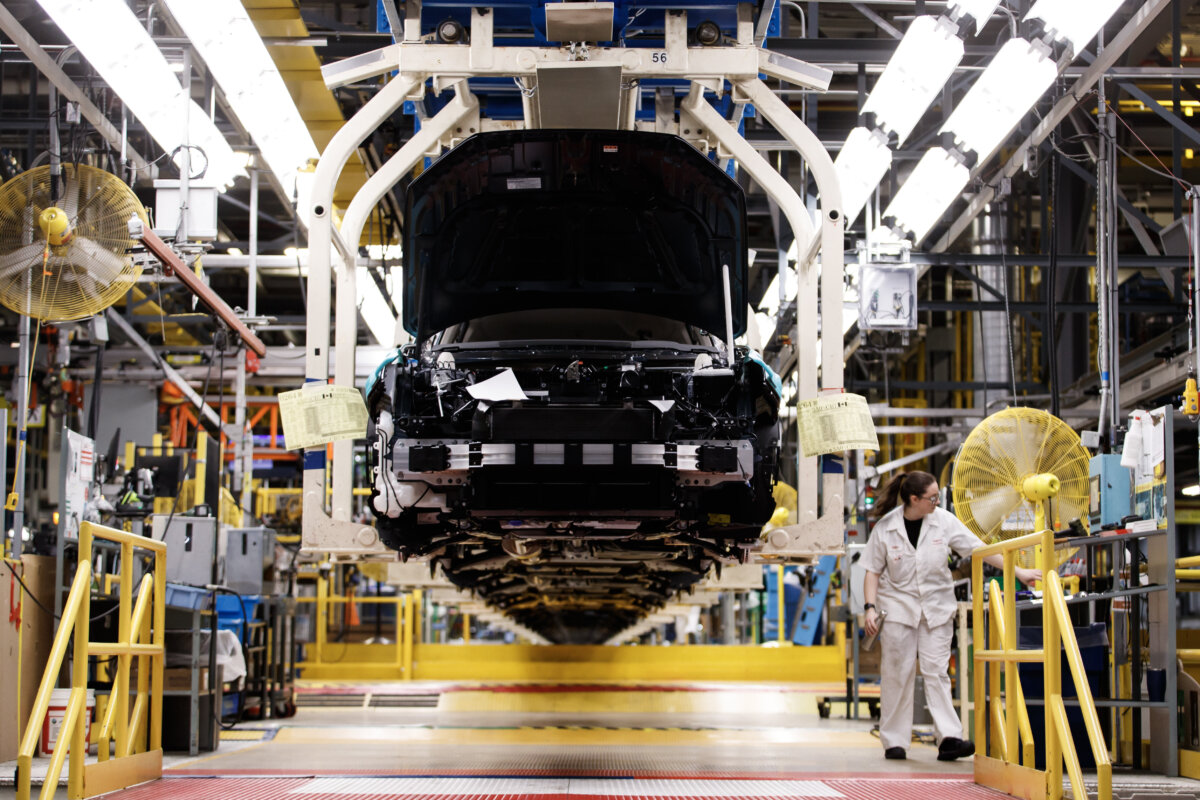
Executives said the company will cut planned EV-related investments to approximately 800 billion yen ($5.04 billion) over the next three years. It also plans to spend 4.4 trillion yen ($27.9 billion) on gasoline and hybrid vehicles and another trillion yen ($6.33 billion) on software technologies.
Honda maintained its long-term carbon neutrality target for 2050 but acknowledged that the pace of EV adoption varies significantly across markets.
Executives also identified India, Japan, and North America as priority growth markets for the company’s broader automotive business.
In India, Honda said it plans to introduce smaller, locally tailored vehicle models beginning in 2028 while expanding financing operations through a new captive finance company scheduled to launch before March 2027.
In Japan, the company said it will continue expanding EV offerings in the mini-vehicle segment while also rolling out additional hybrid models equipped with next-generation driver-assistance systems.
Honda also said it plans to strengthen competitiveness in China by increasing reliance on locally sourced technologies and partnerships with Chinese companies developing new energy vehicles.
 Friends Read Free
Copy
Facebook
Tweet
Friends Read Free
Copy
Facebook
Tweet