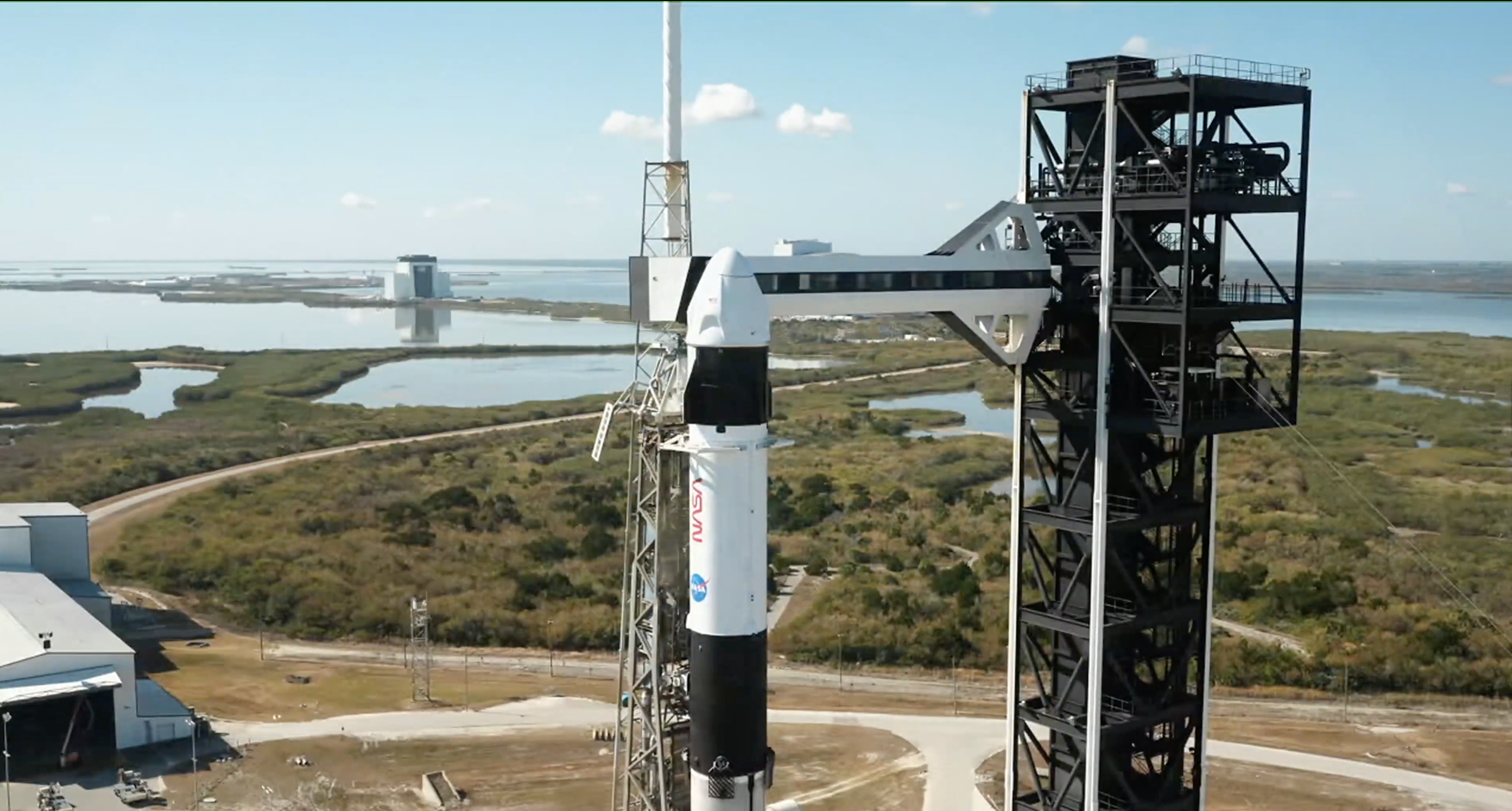

Entrepreneur Elon Musk’s tech conglomerate SpaceX, which combines AI with aerospace manufacturing, transportation, and communications, will issue stock to the public for the first time on June 11, with public trading to begin the following day.
And due to a recent rules change at the Nasdaq stock exchange, quite a few of those shares will likely end up in personal investment portfolios because certain index funds will be compelled to buy them. Index funds, which buy all the stocks in an index such as the S&P 500 or the Nasdaq-100, have been especially popular with retail investors and 401 (k) plans due to their relatively low cost and higher risk diversification.
In order to protect retail investors from the price volatility that often occurs when a privately owned company’s shares are first sold on public markets, called an initial public offering (IPO), stock exchanges have required a “seasoning period” of up to a year before a newly listed company is included in their index funds.
Effective May 1, however, the Nasdaq changed its seasoning rules to allow a “fast track” for any IPO ranking within the top 40 of the index by market cap. This means that large companies can be added to the Nasdaq-100 in just 15 trading days, down from three months.
Some analysts have speculated that Nasdaq changed its criteria in order to win listings for large and lucrative IPOs, while potentially adding risk for retail investors.
“Reducing or ending the seasoning period only benefits the issuers, both of the IPO and of the index fund, not investors,” Paul Mueller, an economist with the Institute for Economic Research, told The Epoch Times. “Stocks often have the most volatility right after they are issued, which means they have more risk when they are first issued.”
This year, SpaceX, OpenAI, and Anthropic, which together are valued at around $3.5 trillion, are all gearing up to issue public shares for the first time.
In the United States, approximately $20 trillion worth of shares are currently held by index funds or index-based ETFs, according to the Investment Company Institute. When index funds are required to purchase IPOs, it creates substantial new demand for that company’s shares.
S&P index funds alone would be forced to absorb roughly 19 percent of SpaceX’s available float once that company is included in their indices, Jay Woods, Chief Strategist at Freedom Capital Markets, told The Epoch Times in an emailed statement.
“Forced buying into an index does not reflect genuine investor conviction; it manufactures artificial demand,” Woods said. “When a passive fund is required to buy SpaceX because a rule change pushed it into the index, that fund isn’t making a judgment about fair value; it is executing an algorithm.”
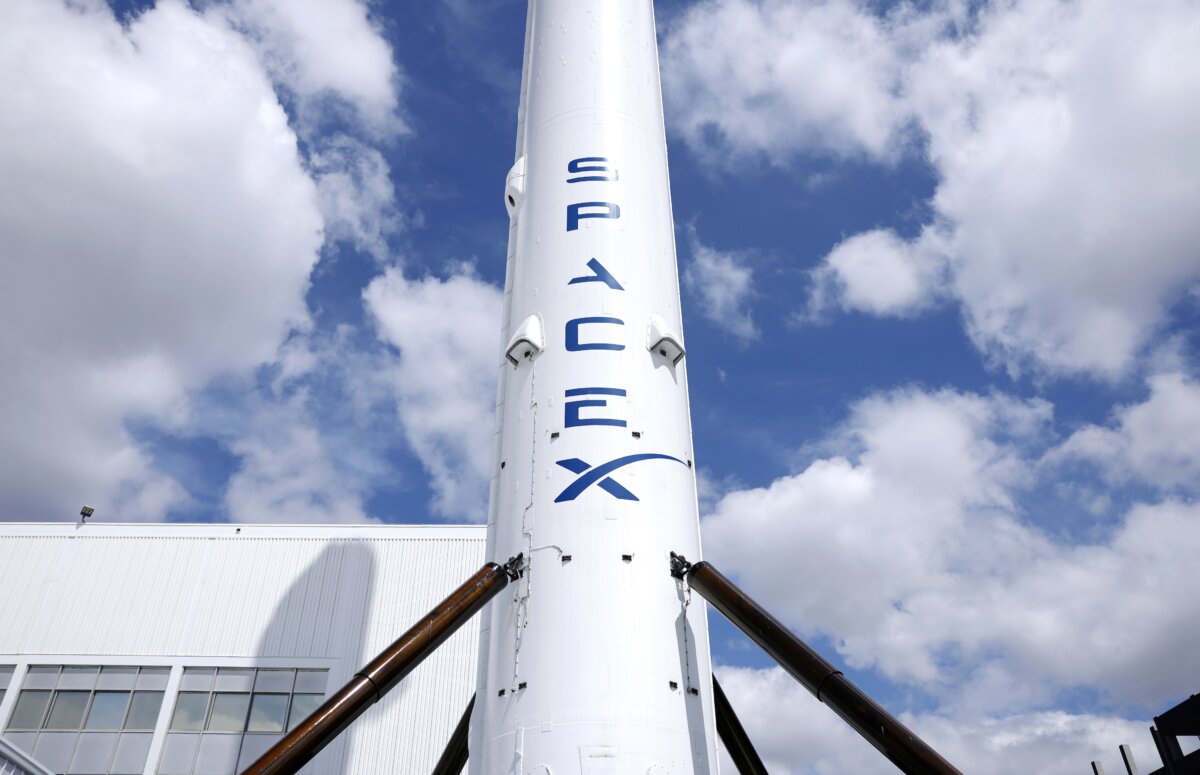 A SpaceX Falcon 9 rocket is displayed at a SpaceX facility in Hawthorne, Calif., on April 2, 2026. (Mario Tama/Getty Images)
Advocates of eliminating long seasoning periods say it would allow index investors to benefit if share prices gain after the initial offering, but Mueller disputes this.
“Companies have a strong incentive not to underprice their initial offering—so the idea that index fund investors, who are usually invested over long periods of time and seeking risk diversification, will be missing out on substantial returns if their funds are not allowed to access the initial shares is a stretch,” he said. “While there will certainly be examples of IPO shares with significant appreciation in their first 12 months of public trading, there are more where the shares ended that period below their IPO.”
If its IPO goes as planned, SpaceX will sell 5 percent of the company this week for about $75 billion, making it by far the largest IPO in history and valuing the firm at about $1.75 trillion in total. The previous IPO record was set by Saudi Aramco, which raised approximately $29 billion in 2019.
Another criterion for adding IPOs to indices is the “float,” or the percentage of the company’s shares being offered to the public.
In the case of SpaceX, founder Musk alone holds approximately 42 percent of the company’s equity and controls roughly 79 percent of votes through super-voting Class B shares, which carry 10 votes each, Woods said. By contrast, the public will be offered only 5 percent of SpaceX’s shares, each with a single vote, giving them little say in how the company is run.
According to Nasdaq, the changes it made to its seasoning rules are a matter of keeping pace with broader changes in equity markets.
“Public markets have evolved significantly over the past decade, as companies stay private longer, list at larger scale, and come to market with more complex ownership and share structures,” Emily Spurling, Global Head of Index at Nasdaq Global Indexes, said in a statement in May.
“Under the prior rules, a company could be among the largest in the U.S. and still remain outside the index for months after coming to market despite having completed the seasoning period,” Spurling said. The changes Nasdaq implemented were “about ensuring the Nasdaq‑100 continues to reflect the market it is designed to measure, as market structure evolves.”
Other indices, including MSCI and FTSE Russell, have also considered dropping their seasoning requirements as stock exchanges seek to attract more companies’ listings. S&P Dow Jones had also considered changing its rules but decided on June 4 to keep existing rules in place, making SpaceX ineligible to be included in the S&P 500 for the next year.
The seasoning rules for a stock to be included in S&P Dow Jones indices currently include a minimum market capitalization of $20.5 billion, one year of positive reported audited operating income, public offering of at least half the company’s outstanding shares, public trading of the company’s shares for at least 12 months, and demonstrated liquidity.
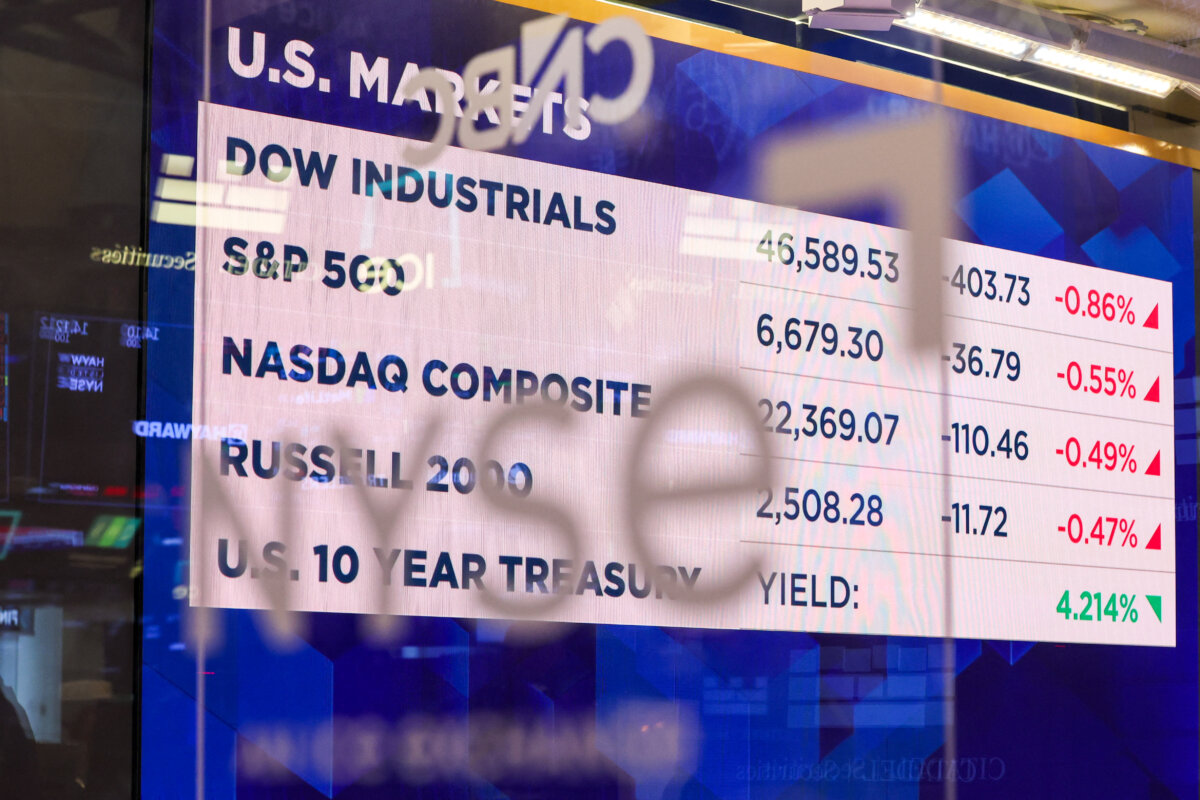 Market numbers are displayed on a monitor as traders work on the floor of the New York Stock Exchange on March 18, 2026. (Angela Weiss/AFP via Getty Images)
Due to more onerous disclosure requirements and other regulations for listing companies on stock exchanges, many companies have opted to remain in private hands in recent years.
A February report by Apollo, an asset management firm, found that the number of publicly traded companies has been cut in half over the past, from more than 8,000 in 1996 to fewer than 4,000 today, and that more companies continue to be removed from public exchanges each year than are added.
“On the surface, public equity markets appear healthy,” the report states. “In reality, these markets are defined by a shrinking opportunity set, narrow leadership, and returns driven by the reflexivity of index investing.”
This leaves stock exchanges in heated competition with one another to attract new issuers.
Nasdaq acknowledged this trend, stating: “Developments in private markets, including greater accessibility and liquidity, have led to fewer companies entering the public market and an increase in the number of large private firms. To continue representing the top 100 largest companies, the Nasdaq-100 must adapt to this changing environment.”
Some fund managers see pros and cons in fast-tracking the largest issuers like SpaceX.
According to Tim Schwarzenberger, a portfolio manager with Inspire Investing, “the volatility concern is legitimate, but it may be overstated.”
“Accelerating inclusion could expose passive investors to more short-term volatility, particularly when there is uncertainty around valuation, a limited public float, or significant retail interest,” Schwarzenberger told The Epoch Times. “At the same time, SpaceX is not a typical IPO.”
The company’s $1.75 trillion valuation would immediately place it among the largest public companies in the world, Schwarzenberger said. “There is a reasonable argument that a company of that size should be reflected in major indexes sooner rather than later.”
 Friends Read Free
Copy
Facebook
Tweet
Friends Read Free
Copy
Facebook
Tweet