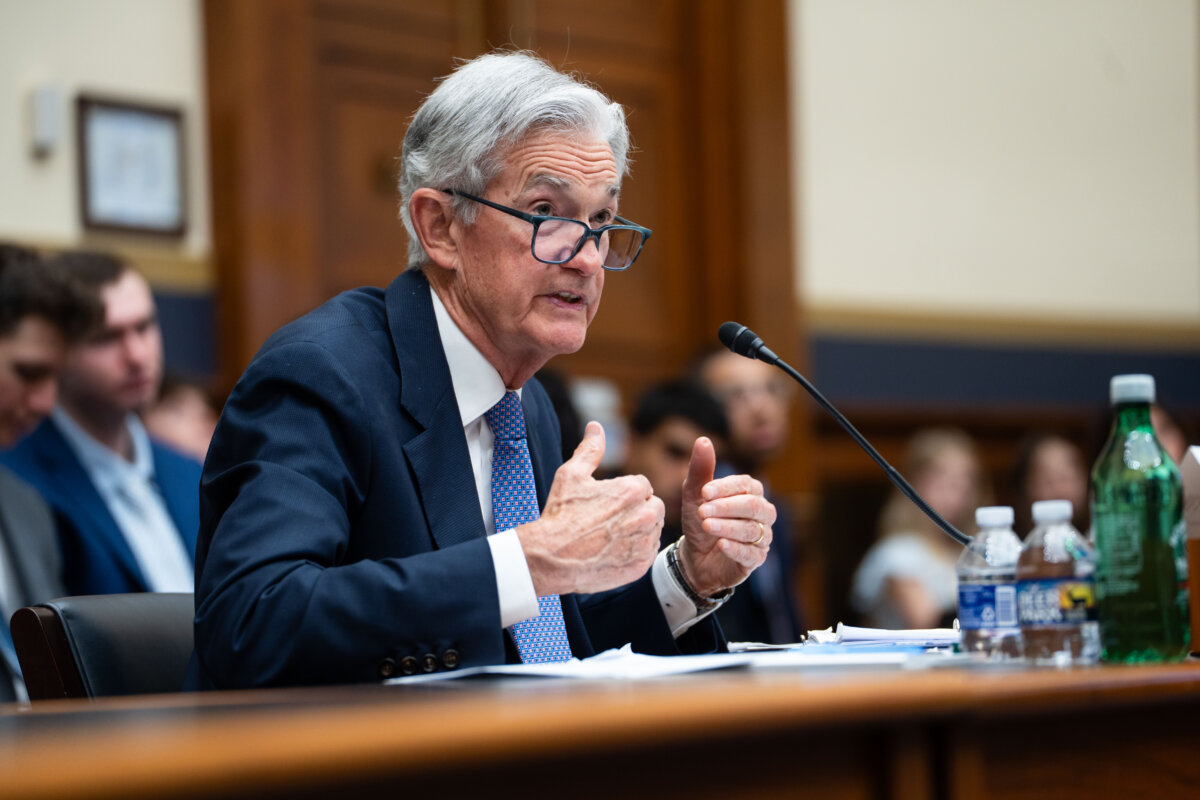

The U.S. central bank cut interest rates this past week in response to weakening labor market conditions, Federal Reserve Chair Jerome Powell confirmed.
Following the Sept. 16-17 meeting, the Federal Open Market Committee (FOMC) lowered the benchmark policy rate by a quarter point to a new target range of 4.00 percent to 4.25 percent—the first reduction of the year.
Appearing before business leaders in Providence, Rhode Island, on Sept. 23, Powell stated that deteriorating employment conditions are outweighing worries about stubborn inflationary pressures.
Echoing the sentiment of Fed Vice Chair for Supervision Michelle Bowman, he noted that the labor market is “less dynamic” and “somewhat softer,” creating conditions whereby “downside risks to employment have risen.”
Recent indicators suggest that the job market has weakened considerably.
In August, the economy created 22,000 new jobs, far below the market consensus. Last month’s report also revealed that adjustments to the data confirm the country lost 13,000 jobs in June—after initially reporting a gain of 147,000.
Additionally, the Bureau of Labor Statistics released its annual preliminary benchmark revisions, which highlighted that payroll growth was overestimated by 911,000 in the 12 months preceding March 2025.
This signaled that slowing employment conditions began slowing well before the implementation of President Donald Trump’s trade policies.
While the recent pace of job creation could threaten the historically low unemployment rate of 4.3 percent, Powell noted that “a number of other labor market indicators remain broadly stable.”
“You’re in a low fire, low hire economy, and it feels like … they’ve kind of stopped hiring or slowed down their hiring, because they want to see how this all shakes out,” Powell said in a follow-up question-and-answer session.
He said the current situation—near-term risks to inflation and downside threats to labor—is “challenging,” adding that “two-sided risks mean that there is no risk-free path.”
The central bank chief reiterated that the current policy position offers flexibility for monetary policymakers.
“The increased downside risks to employment have shifted the balance of risks to achieving our goals,” he said. “This policy stance, which I see as still modestly restrictive, leaves us well positioned to respond to potential economic developments.”
Regarding inflation, he reiterated that the base scenario is that tariffs will result in a one-time price adjustment over the next year. After that pass-through occurs, inflation is expected to return to the Fed’s 2 percent target.
The next inflation reading will be the August Personal Consumption Expenditures (PCE) Price Index. The central bank’s preferred 12-month inflation measure is forecast to tick up to 2.7 percent from 2.6 percent. Core PCE, which strips out volatile energy and food prices, is expected to hold steady at 2.9 percent.
Labor Market Fragility
Powell’s colleagues have also expressed concern surrounding the labor market.
Bowman, speaking at the Kentucky Bankers Association Annual Convention on Sept. 23, noted that she had been alluding to signs of “potential labor market fragility” for months. The latest information reveals “a materially more fragile labor market along with inflation that, excluding tariffs, has continued to hover not far above our target,” she said.
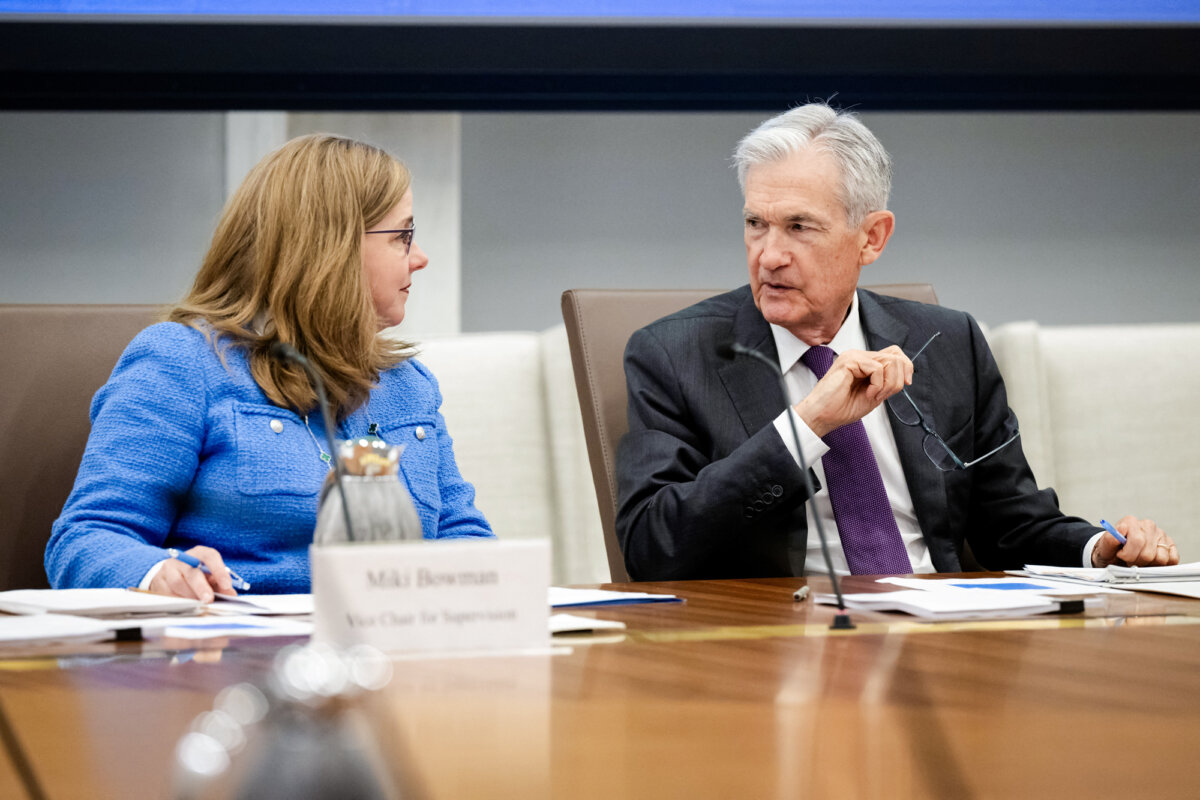
“The U.S. economy has been resilient, but I am concerned about the weakening in labor market conditions and softer economic growth,” Bowman stated in prepared remarks.
Despite the United States enjoying near full employment, there are risks that the labor market could become even “more fragile and could deteriorate significantly in the coming months,” she said, pointing to various indicators, such as unemployment among young people and the employment-to-population ratio.
Since April 2023, the youth unemployment rate—individuals aged 16 to 24—has been steadily rising, reaching a four-year high of 10.5 percent in August.
Additionally, the jobless rate for males aged 16 to 24 with a bachelor’s degree and not enrolled in college reached nearly 14 percent. In addition to being the highest level since June 2020, the rate has doubled in just four months. By comparison, the unemployment rate for their female counterparts was 7 percent, which has also doubled since May.
Meanwhile, the employment-to-population ratio—the percentage of individuals aged 16 and over who are currently employed—has been below 60 percent for much of the year. This measure has yet to recover from the pre-pandemic high of 61.1 percent.
Overall, the numbers suggest that the Federal Reserve should “proactively remove some policy restraint,” Bowman added. By doing so, the Fed can prevent further “damage to the labor market and a further weakening in the economy.”
“I am concerned that the labor market could enter into a precarious phase and there is a risk that a shock could tip it into a sudden and significant deterioration,” she said.
Despite advocating for a more accommodative stance, Bowman was one of the 11 FOMC members voting for a quarter-point rate cut. The lone dissenter was Fed Governor Stephen Miran, who preferred a half-point reduction and has since championed a more aggressive rate-cutting cycle.
Looking ahead, the updated Summary of Economic Projections—a survey of officials’ expectations for policy and the broader economy—suggests two more quarter-point interest rate cuts this year and another decrease in 2026.
The next two-day Fed policy meeting will take place on Oct. 28 and 29.
 Friends Read Free
Copy
Facebook
Tweet
Friends Read Free
Copy
Facebook
Tweet