
Credit card giant Mastercard Inc. and chemical conglomerate Dow Inc. have announced new layoffs, adding to growing worker anxiety in the U.S. labor market.
A strategic business review of its operations will result in the cutting of 4 percent of its global workforce, Mastercard said in a Jan. 29 earnings call with analysts.
This could impact as many as 1,400 employees.
“Recently, we completed a strategic review of our business. This will result in reductions in some areas and roles, but lead to further investment and increased focus in others,” CEO Michael Miebach said.
Additionally, CFO Sachin Mehra estimated Mastercard could incur a one-time restructuring charge of approximately $200 million in the first quarter.
In its latest earnings call on Jan. 29, Dow said it plans to eliminate 4,500 positions from its global workforce and reduce third-party roles and resources.
The two measures could cost as much as $1.5 billion, including $600 million to $800 million in severance payments.
“As the way we work evolves, so will our expectations for where and how work gets done,” Dow COO Karen Carter said in the call.
“This will allow us to speed up decision-making and put the right role in the right areas of the company to better align with the changing market landscape and with where our customers are investing,” she said. “We will also adopt new ways of working.”
Dow and Mastercard are the latest major U.S. companies announcing layoffs.
Amazon said on Jan. 28 that it will terminate about 16,000 roles across the company as part of its ongoing restructuring.
Over the past year, Amazon, one of the world’s largest companies, has implemented various measures to trim red tape, reduce management layers, and invest more in artificial intelligence (AI).
“I recognize this is difficult news, which is why I’m sharing what’s happening and why,” Beth Galetti, Amazon’s senior vice president of people experience and technology, wrote in a memo to employees.
United Parcel Service (UPS) also confirmed that it will eliminate another 30,000 jobs this year as the package delivery behemoth unwinds its partnership with Amazon.
“In terms of semi-variable costs, we expect to reduce operational positions by up to 30,000,” CFO Brian Dykes said in a Jan. 27 earnings call. “This will be accomplished through attrition, and we expect to offer a second voluntary separation program for full-time drivers.”
Shifting Labor Market
Whether these announcements mark the start of an acceleration in corporate layoffs remains to be seen, but job cuts—as well as hiring momentum—have been muted in recent months, according to government and private-sector data.
Initial jobless claims—the number of individuals filing for unemployment benefits—continue to hover around the historically low level of 200,000.
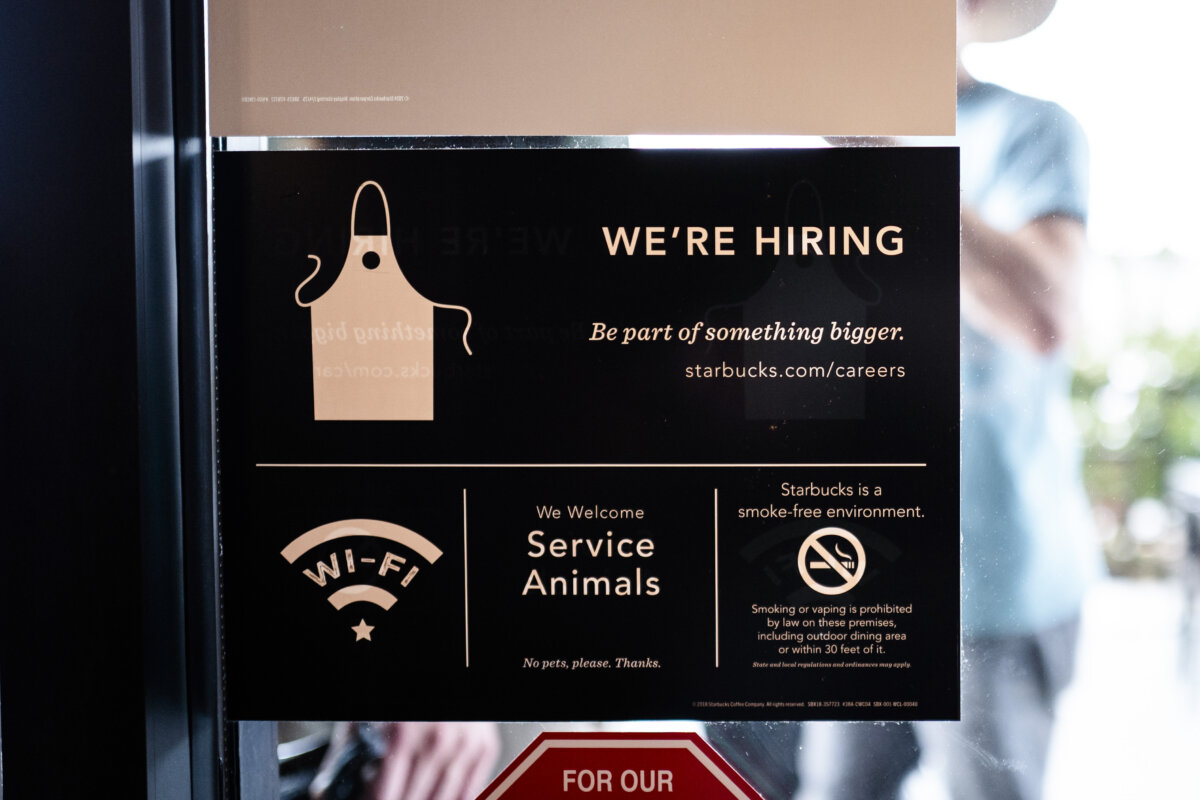
For the week ending Jan. 24, jobless claims dipped to a slightly higher-than-expected 209,000.
Recurring claims—a measure of the number of out-of-work individuals receiving unemployment benefits—declined for the third straight week to 1.827 million.
Both readings could reflect low layoffs and a modest hiring uptick. Additionally, recent numbers suggest job growth may be gaining momentum.
U.S. private employers added an average of 7,750 jobs per week in the four weeks ending Jan. 3, according to payroll processor ADP. This represented the seventh straight period of employment growth.
Job postings on Indeed have been gradually rising since early November 2025.
Global outplacement firm Challenger, Gray and Christmas will release planned job cuts data for January next week. Early estimates suggest a reading of 43,000, a slight increase from the previous month’s 35,553, according to Trading Economics.
The main event will be on Feb. 6, when the Bureau of Labor Statistics publishes the January nonfarm payrolls report. The latest jobs data will also include benchmark revisions in the 12-month period through March 2025, which could highlight negative job growth.
Economists at Indeed say the U.S. labor market “has sprung a number of concerning leaks,” adding that “labor-market churn” will likely be a key barometer for policymakers at the Federal Reserve.
“If unemployment stays low while inflation continues to ease, the Fed can likely afford to be patient and consider additional cuts later in 2026,” they said in a Jan. 28 note. “That is likely what happens if the low-fire/low-hire dynamic we’ve experienced over the past year remains in place.”
If hiring weakens significantly or layoffs pick up, that dynamic could falter and prompt the central bank to cut rates more aggressively, they said.
Fed Chair Jerome Powell signaled during his post-meeting press conference on Jan. 28 that employment conditions are unlikely to deteriorate further, suggesting little policy action.
Investors have penciled in the first quarter-point interest rate cut of 2026 for June—after Powell’s term as head of the central bank is finished.
Tom Ozimek contributed to this report.
 Friends Read Free
Copy
Facebook
Tweet
Friends Read Free
Copy
Facebook
Tweet