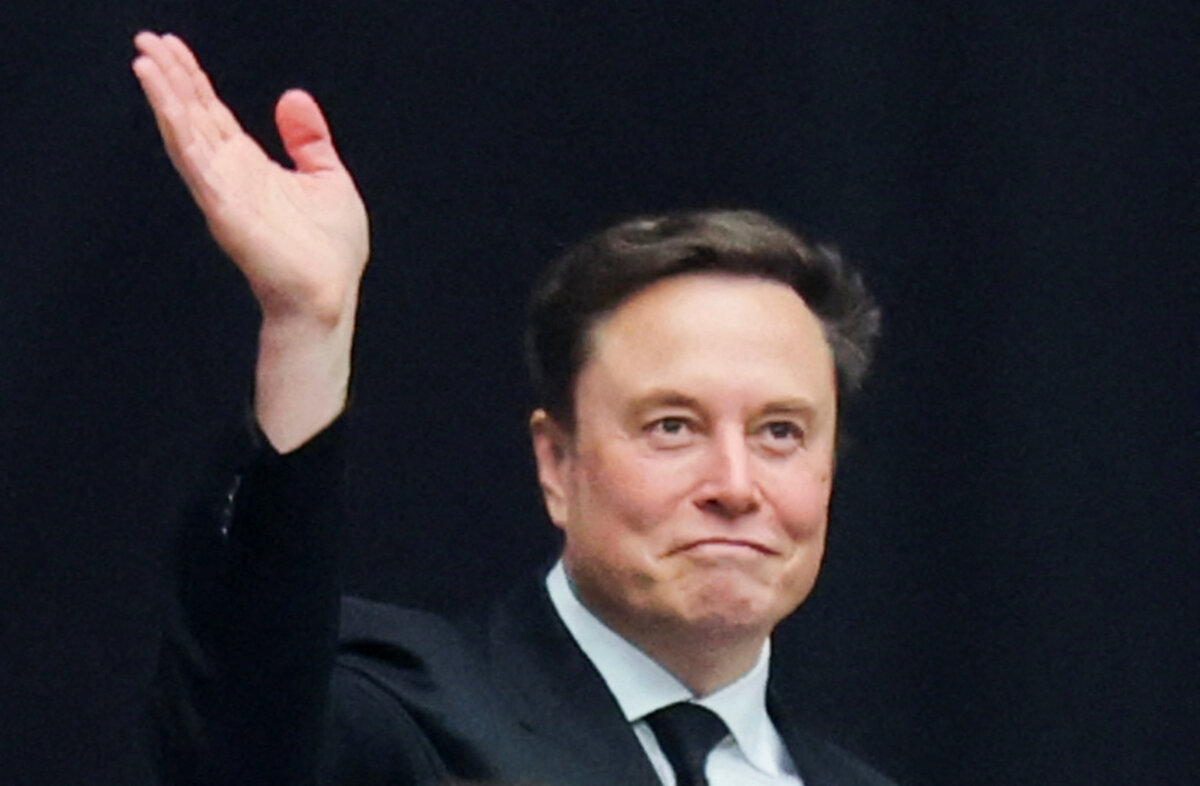

Tesla shareholders are set to vote Thursday on a proposed pay package for Elon Musk that could potentially make him the world’s first trillionaire.
The 2025 CEO Performance Award, as outlined by Tesla’s board of directors, would grant Musk up to 423.7 million shares of Tesla stock over the next decade.
However, that package is contingent on the company achieving an ambitious series of operational and financial targets.
The full value of the potential stock grant is estimated at nearly $1 trillion. That eye-popping amount assumes Tesla reaches a market capitalization of $8.5 trillion within the next 10 years, and Musk will not receive the full package without hitting that milestone. However, the compensation package is structured so that Musk will receive substantial awards provided that the company meets certain market capitalization milestones between 2025 and 2035.
In September, members of the board warned Tesla shareholders that Musk has “raised the possibility that he may pursue other interests” if the pay package is not approved.
In a letter distributed to shareholders in September, Robyn Denholm, chair of the Tesla board, and board member Kathleen Wilson-Thompson warned that failing to pass the plan could result in the loss of Musk’s “time, talent and vision.” The directors said Musk’s leadership is critical to Tesla’s success as it seeks to expand into artificial intelligence and autonomous technology.
Targets and Conditions
The package is structured in 12 tranches, each worth 35.3 million shares, tied to both market capitalization milestones and operational objectives. The first market cap target is $2 trillion, and the final milestone is $8.5 trillion. Operational targets include:
- Delivering 20 million vehicles over 10 years, more than double Tesla’s production over the past dozen years.
- Securing 10 million full self-driving subscriptions.
- Producing 1 million humanoid robots through Tesla’s Optimus division.
- Operating 1 million robotaxis in commercial service.
- Meeting earnings milestones in eight consecutive quarters, each measured over four quarters.
While these goals are technically achievable, Tesla has struggled to meet some recent operational benchmarks.
In its most recent quarter, the company delivered just under 498,000 vehicles and reported $4.2 billion in adjusted earnings before interest, taxes, depreciation, and amortization. This performance is far below the thresholds required to unlock the largest portions of Musk’s award.
Shareholder Debate
The proposed pay package has drawn both strong support and vocal criticism.
Supporters say that Musk’s leadership is essential to Tesla’s future, particularly as the company expands beyond electric vehicles into robotics and autonomous systems. Opponents, however, say that the plan is excessively large and exposes shareholders to significant dilution.
On Nov. 3, Ron Baron, founder and CEO of Baron Capital, published an open letter stating his fund’s intention to vote for the plan. While he graded the goals set forth by the plan as “aggressive” he reiterated his belief that only Musk could achieve them.
“Baron Capital has been investing in Tesla since 2014. Our shareholders and clients have benefited enormously from Elon Musk’s vision, determination and execution,” Baron said in the letter. “Tesla’s success and its future are inseparable from Elon.”
Counterpoint Global, a fund associated with Morgan Stanley Investment Management, also recommended voting for the package on Nov. 3. In a statement, Dennis Lynch, the head of Counterpoint Global, said that “it is in Tesla’s and its shareholders’ best interest for Musk to have significant skin in the game as he leads the company.”
Others weren’t as positive.
In October, proxy advisory firms Glass Lewis and Institutional Shareholder Services (ISS) both recommended voting against the package. ISS said the package likely overpays Musk and reduces the board’s ability to adjust future pay levels.
Ahead of the Nov. 6 vote, Norway’s sovereign wealth fund, Norges Bank Investment Management (NBIM), said it had voted against the plan. The fund owns about 1 percent of Tesla’s stock. In a statement published in November, it said it “appreciates the significant value created” by Musk’s “visionary role,” but it sees risks in putting so much stock in the hands of a single executive.
“We are concerned about the total size of the award, dilution, and lack of mitigation of key person risk consistent with our views on executive compensation,” the bank said in a report on its vote.
Tesla, on its X account, called both Glass Lewis and ISS “misguided.”
“Shareholders have spoken twice on Elon’s 2018 CEO Performance Award,” the company stated in an Oct. 20 post. “ISS’s and Glass Lewis’s recommendations attempt to override the mandate our shareholders delivered to Elon and ignore the staggering financial results delivered under Elon’s leadership.”
In a Nov. 1 appearance on The All-In Podcast, Musk criticized ISS and Glass Lewis for campaigning for a vote while not owning any stock and called them “terrorists” and “corporate ISIS.”
As for his compensation package, Musk said “really it’s not about compensation.” Rather, he said, he wants a greater percentage of the company’s stock so he can exercise greater influence over the company. Currently, Musk owns about 15 percent of the company’s stock.
“I feel like I need to have something like a 25 percent vote, which is enough of a vote to have a strong influence, but not so much of a vote that I can’t be fired if I go insane,” Musk said on the podcast.
Delaware Decision
In 2024, a Delaware court ruled that Musk was not entitled to a compensation package granted by Tesla in 2018 that was potentially worth more than $55 billion. At Tesla’s current valuation, the same compensation package would be worth more than $128 billion.
After five years of legal proceedings, a ruling in the Delaware Court of Chancery invalidated the pay plan on the grounds that Musk had an excessive amount of influence over the board of directors.
The 2018 payment plan, like the 2025 plan, hinged on Musk meeting certain market capitalization milestones. Between 2018 and 2024, Tesla met and exceeded them all. Tesla has since appealed the Delaware ruling and awarded Musk with Tesla stock that is currently worth about $40 billion.
Reuters and The Associated Press contributed to this report.
 Friends Read Free
Copy
Facebook
Tweet
Friends Read Free
Copy
Facebook
Tweet