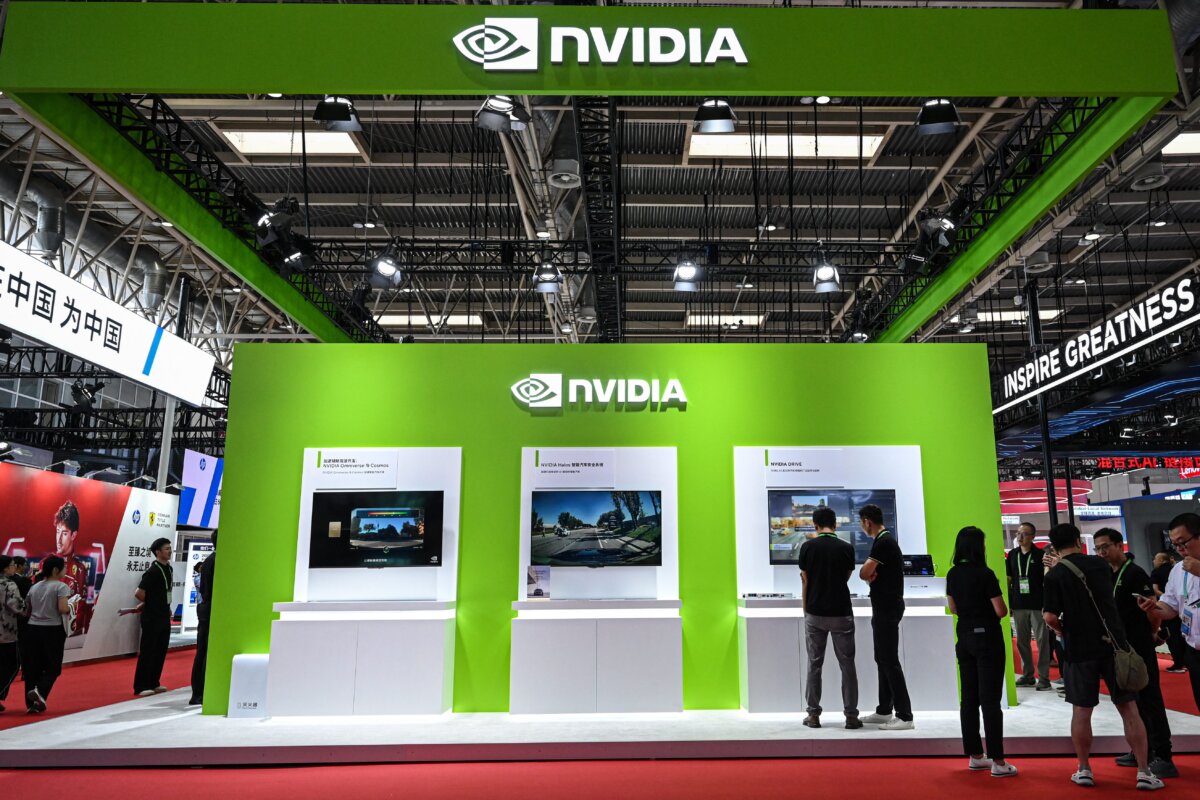

Chip titan Nvidia has authorized an additional $150 billion in stock buybacks, lifting its repurchase program to the largest in U.S. history.
Buybacks involve companies using cash to repurchase shares on the open market, reducing the number of shares available to investors. This essentially increases the ownership stake of the remaining shareholders.
In 2023, Nvidia officially authorized its stock buyback program, but the chipmaker began conducting large-scale repurchases in the past year.
The $150 billion Sept. 28 stock buyback signed off on by the board of directors is the largest single such authorization in history.
According to CEO Jensen Huang, the latest buyback is happening because of a “once-in-a-generation platform” transition to artificial intelligence (AI) and advanced computing.
“Our cash generation gives us the capacity to invest in the technologies that advance this transformation and return capital to shareholders,” Huang said in a Sept. 28 statement. “This authorization reflects our confidence in the long-term opportunity ahead.”
Nvidia is sitting on a mountain of cash. As of the quarter ending July 31, the company said it has almost $100 billion in cash on hand.
Additionally, the latest buyback increases its total to a record $230 billion—and more could be on the way. The chipmaker aims to complete these buybacks by 2028.
Investors cheered the news, with Nvidia shares rising more than 2 percent to around $230. Year to date, the stock is up almost 22 percent.
Nvidia’s jump was not enough to lift the tech-heavy Nasdaq Composite Index or the broad-market S&P 500 as the leading benchmark averages were in the red on rising U.S. Treasury yields and climbing crude oil prices.
More Cash Is Coming: Nvidia CEO
Despite AI bubble fears, Nvidia and a chorus of market watchers anticipate even more growth for the $5.6 trillion behemoth.
Beyond its top AI chips, Nvidia manufactures a wide range of other semiconductors for a broad array of consumer products, including automobiles, computers and laptops, robots, and video game consoles.
Huang, in a Sept. 28 interview with CNBC’s “Squawk Box,” said Nvidia will be central to the “largest infrastructure build-out in human history.”
“We’re going to generate a lot of cash in the coming years, and every single year, as we generate more cash, we’d like to be able to return it back to shareholders,” he added.
Nvidia could accumulate as much as $1 trillion in cash by fiscal year 2031, says Daniel Martins, founder of independent research firm DM Martins Research.
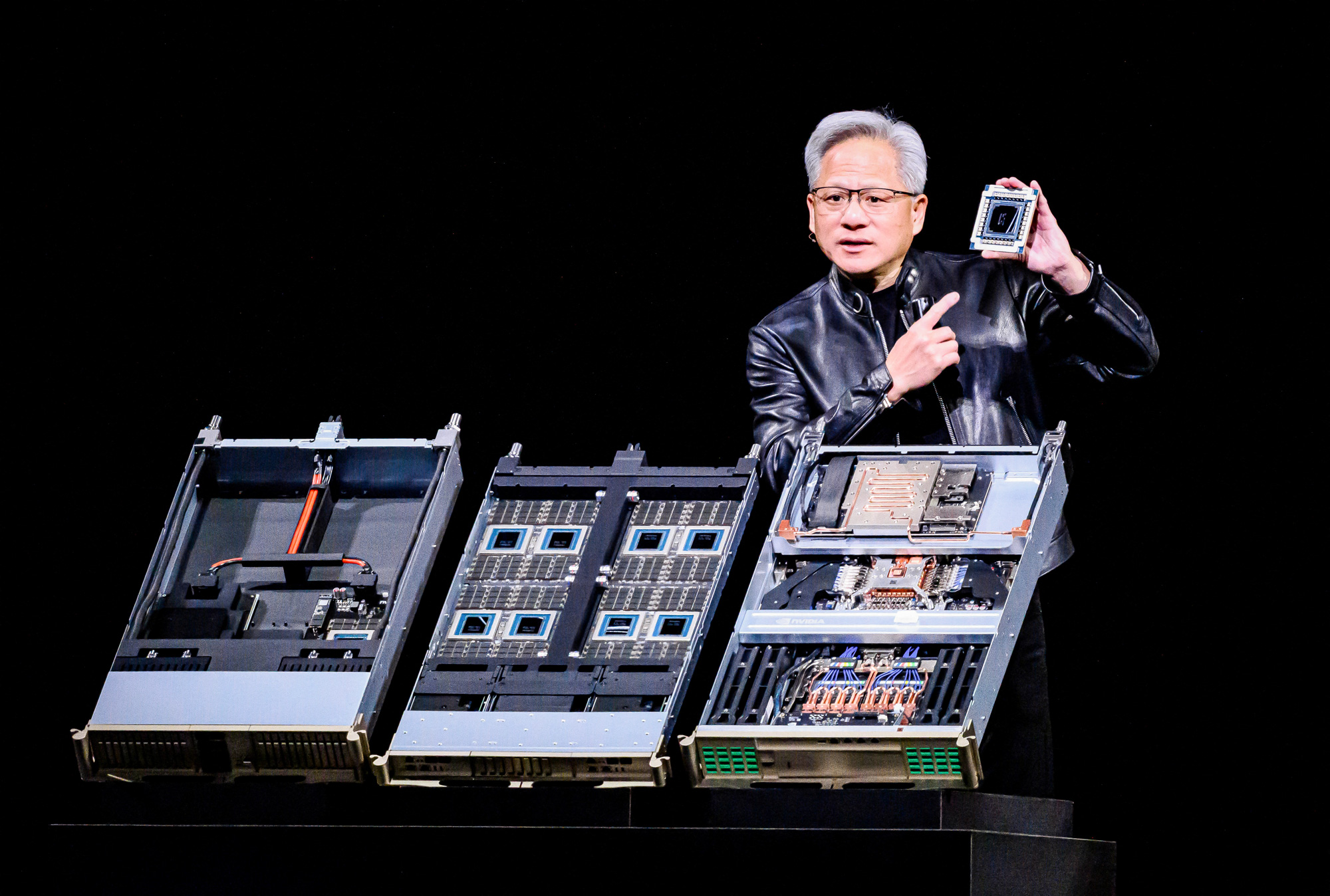 Nvidia CEO Jensen Huang introduces Vera Rubin, a next-generation AI data center platform, and Rubin Ultra, a next-generation AI GPU architecture, at the company’s annual developers conference in San Jose, Calif., on March 16, 2026. (Josh Edelson/AFP via Getty Images)
“Investing in AI and AI-adjacent companies offers the strongest potential use of NVDA’s excess cash, although it would further concentrate the company’s exposure to the AI ecosystem.”
Meanwhile, Nvidia is not just engaging in buybacks; the company has also been deploying its enormous cash stockpile into capital expenditures, or capex.
In the 12 months ending in July 2026, Nvidia’s annual capex is about $7.35 billion.
Looking ahead, Wall Street is optimistic about Nvidia’s near-term future.
The stock has a consensus “Buy” rating and a 41 percent 12-month upside target, according to MarketBeat.
But Nvidia’s growth depends on the leading AI hyperscalers and the broader tech industry. Still, its management projects data center capex will reach $1 trillion next year and total as much as $4 trillion annually in the coming years.
“Nvidia is the epicenter of AI, and this market cannot go without the ‘king,'” Ken Mahoney, president and CEO of Mahoney Asset Management, said in a note emailed to The Epoch Times.
“It is still growing tremendously and, in our view, should be an equal weight. It also seems to be setting up for an all-time-high breakout.”
 Friends Read Free
Copy
Facebook
Tweet
Friends Read Free
Copy
Facebook
Tweet