
Smart ring maker Oura said on Sept. 29 that it has delayed its Wall Street debut.
Oura formally launched plans a week ago for an initial public offering—also known as an IPO—taking advantage of “strong demand.”
Revenues are projected to grow 90 percent over the next year, and its latest product—Oura Ring 5—has helped bring paid members to 5.7 million.
Oura had planned to raise more than $2 billion with the sale of 50 million shares. But “uncertainty in the IPO market” forced the tech firm to hit the pause button.
“Our mission is to empower people to live healthier, longer, and an IPO is just one step in our journey,” said CEO Tom Hale said in a Sept. 29 statement.
“We aim to deliver an extraordinary IPO for our employees and investors, and we have the luxury of choosing our moment. In the meantime, we will execute against the opportunities ahead.”
Opening in 2015, the smart ring maker has advanced beyond tracking users’ sleep.
Oura has developed a wide range of features that focus on broader health and wellness, including artificial intelligence (AI) analytics that can help bolster preventative health.
It becomes the latest major U.S. company to delay an IPO this year.
AI giant OpenAI postponed its highly anticipated trillion-dollar public market debut until next year. Nuclear services provider Holtec Nuclear Corp withdrew its IPO last week.
Digital insurance platform Bamboo Insurance Services also delayed its Wall Street debut.
For the companies that went public, the results have been mixed.
Shares of Elon Musk’s SpaceX have slipped about 7 percent since its trillion-dollar post-IPO high of $225 in June.
AI chipmaker Cerebras Systems has also slumped about 33 percent since its May 14 listing.
Conversely, South Korean chipmaker SK Hynix launched its U.S.-dollar-denominated certificates in July, and shares are up about 11 percent.
Anthropic is expected to debut later this year after the AI juggernaut delayed its IPO this past summer.
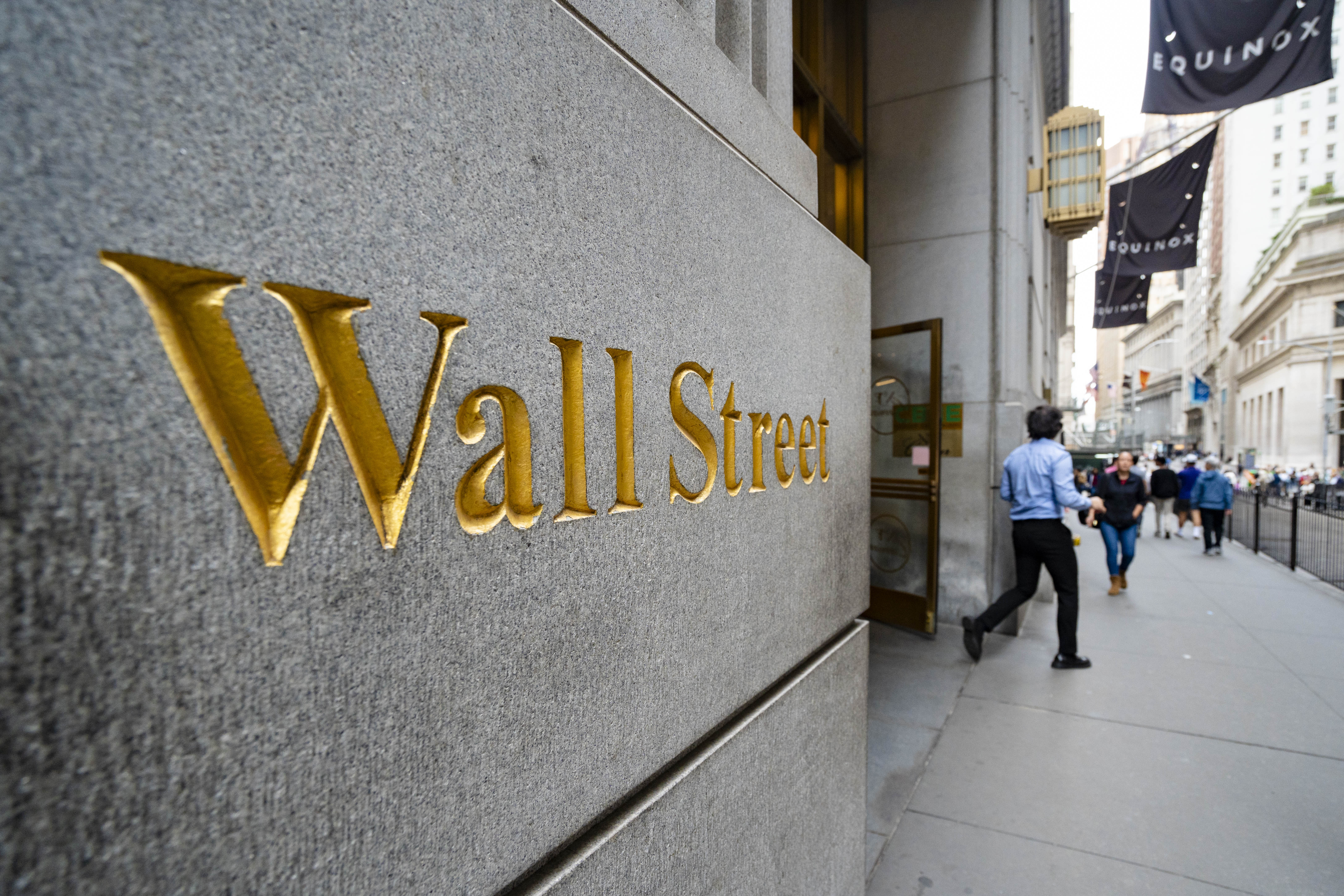 Wall Street in New York City on April 4, 2025. (Samira Bouaou/The Epoch Times)
Additionally, Anthropic’s revenue soared to about $4.6 billion in 2025—a 12-fold increase—but the tech behemoth still recorded a $42 billion loss, largely due to a $34 billion accounting charge linked to financing arrangements that could convert into equity.
It also said that its AI models pose a “catastrophic or existential risk to humanity.”
Underneath the IPO Surface
A series of headwinds could be causing some consternation in the IPO market.
Renewed inflation pressures, elevated energy prices, ongoing military conflicts, and central banks raising interest rates are some of the current challenges facing global financial markets.
Despite the headlines, the IPO market has been relatively healthy, and Anthropic could add to an already successful year, says Macrae Sykes, portfolio manager at Gabelli Funds.
“Anthropic is certainly a tremendous lever,” Sykes said in an emailed note to The Epoch Times. “The expectation is that they could raise over $100 billion.
“If you compare that to all of last year, when about $50 billion was raised among all IPOs, that’s pretty significant.”
Given that other IPOs are in the pipeline and newly debuted companies have strong fundamentals, “I think it’s been a successful year,” he added.
A challenge for companies aiming to go public is intensifying competition for capital.
Major tech firms have been issuing bonds to fund their growing capital expenditures.
The leading AI hyperscalers—Amazon, Microsoft, Meta Platforms, and SpaceX, for example—plan to spend up to $1 trillion this year on the AI infrastructure buildout.
But while they have solid balance sheets, they have been tapping capital markets, which could pose a problem for companies pursuing a listing on the New York Stock Exchange.
Reuters and Tom Gantert contributed to this report.
 Friends Read Free
Copy
Facebook
Tweet
Friends Read Free
Copy
Facebook
Tweet