
The U.S. Supreme Court on Friday did not issue its highly anticipated ruling on the legality of President Donald Trump’s tariffs, as administration officials have said they would still be able to impose the import taxes if the court doesn’t rule in their favor.
On Friday, the highest court indicated on its website that it “may announce opinions” on Wednesday, Jan. 14. The Supreme Court does not announce in advance what cases will be decided. The justices issued one ruling on Friday in a criminal case.
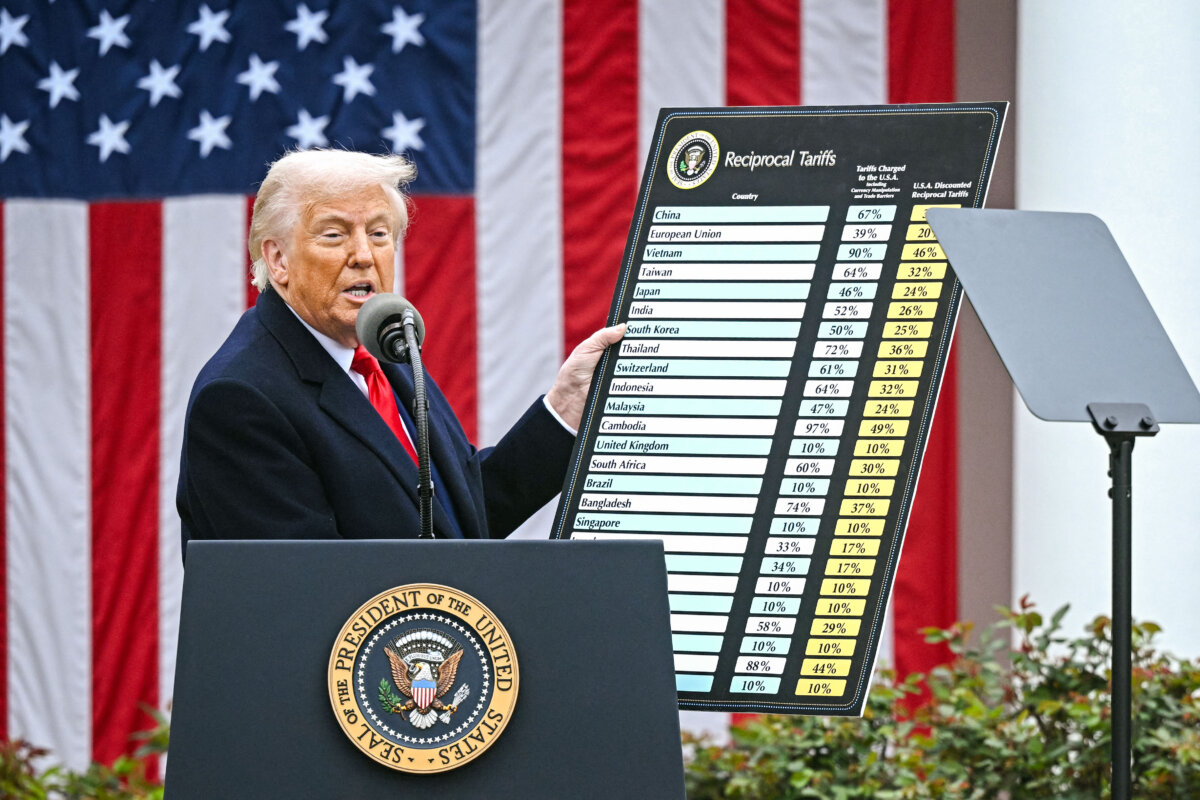
At issue is whether Trump legally invoked the 1977 International Emergency Economic Powers Act (IEPPA) in April 2025 to issue a broad swath of reciprocal tariffs targeting nearly every country in the world. Trump has said the policy is needed to gain a better economic foothold against countries he says are taking advantage of the United States through unfair trade practices.
Trump invoked the IEPPA to impose tariffs to address what he called a national emergency related to U.S. trade deficits. He used the same law to impose tariffs on Canada, China, and Mexico, citing the trafficking of fentanyl and illicit drugs from these countries into the United States as a national emergency.
There was speculation in media outlets this week that the Supreme Court might issue an order on the tariffs Friday.
Trump has said the tariff case is one of the most significant matters in U.S. history.
“If a President is not allowed to use Tariffs, we will be at a major disadvantage against all other Countries throughout the World,” Trump wrote in a post on Truth Social in November.
The president, in other instances, said the tariffs are designed for national security purposes and serve as additional leverage for the United States to end conflicts.
In December, he told reporters at an event at the Trump-Kennedy Center in Washington that he ended eight wars “largely due to trade and tariffs.”
If the Supreme Court blocks the imposition of tariffs under the IEPPA, the administration has other authorities it could utilize to impose them, said Trump and Treasury Secretary Scott Bessent. However, the president said on social media that the current emergency provision allows for “DIRECT, LESS CUMBERSOME, and MUCH FASTER” action.
The justices heard oral arguments in the tariff case in November.
A ruling in the administration’s favor would lead to retaliation by other countries that may harm U.S. interests, wrote the Cato Institute in an October amicus brief that was filed in the case that opposes the import taxes.
“In short, the risk of foreign retaliation is created, not diminished, by the President’s invocation of broad emergency tariff powers under IEEPA. If the executive had no IEEPA tariff authority, the likelihood of foreign retaliation would substantially decline,” the think tank wrote.
Other important cases are also awaiting rulings at the Supreme Court, including a challenge to a key section of the Voting Rights Act as well as a case involving a Colorado law that bans “conversion therapy” for minors.
Reuters contributed to this report.
 Friends Read Free
Copy
Facebook
Tweet
Friends Read Free
Copy
Facebook
Tweet