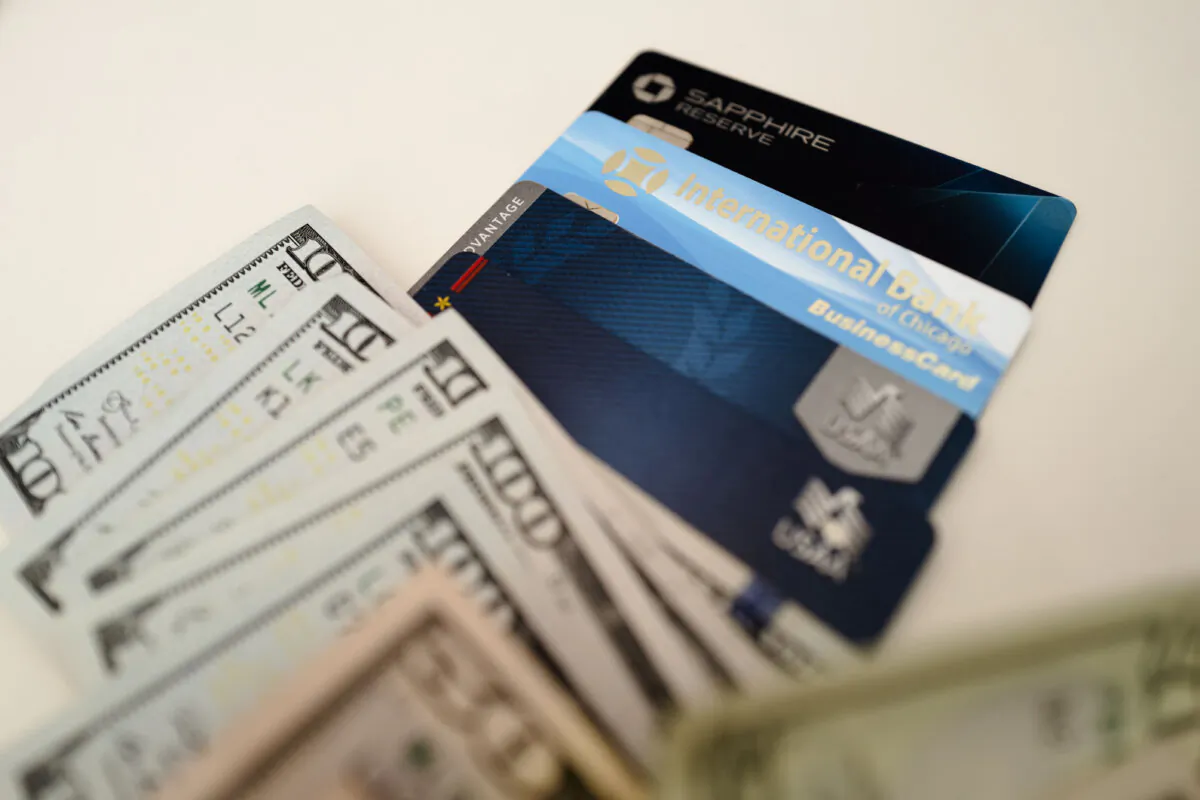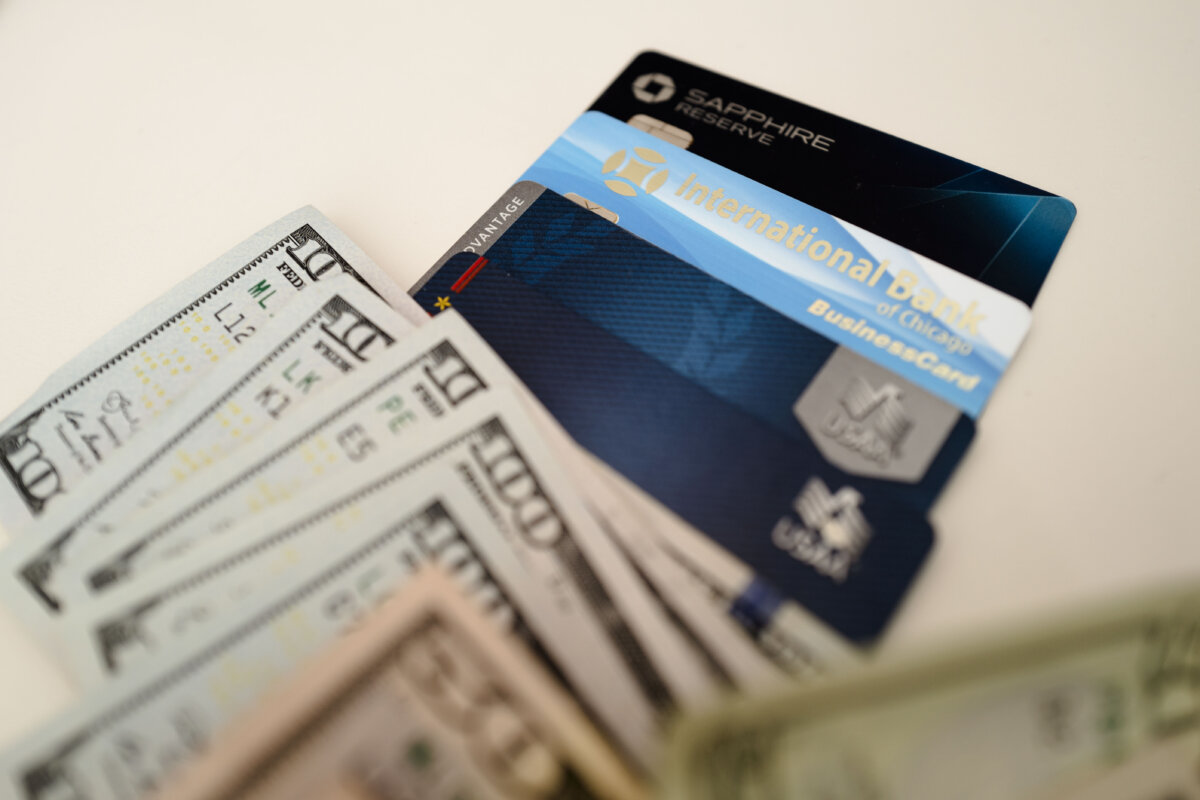

U.S. consumers have a $1.25 trillion credit card bill due.
The Federal Reserve Bank of New York recently released its Household Debt and Credit Report for the first quarter. It is a periodic report that reviews consumer balances on mortgages, credit cards, lines of credit, and auto and student loans.
In the first three months of 2026, total debt rose by a tepid $18 billion, or 0.1 percent, to an all-time high of $18.8 trillion.
Although credit card balances improved from the previous quarter, they are hovering at record levels.
Here is what to know about credit card debt in the United States.
The $1.25 Trillion Balance
Exhausted by the holiday shopping season, consumers took a break from inserting, swiping, and tapping in the opening months of the year.
Credit card debt declined by $25 billion to $1.25 trillion, slightly below the record high of $1.28 trillion registered in the fourth quarter.
Last quarter’s numbers equate to an average debt per person of nearly $7,000.
After adjusting for inflation, first-quarter credit card debt stood at $1.35 trillion, according to personal finance website WalletHub. The average household credit card balance was $11,153 at the end of March.
“A big reduction in credit card debt to start the year is way better than the alternative, of course, but it’s also the norm and not necessarily a sign of newfound consumer discipline,” WalletHub editor John Kiernan said.
So far, April numbers indicate a 0.03 percent dip in credit card debt compared with a year ago.
Despite rising total debt loads, Americans’ balance sheets are in a “pretty healthy place overall,” said Ted Rossman, senior industry analyst at Bankrate.
But higher credit card debt over the past 12 quarters is concerning, he said.
“Credit card balances are up 21 [percent] during that span, and that’s bad debt—that is, high-interest consumer debt that can get even more costly over time,” Rossman said in a statement to The Epoch Times.
Transitioning to Delinquency
Many Americans are struggling to keep up with their credit card payments.
The percentage of credit card balances at least 90 days past due climbed to more than 13 percent, up from 12.3 percent a year ago. The quarterly reading is also the highest in the series since 2011.
“Credit card and student loan delinquencies—both in the low double digits—are the biggest trouble spots,” Rossman said.
The serious delinquency rate for student loans was slightly above 10 percent.
But 90-day credit card delinquencies have been steadily climbing since early 2023, coinciding with rising interest rates.
Interest Rates on Credit Cards
During the 2024 presidential campaign—and again earlier this year—President Donald Trump proposed capping credit card interest rates at 10 percent for one year.
Estimates suggest that borrowers could save billions of dollars if the idea were implemented.
The average annual percentage rate, or APR, offered with a new credit card in the United States was 23.79 percent in May, up from 23.75 percent in April—the first increase since September—according to LendingTree.
Federal Reserve data suggest that the average rate on all credit cards was 21 percent, climbing from the post-COVID-19 pandemic low of 14.51 percent.
Credit card interest rates generally track the federal funds rate, which is set by the Federal Open Market Committee. When the Fed hikes or cuts, the prime rate adjusts within a month.
With the central bank not expected to lower interest rates anytime soon, the federal government could provide borrowers with relief. However, this could come with consequences, JPMorgan Chase chief financial officer Jeremy Barnum said.
In the fourth-quarter earnings call this past winter with analysts, Barnum argued that the proposed rate cap would harm consumers and affect the economy.
“Specifically, people will lose access to credit, like on a very, very extensive and broad basis, especially the people who need it the most, ironically,” he said. “And so, that’s a pretty severely negative consequence for consumers, and frankly, probably also a negative consequence for the economy as a whole right now.”
At the same time, according to a March 25 Federal Reserve Bank of Boston paper, when credit card interest rates increase by a single percentage point, consumers reduce their card spending by almost 9 percent the following month.
A September 2025 Vanderbilt University analysis concluded that a 10 percent limit on card rates would save consumers approximately $100 billion annually.
K-Shaped
Economists have spotlighted a K-shaped trend forming across the U.S. marketplace over the past year. This is when two different parts of the economy—for example, high-income and low-income—diverge.
The Federal Reserve published its 2025 Economic Well-Being of U.S. Households report last month, highlighting the K-shaped development across credit card markets.
“The general trend of credit card balances increasing more rapidly among those facing financial hardships is not new,” the report states. “However, the extent to which credit card balance growth has been concentrated among those with financial hardships is new.”
Those who said they were “living comfortably” accounted for about one-quarter of credit card balance growth over the previous two years—a notable jump from just 3 percent in the 2025 survey.
Conversely, households “finding it difficult to get by” or “just getting by” made up 65 percent of balance growth in 2025, far above the roughly 40 percent share seen in 2023 and 2024.
This trend is also featured in spending patterns.
The Bank of America reported in May that middle- and low-income household card spending rose by 3.6 percent and 3.1 percent year over year, respectively. High-income households increased their card spending by nearly 5 percent.
 Friends Read Free
Copy
Facebook
Tweet
Friends Read Free
Copy
Facebook
Tweet