

President Donald Trump urged House Republican lawmakers to pass a “clean” version of the Senate-approved Guiding and Establishing National Innovation for U.S. Stablecoins Act, also known as the Genius Act.
In a late-night June 18 social media post, the president called the cryptocurrency bill “genius,” and urged the lower chamber to pass the legislation “lightning fast.”
“Get it to my desk, ASAP—no delays, no addons. This is American brilliance at its best, and we are going to show the world how to win with Digital Assets like never before!” Trump said on Truth Social.
His message came one day after the Senate voted 68—30 in favor of the legislation.
The Genius Act aims to establish a more transparent regulatory framework for the banking and finance sectors involved in the $200 billion stablecoin market.
Stablecoins are less volatile cryptocurrencies that are pegged to other assets, such as the U.S. dollar and Treasury securities. Users can utilize stablecoins for payments, trading, and safe-haven investing amid market turbulence.
Senior administration officials, including Treasury Secretary Scott Bessent, weighed in ahead of the vote and encouraged lawmakers to support the Genius Act as it would bolster demand for government bonds and protect the dollar hegemony.
“A thriving stablecoin ecosystem will drive demand from the private sector for U.S. Treasuries, which back stablecoins,” Bessent said on the social media platform X.
“This newfound demand could lower government borrowing costs and help rein in the national debt.”
Several Senate Democrats also championed the crypto bill.
“This bill will enable U.S. businesses and consumers to take advantage of the next generation of financial innovation,” Sen. Kirsten Gillibrand (D-N.Y.), a co-sponsor, said in a statement.
“A product of months of bipartisan negotiations, the GENIUS Act will protect consumers, enable responsible innovation, and safeguard the dominance of the U.S. dollar.”
It has not been an easy path, says Sen. Cynthia Lummis (R-Wyo.).
“We thought it would be easiest to start with stablecoins. It has been extremely difficult. I had no idea how hard this was going to be,” Lummis said at this year’s May 29 Bitcoin 2025 conference.
In May, the bill failed to clear a key Senate hurdle, falling short of the 60 votes needed to end a formal debate and bring the legislation to a full vote.
Clarity and Stability
However, while Republican lawmakers are supportive of the president’s crypto agenda, officials may be hesitant to rubber-stamp the Genius Act, as the House has an alternative: the Stablecoin Transparency and Accountability for a Better Ledger Economy (Stable) Act.
Introduced in March and amended by the House Financial Services Committee, the legislation has some differences, as it concentrates mainly on payment stablecoins and establishes federal standards and a national framework.
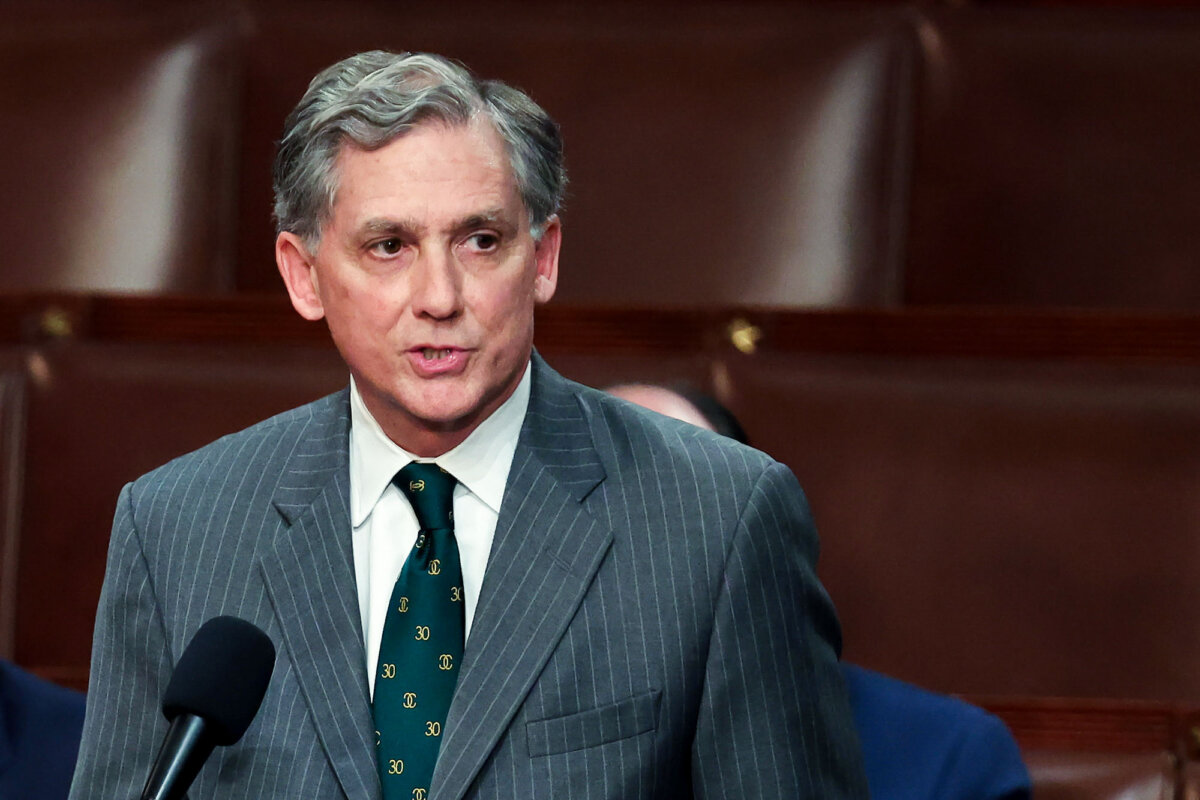
Still, following the bill’s passage in the upper chamber, House Financial Services Committee Chairman French Hill (R-Ark.) stated he would work with his colleagues “to bring much-needed clarity and protections to the digital asset ecosystem.”
Hill has been a staunch advocate of crafting crypto-friendly legislation in the House and is seeking to get other industry-related bills over the finish line.
Another piece of legislation that he is advancing is the Clarity Act, which would define the regulatory roles of the Securities and Exchange Commission and the Commodity Futures Trading Commission.
Additionally, the bill would designate digital currencies as either commodities or securities based on their features and characteristics.
The House Financial Services Committee and the House Agriculture Committee have approved the Clarity Act and will bring it to the floor for a full vote.
Washington has become more open to the crypto industry, particularly as Trump made it a crucial component of his 2024 election campaign.
In the early stages of his second term in the Oval Office, the president has implemented various industry-friendly policies, including appointing a pro-crypto chief of the Securities and Exchange Commission and advocating for more precise regulation of cryptocurrencies.
“Digital Assets are the future, and our nation is going to own it. We are talking about massive investment, and Big Innovation,” Trump said.
 Friends Read Free
Copy
Facebook
Tweet
Friends Read Free
Copy
Facebook
Tweet