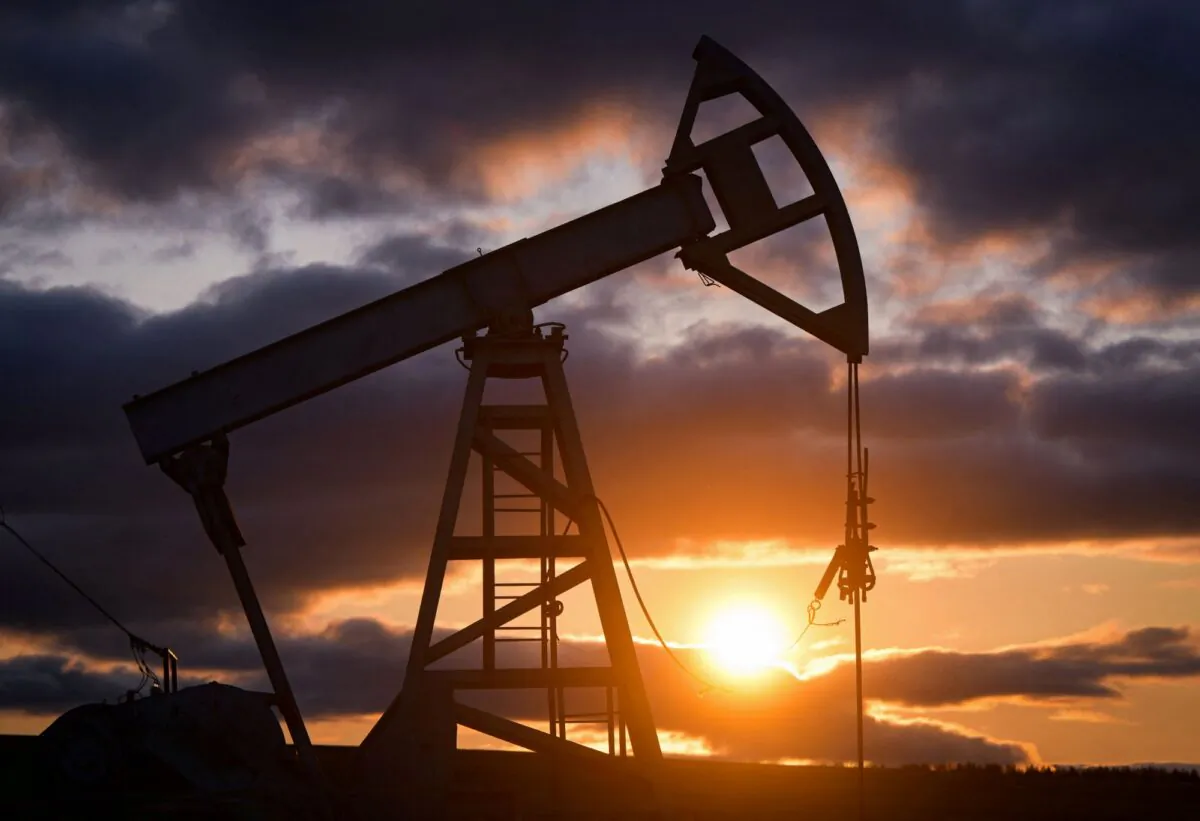

President Donald Trump said on July 14 that he will impose “very severe” secondary tariffs on Russia if Russian President Vladimir Putin does not agree to a cease-fire with Ukraine in 50 days.
“We’re going to be doing secondary tariffs if we don’t have a deal in 50 days,” Trump said. “It’s very simple, and they’ll be at 100 percent.”
Secondary tariffs would be applied to nations that trade with the targeted country. So if China purchases petroleum from Moscow, the United States would slap a tariff on exports from Beijing.
“I use trade for a lot of things,” Trump said at the Oval Office during a meeting with NATO Secretary-General Mark Rutte on July 14. “But it’s great for settling wars.”
He warned earlier this year that if his administration could not strike a deal with Putin to end the war in Ukraine, then he will “put secondary tariffs on oil, on all oil coming out of Russia.”
Russia’s largest exports are crude oil, refined petroleum, natural gas, and coal.
The president has already flirted with secondary tariffs on other markets this year.
In March, Trump implemented a 25 percent secondary levy on countries that imported crude oil from Venezuela. He also threatened to impose similar tariffs in May on countries that imported Iranian crude oil.
In a joint statement from Sens. Lindsey Graham (R-S.C.) and Richard Blumenthal (D-Conn.) shortly after Trump’s announcement, they expressed support for the president’s proposal to introduce 100 percent secondary tariffs, calling it a “real executive hammer to drive the parties to the negotiating table.”
“It is long overdue for the financial backers of Russia’s atrocities in Ukraine to pay a price for buying cheap energy products and marking it up in order to benefit their economies. The days of doing this without consequences are coming to an end,” they said.
U.S. officials later clarified that secondary levies would be imposed on countries that purchase Russian oil.
Here are the countries that would most likely be affected by secondary tariffs.
Who Would Get Hit
In February 2023, the European Union’s full embargo on Russian oil products took effect. Since then, Asian countries—mainly China, India, and Turkey—have become key destinations for Russia’s energy exports.
These markets have turned into significant buyers of Russian energy, taking advantage of the sanction-driven discount on the price of Russia’s Urals crude oil.
According to recent calculations by Reuters, a barrel of Urals is about $58, slightly below the $60-per-barrel limit implemented by the United States and G7 countries in late 2022.
By comparison, Brent crude oil prices are trading above $69 per barrel on London’s ICE Futures exchange.
Last year, Russia accounted for approximately 22 percent of China’s total crude imports, up from about 16 percent before the war in Ukraine. In total, China has purchased 47 percent of Russia’s crude exports between December 2022 and June 2025.
And Beijing’s appetite for Russian energy has continued this year.
According to the Center for Research on Energy and Clean Air, crude oil represented 64 percent of China’s imports from Russia.
At the same time, China–Russia trade has slowed. New data show that trade between Russia and China declined by 9 percent year-over-year in the first half of 2025, totaling $106.48 billion.
Since the outbreak of the war in Eastern Europe, Moscow has become heavily reliant on crude exports to China for revenues to fund its expenditures, since access to Western markets has been immensely restricted.
India is Russia’s second biggest crude customer.
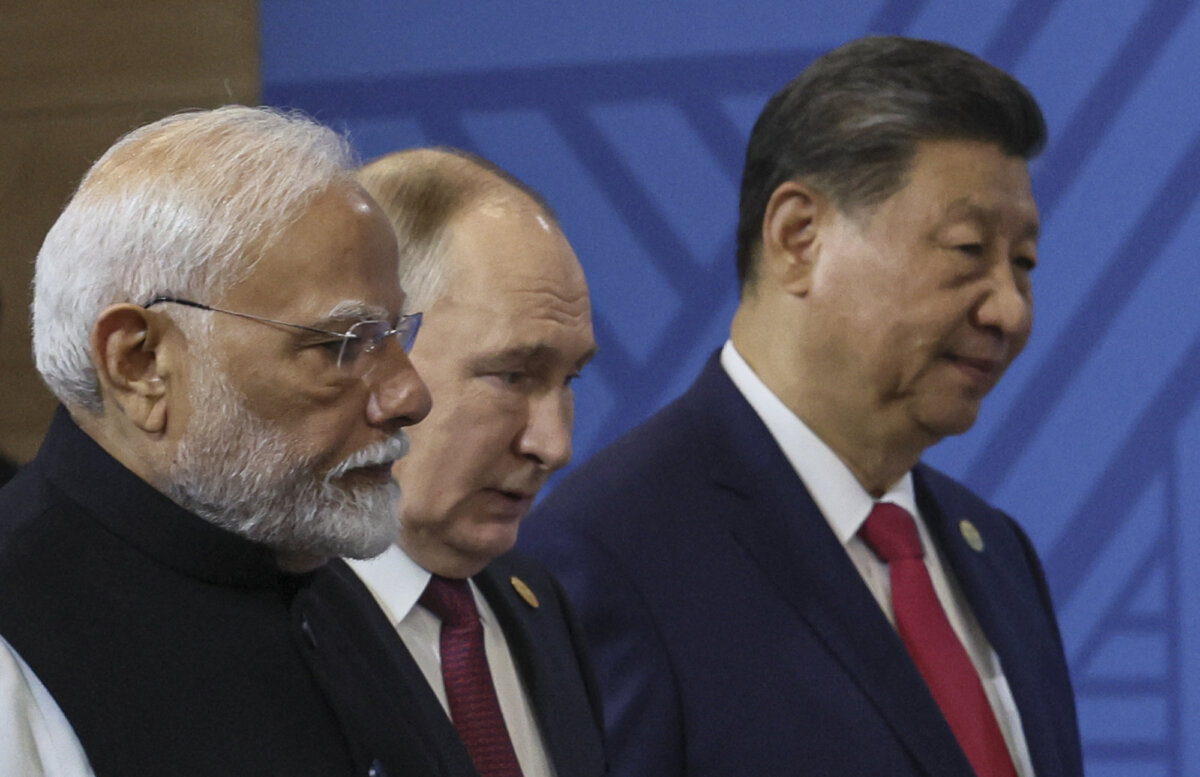
Data from global commodity tracking firm Kpler shows that India purchased more than 2 million barrels of Russian crude per day last month, the highest in about a year.
“While India’s global imports of crude oil dropped by 6 percent in June, Russian volumes saw an 8 percent month-on-month rise—to their highest levels since July 2024,” the Center for Research on Energy and Clean Air stated.
“More than half of these imports from Russia were made by three refineries in India, which also export refined products to G7+ countries.”
Since December 2022, India has bought 38 percent of Russia’s crude exports.
Following a July 2024 India–Russia summit, leaders issued a joint economic statement, reiterating the importance of bilateral trade “in the energy sector as a significant pillar” in their partnership.
“The Sides noted the continued special importance of bilateral trade in energy resources and agreed to explore new long-term contracts,” the statement reads.
While the country has reduced its reliance on Moscow’s energy products, Turkey also continues to be one of the world’s largest importers of Russian oil.
In May, Russia’s seaborne fuel oil exports to Turkey soared by 75 percent monthly to 430,000 tons.
The market share of liquefied natural gas (LNG) is different.
The EU is still the largest buyer of Russia’s LNG exports, purchasing 51 percent of its exports. This is followed by China (21 percent) and Japan (18 percent).
Changes in the Outlook
Additional penalties on Russia would “drastically change the outlook for the oil market,” according to ING commodities strategists, as these countries would need to reassess their buying patterns.
“If effectively enforced, the global market would be pushed into a large deficit. OPEC’s spare production capacity would not be able to fill the entire shortfall,” they said.
“This would present significant upside to oil prices. Given Trump’s desire for low oil prices, we don’t believe Trump would be keen to follow through with this threat.”
The International Energy Agency projected that global oil demand growth would increase by 700,000 barrels per day this year, the lowest rate since 2009, outside of the COVID-19 pandemic.
The Organization of the Petroleum Exporting Countries trimmed its outlook for worldwide oil demand growth in 2025. The cartel, writing in its latest monthly report, forecast international demand would average 105 million barrels per day.
Prices for West Texas Intermediate crude oil, a U.S. benchmark, tumbled about 2 percent to kick off the trading week, sliding toward $67 per barrel on the New York Mercantile Exchange.
Reuters contributed to this report.
 Friends Read Free
Copy
Facebook
Tweet
Friends Read Free
Copy
Facebook
Tweet