
Since President Donald Trump’s return to the White House, tariffs have been the centerpiece of the administration’s economic agenda.
In addition to his sweeping global tariff plans announced on April 2, the president has also imposed levies on automobiles, aluminum, copper, and steel.
Rebalancing global trade—turning the United States into a producer again and other nations into consumers—has been one of the core objectives behind these far-reaching levies.
Reversing trade deficits, rectifying unfair trade practices, and generating revenue for the federal government are other aims of the president’s tariff agenda.
But what are some of the inner workings of this centuries-old trade mechanism?
Why Tariffs?
For centuries, governments have employed tariff measures for economic, fiscal, and political reasons.
“I always say ‘tariffs’ is the most beautiful word to me in the dictionary,” the president said shortly after his inauguration in January. “Because tariffs are going to make us rich. … It’s going to bring our country’s businesses back that left us.”
Many of his predecessors would agree with his position.
The Tariff of 1789 was the first significant law approved by Congress, intended to fund the government and shield emerging U.S. industries.
Since then, the White House and lawmakers have implemented many tariffs.
In 1890, the McKinley Tariff—touted by then-Rep. William McKinley and signed by President Benjamin Harrison—protected domestic manufacturers from foreign competition by raising import duties on tin plates and wool.
The Smoot-Hawley Act of 1930, which economists say exacerbated the Great Depression, raised tariffs on more than 20,000 imported goods.
The Trade Act of 1974 introduced Section 301, which has been regularly used by subsequent presidents to combat unfair trade practices.
Governments at home and abroad routinely wield the tariff as a protectionist weapon. But then, who pays?
Dollars and Cents of Tariffs
Tariffs are a tax paid by importers, not foreign governments.
If a U.S. business is purchasing smartphones, televisions, or automobiles from a foreign market—such as Indonesia or Vietnam—the company will pay the tariff, not the Indonesian or Vietnamese governments.
One of the reasons economists fear that tariffs will rekindle the inflation flame is that businesses could pass the tariff-related costs onto consumers through higher prices.
At the same time, businesses could also cushion the financial blows by absorbing the costs, stockpiling inventories—such as how many importers rushed their purchases of foreign goods ahead of the tariffs—or delaying price increases.
So far, despite a plethora of industry surveys suggesting companies plan to make shoppers bear at least some of the costs, the data signals have been mixed.
In the June Consumer Price Index (CPI) report, for example, tariff-sensitive sectors have produced different trajectories.
The indexes for new vehicles and used cars and trucks declined by 0.3 percent and 0.7 percent, respectively.
Meanwhile, the apparel index surged by 0.4 percent in June.
Additionally, according to the CPI report, television prices fell by 0.1 percent, smartphones remained unchanged, and appliance prices increased by 1.9 percent.
“The details show that there was some scattered evidence of early tariff impacts on some goods components—mainly fresh fruit & vegetables, household appliances, toys, clothing, and sporting goods, but this was offset to a large extent by softness in the all-important shelter component,” ING economists said in a July 15 note.
Shelter accounts for about 40 percent of the core CPI basket.
Meanwhile, in addition to importers paying the levies, foreign firms can also absorb the higher expense by sacrificing profit margins to remain competitive in the United States.
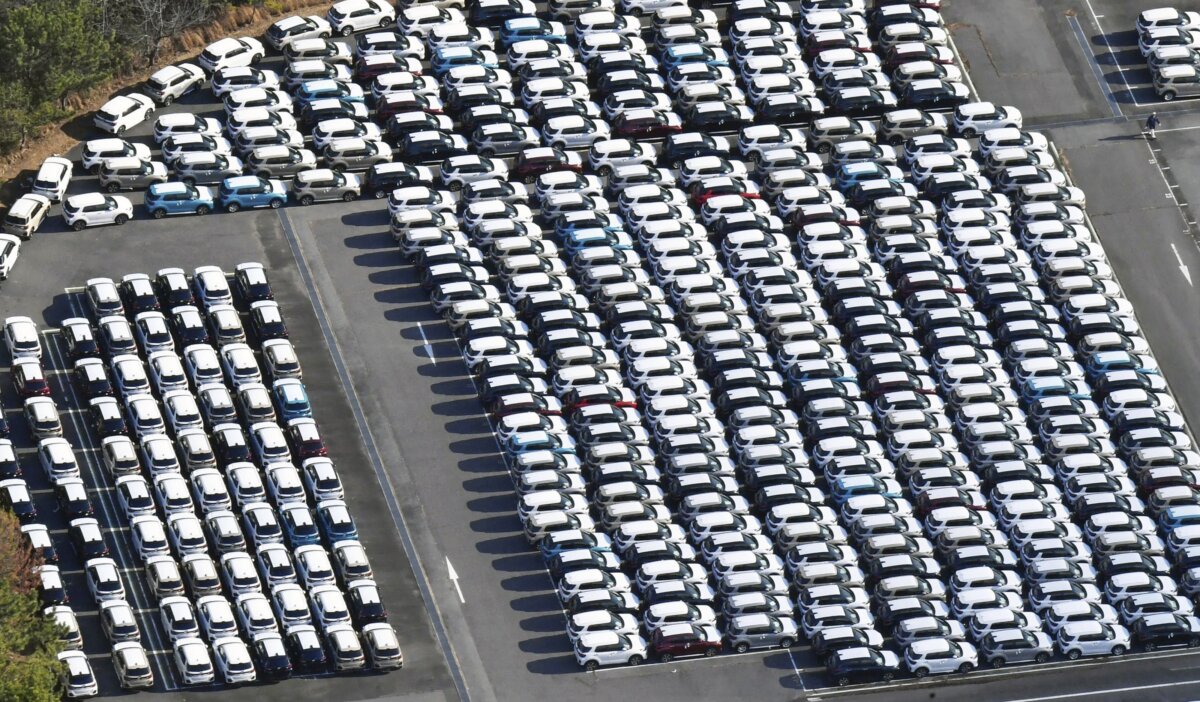
New data indicate that Japanese automakers, for instance, are absorbing tariff-related costs in the form of lower prices.
In June, auto export prices to the United States declined by 20 percent per unit year over year.
At the same time, the volume of car shipments increased by more than 3 percent.
Tariffs can adversely impact overseas markets by encouraging importers to seek alternative suppliers, either domestically or in other regions with lower tariffs.
As a result, foreign companies may be compelled to reduce prices to maintain market share—Japanese carmakers account for about 30 percent of the U.S. auto market—and retain their U.S. customer base.
Does this mean the U.S. economy has cut the tariff–inflation connection?
“The pass-through so far has been relatively modest, but that doesn’t mean we’re out of the woods yet,” Gurpreet Garewal, macro strategist in Goldman Sachs Asset Management, said in the bank’s recent episode of its “The Markets” podcast.
Collecting, Transferring Tariff Income
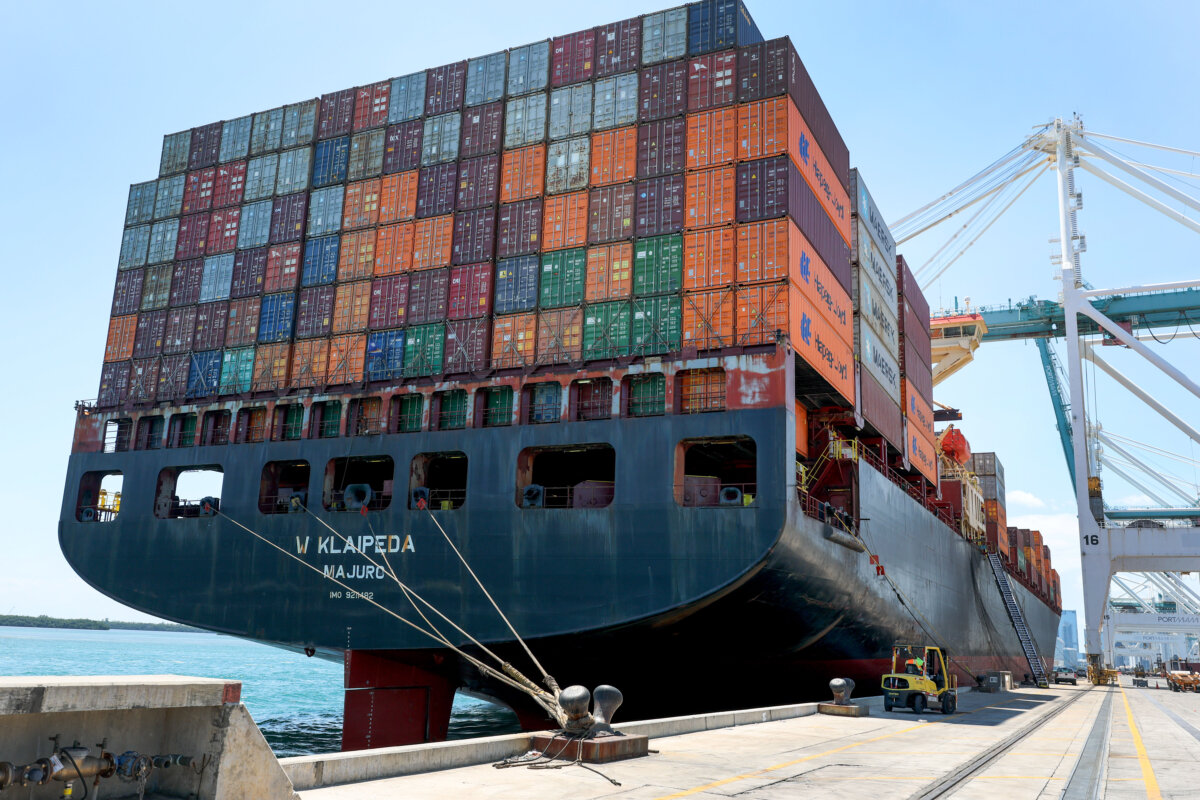
U.S. Customs and Border Protection collects tariffs at ports of entry on behalf of the Treasury Department.
In addition to receiving the duties, it enforces applicable rules and audits shipments.
Revenues from tariffs are then transferred to the Treasury’s general fund, a funding pool designated for a wide array of programs, including health care, education, and defense.
Since the tariff receipts are not earmarked for any particular purpose, Congress can dedicate the money to anything officials deem appropriate.
Tariffs could, in theory, be used to help pay down the $36 trillion national debt.
However, tariff revenues are currently insufficient for that purpose, as they account for a small share of tax receipts, and federal outlays continue to increase.
In June, the federal government collected a record $28.02 billion in tariff revenue.
On a fiscal year-to-date basis, the United States has generated about $122.5 billion in customs duties.
Treasury Secretary Scott Bessent, speaking at a Cabinet meeting earlier this month, projected that tariff income could soar to $300 billion by the calendar year’s end.
By comparison, Washington garnered $526 billion in tax revenue in June and $4 trillion in receipts in the first nine months of fiscal year 2025.
Nevertheless, if the Trump administration maintains its current tariffs, they could become a significant revenue stream.
The Congressional Budget Office projects that tariff collections could reach about $2.5 trillion between 2025 and 2034. That income would offset much of the $3.4 trillion in deficits from the reconciliation package that the fiscal agency projects.
Treasury Secretary Scott Bessent has stated that tariff income would be a short-term revenue generator.
The goal, he says, is to eventually transition toward higher domestic income as more companies reshore and expand their manufacturing presence in the United States.
Waiting for Tariff-Based Inflation
Although for decades the consensus has been that tariffs are inflationary, both Trump administrations have maintained that there is not always a direct path from tariffs to inflation.
In 2018 and 2019, when Trump’s earlier levies first traversed their way through the United States and global economy, aggregate inflation did not spike.
The Producer Price Index—a gauge of prices paid for goods and services by businesses and passed on to consumers—initially surged in 2018 but then stabilized heading into the coronavirus pandemic.
The CPI, meanwhile, showed that the annual headline inflation rate peaked at 2.9 percent in July 2018 before falling below the 2 percent mark for much of 2019.
Today, the White House’s trade package is more expansive and broad-based, which is causing consternation among businesses, consumers, and policymakers. But the major inflation reports have yet to detect that inflation has materialized as a result of these levies in a significant way.
According to the Bureau of Labor Statistics, import prices ticked up by 0.1 percent in June, following a 0.4 percent decline in May.
“To be clear, we know that tariffs are inflationary, and because there are currently tariffs in force, inflation is bound to show up at some point,” Siebert Financial Chief Financial Officer Mark Malek said in a note emailed to The Epoch Times.

“How much and how long it may last is the real question that needs to be answered. The fact is that tariff-based inflation has not really shown up yet.”
The next facet of the tariff discussion involves determining whether tariffs will deliver persistent inflation or one-time price adjustments.
In an April 6 interview with NBC’s “Meet the Press,” Bessent said the president’s levies will simply produce a one-time price increase.
“What I have said is tariffs are a one-time price adjustment,” he said. “So, there’s a big difference between insipid, endemic inflation within the system and consistent price level increases, and a one-time adjustment.”
Federal Reserve Chair Jerome Powell told lawmakers on Capitol Hill that tariff-driven inflation could start appearing in the summertime statistics.
Early estimates suggest modest readings. According to the Cleveland Fed Inflation Nowcasting model, the CPI is expected to rise by 0.2 percent, and the annual rate is forecast to be unchanged at 2.7 percent.
Reuters contributed to this report.
 Friends Read Free
Copy
Facebook
Tweet
Friends Read Free
Copy
Facebook
Tweet