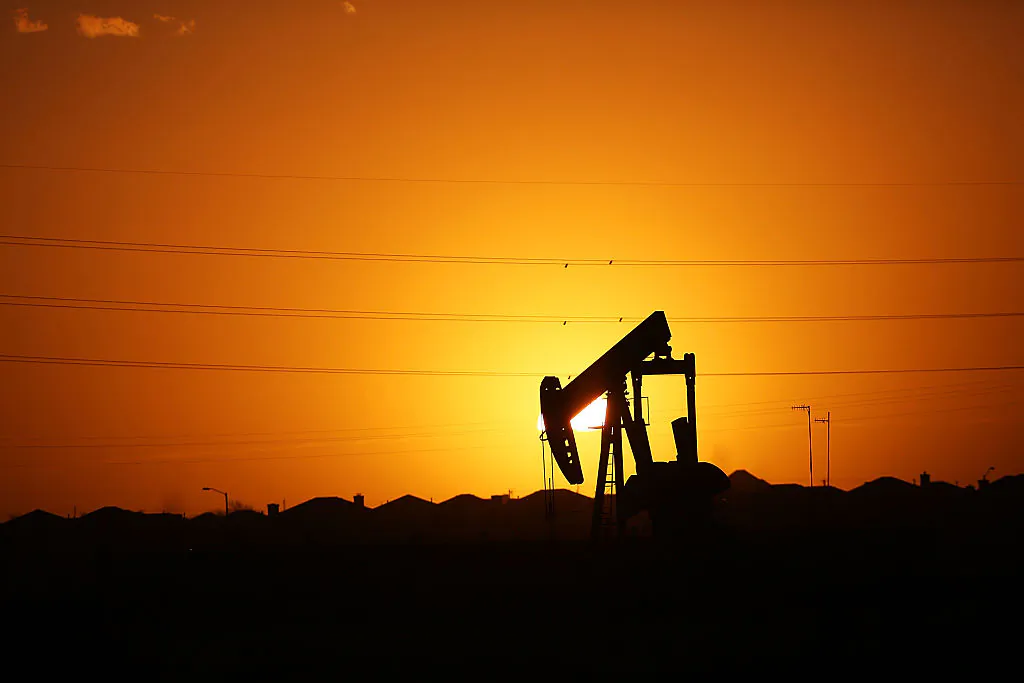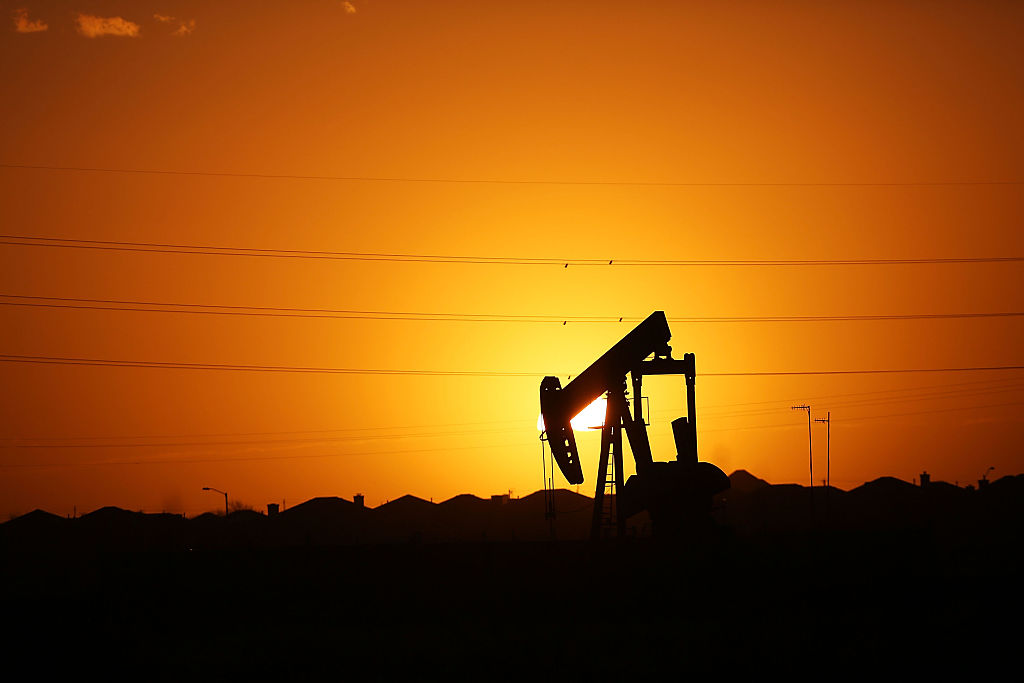

Crude oil output in the United States reached a new annual record last year, growing by 3 percent to hit 13.6 million barrels per day (b/d), the Energy Information Administration (EIA) said in a March 31 statement.
“Production from the Lower 48 states excluding the Gulf of America … accounted for 11.3 million b/d, or 83 percent of the total U.S. crude oil production in 2025,” the agency said. “The rest of the production came from Federal Gulf of America … and Alaska.”
Improvements in efficiency enabled higher oil output last year, even though there were 5 percent fewer active rigs per month and 1 percent fewer wells getting drilled in the Lower 48 region than in 2024, according to the EIA.
Region-wise, the EIA said, “the Permian, Eagle Ford, and Bakken are the most prolific crude oil production regions, accounting for almost two-thirds of total U.S. production.”
“In 2025, the Permian region in western Texas and southeastern New Mexico produced more crude oil than any other region, accounting for 48 percent of total U.S. crude oil production,” it said. “Most of the annual U.S. crude oil production growth in 2025 also came from the Permian, where production grew by 280,000 b/d to 6.6 million b/d.”
In an April 1 statement, the Department of the Interior said that offshore oil production in the United States totaled 714 million barrels last year, which it said was the “highest annual output on record.”
The department attributed the high output levels to new projects entering production and other offshore developments, especially in the Gulf of America regions. According to interior officials, policy changes aimed at improving regulatory efficiency and providing greater certainty for energy developers have incentivized the acceleration of investments in offshore projects.
“President [Donald] Trump has made it clear that America should fully develop its abundant energy resources in a way that strengthens our economy and benefits American families,” Secretary of the Interior Doug Burgum said.
“By providing regulatory certainty, streamlining processes and encouraging responsible development, this administration is unlocking the full potential of our domestic energy resources—supporting job creation, lowering energy prices, strengthening energy security and maintaining strong safety and environmental protections.”
As for this year, the EIA is expecting total U.S. crude oil production to average 13.6 million b/d, the same as last year, according to a March 9 report from the agency. In 2027, output is expected to rise to 13.8 million b/d.
A recent survey of oil and gas companies showed that in the top two production regions where they are active, the entities require West Texas Intermediate (WTI) oil prices to average $43 per barrel to cover operating expenses of existing wells, the Federal Reserve Bank of Dallas said in a March 25 report.
“Across regions, the average price necessary to cover operating expenses ranges from $34 to $47 per barrel,” the report states. “All respondents can cover operating expenses for existing wells at current prices.”
WTI oil futures prices ended on April 2 at higher than $111 per barrel.
To be profitable enough to drill a new well, the companies need WTI prices to average $66 per barrel, the survey found.
Meanwhile, gasoline prices at the pump have surged across the United States amid the ongoing U.S.–Israeli war against Iran.
On March 31, the national average retail price for regular gas exceeded $4 per gallon, the first time prices breached the level since August 2022 after Russia had invaded Ukraine, according to the American Automobile Association.
Regular gas prices averaged $4.09 per gallon nationally as of April 3, up from $3.10 a month back, American Automobile Association data show. In California, Hawaii, and Washington, prices have exceeded $5 per gallon.
The Trump administration has taken steps to control gas prices, temporarily allowing Russian and Iranian crude oil and petroleum stranded at sea to be sold. The United States also announced the phased release of 172 million barrels of oil from the U.S. Strategic Petroleum Reserve.
 Friends Read Free
Copy
Facebook
Tweet
Friends Read Free
Copy
Facebook
Tweet