
The federal government’s long-term deficits and debt will worsen over the next decade, according to the nonpartisan Congressional Budget Office (CBO).
On Feb. 11, the same day that the Treasury Department released the January budget numbers, the CBO published its 10-year outlook for the budget and the U.S. economy.
Officials forecast that by the end of 2036, federal debt held by the public will reach a record 120 percent of the gross domestic product (GDP); it is currently 99 percent of GDP.
As a share of GDP, the deficit will rise to 6.7 percent over the next decade, firmly above the administration’s 3 percent target, according to the forecast.
Since taking office in January 2025, Treasury Secretary Scott Bessent has advocated reducing the deficit-to-GDP ratio to 3 percent—it currently stands slightly below 6 percent.
In January, a bipartisan coalition of lawmakers also advanced a resolution to establish a fiscal goal of reducing the federal budget deficit to 3 percent or less of GDP.
Cumulatively, deficits are projected to total $23.1 trillion, a 6 percent increase from last year’s CBO baseline.
While revenues are expected to be stable—accounting for almost 18 percent of GDP—outlays will climb to 24.4 percent from the current 23.3 percent, the CBO projected. This is because spending on Medicare, Social Security, and interest payments will grow faster than output, it said.
The Committee for a Responsible Federal Budget said the CBO’s analysis provides “no surprises” or “bright spots of encouraging news.”
“Our nation’s deficits, debt, interest payments, and trust funds are all in terrible shape,” said Maya MacGuineas, president of the independent policy organization.
“With debt around 100 [percent] of GDP and growing, we will enter the next crisis with a higher debt-to-GDP ratio than we ever have had before.
“At this moment in time, with challenges ranging from the aging of society to growing geo-political rivalries, it is nothing short of self-sabotage to operate with such a self-imposed disadvantage.”
Interest Costs and the Economy
Net interest costs are projected to reach $2.1 trillion in 2036, representing 4.6 percent of the national economy.
“Our budget projections continue to indicate that the fiscal trajectory is not sustainable,” the CBO stated in the report.
One reason is that yields on long-term Treasury securities will remain between 3 percent and 4 percent, even as the Federal Reserve lowers its policy rate.
“It’s really a pretty benign outlook for Treasury yields,” CBO Director Phillip Swagel told reporters on Feb. 11.
He cited two factors for the flat movement in interest rate projections. Changing demographics—an aging population with slower immigration growth—will put downside pressure on the economy, Swagel said, and rising debt levels will lead to upward pressure.
“There are other factors, but those are the two main ones, and those roughly offset each other, leading to that flat interest rate trajectory,” he said.
Although the White House is betting on substantial GDP growth from its economic agenda, the CBO said it anticipates that the expansion will slow to 1.8 percent beginning in 2027, “reflecting several factors that roughly offset each other.”
The One Big Beautiful Bill Act will bolster work and investment incentives, thereby improving growth prospects, according to the CBO. Additionally, productivity will accelerate from generative artificial intelligence (AI), “amounting to an increase of about 10 basis points per year, on average,” it stated.
“That faster growth from AI increases the level of output in the nonfarm business sector by 1 percent in 2036,” the report reads.
At the same time, the deteriorating fiscal outlook and slower labor force growth will weigh on the economy, according to the CBO.
“The 2025 reconciliation act contributes to stronger growth in 2026 that boosts revenues but also increases interest rates,” it stated in the report.
“The latter effect dominates, so overall, the economic changes brought about by the 2025 reconciliation act slightly increase the deficit.”
A problem with the CBO’s fiscal path is that it presents “rosy” assumptions, whether about the economy or interest rates, said Michael A. Peterson, CEO of the Peter G. Peterson Foundation.
“CBO’s baseline—as bad as it is—assumes interest rates will remain moderate and that we will face no costly unforeseen events. If those rosy projections do not transpire, the damage will only be worse,” Peterson said in a statement.
The White House has also criticized the CBO for its methodology.
Bessent, in a July 2025 interview with CNBC, said that he “doesn’t believe in the CBO forecast.”
“If you turn up the growth projections to something like 2.8, 3 percent … then the debt disappears,” he said.
“The other thing, too, is are we growing the GDP faster than we’re growing the debt? I am sure we will—it will happen over the remainder of the president’s term.”
January Budget Deficit
The grim fiscal projections came as the Treasury Department released the latest Monthly Treasury Statement.
In January, the federal government registered a $95 billion budget deficit, down by 26 percent, or $34 billion, from a year earlier. The shortfall would have been $30 billion—or 63 percent lower—if not for adjusting for routine calendar shifts in benefit payments.
Revenues totaled $560 billion last month, representing a 9 percent increase from the previous year. Outlays ticked up by 2 percent year over year to $655 billion.
In the first four months of fiscal year 2026, the budget deficit totaled $697 billion, down by 17 percent from the same four-month period last year.
Fiscal year to date, receipts totaled $1.785 trillion, up by 12 percent from a year earlier. Outlays reached $2.482 trillion, a 2 percent increase.
President Donald Trump’s tariffs helped boost federal revenues, with net customs receipts totaling nearly $28 billion—well above the $7.3 billion recorded in January 2025.
A rare bright spot in the budget deficit was a $12 billion decrease in interest payments on the public debt, bringing January’s total to $72 billion.
The drop reflected delayed downward adjustments to inflation‑indexed securities, corrections that were delayed by last year’s government shutdown and the postponement of consumer price index data releases.
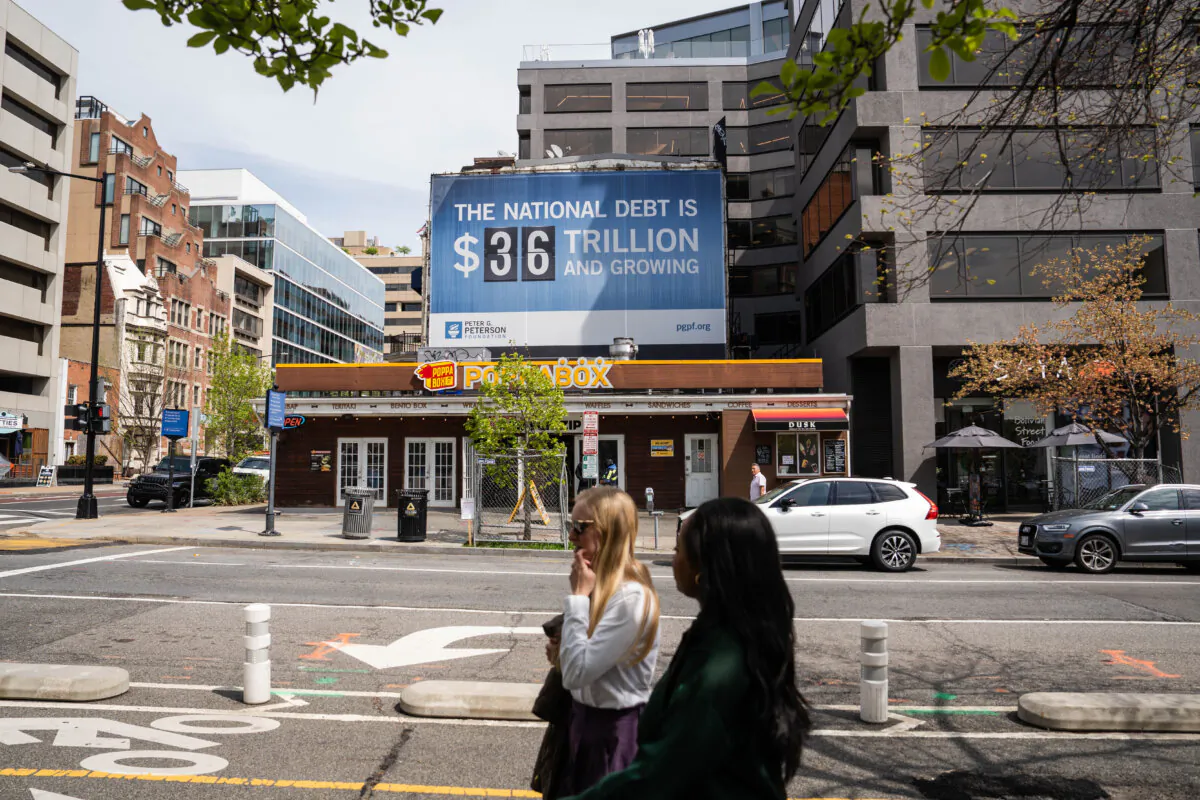
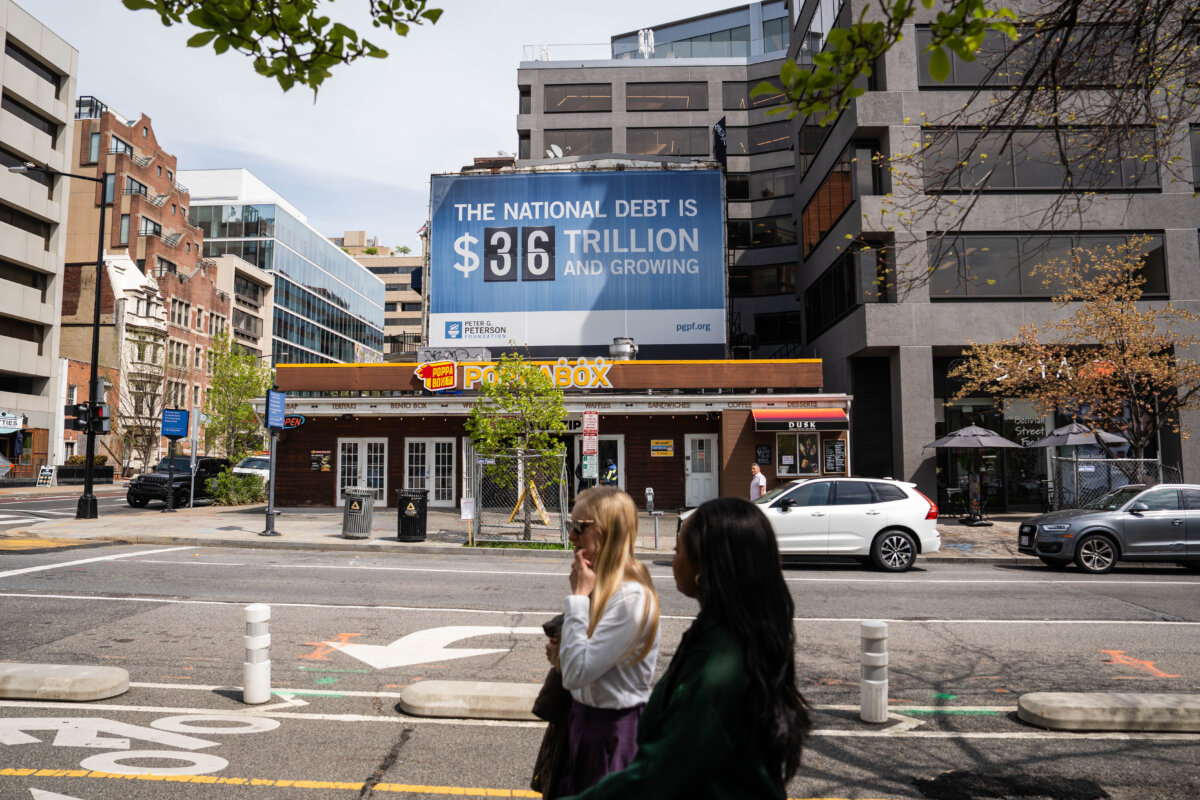
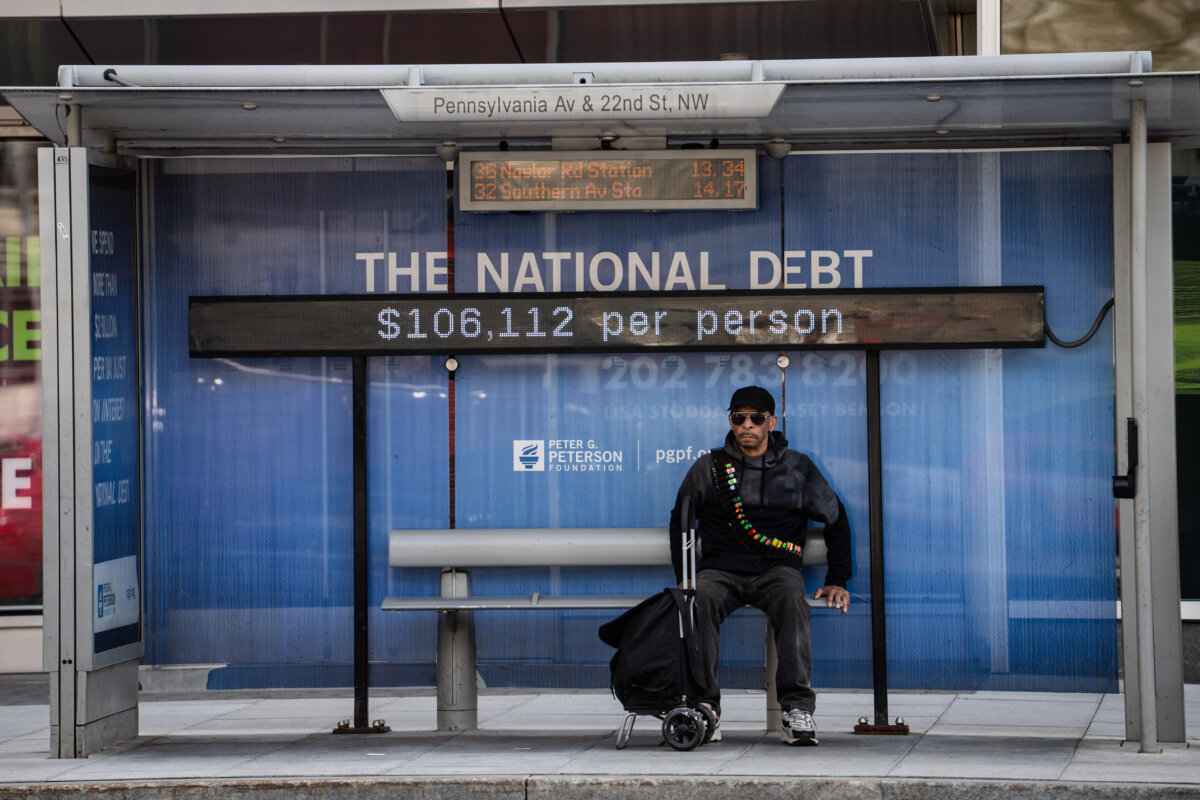
The national debt is inching closer to $39 trillion.
 Friends Read Free
Copy
Facebook
Tweet
Friends Read Free
Copy
Facebook
Tweet