
The U.S. economy closed out a quarter marked by whiplash in the labor market, as hiring surged one month and sagged the next.
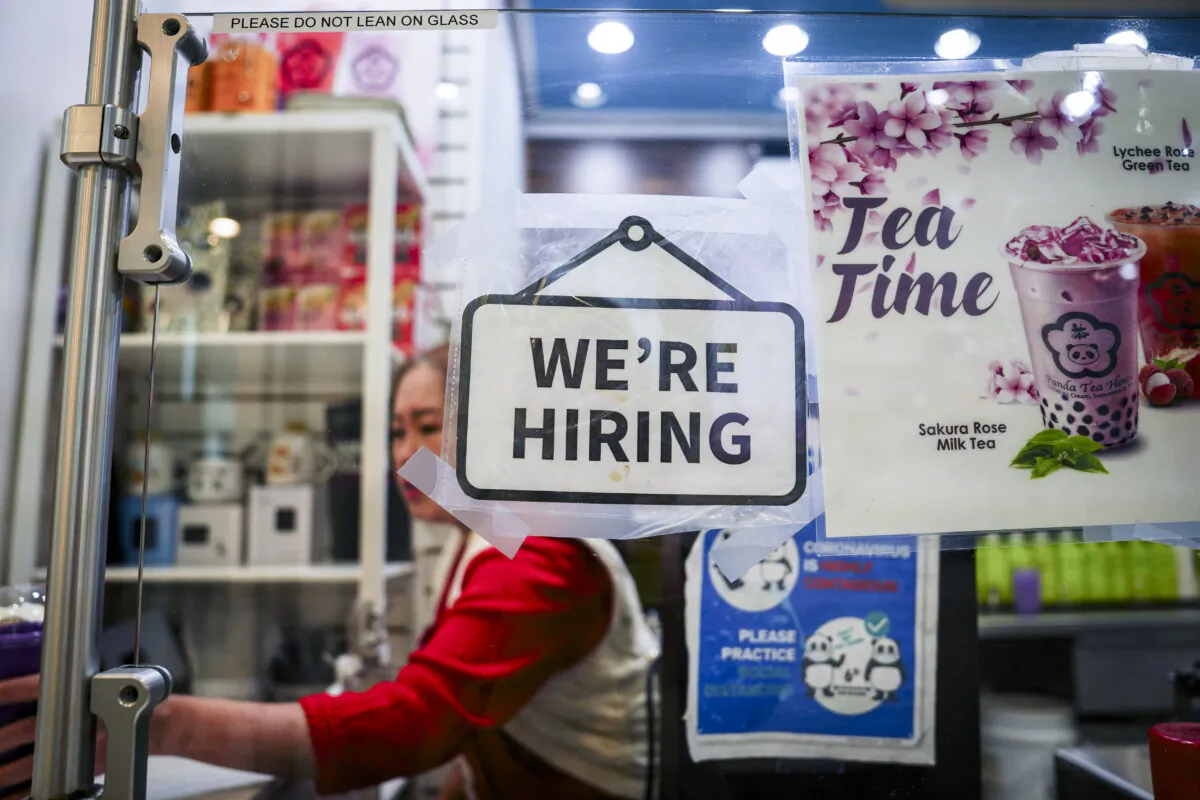
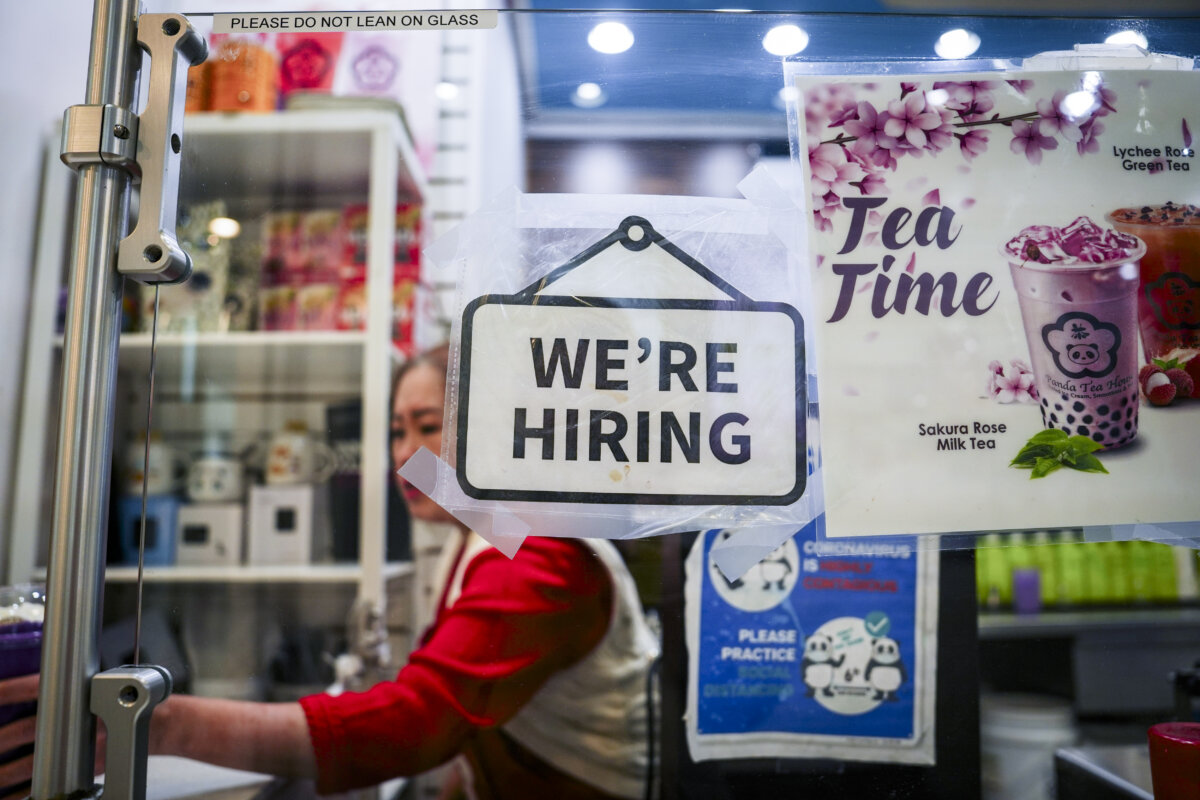
Employers added 178,000 new jobs in March, according to new Bureau of Labor Statistics data released on April 3.
Prior to the nonfarm payrolls report, economists had forecast a more modest reading of 60,000.
The unemployment rate also dipped to 4.3 percent last month, from the 4.4 percent registered in February.
Markets had projected the jobless rate holding steady at 4.4 percent.
The White House welcomed the report, saying it shows the economy remains on a solid footing.
“The March jobs report blew out expectations with strong construction job growth and a surge in manufacturing job creation as trillions of dollars in investments begin to materialize,” White House spokesman Kush Desai wrote in an April 3 post on X. “America remains on a solid economic trajectory thanks to President Trump’s proven agenda of tax cuts, deregulation, tariffs, and energy dominance.”
He added that “short-term disruptions of Operation Epic Fury are behind us” and that the U.S. economy’s resurgence is set to accelerate.
It was a turbulent first quarter as employment data whipsawed between strike-driven losses, persistent tariff concerns, and weather-related rebounds. These conditions have offered a distorted view of the U.S. labor market, further complicating the Federal Reserve’s policymaking efforts.
As for the war in Iran, market-watchers anticipate the conflict to show up in the April data.
“Although most of this data is from the period prior to the war, it establishes a baseline of a resilient economy, with better-than-expected job growth and a lower unemployment rate,” Chris Zaccarelli, CIO for Northlight Asset Management, told The Epoch Times in an emailed note.
January’s total nonfarm payroll employment reading was adjusted up by 34,000 to 160,000. The February figures were revised down by 41,000 to a loss of 133,000.
This brought the three-month total to 205,000, higher than the 61,000 added in the first quarter of 2025.
Health care accounted for a sizable share of March’s payroll gains, adding 76,000 jobs.
“Employment in ambulatory health care services rose by 54,000, reflecting an increase of 35,000 in offices of physicians as workers returned from a strike,” the bureau said.
About 31,000 Kaiser Permanente nurses and health care professionals in California and Hawaii went on strike from January 26 to February 23. The labor disruption was centered around wages and chronic understaffing.
Kaiser ultimately agreed to a 21.5 percent wage increase, as well as stronger staffing protections.
Last month’s job growth was also fueled by construction (26,000), transportation and warehousing (21,000), manufacturing (15,000), and social assistance (14,000).
Conversely, financial activities and federal payrolls fell by 18,000 and 15,000.
Wage growth cooled sharply, with average hourly earnings rising at a lower-than-expected pace of 0.2 percent—down from the 0.4 percent increase in February.
On a 12-month basis, growth in average hourly earnings eased to 3.5 percent, below economists’ projections.
The labor force participation slipped below 62 percent for the first time since November 2021. Average weekly hours slid to 34.2, from 34.3.
The number of employed full-time workers rebounded substantially, surging by 335,000. Employed part-time workers dropped by 188,000.
The number of people working two or more jobs was little changed at 8.357 million.
Markets were closed for the Good Friday long weekend.
Mixed Conditions
The flurry of data released this week painted a mixed picture of the employment situation, complicating the labor market outlook.
Demand for labor softened in February, with job openings falling to 6.882 million, from an upwardly revised 7.24 million in the previous month.
Quits—the number of people voluntarily leaving their positions—declined to 2.974 million, from a slightly upwardly adjusted 3.131 million.
These figures indicate “a cooling labor market amid tariff headwinds and lingering inflation uncertainty,” says Gina Bolvin, president of Bolvin Wealth Management Group.
Economic observers use quits data as a proxy to gauge the challenges workers may face in finding new jobs.
“Across most industries, the quits rate fell below pre-pandemic levels, underscoring growing worker uncertainty. Hiring also slowed, most notably in healthcare, which has been a key driver of recent payroll gains,” Bolvin said in a note emailed to The Epoch Times.
Private payrolls rebounded in March, jumping by 62,000, higher than economists’ expectations of 40,000, according to ADP.
“Overall hiring is steady, but job growth continues to favor certain industries, including health care,” Nela Richardson, chief economist at ADP, said in a news release.
While labor demand has been mixed, employers have not been terminating employment at large-scale levels.
March’s planned job cuts totaled 60,620—firmly below the 275,240 announced a year earlier—according to global outplacement firm Challenger, Gray and Christmas.
Initial jobless claims—the number of Americans filing new applications for unemployment benefits—remained at historically low levels last month. Recurring claims, which measure unemployed individuals currently receiving benefits, continue to be below 1.9 million for the 12th consecutive week.
What all of this means for the Federal Reserve is unclear, but traders have trimmed their bets on interest rate cuts this year. While investors have scaled back their expectations to raise rates, the baseline scenario for the futures market is leaving rates higher for longer.
 Friends Read Free
Copy
Facebook
Tweet
Friends Read Free
Copy
Facebook
Tweet