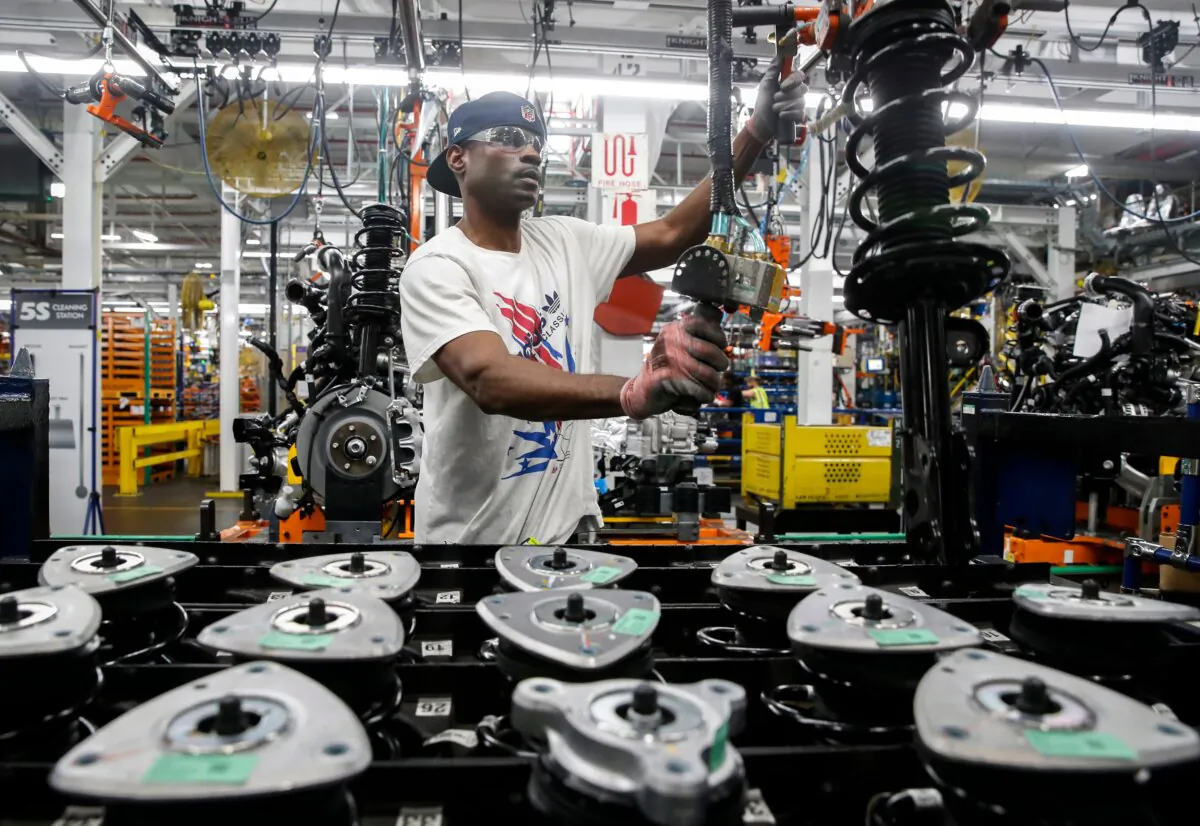

U.S. factory production surged at its best pace in more than a year, according to new Federal Reserve data published on May 15.
In April, industrial production jumped by 0.7 percent, following an upwardly adjusted 0.3 percent decline in the previous month, the U.S. central bank said.
Manufacturing output, which accounts for three-quarters of industrial production, rose by 0.6 percent.
Both readings topped economists’ expectations.
Even though the war in Iran has lifted energy prices and raised input costs for U.S. firms, the latest data reaffirm the underlying strength of the country’s manufacturing sector.
After anemic growth over the past few years, the United States’ manufacturing base is experiencing a revival. Various industry surveys show renewed factory activity as the artificial intelligence (AI) boom powers business investment.
But the latest figures showed broad-based growth last month.
Motor vehicle output led the jump, increasing by 3.7 percent. Additionally, output of utilities climbed by 1.9 percent, including electric and natural gas utilities. Mining output dipped by 0.1 percent.
Capacity utilization—the share of a factory’s maximum output that is actually being produced—edged up to a higher-than-expected 76.1 percent. This is still below the long-run average of 79.4 percent, according to the Fed.
This comes as the New York Fed reported that the state’s manufacturing activity in May surged at its fastest pace in more than four years. New orders, new shipments, and an optimistic outlook bolstered the reading, which came in above forecasts.
But input and selling prices increased sharply this month.
Similar findings have been observed in manufacturing reports.
Growth With Inflation
Earlier this month, the Institute for Supply Management and S&P Global reported that factory activity remained in expansion territory, although companies are facing cost pressures.
The manufacturing sector could continue to experience inflationary challenges as a broad array of commodities are facing higher prices, extending beyond crude oil and fuel. This could then seep into the wider economic landscape, affecting consumers’ pocketbooks, said Adam Turnquist, chief technical strategist at LPL Financial.
“Rising prices across industrial metals, precious metals, and agricultural commodities (not just oil) could create broader inflationary pressures by lifting input costs across manufacturing, construction, transportation, and food production,” Turnquist said in a note emailed to The Epoch Times.
“That dynamic could make it more difficult for inflation to moderate in the months ahead, even if energy prices eventually stabilize.”
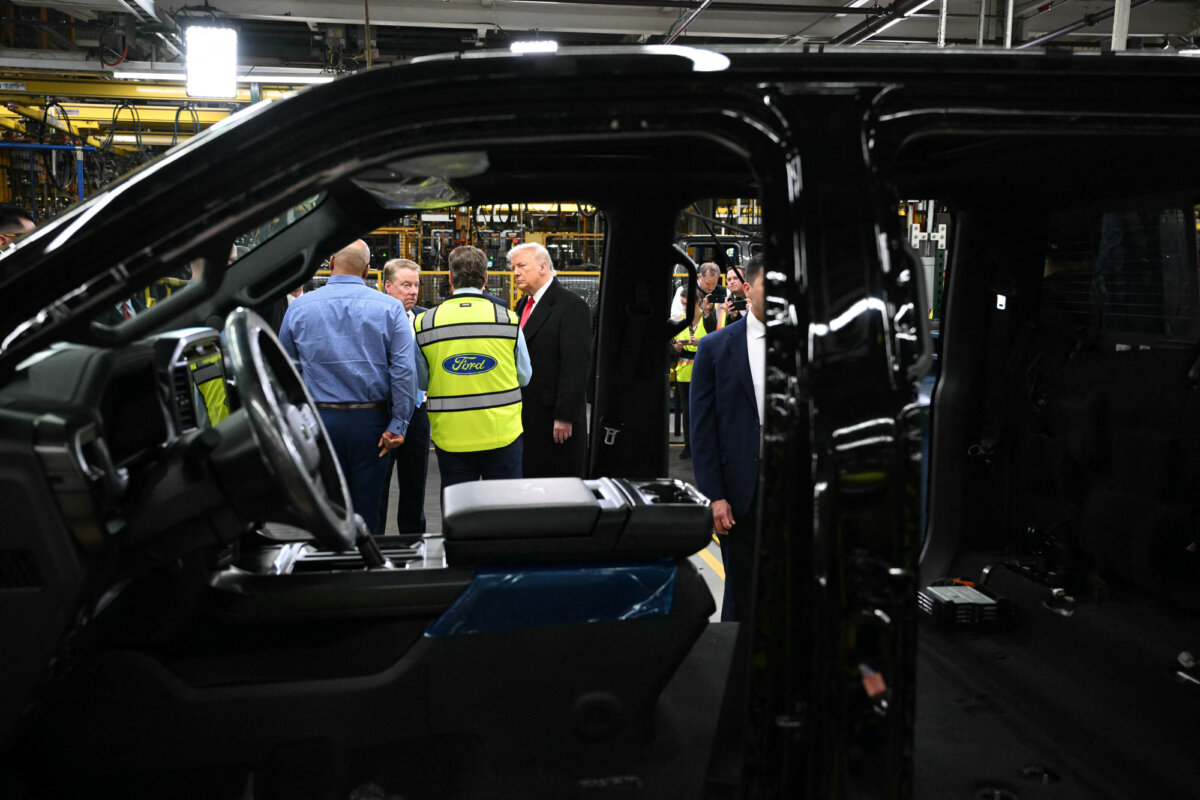
Wholesale inflation accelerated in April.
The producer price index—a gauge of what businesses pay for goods and services—surged by 1.4 percent, from an upwardly revised 0.7 percent increase in the previous month.
Core producer inflation, which strips out the volatile energy and food categories, rose by 1 percent, from 0.2 percent in March.
Economists use the index as a precursor to future consumer inflation trends.
Prices for imported goods entering the United States also advanced by almost 2 percent last month, which could further fuel input costs.
Unlike the supply shock after the COVID-19 pandemic, inflation could be transitory, as it is mainly driven by energy, according to James Knightley, chief international economist at ING.
“So far, there appears to be little spillover into other inflation components and the lack of demand impetus means we are seeing this as a transitory story that the Fed can ‘look through,’” Knightley wrote in a May 12 article.
“We do not predict broad and persistent inflation that would justify higher Federal Reserve policy rates, especially with the Fed having to optimise policy for two very different goals—price stability and maximising employment.”
Investors have sent signals that they anticipate higher-for-longer inflation, which could force the Fed to raise interest rates.
The main benchmark for U.S. borrowing—the 10-year Treasury Note—reached 4.57 percent during the May 15 trading session.
The 30-year yield also firmed above 5 percent to the highest in a year.
In addition, the two-year yield, which tracks expectations for Fed policy, surged beyond 4 percent.
Similar upward trends are seen in Europe and Japan.
“The increase in both 10-year and 30-year yields in major economies indicates growing skepticism among global investors around the fiscal path, inflation and political stability of those nations,” Joseph Brusuelas, chief economist at RSM, wrote in a May 13 article.
As a result, traders are making a Fed rate hike their base case, according to new CME FedWatch data.
 Friends Read Free
Copy
Facebook
Tweet
Friends Read Free
Copy
Facebook
Tweet