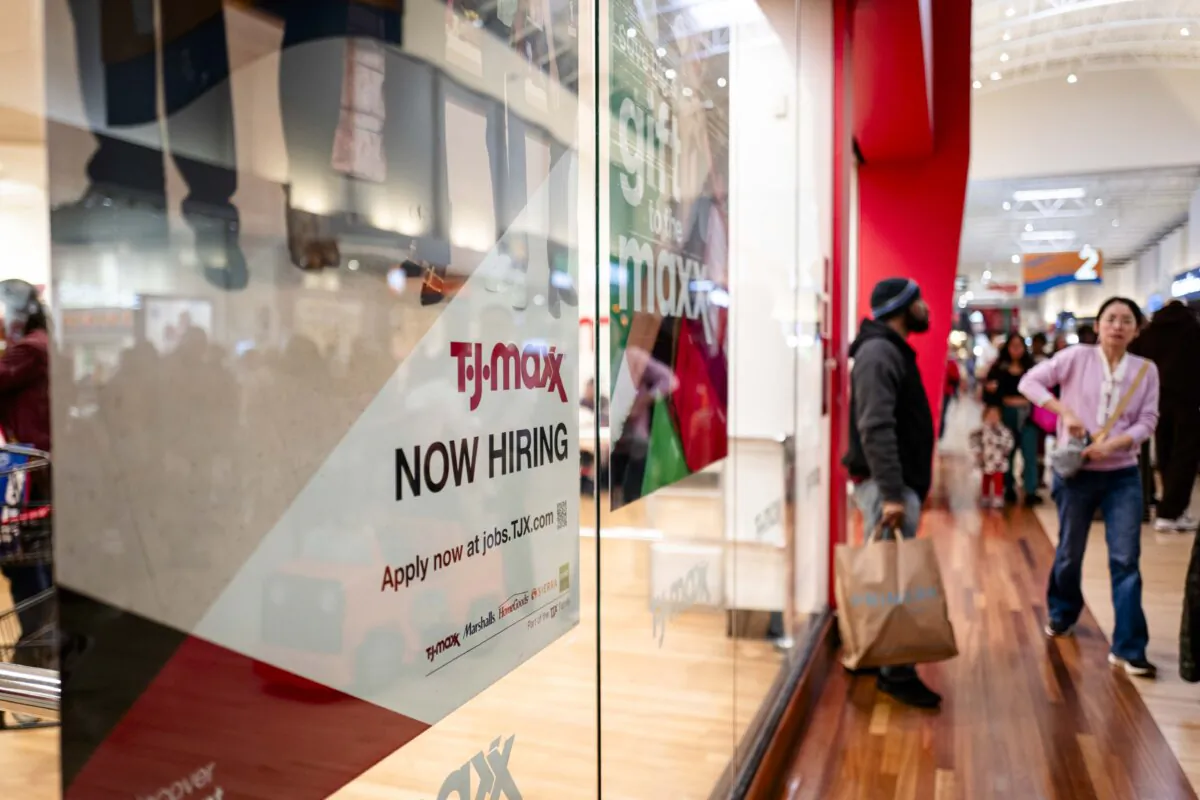

Demand for labor continued to soften as job vacancies fell sharply in November, reaching their lowest level in five years, according to the Bureau of Labor Statistics.
The number of job openings declined by 303,000 to 7.146 million from the downwardly revised 7.449 million in October, according to data from the new Job Openings and Labor Turnover Summary (JOLTS) report, released on Jan. 7.
The latest reading represented the lowest level since December 2020.
Falling employment opportunities were centered in accommodation and food services (down 148,000) and transportation, warehousing, utilities, and wholesale trade (negative 171,000).
Job vacancies rose by 90,000 in the construction sector.
Job quits climbed by 188,000 to 3.161 million—the highest since July—from an upwardly revised 2.973 million.
The quits rate—a measure reflecting voluntary job leavers as a share of total employment—edged up to 2 percent.
Quits can be an indicator of workers’ confidence in finding new jobs in today’s labor market.
The increase was concentrated in accommodation and food services (208,000) and construction (39,000).
Resignation declines were observed in professional and business services (down 75,000), wholesale trade (minus 23,000), and government (negative 12,000).
Caution is warranted regarding the data due to the 43-day federal spending impasse, says Mark Hamrick, senior economic analyst at Bankrate.
“The federal government shutdown was the predominant story in the first half of November, and the fog has only started to lift with the release of previously logjammed economic data,” Hamrick said in a statement to The Epoch Times.
Still, JOLTS figures indicate that employment conditions remain stuck in the oft-described “low fire, low hire” climate.
‘Low Fire, Low Hire’ Persists
The number of new hires was little changed at 5.12 million, with the decrease largely seen in state and local government positions. Federal government hiring jumped by 11,000.
Total separations—discharges, layoffs, retirements, and deaths—were unchanged at 5.08 million. Again, they were primarily observed in state and local government employment.
The hiring-separations gap has narrowed in recent months, suggesting the U.S. economy is hardly adding net new jobs.
“While openings have remained fairly stable since April 2024, the pace of actual jobs being added each month has continued to slow, and those positions are increasingly concentrated in one industry—healthcare,” Cory Stahle, economist at Indeed Hiring Lab, said in a Jan. 7 note.
“In other words, employers are holding onto the workers they have, but aren’t eager to bring new people on board.”
In the private sector, hiring has cooled considerably compared to early 2025, according to data from payroll processor ADP.
From January to June, private payrolls expanded by 483,000.
From July to December, businesses’ staffing levels rose by 131,000.
Despite softening employment conditions, the unemployment rate remains historically low, hovering above 4 percent.
Looking ahead to the next 12 months, job growth could stabilize, says Jeffrey Roach, chief economist at LPL Financial.
“ADP says payrolls rose in [December], but private hiring still disappointed in 2025; 2026 will see more job growth and less labor supply growth, lowering the unemployment rate by year end,” Roach said in a note emailed to The Epoch Times.
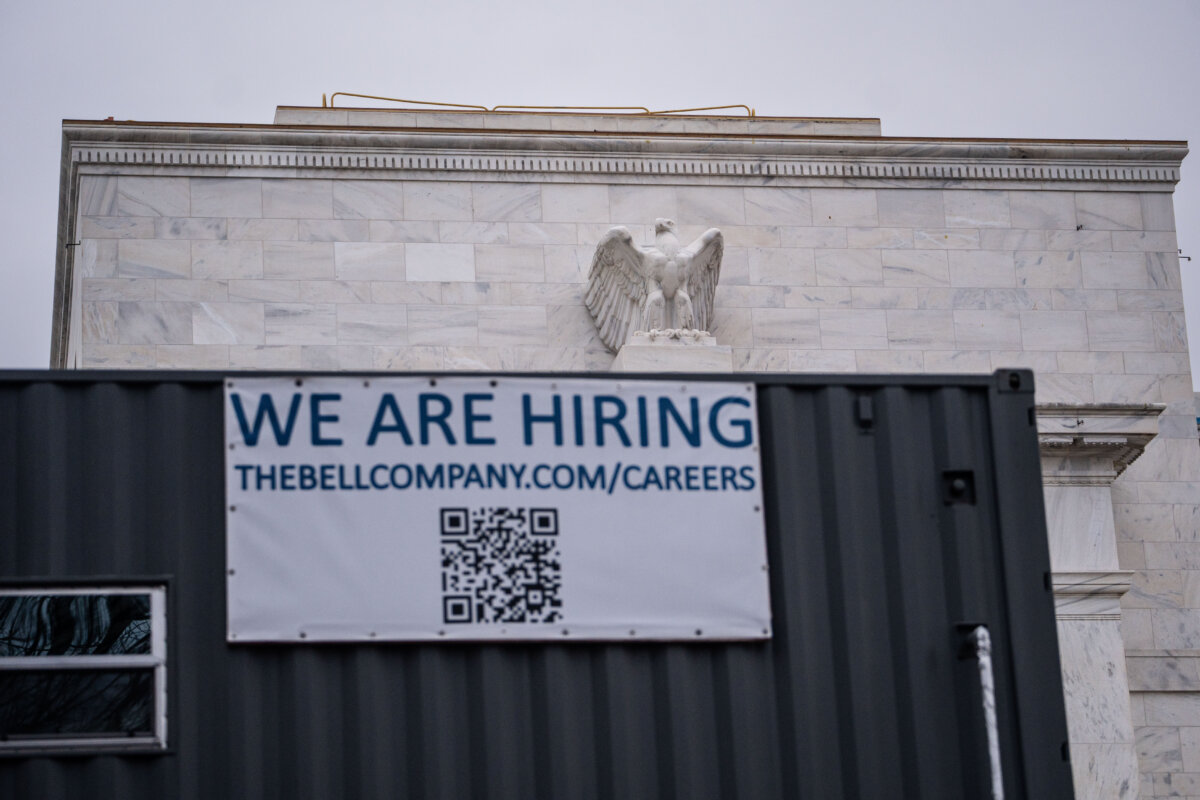
“I expect monthly private payroll growth to stabilize around 50,000 for most of 2026 after smoothing out some of the month-to-month volatility.”
The bureau will publish the December jobs report on Jan. 9, providing a full picture of how the U.S. labor market performed last year.
Market estimates suggest the economy added 60,000 new jobs in December, and the unemployment rate likely dipped to 4.5 percent.
Help for the Fed
A fresh set of data could help the Federal Reserve obtain a clearer view of employment conditions heading into the January Federal Open Market Committee meeting.
Last month, officials lowered interest rates by a quarter point without key inflation and labor market data.
This prompted Chicago Federal Reserve President Austan Goolsbee to vote to leave rates unchanged until more information was available.
“Waiting to take this matter up in the new year would not have entailed much additional risk and would have come with the added benefit of updated economic data, which have been absent lately,” Goolsbee said in a Dec. 12 statement.
The Federal Reserve will convene its two-day policy meeting on Jan. 27 and Jan. 28.
Investors overwhelmingly expect the central bank to leave rates unchanged in the target range of 3.5 percent to 3.75 percent.
Monetary policymakers expect one quarter-point rate cut in 2026, but investors are betting on two to three reductions.
Officials have been split on whether to keep lowering rates to prevent further weakening of the labor market, or leave rates alone to bring elevated inflation down.
 Friends Read Free
Copy
Facebook
Tweet
Friends Read Free
Copy
Facebook
Tweet