
The number of Americans filing for unemployment benefits rose to a two-month high.
For the week ending April 4, initial jobless claims jumped by 16,000 to 219,000, according to new Department of Labor data released on April 9.
This is up from the previous week’s upwardly revised 203,000 and higher than the consensus estimate of 210,000.
The four-week average, which strips out week-to-week volatility, ticked up to 209,500.
Weekly claims are still firmly below the elevated readings in the second half of last year and remain hovering around historically low levels.
Various economic indicators suggest that employment conditions have improved as of late, even as the labor market remains in a low-fire, low-hire state.
Payroll processor ADP reported earlier this week that U.S. private employers added an average of 26,000 jobs per week in the four weeks ending on March 21. This marks the highest job creation growth since September 2025.
This comes as the economy added 178,000 jobs in March, well above economists’ estimates of 60,000. The unemployment rate also dipped to 4.3 percent, lower than market forecasts.
Demand for labor could be tepid, with Indeed job postings at a five-month low.
A chorus of market watchers says the labor market could be in a Goldilocks state—one that is neither softening nor reaccelerating.
“Job market is stable despite all the handwringing,” Nancy Tengler, CEO and chief investment officer at Laffer Tengler Investments, said in a note emailed to The Epoch Times.
But monetary policymakers warn that while employment conditions are “broadly in balance,” they could be vulnerable to economic shocks.
“Many participants cautioned that, in the current situation of low rates of net job creation, labor market conditions appeared vulnerable to adverse shocks,” minutes from the March policy meeting, released on April 8, said.
“They pointed to the possibility that a further fall in labor demand could push the unemployment rate sharply higher in a low-hiring environment or that the concentration of job gains in a few less cyclically sensitive sectors was potentially signaling heightened vulnerability in the overall labor market.”
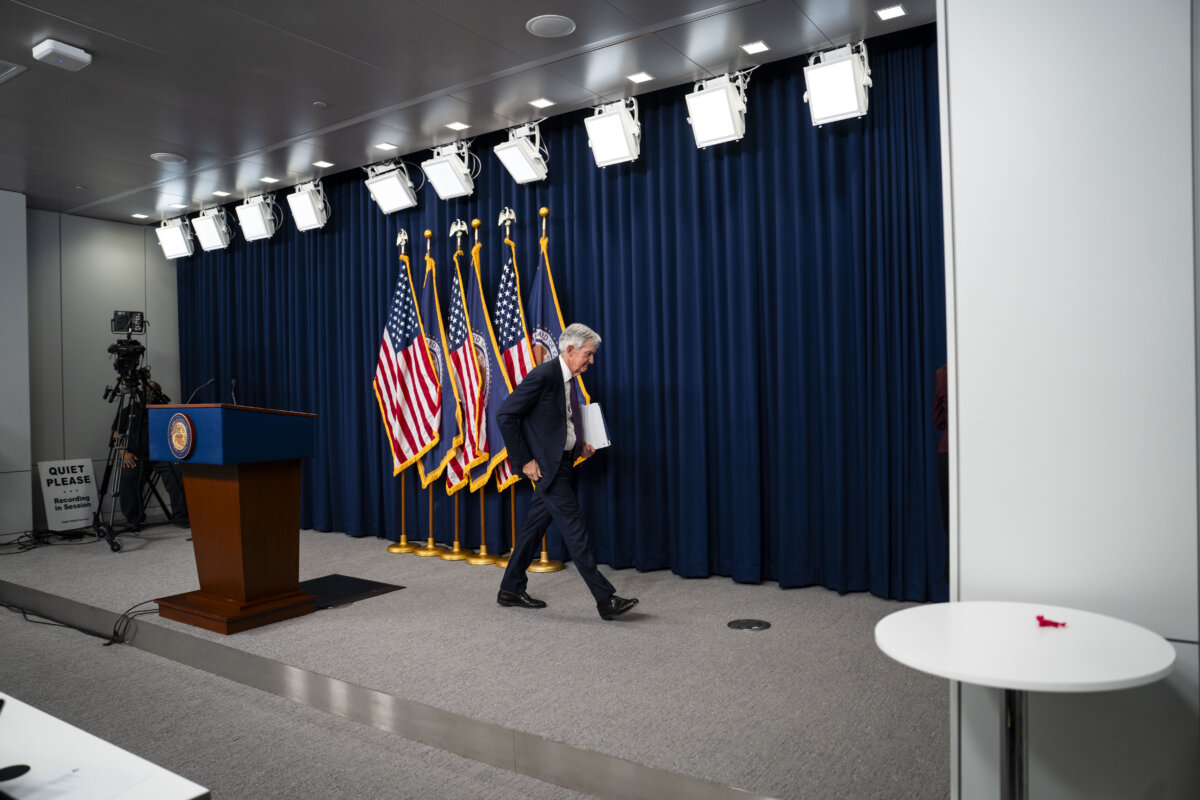
Although the central bank is grappling with war-driven inflation pressures, officials say further softening of the labor market “could warrant additional rate cuts.”
For now, traders widely expect the Federal Reserve to leave interest rates unchanged at next week’s two-day policy meeting. Investors’ baseline scenario is that the central bank will keep the benchmark federal funds rate unchanged this year, despite officials penciling in a single quarter-point cut.
Mixed Employment Outlook
Continuing jobless claims—a measure of the number of Americans currently receiving unemployment benefits—declined to its lowest level since February 2024.
Recurring claims fell to 1.79 million, from a downwardly revised 1.83 million, for the week ending March 28.
This is below the consensus forecast of 1.84 million.
Economists use this data as a proxy to gauge the difficulty workers may face in finding new employment. Additionally, the statistic can also highlight that Americans’ unemployment benefits have been exhausted, as many states limit eligibility to 26 weeks.
Views of the labor market have been mixed as of late.
Expectations of higher unemployment have steadily risen since July 2025, according to the New York Fed’s Survey of Consumer Expectations.
The mean probability of finding a job in the next three months after a position was lost today was 45.9 percent, hovering near record-low levels in the New York Fed’s survey series. Additionally, the chances of losing or leaving a job voluntarily were 14.4 percent and 18.3 percent, respectively.
Despite the view of a balanced labor market, conditions do maintain a “feel of downside risk,” Fed Chair Jerome Powell told reporters last month.
“And it’s not kind of a really comfortable balance,” Powell, whose term expires next month, said at the March 18 post-meeting press conference.
New research from the Dallas Fed indicated that the break-even rate—the pace of job growth needed to prevent the unemployment rate from rising—is near zero.
In 2023, the break-even rate peaked at 250,000 and declined to near zero in late 2025, “averaging about –3,000 jobs per month from August to December 2025, indicating, if anything, a modest net jobs loss over this period,” they said.
“Comparing our break-even estimates with actual payroll growth … suggests that job growth over the recent three months—December 2025–February 2026—has slightly exceeded the break-even rate on average, consistent with the unemployment rate remaining stable despite softer headline payroll numbers,” the paper reads.
 Friends Read Free
Copy
Facebook
Tweet
Friends Read Free
Copy
Facebook
Tweet